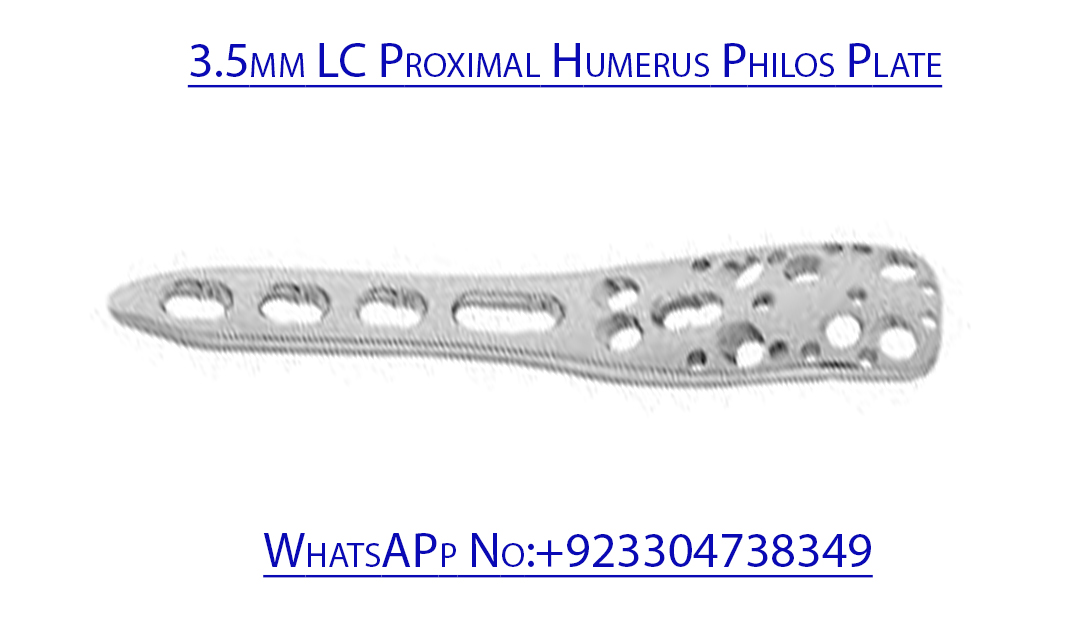
Proximal Humerus Internal Locking System (PHILOS) Plate: An Advanced Solution for Shoulder Fractures
Comprehensive Introduction & Overview
Fractures of the proximal humerus, the upper part of the arm bone near the shoulder joint, are among the most common fractures, particularly in older adults due to osteoporosis. These injuries can be debilitating, significantly impacting a patient's ability to perform daily activities, and often require precise and stable fixation to ensure optimal recovery and functional outcomes. Due to the complex anatomy of the shoulder, the forces acting upon it, and the often comminuted (fragmented) nature of these fractures, treatment can be challenging.
Historically, treatment options ranged from conservative management (sling immobilization) to various surgical techniques, each with its limitations. However, advancements in orthopedic trauma care have led to the development of highly specialized implants designed to address these complexities. One such innovation is the Proximal Humerus Internal Locking System (PHILOS) Plate.
The PHILOS Plate represents a significant leap forward in the surgical management of proximal humerus fractures. It is a state-of-the-art internal fixation device designed to provide robust, angularly stable support, promoting early mobilization and improved functional recovery. This guide will delve deep into the PHILOS Plate, exploring its design, applications, benefits, and what patients can expect.
Deep-dive into Technical Specifications / Mechanisms
The effectiveness of the PHILOS Plate stems from its innovative design and the advanced materials used in its construction.
Design and Materials
The PHILOS Plate is meticulously engineered to conform to the complex anatomy of the proximal humerus.
* Anatomical Contouring: The plate is pre-contoured to match the natural shape of the lateral aspect of the proximal humerus. This anatomical fit minimizes soft tissue irritation and facilitates accurate reduction and placement.
* Material Composition: Typically crafted from high-grade titanium alloy, the PHILOS Plate offers several advantages:
* Biocompatibility: Titanium is highly biocompatible, meaning it is well-tolerated by the human body, reducing the risk of adverse reactions.
* Strength-to-Weight Ratio: It provides exceptional strength while being relatively lightweight, capable of withstanding the significant forces exerted on the shoulder.
* Corrosion Resistance: Titanium is highly resistant to corrosion within the body's physiological environment.
* MRI Compatibility: While titanium is a metal, it is generally considered safe for MRI scans, though patients should always inform their radiologist about the implant.
* Locking Screw Technology: This is the cornerstone of the PHILOS system's stability.
* Fixed-Angle Construct: Unlike traditional screws that compress the plate to the bone, locking screws thread directly into the plate, creating a fixed-angle construct. This means the screws and plate act as a single, stable unit, providing angular stability.
* Multi-Directional Screw Placement: The plate features multiple holes, allowing for the strategic placement of locking screws into the humeral head. This periarticular cluster of screws provides enhanced purchase, especially crucial in osteoporotic bone, preventing screw pull-out and loss of reduction.
* Shaft Screws: The elongated shaft of the plate allows for secure fixation to the humeral shaft with both locking and non-locking screws, providing additional stability and preventing rotation.
* Suture Holes: Many PHILOS plates also incorporate suture holes, allowing for the reattachment of rotator cuff tendons or tuberosity fragments, further enhancing stability and biological healing potential.
Biomechanics
The biomechanical principles underlying the PHILOS Plate's success are critical for stable fixation and successful healing.
* Angular Stability: The locking screws create a fixed-angle construct that acts like an internal fixator, providing angular stability independent of plate-bone compression. This is particularly advantageous in comminuted fractures or osteoporotic bone where traditional plate fixation might fail due to poor screw purchase.
* Reduced Risk of Screw Pull-out: By locking into the plate, the screws resist pull-out forces, a common failure mechanism in osteoporotic bone. This enhanced stability is vital for maintaining fracture reduction.
* Load Sharing vs. Load Bearing: The PHILOS Plate aims for a balance. While it initially bears a significant portion of the load, it also promotes load sharing over time as bone healing progresses. This dynamic interaction encourages bone callus formation and remodeling.
* Indirect Reduction Potential: The plate's design often allows for indirect reduction techniques, minimizing soft tissue stripping and preserving the blood supply to the bone fragments, which is crucial for healing, especially in areas prone to avascular necrosis.
* Enhanced Construct Rigidity: The combination of anatomical contouring, robust materials, and locking screw technology results in a highly rigid construct, allowing for earlier, controlled range of motion exercises, which can prevent stiffness and improve long-term function.
Extensive Clinical Indications & Usage
The PHILOS Plate is a versatile implant used for a wide range of proximal humerus fractures, particularly those that are unstable, displaced, or involve multiple fragments.
Clinical Indications
- Two-part, Three-part, and Four-part Fractures: According to the Neer classification, PHILOS is highly effective for these complex fractures involving the surgical neck, greater tuberosity, lesser tuberosity, and articular surface.
- Fracture-Dislocations: When a proximal humerus fracture is accompanied by a dislocation of the shoulder joint, the PHILOS plate can help stabilize both components.
- Osteoporotic Fractures: Its locking screw technology provides superior fixation in compromised bone quality, making it an excellent choice for elderly patients.
- Comminuted Fractures: In cases where the bone is broken into many small pieces, the angular stability of the PHILOS system helps to maintain alignment and facilitate healing.
- Periprosthetic Fractures: Fractures occurring around a pre-existing shoulder prosthesis.
- Non-unions or Malunions: In some revision surgeries where previous fixation failed or healed incorrectly.
Surgical Procedure (Patient Perspective)
The surgical procedure to implant a PHILOS Plate is a specialized orthopedic surgery typically performed by a fellowship-trained orthopedic surgeon like Dr. Mohammed Hutaif.
1. Pre-operative Planning: This involves detailed imaging (X-rays, CT scans) to precisely understand the fracture pattern and plan the optimal plate size and screw trajectories.
2. Anesthesia: The patient will receive general anesthesia. A regional nerve block may also be used to help manage post-operative pain.
3. Incision: The surgeon makes an incision, typically either a deltopectoral approach (between the deltoid and pectoralis major muscles) or a deltoid-splitting approach, to access the fractured humerus. The goal is to minimize soft tissue disruption.
4. Fracture Reduction: The bone fragments are carefully manipulated and realigned into their anatomical position. This is a critical step for restoring shoulder function.
5. Plate Placement: The PHILOS Plate is then carefully positioned on the lateral aspect of the proximal humerus, ensuring proper alignment with the humeral head and shaft.
6. Screw Fixation: Guided by fluoroscopy (real-time X-ray imaging), the surgeon inserts locking and non-locking screws through the plate into the bone fragments and humeral shaft. The locking screws provide the crucial angular stability. Suture fixation may also be performed for tuberosity reattachment.
7. Wound Closure: Once stable fixation is achieved, the incision is irrigated, and the layers of tissue are closed. A drain may be placed temporarily.
8. Post-operative Care: The arm is typically immobilized in a sling for a period, followed by a structured physical therapy program.
Fitting/Usage (from the Patient's Perspective)
From a patient's standpoint, the "fitting" of a PHILOS Plate refers to its precise surgical implantation, while "usage" describes how it functions within the body to facilitate healing and recovery.
* Internal Stabilization: The plate acts as an internal splint, holding the bone fragments firmly in place while they heal. This eliminates the need for bulky external casts in most cases.
* Early Mobilization: The robust stability provided by the locking screws often allows for earlier, controlled passive and active-assisted range of motion exercises, under the guidance of a physical therapist. This is crucial for preventing shoulder stiffness and promoting faster functional recovery.
* Promoting Bone Healing: By stabilizing the fracture fragments, the PHILOS plate creates an optimal environment for bone callus formation and eventual bone union.
Risks, Side Effects, or Contraindications
While the PHILOS Plate offers significant advantages, like any surgical procedure involving implants, it carries potential risks and has specific contraindications. It's essential for patients to discuss these thoroughly with their surgeon.
General Surgical Risks
- Infection: Risk of infection at the surgical site.
- Bleeding: Intraoperative or post-operative bleeding.
- Nerve or Vascular Injury: Damage to nerves or blood vessels surrounding the shoulder.
- Anesthesia Risks: Adverse reactions to anesthesia.
Specific Risks Related to PHILOS Plate
- Screw Penetration into the Joint: If screws are too long, they can penetrate the articular cartilage of the humeral head, leading to pain, stiffness, and potentially early arthritis. Meticulous surgical technique and fluoroscopy minimize this risk.
- Avascular Necrosis (AVN) of the Humeral Head: The blood supply to the humeral head can be compromised by severe fractures or surgical dissection, leading to the death of bone tissue. This is a serious complication, though the PHILOS system aims to preserve blood supply.
- Non-union or Malunion: Despite stable fixation, the bone may fail to heal (non-union) or heal in an incorrect position (malunion).
- Implant Failure: Although rare with modern titanium implants, the plate or screws can break or loosen over time, especially with excessive early loading or poor bone quality.
- Shoulder Stiffness (Adhesive Capsulitis): Despite early mobilization protocols, some patients may develop significant shoulder stiffness.
- Subacromial Impingement: The plate may irritate the overlying soft tissues (e.g., rotator cuff tendons, bursa) or impinge against the acromion, causing pain. This may necessitate implant removal.
- Loss of Reduction: In some complex or highly unstable fractures, despite initial stable fixation, the fracture fragments may shift.
- Pain Requiring Implant Removal: While the PHILOS plate is often left in place permanently, some patients experience ongoing pain or irritation that warrants its removal after healing.
Contraindications
- Active Infection: Presence of an active infection in the shoulder region.
- Severe Open Fractures: Fractures where bone pierces the skin, requiring immediate debridement and often external fixation before internal plating.
- Extremely Poor Bone Quality: In cases of severe osteoporosis where even locking screws cannot achieve adequate purchase, alternative treatments like reverse shoulder arthroplasty might be considered.
- Patient Non-compliance: Patients unable or unwilling to adhere to post-operative rehabilitation protocols.
- Insufficient Soft Tissue Coverage: In rare cases, inadequate soft tissue to cover the implant.
Expert Tips from Dr. Mohammed Hutaif
As an orthopedic specialist, I frequently utilize the PHILOS Plate system for its proven efficacy in managing complex proximal humerus fractures. Here are some key insights and tips for patients undergoing this treatment:
- Personalized Treatment is Paramount: Every fracture is unique, and so is every patient. While the PHILOS Plate is an excellent tool, the decision to use it, and the specific surgical approach, are always tailored to your individual fracture pattern, bone quality, age, activity level, and overall health. A thorough evaluation and discussion are essential.
- Early, Guided Rehabilitation is Crucial: The stability provided by the PHILOS Plate allows for earlier initiation of physical therapy compared to older methods. This is not a suggestion; it's a critical component of your recovery. Adhering strictly to your physical therapist's instructions for range of motion exercises, even when it feels challenging, is vital to prevent stiffness and regain function.
- Manage Expectations Realistically: While the PHILOS Plate significantly improves outcomes, recovery from a proximal humerus fracture is a journey, not a sprint. Full recovery of strength and range of motion can take many months, and in some very complex cases, a complete return to pre-injury function may not be entirely possible. Patience and perseverance are key.
- Listen to Your Body, But Don't Overdo It: It's important to differentiate between expected post-operative discomfort and pain that signals a problem. Follow the guidelines for weight-bearing and activity restrictions diligently. Pushing yourself too hard too soon can jeopardize the healing process.
- Bone Health Matters: Especially for older patients, optimizing bone health is crucial. Discuss with your doctor strategies to improve bone density, such as calcium and vitamin D supplementation, and medications for osteoporosis if indicated. Stronger bones mean better screw purchase and a more robust healing environment.
- Communication is Key: Maintain open communication with your surgical team and physical therapist. Report any new or worsening pain, swelling, numbness, or signs of infection promptly. Your active participation in your care is invaluable.
- The PHILOS Advantage: I often recommend the PHILOS Plate because its locking technology provides superior stability, particularly in complex and osteoporotic fractures. This stability translates into a more reliable healing environment and often allows for a more accelerated rehabilitation protocol, ultimately leading to better long-term functional outcomes for my patients.
A Massive FAQ Section
Q1: What exactly is a Proximal Humerus Internal Locking System (PHILOS) Plate?
A1: The PHILOS Plate is an advanced orthopedic implant used to surgically repair fractures in the upper part of the arm bone (humerus), near the shoulder joint. It's a metal plate, typically made of titanium, that is anatomically shaped and features special locking screws. These screws thread directly into the plate, creating a fixed-angle construct that provides very stable internal fixation for the broken bone fragments, promoting healing and allowing for earlier movement.
Q2: Why did my doctor recommend a PHILOS plate for my shoulder fracture?
A2: Your doctor likely recommended a PHILOS plate because your fracture is unstable, displaced, or involves multiple fragments, making conservative treatment (like a sling) less effective. The PHILOS plate is particularly advantageous for complex fractures, fractures in osteoporotic (weak) bone, or when early mobilization is desired, as it provides superior stability and reduces the risk of the fracture fragments shifting.
Q3: Is the surgery to implant a PHILOS plate painful?
A3: The surgery itself is performed under general anesthesia, so you won't feel any pain during the procedure. After surgery, you will experience some pain and discomfort, which will be managed with pain medication. Your medical team will work with you to ensure your pain is controlled, and it typically subsides significantly over the first few days to weeks.
Q4: How long is the recovery time after PHILOS plate fixation?
A4: Recovery time varies significantly depending on the complexity of the fracture, your overall health, and adherence to physical therapy. Generally, initial healing takes about 6-12 weeks, during which you'll wear a sling and begin gentle range-of-motion exercises. Full recovery of strength and motion can take 6 months to a year, or even longer for very complex cases.
Q5: Will I need to remove the PHILOS plate in the future?
A5: In many cases, the PHILOS plate is designed to be a permanent implant and is not removed unless it causes problems. Reasons for removal might include persistent pain, irritation of soft tissues (like tendons), infection, or if the implant breaks (which is rare). Your surgeon will discuss the pros and cons of potential removal with you.
Q6: Can I regain full range of motion in my shoulder after PHILOS plate surgery?
A6: The goal of PHILOS plate fixation and subsequent physical therapy is to restore as much function and range of motion as possible. Many patients achieve excellent results and regain nearly full range of motion. However, complex fractures or individual healing responses can sometimes lead to some residual stiffness or limitations. Consistent and dedicated physical therapy is the most critical factor in maximizing your recovery.
Q7: What activities should I avoid after PHILOS plate surgery?
A7: Immediately after surgery, you'll need to avoid lifting, pushing, pulling, or sudden movements with your affected arm. Your surgeon and physical therapist will provide specific restrictions, but generally, heavy lifting, contact sports, and activities that put excessive stress on the shoulder are restricted for several months. Gradually, you will be cleared to return to more activities as healing progresses.
Q8: How is physical therapy involved in my recovery with a PHILOS plate?
A8: Physical therapy is an integral and essential part of your recovery. It typically begins very soon after surgery, often with passive and active-assisted range of motion exercises to prevent stiffness. As healing progresses, therapy will advance to strengthening exercises to rebuild muscle around the shoulder. Your physical therapist will guide you through a structured program tailored to your needs.
Q9: What are the potential complications I should watch for after surgery?
A9: While complications are relatively rare, it's important to be aware of them. Watch for signs of infection (fever, redness, warmth, pus at the incision site), severe or worsening pain not relieved by medication, numbness or tingling in your arm/hand, significant swelling, or any sudden loss of function. Report any of these symptoms to your doctor immediately.
Q10: Is the PHILOS plate MRI compatible?
A10: Yes, PHILOS plates made of titanium alloy are generally considered safe for MRI scans. However, it's crucial to always inform the MRI technician and your doctor about your implant before undergoing any imaging procedure. The presence of the plate may cause some artifact (distortion) in the images directly around the implant, but it typically does not prevent the scan from being performed or interpreted.
Q11: What makes the PHILOS plate different from traditional bone plates?
A11: The key difference lies in its locking screw technology. Traditional plates rely on compression between the plate and bone for stability. PHILOS screws, however, thread directly into the plate, creating a fixed-angle construct. This provides angular stability independent of plate-bone compression, making it much more stable, especially in comminuted fractures or patients with osteoporotic bone, where traditional screws might pull out.
Q12: Can the PHILOS plate be used in older patients with osteoporosis?
A12: Absolutely, in fact, the PHILOS plate is particularly well-suited for older patients with osteoporosis. Its locking screw design provides enhanced purchase and stability in compromised bone quality, significantly reducing the risk of screw pull-out and loss of reduction compared to conventional plating systems. This makes it a preferred choice for managing proximal humerus fractures in the elderly population.
Q13: What is the long-term outlook for patients treated with a PHILOS plate?
A13: The long-term outlook for patients treated with a PHILOS plate for proximal humerus fractures is generally very positive. Studies show high rates of fracture healing, good to excellent functional outcomes, and significant improvement in pain and range of motion. With proper surgical technique and diligent rehabilitation, most patients can expect to regain a high level of shoulder function and quality of life. Regular follow-up with your orthopedic surgeon is important to monitor progress.
Disclaimer: This information is for educational purposes only and is not intended as medical advice. Always consult with a qualified healthcare professional for diagnosis and treatment of any medical condition.