The Platelet-Rich Plasma (PRP) Double Spin Centrifuge Kit: A Comprehensive Orthopedic Guide
1. Comprehensive Introduction & Overview
In the evolving landscape of regenerative medicine, Platelet-Rich Plasma (PRP) therapy has emerged as a groundbreaking approach for treating a myriad of orthopedic conditions. At its core, PRP therapy harnesses the body's natural healing capabilities by concentrating growth factors and other bioactive proteins found within a patient's own blood. The efficacy of PRP therapy is intrinsically linked to the quality and concentration of the PRP preparation itself. This is where the advanced Platelet-Rich Plasma (PRP) Centrifuge Kit (Double Spin System) plays a pivotal role.
Unlike conventional single-spin systems, the double-spin method is engineered to yield a significantly higher concentration of platelets with a more refined separation of blood components. This advanced system ensures a purer and more potent PRP product, optimizing the therapeutic potential for patients suffering from musculoskeletal injuries and degenerative conditions. For licensed practitioners like Dr. Mohammed Hutaif, employing such a sophisticated system is paramount to delivering superior patient outcomes and upholding the highest standards of care.
This comprehensive guide delves deep into the intricacies of the PRP Double Spin Centrifuge Kit, covering its design, mechanisms, clinical applications, usage protocols, maintenance, and the profound impact it has on patient recovery and long-term joint health.
2. Deep-dive into Technical Specifications / Mechanisms
The effectiveness of PRP therapy hinges on the precise separation and concentration of platelets from whole blood. The double-spin system is designed with meticulous attention to detail, utilizing principles of biomechanics and material science to achieve optimal results.
2.1. Design and Materials
A typical PRP Double Spin Centrifuge Kit comprises several key components, each engineered for specific functions:
- The Centrifuge Unit:
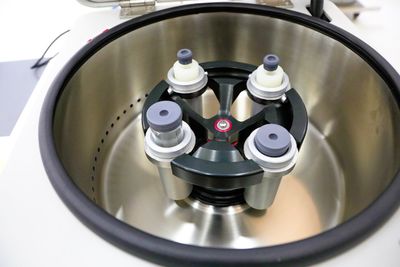
- Motor & Rotor: High-precision motor capable of generating controlled centrifugal forces (RCF) and revolutions per minute (RPM). Rotors are typically swing-out or fixed-angle, designed to securely hold blood collection tubes.
- Control Panel: Digital display for setting and monitoring RPM/RCF, time, and temperature (if applicable). Features programmable cycles for both first and second spins.
- Safety Features: Automatic lid lock, imbalance detection, emergency lid release, and robust housing to ensure user safety and stability during operation.
- Materials: Constructed from durable, medical-grade plastics and metals, resistant to chemicals and easy to clean.
- Blood Collection & Processing Tubes:
- Material: Often made from sterile, medical-grade glass or polypropylene, designed to withstand high centrifugal forces.
- Anticoagulant: Pre-filled with an anticoagulant (e.g., Sodium Citrate or ACD-A) to prevent blood clotting during processing.
- Gel Separator: A thixotropic polymer gel layer with a specific density. This gel acts as a barrier, migrating during centrifugation to separate the denser red blood cells (RBCs) and white blood cells (WBCs) from the lighter plasma and platelets. Its precise density is crucial for achieving distinct layers.
- Transfer Devices & Syringes: Sterile syringes and needles for drawing blood, transferring plasma, and aspirating the concentrated PRP. Specialized transfer devices may be included to minimize contamination and ensure precise aspiration of desired layers.
2.2. Biomechanics of the Double Spin Process
The double-spin method leverages the principle of differential centrifugation, separating blood components based on their density, size, and shape under varying centrifugal forces and durations.
-
First Spin (Separation of Red Blood Cells):
- Whole blood collected in anticoagulant-treated tubes is placed into the centrifuge.
- The first spin is typically performed at a lower speed (e.g., 1000-1200 RPM, or 100-200 RCF) for a longer duration (e.g., 10-15 minutes).
- This initial spin separates the blood into three primary layers:
- Bottom Layer: Denser Red Blood Cells (RBCs).
- Middle Layer: A thin, whitish layer known as the "buffy coat," containing white blood cells (WBCs) and platelets.
- Top Layer: Platelet-Poor Plasma (PPP) and Platelet-Rich Plasma (PRP). The gel separator typically sits above the RBCs, creating a clear boundary.
- The goal here is to isolate the plasma layer containing platelets and WBCs, while effectively separating the majority of RBCs, which are pro-inflammatory and can dilute the PRP.
-
Second Spin (Concentration of Platelets):
- After the first spin, the plasma layer (containing platelets and some WBCs) is carefully aspirated into new sterile tubes, leaving the RBCs and the gel separator behind.
- These new tubes are then subjected to a second spin at a higher speed (e.g., 2000-3000 RPM, or 400-700 RCF) for a shorter duration (e.g., 5-10 minutes).
- This higher centrifugal force causes the platelets to pellet at the bottom of the tube, forming a concentrated "platelet pellet."
- The supernatant, which is now largely Platelet-Poor Plasma (PPP), can be removed, leaving a small, highly concentrated volume of PRP.
- The double-spin method allows for fine-tuning the concentration of platelets and the removal of unwanted components (like excess PPP and RBCs), leading to a purer and more potent PRP product.
2.3. Mechanism of Action of PRP
Once concentrated, PRP is a rich source of various growth factors and signaling molecules critical for tissue repair and regeneration. When injected into the target area, these factors are released from activated platelets, initiating a cascade of biological events:
- Growth Factors: Platelets release factors such as Platelet-Derived Growth Factor (PDGF), Transforming Growth Factor-beta (TGF-β), Insulin-like Growth Factor-1 (IGF-1), Vascular Endothelial Growth Factor (VEGF), Epidermal Growth Factor (EGF), and Fibroblast Growth Factor (FGF). These orchestrate cell proliferation, migration, differentiation, and extracellular matrix synthesis.
- Cytokines & Chemokines: These molecules regulate inflammation, attract immune cells, and modulate cellular responses.
- Angiogenesis: Promotion of new blood vessel formation, improving oxygen and nutrient supply to injured tissues.
- Collagen Synthesis: Stimulation of fibroblasts to produce collagen, the primary structural protein of connective tissues.
- Anti-inflammatory Effects: While initiating a healing response, PRP can also modulate inflammation, reducing pain and swelling.
3. Extensive Clinical Indications & Usage
The versatility and efficacy of PRP derived from a double-spin system have made it a valuable tool across numerous orthopedic specialties.
3.1. Orthopedic Applications
- Osteoarthritis (OA): Particularly effective for knee osteoarthritis, PRP injections can reduce pain, improve joint function, and potentially slow cartilage degeneration. Also used in hips, shoulders, and ankles.
- Tendon Injuries (Tendinopathies):
- Rotator Cuff Tendinopathy/Partial Tears: Speeds healing and reduces pain in the shoulder.
- Achilles Tendinopathy: Chronic heel pain.
- Patellar Tendinopathy ("Jumper's Knee"): Pain below the kneecap.
- Lateral/Medial Epicondylitis ("Tennis/Golfer's Elbow"): Elbow pain.
- Plantar Fasciitis: Chronic heel pain.
- Ligament Sprains & Injuries:
- ACL/MCL Sprains (Grade I/II): Can augment healing and accelerate return to sport.
- Ankle Sprains: Reduces pain and swelling, promoting faster recovery.
- Muscle Strains & Tears: Accelerates healing of acute and chronic muscle injuries (e.g., hamstring strains, calf tears).
- Cartilage Repair: Used as an adjunct to surgical procedures like microfracture or osteochondral grafting to enhance cartilage regeneration.
- Bone Healing & Non-Unions: Can stimulate bone formation in delayed unions or non-unions of fractures, and enhance bone graft integration in spinal fusions.
- Spine Conditions (Off-label/Emerging): Facet joint pain, sacroiliac joint dysfunction, and degenerative disc disease are areas of ongoing research and clinical application.
3.2. Fitting / Usage Instructions (Step-by-Step Protocol)
Aseptic technique is paramount throughout the entire PRP preparation and injection process to prevent infection.
-
Patient Preparation & Blood Draw:
- Patient consent obtained and questions addressed.
- Identify a suitable venous access site (typically cubital fossa).
- Sterilize the venipuncture site with an antiseptic solution.
- Draw the required volume of whole blood (e.g., 30-60 mL, depending on the kit and desired PRP volume) into the specialized anticoagulant-containing tubes provided in the kit.
- Gently invert tubes several times to ensure proper mixing with the anticoagulant.
-
First Centrifugation (Separation):
- Place the filled blood tubes into the centrifuge rotor, ensuring they are balanced.
- Close the centrifuge lid securely.
- Set the centrifuge parameters for the first spin:
- Speed: E.g., 1100 RPM (approx. 150 RCF).
- Time: E.g., 10 minutes.
- Start the centrifugation cycle.
- Upon completion, carefully remove the tubes. Observe the distinct layers: RBCs at the bottom, gel separator, buffy coat (thin whitish layer above the gel), and plasma (PPP/PRP) at the top.
-
Plasma Aspiration:
- Using a sterile syringe and needle, carefully aspirate the upper plasma layer, ensuring to include the buffy coat (which contains a significant portion of platelets and leukocytes) just above the gel separator.
- Transfer this plasma-buffy coat fraction into new, sterile processing tubes provided by the kit. Avoid aspirating red blood cells.
-
Second Centrifugation (Concentration):
- Place the newly filled processing tubes into the centrifuge, ensuring balance.
- Close the lid securely.
- Set the centrifuge parameters for the second spin:
- Speed: E.g., 2500 RPM (approx. 500 RCF).
- Time: E.g., 5 minutes.
- Start the centrifugation cycle.
- Upon completion, carefully remove the tubes. A concentrated platelet pellet should be visible at the bottom of the tube, with Platelet-Poor Plasma (PPP) as the supernatant.
-
Final PRP Concentration & Activation (Optional):
- Carefully aspirate and discard the majority of the supernatant PPP, leaving a small, precise volume (e.g., 3-5 mL) of plasma above the platelet pellet.
- Gently resuspend the platelet pellet into the remaining plasma by swirling or gentle aspiration with a syringe to achieve a homogeneous, highly concentrated PRP solution.
- Activation: While PRP can be activated by tissue contact upon injection, some protocols may opt for ex vivo activation using calcium chloride or thrombin just prior to injection. This decision depends on the specific clinical application and physician preference.
-
PRP Injection:
- Load the concentrated PRP into a sterile syringe.
- Prepare the patient's injection site with antiseptic solution and local anesthetic (if desired).
- Under ultrasound guidance (highly recommended for precision and safety, especially for joints, tendons, and spine), inject the PRP into the target anatomical structure.
- Apply a sterile dressing to the injection site.
4. Risks, Side Effects, or Contraindications
While PRP therapy is generally safe due to its autologous nature (using the patient's own blood), it is not without potential risks or contraindications.
4.1. Risks and Side Effects
- Injection Site Pain/Soreness: Common for 2-3 days post-injection, often managed with ice and acetaminophen.
- Swelling & Bruising: Minor swelling or bruising at the injection site is possible.
- Infection: Rare, but possible with any invasive procedure. Meticulous sterile technique minimizes this risk.
- Nerve Injury: Extremely rare, but possible if a needle inadvertently contacts a nerve. Ultrasound guidance significantly reduces this risk.
- No Improvement/Worsening of Symptoms: Not all patients respond to PRP therapy, and in some rare cases, symptoms may not improve or could temporarily worsen.
- Allergic Reaction: Extremely rare, as it uses the patient's own blood components.
4.2. Contraindications
- Active Infection: At the injection site or systemic infection (sepsis).
- Certain Blood Disorders:
- Platelet dysfunction syndromes.
- Thrombocytopenia (low platelet count).
- Hypofibrinogenemia.
- Hemodynamic instability.
- Anticoagulant Therapy: Patients on blood thinners (e.g., warfarin, clopidogrel) may need to temporarily discontinue medication under physician guidance, due to increased bleeding risk. Aspirin and NSAIDs should generally be avoided for 1-2 weeks before and after treatment, as they can interfere with platelet function.
- Cancer/Malignancy: Especially hematologic cancers (leukemia, lymphoma) or metastatic disease.
- Pregnancy & Lactation: Generally avoided due to lack of safety data.
- Recent Steroid Injection: In the same area (within 2-4 weeks), as steroids can inhibit the healing process and PRP's effectiveness.
- Severe Anemia: May affect the quality of PRP.
5. Expert Tips from Dr. Mohammed Hutaif
As a specialist in orthopedic regenerative medicine, Dr. Mohammed Hutaif emphasizes several critical aspects for maximizing the benefits of PRP therapy:
- Patient Selection is Key: "Not every patient is an ideal candidate for PRP. A thorough diagnostic workup, including imaging and physical examination, is crucial to determine if PRP is the most appropriate treatment modality. Realistic expectations must be set."
- Precision in Preparation: "The double-spin centrifuge kit is a game-changer. It allows us to achieve a consistently high concentration of viable platelets with minimal red blood cell contamination. This purity is directly correlated with better therapeutic outcomes. Adhering strictly to the manufacturer's protocol for speeds and times is non-negotiable."
- Aseptic Technique is Paramount: "Preventing infection is our highest priority. Every step, from blood draw to injection, must be performed under strict aseptic conditions. This includes proper skin preparation, sterile drapes, and single-use disposable kits."
- Ultrasound Guidance for Accuracy: "I strongly advocate for ultrasound guidance during PRP injections. It ensures precise placement of the PRP into the injured tissue or joint space, maximizing its therapeutic effect and minimizing risks to surrounding structures. Blind injections are simply not acceptable for optimal results."
- Post-Procedure Care and Rehabilitation: "PRP is not a magic bullet; it's a catalyst for healing. Patients must understand the importance of post-procedure rest, activity modification, and adherence to a tailored rehabilitation program. This synergistic approach is vital for long-term success."
- Understanding PRP Phenotypes: "Different conditions may benefit from different PRP compositions – some requiring leukocyte-rich PRP (LR-PRP) and others leukocyte-poor PRP (LP-PRP). A double-spin system offers greater control in customizing the PRP product to the specific clinical need, although most orthopedic applications prefer LP-PRP to minimize inflammation. My preferred system allows for this nuanced control."
- Holistic Approach: "PRP therapy is often most effective when integrated into a comprehensive treatment plan that may include physical therapy, dietary adjustments, and lifestyle modifications. It's about optimizing the body's entire healing environment."
6. Massive FAQ Section
Q1: What exactly is Platelet-Rich Plasma (PRP) therapy?
A1: Platelet-Rich Plasma (PRP) therapy is a regenerative medical treatment that uses a concentration of a patient's own platelets to accelerate the healing of injured tendons, ligaments, muscles, and joints. Platelets contain numerous growth factors and signaling proteins that stimulate cellular repair and regeneration.
Q2: How does the "Double Spin System" for PRP differ from other methods?
A2: The "Double Spin System" involves two distinct centrifugation cycles. The first spin separates red blood cells from plasma and platelets. The second, higher-speed spin then concentrates the platelets from the plasma into a small, highly potent volume. This method typically yields a significantly higher concentration of platelets and a purer product (fewer red blood cells) compared to single-spin systems, optimizing therapeutic efficacy.
Q3: What orthopedic conditions can be treated with PRP using this system?
A3: This advanced PRP system is highly effective for a wide range of orthopedic conditions, including:
* Osteoarthritis (especially knee, hip, shoulder)
* Chronic tendon injuries (e.g., rotator cuff tendinopathy, Achilles tendinopathy, patellar tendinopathy, tennis/golfer's elbow)
* Ligament sprains (e.g., ACL, MCL, ankle sprains)
* Muscle strains and tears
* Plantar fasciitis
* As an adjunct to cartilage repair procedures and for stimulating bone healing.
Q4: Is the PRP injection painful?
A4: While the blood draw is similar to a standard blood test, the injection itself can cause some discomfort. We often use local anesthetic to numb the area before injection. Post-injection, patients might experience mild to moderate soreness or aching for a few days, which is a normal part of the healing response and can be managed with ice and non-NSAID pain relievers.
Q5: How many PRP treatments are typically needed?
A5: The number of treatments varies depending on the condition, its severity, and individual patient response. Many patients experience significant improvement after 1-3 injections, spaced several weeks apart. Dr. Hutaif will assess your specific case and recommend a personalized treatment plan.
Q6: What is the recovery time after a PRP injection?
A6: Recovery is generally quick. Patients are usually advised to rest the treated area for 24-48 hours and avoid strenuous activity for a few days to a week. A gradual return to normal activities and a guided rehabilitation program are typically recommended. Full benefits may take several weeks to months to manifest as the body's natural healing process takes time.
Q7: Are there any significant side effects or risks associated with PRP?
A7: Since PRP uses your own blood, the risk of allergic reaction or disease transmission is virtually eliminated. The most common side effects are mild pain, swelling, or bruising at the injection site. Serious risks like infection or nerve damage are extremely rare, especially when meticulous sterile technique and ultrasound guidance are used.
Q8: How soon can I expect to see results from PRP therapy?
A8: The healing process initiated by PRP is gradual. Some patients may notice subtle improvements within a few weeks, but significant pain reduction and functional improvement typically become evident after 4-6 weeks, continuing to progress over several months. Patience and adherence to post-procedure guidelines are important.
Q9: Is PRP therapy covered by insurance?
A9: Currently, most insurance providers, including Medicare, consider PRP therapy experimental or investigational for many orthopedic conditions and typically do not cover the cost. We recommend contacting your insurance provider directly for the most up-to-date information regarding your specific plan. Our clinic can provide detailed cost estimates.
Q10: What makes Dr. Hutaif's clinic different for PRP treatments?
A10: Dr. Hutaif's clinic prioritizes patient safety and optimal outcomes. We utilize the state-of-the-art Double Spin Centrifuge Kit for superior PRP concentration and purity. Our approach includes:
* Thorough patient evaluation and personalized treatment plans.
* Strict adherence to aseptic techniques.
* Routine use of ultrasound guidance for precise injections.
* Comprehensive post-procedure care and rehabilitation support.
* A commitment to staying abreast of the latest research and advancements in regenerative medicine.
Q11: What should I avoid before and after PRP treatment?
A11:
* Before: Avoid NSAIDs (e.g., ibuprofen, naproxen) for at least 1-2 weeks prior, as they can inhibit platelet function. Inform your doctor about all medications, especially blood thinners. Stay well-hydrated.
* After: Avoid NSAIDs for 1-2 weeks post-treatment. Avoid strenuous activity involving the treated area for a few days to a week. Follow specific instructions for activity modification and physical therapy.
Q12: Is PRP a permanent solution?
A12: PRP therapy aims to promote natural healing and tissue regeneration, which can lead to long-lasting relief and functional improvement. While it can provide significant and durable benefits, it's not always a "permanent cure," especially for degenerative conditions. Its effectiveness can vary, and lifestyle modifications, continued physical therapy, and sometimes booster injections may be recommended to maintain results.
This content is for patient information only and is not medical advice. Always consult with a licensed healthcare professional for diagnosis and treatment recommendations.