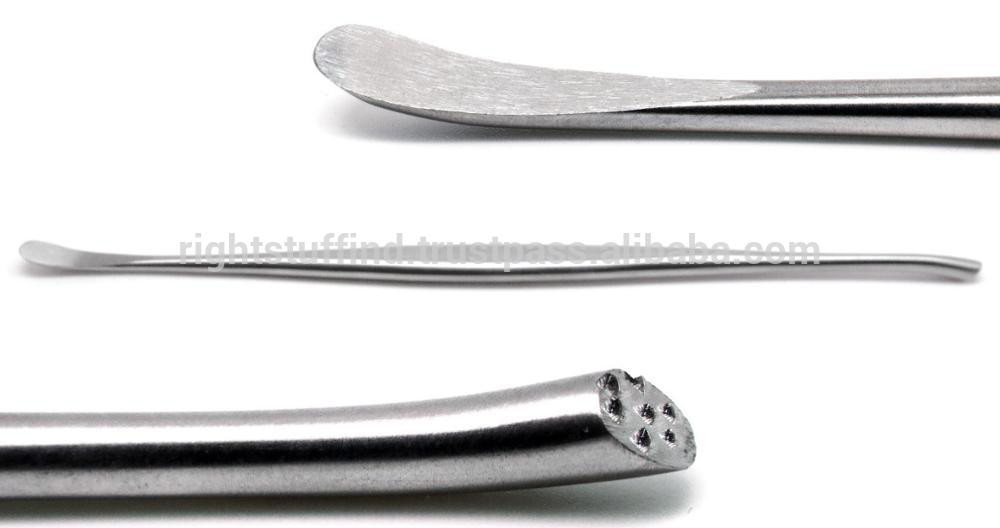
Penfield Dissectors (Set of 1-4): The Pinnacle of Orthopedic Precision Dissection
As an expert in both medical SEO and orthopedic surgery, we understand the critical role that specialized instrumentation plays in achieving superior patient outcomes. While traditionally recognized in neurosurgery, the Penfield Dissectors (Set of 1-4) have carved out an indispensable niche within highly specialized orthopedic procedures. These instruments are not merely tools; they are extensions of the surgeon's hands, designed for unparalleled precision when navigating the most delicate anatomical landscapes, particularly in close proximity to neurovascular structures.
This comprehensive guide delves into the intricate world of Penfield Dissectors, offering an exhaustive overview for orthopedic surgeons, surgical technicians, procurement specialists, and anyone seeking to understand the profound impact of these instruments on surgical efficacy and patient safety within orthopedics. We will explore their meticulous design, diverse applications, rigorous maintenance protocols, and the biomechanical principles that underpin their effectiveness.
Deep-Dive into Technical Specifications & Mechanisms
The efficacy of Penfield Dissectors stems from their deceptively simple yet profoundly effective design. Each dissector in the set (typically numbered 1 through 4) is crafted to offer a specific functional advantage, allowing surgeons to adapt to varying tissue densities and anatomical constraints with fluid precision.
Design and Materials Excellence
Penfield Dissectors are universally fabricated from high-grade German stainless steel, a material chosen for its exceptional durability, corrosion resistance, and ability to maintain its structural integrity through countless sterilization cycles. This material also provides the optimal balance of rigidity and tactile feedback, crucial for delicate tissue manipulation.
Key Design Features Across the Set:
- Ergonomic Handles: All Penfield dissectors feature a slender, rounded handle designed for a comfortable, pencil-grip hold. This ergonomic design minimizes hand fatigue during prolonged procedures and maximizes tactile sensitivity, allowing the surgeon to "feel" the tissue planes.
- Matte Finish: The instrument's surface is often treated with a matte finish to reduce glare from operating room lights, enhancing visualization of the surgical field.
-
Varied Tip Configurations: The defining characteristic of the Penfield set lies in the unique configuration of each tip:
- Penfield #1: Features a broad, blunt, slightly curved spatulated tip. Ideal for general blunt dissection, separating larger tissue planes, and gentle retraction.
- Penfield #2: Similar to #1 but with a slightly narrower, more acutely curved, blunt spatulated tip. Offers more focused dissection and elevation in confined spaces.
- Penfield #3: Distinguished by a small, angled, blunt spoon-shaped tip. Excellent for scooping, elevating, and dissecting very fine adhesions or tissue layers, particularly useful for nerve root identification.
- Penfield #4: Presents a small, angled, blunt hook-like or spatulated tip. Uniquely suited for lifting, teasing, and separating extremely delicate structures, often used for precise nerve or vessel isolation.
Biomechanics of Atraumatic Dissection
The biomechanical advantage of Penfield Dissectors lies in their ability to facilitate atraumatic tissue separation. Unlike sharp instruments that cut, Penfield dissectors rely on blunt force, leverage, and the principle of hydrodissection (using fluid pressure to separate tissues) to gently push, tease, and lift tissues along natural anatomical planes.
Biomechanics at Play:
- Controlled Force Distribution: The blunt, polished tips distribute force over a wider area compared to a sharp edge, significantly reducing the risk of puncturing or tearing delicate structures like nerves, blood vessels, or dura mater.
- Leverage and Fulcrum: The slender shaft and precise tip angles allow surgeons to apply controlled leverage, particularly when working in deep cavities or around bony prominences. The surgeon's hand acts as a stable fulcrum, enabling minute movements of the working tip.
- Tactile Feedback: The solid stainless steel construction transmits subtle changes in tissue resistance directly to the surgeon's hand, providing invaluable sensory feedback that guides the dissection process and prevents inadvertent trauma.
- Tissue Plane Identification: By gently probing and separating, the Penfield dissectors help surgeons identify and follow avascular planes, minimizing bleeding and preserving tissue integrity.
Extensive Clinical Indications & Usage in Orthopedics
While primarily associated with neurosurgery, the precision and atraumatic nature of Penfield Dissectors make them invaluable in specific orthopedic subspecialties, particularly where neurovascular structures are at high risk.
Detailed Surgical Applications
1. Spinal Orthopedic Surgery:
* Nerve Root Decompression: During laminotomy, laminectomy, or microdiscectomy, Penfield dissectors are paramount for gently dissecting and retracting nerve roots and the dural sac, protecting them from injury while removing bone or disc fragments. Penfield #3 and #4 are particularly useful for meticulously separating adhesions around the nerve root.
* Periosteal Elevation: In areas requiring extremely precise subperiosteal dissection, such as around facet joints or pedicles, Penfield dissectors can be used to carefully lift the periosteum without damaging underlying neural elements.
* Epidural Dissection: For freeing scar tissue or adhesions within the epidural space, the blunt tips prevent dural tears.
2. Hand, Wrist, and Foot Surgery:
* Nerve Decompression Syndromes: In procedures like carpal tunnel release or cubital tunnel release, Penfield #1 and #2 are excellent for blunt dissection of the retinaculum and surrounding soft tissues, providing a safe corridor for nerve identification and release. Penfield #4 can be used to gently lift and isolate the median or ulnar nerve.
* Tendon Sheath Dissection: For separating delicate tendon sheaths or releasing adhesions around tendons, especially in flexor tendon repairs or tenolysis.
* Small Joint Arthroscopy/Open Procedures: For meticulous soft tissue debridement or capsular release in confined spaces where neurovascular bundles are in close proximity.
* Tumor Resection: When excising small benign tumors or cysts in the extremities, Penfield dissectors aid in carefully separating the mass from adjacent nerves and vessels.
3. General Orthopedic Trauma (Select Cases):
* In complex fracture repairs involving significant soft tissue injury, Penfield dissectors can be used to carefully explore wound beds, identify and protect neurovascular structures before definitive fixation.
Fitting and Usage Instructions
Proper handling and application of Penfield Dissectors are crucial for optimal outcomes.
- Grip: Always use a modified pencil grip, allowing for fine motor control and maximizing tactile feedback. The instrument should rest comfortably between the thumb and index finger, supported by the middle finger.
- Visualization: Ensure excellent illumination and magnification (e.g., surgical loupes or microscope) when using Penfield dissectors, especially in deep or confined surgical fields.
- Gentle Manipulation: The defining principle is gentleness. Dissection should involve slow, deliberate, sweeping, or teasing motions. Avoid aggressive pushing or prying.
- Tissue Plane Identification: Use the blunt tip to palpate and identify the natural cleavage planes between tissues. Follow these planes to minimize trauma.
- Specific Tip Application:
- Penfield #1/#2: For initial, broader blunt dissection and retraction of soft tissues.
- Penfield #3: For delicate elevation, separating fine adhesions, or gently lifting nerve roots.
- Penfield #4: For precise hooking, teasing, or isolating extremely fragile structures.
- Maintain Awareness: Always be cognizant of the instrument's tip position in relation to vital structures, even when not directly visualizing it.
Patient Outcome Improvements
The judicious use of Penfield Dissectors directly translates to enhanced patient safety and superior post-operative recovery.
- Reduced Neurological Complications: Minimizes the risk of nerve contusion, stretch injury, or transection, leading to better functional outcomes and reduced post-operative neuropathic pain.
- Decreased Vascular Injury: Protects delicate blood vessels, reducing intraoperative bleeding and the risk of hematoma formation.
- Minimized Tissue Trauma: Atraumatic dissection preserves the integrity of surrounding soft tissues, leading to less inflammation, faster wound healing, and reduced scar tissue formation.
- Lower Infection Risk: Less tissue damage and bleeding create a healthier surgical environment, potentially reducing the risk of surgical site infections.
- Faster Recovery and Rehabilitation: Patients experience less pain and quicker return to function due to the precision and gentleness of the dissection.
Maintenance & Sterilization Protocols
The longevity and safety of Penfield Dissectors depend entirely on meticulous care and adherence to strict sterilization protocols.
Immediate Post-Operative Care
- Rinse: Immediately after use, rinse instruments under cool running water to remove gross contaminants like blood and tissue. Do not use hot water, as it can coagulate proteins, making them harder to remove.
- Disassembly (if applicable): Penfield dissectors are single-piece instruments, so no disassembly is required.
- Pre-Soak: Place instruments in an enzymatic detergent solution as soon as possible to prevent drying of organic material.
Cleaning
- Manual Cleaning: If manual cleaning is mandated, use a soft brush and enzymatic detergent to thoroughly scrub all surfaces, paying close attention to the tips and crevices. Rinse thoroughly.
- Ultrasonic Cleaning: Recommended for thorough cleaning. Place instruments in an ultrasonic cleaner with appropriate detergent. Follow manufacturer's guidelines for time and temperature. Rinse thoroughly after cycle.
- Inspection: After cleaning, meticulously inspect each dissector under magnification for any residual debris, corrosion, pitting, bent tips, or other damage. Discard or repair damaged instruments.
Sterilization
- Packaging: Place cleaned and inspected Penfield dissectors in appropriate sterilization trays or pouches. Ensure instruments are not overcrowded and are positioned to allow steam penetration.
- Autoclave (Steam Sterilization): This is the preferred method for stainless steel instruments.
- Gravity Displacement: 15-30 minutes at 121°C (250°F).
- Pre-Vacuum: 4 minutes at 132°C (270°F).
- Always follow the specific instructions of the sterilizer manufacturer and facility policies.
- Flash Sterilization: Use only in emergency situations when time is critical. Not recommended for routine sterilization.
- Ethylene Oxide (EO): Can be used for heat-sensitive instruments, but less common for stainless steel Penfields. Requires aeration time.
- Storage: Store sterilized instruments in a clean, dry, and sterile environment until needed. Protect tips from damage during storage.
Risks, Side Effects, or Contraindications
While Penfield Dissectors are designed for safety, their misuse or improper care can lead to complications.
- Tissue Damage: Improper technique, excessive force, or lack of visualization can still lead to inadvertent damage to nerves, vessels, or dura mater, despite the blunt nature of the instruments.
- Instrument Breakage/Damage: Dropping, improper handling, or using instruments for unintended purposes (e.g., prying with excessive force) can bend or damage the delicate tips, rendering them unsafe and ineffective.
- Infection: Inadequate cleaning or sterilization protocols can lead to surgical site infections.
- Corrosion: Exposure to harsh chemicals, improper drying, or prolonged contact with saline can lead to corrosion, compromising the instrument's integrity and potentially introducing foreign bodies into the surgical field.
- Contraindications: Penfield dissectors are not designed for cutting or heavy leverage. They should not be used in situations requiring sharp dissection or when significant force is needed to release tough fibrous tissue, as this can damage both the instrument and the surrounding anatomy.
Massive FAQ Section
Q1: What are Penfield dissectors primarily used for in orthopedics?
A1: In orthopedics, Penfield dissectors are primarily used for highly precise, atraumatic dissection of delicate soft tissues, particularly around nerves and blood vessels. This includes nerve root decompression in spinal surgery, isolation of nerves in hand/foot surgery (e.g., carpal tunnel release), and meticulous periosteal elevation in confined spaces.
Q2: Why are Penfield dissectors considered essential in certain orthopedic procedures?
A2: They are essential because their blunt, specialized tips allow surgeons to separate tissues along natural planes without cutting or tearing, significantly reducing the risk of damage to critical structures like nerves and blood vessels. This precision is vital for minimizing complications and improving patient recovery.
Q3: What are the key differences between Penfield #1, #2, #3, and #4?
A3: The key differences lie in their tip configurations. Penfield #1 has a broad, blunt spatula; #2 has a narrower, more curved blunt spatula; #3 features a small, angled blunt spoon; and #4 has a small, angled blunt hook or spatulated tip. Each is designed for progressively finer and more specific dissection tasks.
Q4: What materials are Penfield dissectors typically made from?
A4: Penfield dissectors are almost exclusively made from high-grade German stainless steel. This material is chosen for its superior strength, durability, corrosion resistance, and ability to withstand repeated sterilization cycles while maintaining its precise form and function.
Q5: How do Penfield dissectors contribute to patient safety?
A5: They enhance patient safety by enabling surgeons to perform delicate dissections with extreme precision, thereby minimizing the risk of iatrogenic injury to vital structures such as nerves and blood vessels. This leads to fewer post-operative complications, better functional outcomes, and a safer surgical experience.
Q6: What is the recommended sterilization method for Penfield dissectors?
A6: The recommended and most common sterilization method for Penfield dissectors is steam sterilization (autoclaving). This method is highly effective for stainless steel instruments, ensuring complete sterility when proper parameters for temperature, pressure, and time are followed.
Q7: Can Penfield dissectors be used for sharp dissection?
A7: No, Penfield dissectors are specifically designed for blunt dissection. Their tips are polished and rounded to gently separate tissue planes, not to cut. Using them for sharp dissection can damage both the instrument and delicate anatomical structures.
Q8: How should Penfield dissectors be handled during surgery to prevent damage?
A8: They should be handled with care, using a light, controlled pencil grip. Avoid dropping them or using excessive force, which can bend or damage the delicate tips. Always place them carefully in instrument trays to prevent contact with other instruments that could cause scratches or deformities.
Q9: What are the benefits of using a complete set (1-4) of Penfield dissectors?
A9: Using a complete set provides the surgeon with a versatile range of tools to address various dissection needs during a procedure. The different tip configurations allow for seamless transitions from broader blunt dissection to extremely fine, precise manipulation, ensuring optimal adaptation to the surgical field and tissue types encountered.
Q10: How do Penfield dissectors impact post-operative recovery?
A10: By facilitating atraumatic dissection and minimizing damage to surrounding tissues, Penfield dissectors contribute to reduced post-operative pain, less swelling, faster wound healing, and a quicker return to normal function for the patient. This precision directly translates to an improved overall recovery experience.
Q11: Are there any specific ergonomic considerations for these instruments?
A11: Yes, their slender, rounded handles are designed for a comfortable, pencil-grip hold, which is crucial for fine motor control. This ergonomic design minimizes hand fatigue during long procedures and enhances the surgeon's tactile feedback, allowing for precise and controlled movements.
Q12: What maintenance tips ensure the longevity of Penfield dissectors?
A12: To ensure longevity, always rinse instruments immediately after use, clean them thoroughly with enzymatic detergents (manual or ultrasonic), inspect them for damage, and sterilize them properly via autoclaving. Store them in protective trays to prevent tip damage and corrosion. Avoiding harsh chemicals and ensuring thorough drying are also crucial.