Understanding the Pelvic C-Clamp: A Critical Tool in Orthopedic Trauma
Introduction to Pelvic Fractures and the Role of Stabilization
The pelvis is a complex, ring-like structure that connects the spine to the legs, providing crucial support for the upper body, protecting vital organs, and facilitating movement. Due to its robust design, pelvic fractures typically result from high-energy trauma, such as car accidents, falls from significant heights, or severe crush injuries. These fractures can range from stable, minor breaks to highly unstable, life-threatening injuries involving significant blood loss and damage to surrounding organs.
In cases of severe, unstable pelvic fractures, immediate and effective stabilization is paramount. The primary goals of early stabilization are to:
* Control life-threatening hemorrhage by reducing the volume of the pelvic cavity.
* Restore anatomical alignment and stability to prevent further injury.
* Alleviate pain.
* Facilitate early mobilization and improve long-term functional outcomes.
While various methods exist for pelvic stabilization, the Pelvic C-Clamp stands out as a rapid, effective, and often life-saving external fixation device used in acute trauma settings. This comprehensive guide will delve into its design, applications, benefits, and what patients can expect.
What is a Pelvic C-Clamp?
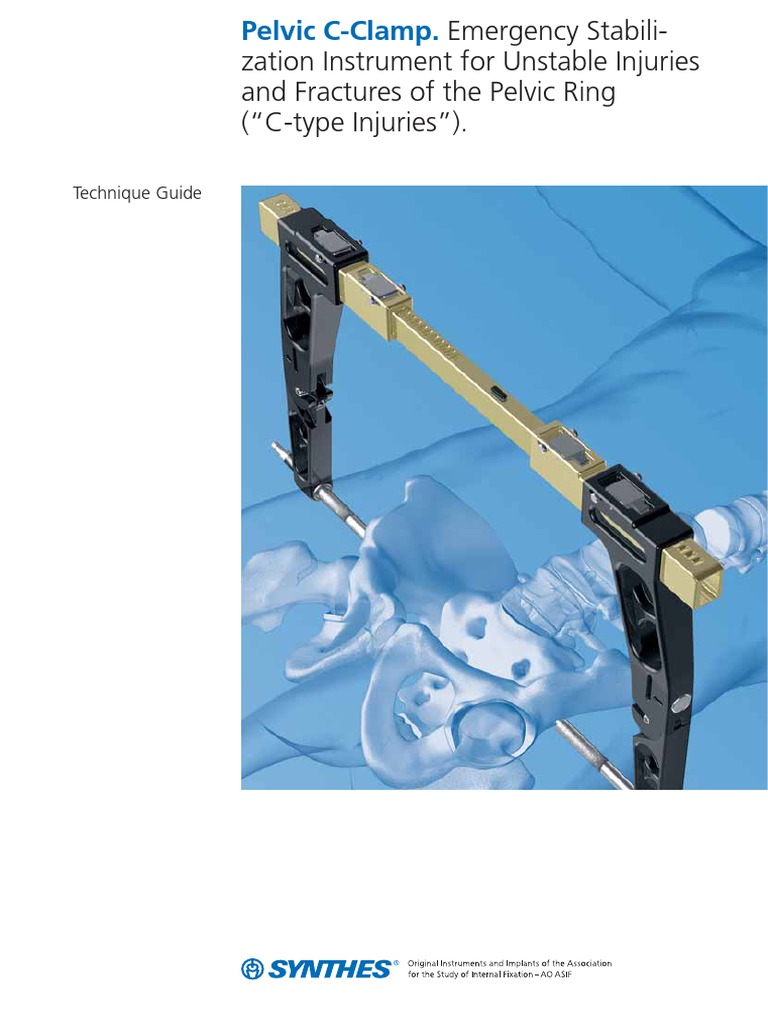
The Pelvic C-Clamp is an external fixation device specifically designed for emergency stabilization of severe, unstable posterior pelvic ring injuries. It acts by compressing the posterior pelvic ring, thereby reducing the volume of the pelvic cavity, which can significantly help in controlling hemorrhage and stabilizing the fractured bones. It is typically applied in the emergency room or operating room as a temporary measure to stabilize the pelvis before definitive surgical repair or as a primary stabilization method in certain circumstances.
Design, Materials, and Biomechanics: The Engineering Behind Stability
The effectiveness of the Pelvic C-Clamp lies in its ingenious design and the materials it's constructed from, all underpinned by sound biomechanical principles.
Core Design Principles
The Pelvic C-Clamp typically consists of several key components working in concert:
1. Main Body/Frame: A sturdy, C-shaped or U-shaped frame that provides the primary structural integrity.
2. Schanz Screws/Pins: Two or more large-diameter pins that are inserted into the iliac crests (the prominent bones at the top of the pelvis). These pins are cannulated, allowing for precise insertion over guide wires.
3. Compression Mechanism: A threaded rod or a ratchet mechanism that allows for controlled compression of the posterior pelvis by drawing the pins closer together.
4. Connecting Rods/Arms: Components that link the Schanz screws to the main body, allowing for adjustability and secure fixation.
Advanced Materials for Strength and Biocompatibility
Given its critical role in trauma, the materials used in a Pelvic C-Clamp must be exceptionally strong, durable, and biocompatible.
* Medical-Grade Stainless Steel: Often used for the main frame and connecting rods due to its high tensile strength, resistance to corrosion, and excellent mechanical properties.
* Titanium Alloys: Frequently used for Schanz screws and other components requiring high strength-to-weight ratio and superior biocompatibility, minimizing the risk of adverse reactions within the body.
* Polymer Components: Some clamps may incorporate high-strength polymer elements for specific parts, offering weight reduction and shock absorption.
Biomechanical Principles of Pelvic Stabilization
The Pelvic C-Clamp leverages specific biomechanical principles to achieve stability:
* Mechanism of Action: The clamp applies direct, compressive force across the posterior pelvic ring through the iliac crests. This force effectively reduces the diastasis (separation) of the sacroiliac joints or sacral fractures, closing down the "open book" deformity often seen in unstable pelvic injuries.
* Force Distribution and Reduction: By compressing the pelvis, the C-clamp helps to:
* Reduce Pelvic Volume: This is critical in stopping venous hemorrhage, as it decreases the potential space for blood pooling and allows for tamponade.
* Restore Anatomical Alignment: Bringing the fractured segments closer together facilitates natural healing and reduces stress on surrounding soft tissues.
* Increase Stability: The external compression provides immediate mechanical stability, preventing further displacement of fracture fragments.
Detailed Surgical and Clinical Applications
The Pelvic C-Clamp is a specialized tool reserved for specific, often life-threatening, scenarios.
Primary Indications for Pelvic C-Clamp Placement
The decision to use a Pelvic C-Clamp is made by an orthopedic trauma surgeon based on the patient's overall condition and the specific type of pelvic injury. Key indications include:
- Life-Threatening Pelvic Hemorrhage: In patients with unstable pelvic fractures and signs of hemodynamic instability (e.g., low blood pressure, rapid heart rate) due to significant blood loss from the pelvic region, the C-clamp can provide rapid external compression to help control bleeding.
- Unstable Posterior Pelvic Ring Fractures: Especially types like:
- APC III (Anterior-Posterior Compression Type III): Often referred to as "open book" injuries, where the front of the pelvis is splayed open, and the posterior ligaments are completely disrupted.
- LC III (Lateral Compression Type III): Involves a crush injury that can also lead to posterior instability.
- Vertical Shear Injuries: Where one half of the pelvis is displaced vertically relative to the other.
- Emergency Stabilization in Polytrauma: As part of damage control orthopedics in patients with multiple severe injuries, where definitive surgery may need to be delayed.
The Surgical Procedure: A Step-by-Step Overview (Simplified for Patients)
The application of a Pelvic C-Clamp is a precise surgical procedure typically performed by an orthopedic trauma surgeon.
- Pre-operative Assessment and Imaging: X-rays, CT scans, and sometimes angiography are used to fully understand the fracture pattern and identify sources of bleeding.
- Patient Positioning and Preparation: The patient is carefully positioned, usually supine, on a specialized trauma table. The skin is thoroughly cleaned and sterilized.
- Clamp Application and Reduction:
- Small incisions are made over the iliac crests.
- Guide wires are carefully inserted into the iliac bones, ensuring they are positioned safely away from vital structures.
- Schanz screws are then advanced over the guide wires into the bone.
- The C-clamp frame is attached to the Schanz screws.
- The compression mechanism is activated, slowly and incrementally closing the clamp to reduce the pelvic fracture and apply controlled compression. This step is often guided by fluoroscopy (real-time X-ray imaging) to ensure optimal reduction and prevent over-compression.
- Intraoperative Verification: The surgeon verifies the stability and alignment using fluoroscopy. The patient's hemodynamic status is continuously monitored.
Fitting and Usage Instructions for Orthopedic Surgeons (Simplified for Patients)
- Key Considerations for Optimal Placement:
- Anatomical Landmarks: Precise identification of the iliac crests and avoidance of the sciatic notch and greater trochanter.
- Pin Trajectory: Pins must be inserted bicortically (through both layers of bone) for maximum purchase and stability, avoiding intra-pelvic structures.
- Compression Force: Applied gradually and monitored to achieve stability without causing excessive soft tissue pressure or neurovascular compromise.
- Adjustments and Monitoring:
- Post-application, the clamp's stability and the patient's neurovascular status in the lower extremities are regularly assessed.
- Radiographs are taken to confirm ongoing reduction.
- Pin sites are monitored for signs of infection.
Maintenance, Sterilization, and Device Longevity
While the C-Clamp is a temporary device, its proper handling, sterilization, and maintenance are crucial for patient safety and device efficacy.
Importance of Proper Handling
- Pre-use Inspection: Before surgery, the clamp components are inspected for any signs of damage, wear, or malfunction.
- Careful Assembly: Components are assembled according to manufacturer guidelines to ensure proper function.
Sterilization Protocols
- Autoclaving: The primary method for sterilizing the Pelvic C-Clamp and its components. Devices are thoroughly cleaned to remove all organic matter, then subjected to high-pressure steam sterilization.
- Manufacturer Guidelines: Strict adherence to the manufacturer's specific sterilization instructions is essential, as different materials or designs may require specific cycles.
Post-Use Care and Storage
- Disassembly and Cleaning: After use, the clamp is carefully disassembled and thoroughly cleaned to remove blood and tissue.
- Storage: Components are stored in a clean, dry environment, often in specialized trays, to protect them from damage and ensure they are ready for the next sterilization cycle.
Risks, Potential Side Effects, and Contraindications
While life-saving, the Pelvic C-Clamp is not without potential risks. A thorough understanding of these is important for both medical professionals and patients.
Potential Complications
- Pin Site Infections: The most common complication. Bacteria can enter the body at the pin insertion sites, leading to localized infection, cellulitis, or even osteomyelitis (bone infection).
- Neurovascular Injury: Although rare with careful technique, there is a risk of damage to nerves (e.g., lateral femoral cutaneous nerve) or blood vessels during pin insertion.
- Soft Tissue Damage/Pressure Sores: Excessive or prolonged compression, especially in malnourished or elderly patients, can lead to pressure necrosis of the skin and underlying tissues at the clamp application sites.
- Clamp Loosening or Migration: Over time, especially with patient movement, the pins can loosen or the clamp can migrate, leading to loss of reduction.
- Perforation of Viscera: Extremely rare but serious complication if pins are inserted too deeply, potentially injuring internal organs like the bowel.
- Over-compression of the Sacrum: Can potentially lead to sacral nerve root injury.
Contraindications
- Stable Pelvic Fractures: The C-clamp is unnecessary for fractures that are inherently stable and do not pose a risk of significant hemorrhage or displacement.
- Previous Pelvic Surgery/Hardware: Prior surgery or existing hardware in the iliac crests may make C-clamp application difficult or impossible.
- Morbid Obesity: Extreme obesity can make accurate pin placement and effective compression challenging.
- Severe Local Infection: An active infection at the proposed pin insertion sites would be a contraindication.
Expert Tips from Dr. Mohammed Hutaif
As an orthopedic trauma specialist, Dr. Mohammed Hutaif emphasizes key principles when considering and managing patients with a Pelvic C-Clamp:
- Prioritizing Patient Safety and Rapid Stabilization: "In severe pelvic trauma, time is tissue, and time is blood. The Pelvic C-Clamp offers an unparalleled ability to achieve rapid hemodynamic stabilization by reducing pelvic volume and controlling hemorrhage. Our priority is always to stabilize the patient's condition first, often before definitive fracture fixation."
- The Importance of Multidisciplinary Approach: "Managing complex pelvic fractures is a team effort. It requires close collaboration between orthopedic trauma surgeons, general surgeons, intensivists, interventional radiologists, and rehabilitation specialists. Each discipline plays a vital role in optimizing patient outcomes."
- Meticulous Pin Site Care: "Pin site infection is a significant concern. We educate our patients and caregivers extensively on proper pin site hygiene, including daily cleaning with antiseptic solutions, to minimize this risk. Early detection and treatment of any signs of infection are crucial."
- Early Mobilization and Rehabilitation: "While the C-clamp provides stability, it's a temporary measure. Once the patient is stable, we work aggressively on early mobilization and a comprehensive rehabilitation plan. This helps prevent complications like deep vein thrombosis and muscle atrophy, paving the way for better long-term function."
- Patient Education is Key: "We ensure our patients and their families fully understand the purpose of the C-clamp, how it works, what to expect during their hospital stay, and the importance of adhering to post-operative instructions. Knowledge empowers patients in their recovery journey."
Frequently Asked Questions (FAQ) about the Pelvic C-Clamp
Q1: What is a Pelvic C-Clamp used for?
A1: The Pelvic C-Clamp is primarily used for emergency stabilization of severe, unstable pelvic fractures, particularly those causing significant internal bleeding or extreme instability. Its main purpose is to reduce the volume of the pelvic cavity and compress the fractured bones, which helps control hemorrhage and stabilize the injury.
Q2: How does the Pelvic C-Clamp work?
A2: It works by applying external compression across the posterior (back) part of the pelvis. Two pins are inserted into the strong iliac bones on either side of the pelvis, and a C-shaped frame connects these pins. The frame is then tightened, pulling the pins closer together, which closes the "open book" deformity of the pelvis and stabilizes the fracture.
Q3: Is the Pelvic C-Clamp a permanent implant?
A3: No, the Pelvic C-Clamp is a temporary external fixation device. It is typically used for a few days to several weeks, primarily in the acute phase of trauma, to stabilize the patient before definitive surgery or until the initial swelling and bleeding have subsided.
Q4: What are the benefits of using a C-Clamp for pelvic fractures?
A4: The main benefits include rapid control of life-threatening bleeding, immediate mechanical stabilization of highly unstable fractures, reduction of pain, and prevention of further injury to internal organs. It is a crucial tool in damage control orthopedics.
Q5: How long does a Pelvic C-Clamp typically stay in place?
A5: The duration varies based on the patient's condition and the specific fracture. It can range from a few days (e.g., until definitive internal fixation can be performed) to several weeks, particularly if it's being used as the primary stabilization method for a longer period. Your surgeon will determine the appropriate time for removal.
Q6: What happens after the C-Clamp is removed?
A6: After the C-clamp is removed, the pin sites will be cleaned and dressed. Depending on the stability of the fracture and the overall treatment plan, the patient may then proceed to definitive internal fixation (surgery with plates and screws) or continue with non-weight-bearing restrictions and rehabilitation.
Q7: Is the procedure painful?
A7: The procedure for applying the C-clamp is performed under general anesthesia, so you will not feel any pain during the insertion. After the procedure, pain medication will be provided to manage any discomfort at the pin sites or from the fracture itself.
Q8: Can I move with a Pelvic C-Clamp?
A8: While the C-clamp provides stability, your mobility will be restricted. You will likely be on bed rest initially, and any movement will be carefully guided by nurses and physical therapists to prevent complications and further injury. The goal is often early, but controlled, mobilization.
Q9: What are the risks associated with the Pelvic C-Clamp?
A9: Potential risks include pin site infections (the most common), nerve or blood vessel injury during pin insertion, damage to soft tissues from pressure, loosening or migration of the clamp, and rarely, injury to internal organs. Your medical team will take precautions to minimize these risks.
Q10: What kind of follow-up care is needed?
A10: Follow-up care involves regular monitoring of the pin sites for infection, pain management, frequent X-rays to check fracture alignment, and often, physical therapy. Once the clamp is removed, further rehabilitation will be crucial for regaining strength and mobility.
Q11: How does the C-clamp compare to other pelvic stabilization methods?
A11: The C-clamp is unique in its ability to provide rapid, strong posterior compression, making it ideal for emergent control of hemorrhage and instability. Other methods like anterior external fixators primarily stabilize the front of the pelvis, while internal fixation (plates and screws) is typically a definitive, later-stage solution. The C-clamp often serves as a bridge to these other treatments.
Q12: Is the C-clamp used for all types of pelvic fractures?
A12: No, the C-clamp is specifically indicated for severe, unstable posterior pelvic ring fractures, especially those associated with significant bleeding. It is not used for stable fractures or those that do not involve the posterior ring instability that the clamp is designed to address. The specific type of fracture dictates the chosen stabilization method.
Disclaimer: This information is intended for educational purposes only and does not constitute medical advice. Always consult with a qualified healthcare professional for diagnosis and treatment of any medical condition.