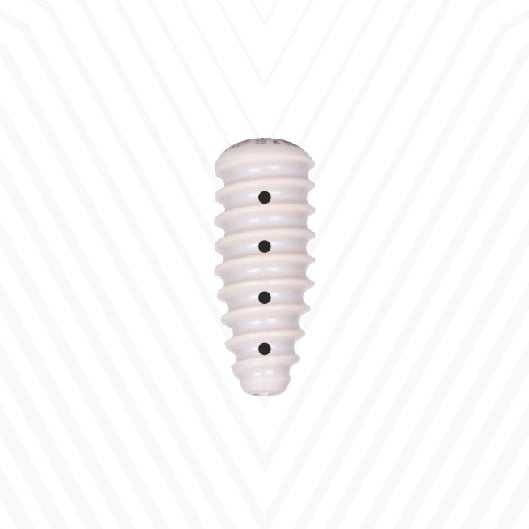
PEEK Interference Screw (7mm-10mm): The Gold Standard in Orthopedic Graft Fixation
In the intricate world of orthopedic surgery, the success of ligament and tendon reconstructions hinges critically on the stability and strength of graft fixation. Among the myriad of fixation devices, the PEEK Interference Screw (7mm-10mm) has emerged as a cornerstone, representing a pinnacle of material science and biomechanical engineering. This comprehensive guide delves into every facet of this essential orthopedic instrument, offering an authoritative resource for surgeons, medical professionals, and patients seeking to understand its profound impact on surgical outcomes.
From its advanced material composition to its precise surgical applications and the biomechanical advantages it confers, the PEEK Interference Screw (7mm-10mm) offers a reliable solution for various reconstructive procedures. Its specific sizing within the 7mm to 10mm range caters to a broad spectrum of anatomical requirements and graft diameters, ensuring optimal interference fit and robust fixation.
The Evolution of Graft Fixation: Why PEEK?
Historically, graft fixation methods have evolved from simple sutures to metallic staples, bioabsorbable pins, and various screw designs. While each offered improvements, challenges such as stress shielding, imaging artifacts, or unpredictable degradation profiles persisted. The advent of Polyetheretherketone (PEEK) in orthopedic implants marked a significant leap forward, providing a material that combines biocompatibility with superior mechanical properties, addressing many of these limitations. The 7mm-10mm range of PEEK interference screws is particularly crucial for securing soft tissue grafts within bone tunnels, providing an immediate and strong mechanical lock.
Deep-Dive into Technical Specifications and Mechanisms
The efficacy of the PEEK Interference Screw (7mm-10mm) is rooted in its advanced material science and thoughtful design. Understanding these technical aspects is key to appreciating its role in successful surgical outcomes.
The PEEK Advantage: Material Science Unveiled
Polyetheretherketone (PEEK) is a high-performance thermoplastic polymer renowned for its exceptional properties, making it an ideal choice for orthopedic implants.
- Biocompatibility: PEEK is highly biocompatible, meaning it is well-tolerated by the human body, minimizing adverse tissue reactions or inflammatory responses. It is inert and does not degrade over time within the body.
- Mechanical Strength & Elasticity: PEEK exhibits mechanical properties closer to cortical bone than traditional metallic implants. This "bone-like" elasticity reduces stress shielding, promoting a more natural load transfer and potentially aiding in healing. Its high tensile and compressive strength ensures robust fixation.
- Radiolucency: Unlike metallic screws that create significant artifacts on X-rays, CT scans, and MRI, PEEK is radiolucent. This allows for clear post-operative imaging, enabling surgeons to assess graft healing, tunnel integrity, and detect potential complications without obstruction. While radiolucent, some formulations may contain a small amount of barium sulfate for slight visibility under fluoroscopy.
- Chemical Stability: PEEK resists degradation from bodily fluids, ensuring long-term structural integrity.
- Non-Absorbable: Unlike bioabsorbable screws that gradually resorb, PEEK screws maintain their structural integrity indefinitely, providing permanent fixation.
Design Innovations of the PEEK Interference Screw (7mm-10mm)
The design of these screws is meticulously engineered for optimal performance:
- Cannulated Design: Most PEEK interference screws are cannulated, featuring a hollow core. This design allows for insertion over a guide wire, ensuring precise placement within the bone tunnel and reducing the risk of malalignment or cortical breach.
- Self-Tapping Threads: The sharp, self-tapping threads facilitate easier insertion into the bone tunnel, reducing the need for extensive pre-tapping and minimizing the risk of bone damage or graft abrasion. The thread geometry is designed to maximize surface contact with both the bone tunnel walls and the graft, generating compressive forces.
- Aggressive Thread Profile: The threads are designed to maximize pull-out strength and torsional stability, ensuring a secure grip on the graft within the bone tunnel.
- Head Design: The screw head is typically designed for specific drivers (e.g., hexagonal, star-shaped) to ensure stable engagement during insertion, preventing stripping and allowing for controlled torque application.
- Size Range (7mm-10mm): This specific range is critical.
- 7mm-8mm: Commonly used for smaller diameter grafts (e.g., smaller hamstring grafts) or in areas with narrower bone tunnels.
- 9mm-10mm: Ideal for larger diameter grafts (e.g., BTB, larger hamstring grafts) or to achieve greater interference in larger tunnels, providing enhanced stability.
- The availability of this range allows surgeons to precisely match the screw size to the drilled tunnel diameter and the graft, optimizing the interference fit.
Biomechanical Principles of Fixation
The PEEK Interference Screw (7mm-10mm) provides fixation through a mechanism known as "interference fit."
- Compression at the Interface: When the screw is inserted alongside the graft into a slightly undersized bone tunnel, it compresses the graft against the tunnel walls. This compression creates friction and a strong mechanical lock.
- Initial Fixation Strength: PEEK interference screws provide excellent initial fixation strength, crucial for allowing early rehabilitation and promoting graft incorporation. Studies consistently show comparable or superior initial fixation strength to other methods.
- Load Distribution: The material properties of PEEK, similar to bone, help distribute stress more evenly, potentially reducing tunnel widening—a common concern with stiffer metallic implants or rapidly resorbing bioabsorbable screws.
- Prevention of Graft Micromotion: A stable interference fit minimizes micromotion at the graft-bone interface, which is vital for encouraging biological incorporation (ligamentization) of the graft into the bone tunnel.
Extensive Clinical Indications & Usage
The versatility and reliability of the PEEK Interference Screw (7mm-10mm) make it a preferred choice across a spectrum of orthopedic reconstructive procedures.
Primary Applications
- Anterior Cruciate Ligament (ACL) Reconstruction: This is arguably the most common application.
- Graft Types: Used with both soft tissue grafts (e.g., hamstring autograft/allograft, quadriceps autograft) and bone-patellar tendon-bone (BTB) autografts.
- Fixation Sites: Can be used for femoral and/or tibial fixation. For soft tissue grafts, the screw compresses the graft within the bone tunnel. For BTB grafts, it fixes the bone block within the tunnel.
- Surgical Techniques: Essential for transtibial, anteromedial portal, and all-inside techniques, providing robust primary fixation.
- Posterior Cruciate Ligament (PCL) Reconstruction: Similar to ACL reconstruction, PEEK interference screws provide strong fixation for PCL grafts, which often require robust initial stability due to the significant forces on the PCL.
- Medial Patellofemoral Ligament (MPFL) Reconstruction: Used to secure the reconstructed MPFL graft to the medial femoral condyle, restoring patellar stability.
- Rotator Cuff Repair (Indirect Use): While not directly fixing the tendon to bone, PEEK screws are sometimes used in conjunction with suture anchors to provide additional broad-based compression or to secure a graft patch, enhancing the overall repair construct stability.
- Other Ligament and Tendon Reconstructions: Applicable in other areas where strong soft tissue-to-bone or bone block-to-bone fixation is required, such as collateral ligament repairs of the knee, Achilles tendon repair augmentations, or various foot and ankle reconstructions.
Surgical Technique & Best Practices
Precise surgical technique is paramount for optimizing the performance of the PEEK Interference Screw (7mm-10mm).
- Pre-operative Planning:
- Graft Sizing: Meticulous graft preparation and sizing are crucial. The graft diameter dictates the tunnel reamer size and, subsequently, the appropriate screw diameter.
- Tunnel Creation: Bone tunnels are precisely reamed to a diameter typically 1mm to 2mm larger than the graft diameter for soft tissue, or matched to the bone block for BTB.
- Tunnel Preparation:
- After reaming, the bone tunnels are thoroughly irrigated to remove debris and blood, ensuring a clean interface for graft integration.
- Graft Preparation & Tensioning:
- The graft is carefully positioned and tensioned appropriately within the joint, mimicking its anatomical function. For soft tissue grafts, the screw is inserted alongside the graft. For BTB, the bone block is seated.
- Guide Wire Insertion:
- A guide wire is inserted into the bone tunnel, parallel to the graft (for soft tissue) or through the bone block (for BTB), guiding the screw's path and preventing malpositioning.
- Screw Insertion:
- The PEEK interference screw (7mm-10mm) is loaded onto a specialized driver and advanced over the guide wire.
- Controlled Torque: Insertion is performed with controlled, steady torque to avoid damaging the graft, stripping the bone tunnel, or breaking the screw. The self-tapping threads aid in smooth progression.
- Proper Depth: The screw is inserted until it is fully seated or slightly countersunk within the bone tunnel, ensuring maximal fixation without protruding into the joint space.
- Post-Insertion Assessment:
- The stability of the graft is manually assessed, and range of motion is checked to ensure proper fixation and absence of impingement.
Screw Size Selection Guide (General Guidelines)
| Graft Diameter (mm) | Recommended PEEK Screw Diameter (mm) | Application Example |
|---|---|---|
| 6.0 - 7.0 | 7 (or 8) | Smaller hamstring grafts, MPFL reconstruction |
| 7.0 - 8.0 | 8 (or 9) | Standard hamstring grafts, quadriceps grafts |
| 8.0 - 9.0 | 9 (or 10) | Larger hamstring grafts, BTB bone blocks, larger tunnels |
| 9.0 - 10.0+ | 10 (or larger, if available) | Very large grafts, revision cases with tunnel widening |
Note: The choice of screw diameter is also influenced by the bone tunnel diameter, bone quality, and surgeon preference. The screw is typically 1-2mm larger than the graft diameter for soft tissue fixation.
Maintenance/Sterilization Protocols
PEEK Interference Screws (7mm-10mm) are highly specialized implants and have specific handling and sterilization requirements to ensure patient safety and product integrity.
- Pre-Sterilized, Single-Use: These screws are supplied sterile and are intended for single use only. They come in individually packaged, sterile pouches or trays. Re-sterilization is strictly prohibited, as it can compromise the material properties and sterility.
- Handling in the Sterile Field: Once opened, the screw should be handled with sterile instruments, minimizing direct contact to prevent contamination. It should be used promptly as per surgical protocol.
- Storage Conditions: Screws should be stored in their original packaging in a cool, dry place, away from direct sunlight or extreme temperatures, as per the manufacturer's instructions.
- Disposal: Any unused or expired screws, along with packaging, should be disposed of according to hospital waste management protocols for medical devices.
Patient Outcome Improvements
The use of PEEK Interference Screws (7mm-10mm) significantly contributes to positive patient outcomes in reconstructive surgery.
- Reduced Graft Laxity & Improved Stability: The robust interference fit provides immediate, strong fixation, minimizing graft micromotion. This translates to a more stable joint post-operatively, reducing the risk of re-injury.
- Faster Rehabilitation & Return to Activity: The secure fixation allows for earlier initiation of aggressive rehabilitation protocols. Patients can often bear weight and engage in controlled range-of-motion exercises sooner, accelerating their return to daily activities and sports.
- Lower Re-Rupture Rates: By providing a durable and stable construct for graft healing, PEEK screws contribute to lower rates of graft failure or re-rupture compared to less stable fixation methods.
- Reduced Post-Operative Pain: Stable fixation can contribute to less pain by minimizing irritating micromotion at the surgical site.
- Improved Patient Satisfaction & Functional Scores: Patients typically experience better functional outcomes, reflected in higher scores on validated scales like the IKDC (International Knee Documentation Committee) and Lysholm scores, indicating improved knee function, stability, and satisfaction.
- Long-Term Durability & Predictability: As PEEK is a non-absorbable, inert material, the fixation provided by the screw is permanent and predictable, avoiding issues related to bioabsorbable material degradation or potential late-stage tunnel widening.
- Clear Post-Operative Imaging: The radiolucency of PEEK allows for unobstructed visualization of the healing graft and bone tunnels on X-rays and MRI, providing surgeons with valuable diagnostic information without artifacts.
Risks, Side Effects, or Contraindications
While PEEK Interference Screws (7mm-10mm) offer significant advantages, it's crucial to be aware of potential risks, side effects, and contraindications.
Potential Risks and Complications
- Graft Laceration/Damage: Improper screw insertion technique, excessive force, or malalignment can lead to damage or laceration of the graft, potentially compromising fixation strength.
- Screw Malpositioning: Incorrect placement of the guide wire or screw can result in the screw being too proud, too deep, or perforating the cortical bone, potentially causing joint impingement or neurovascular injury.
- Tunnel Widening: While less common and less severe than with some bioabsorbable screws, some degree of tunnel widening can still occur over time, influenced by surgical technique, graft-bone healing, and rehabilitation.
- Infection: As with any surgical implant, there is a risk of post-operative infection, though PEEK itself is not a source of infection. Strict sterile technique is paramount.
- Neurovascular Injury: Misplacement of the screw or guide wire, particularly in tight anatomical spaces, carries a risk of injury to adjacent nerves or blood vessels.
- Allergic Reaction: Allergic reactions to PEEK are exceedingly rare due to its inert and biocompatible nature.
- Screw Breakage: While PEEK is strong, excessive torsional force during insertion, particularly in very dense bone or if the screw is misaligned, can lead to screw breakage. This is rare with proper technique.
- Aseptic Loosening: In rare cases, the screw may loosen over time, though this is often associated with poor bone quality or significant trauma.
Contraindications
- Active Infection: The presence of an active infection in or around the surgical site is an absolute contraindication, as it can lead to severe implant-related complications.
- Insufficient Bone Stock: Patients with severely compromised bone quality (e.g., severe osteoporosis) or inadequate bone stock in the fixation site may not be suitable candidates, as the screw may not achieve adequate purchase.
- Skeletal Immaturity: In pediatric patients, the use of interference screws crossing open growth plates is generally avoided or performed with extreme caution to prevent growth disturbances. Alternative fixation methods or specific surgical techniques are often considered.
- Known Allergy to PEEK: Although extremely rare, a documented allergy or hypersensitivity to PEEK material would be a contraindication.
- Severe Joint Degeneration: In cases of advanced osteoarthritis or significant joint degeneration, the primary focus might be on joint replacement rather than ligament reconstruction with interference screws.
Massive FAQ Section
Q1: What is a PEEK Interference Screw (7mm-10mm) and what is it used for?
A1: A PEEK Interference Screw (7mm-10mm) is a medical implant made from Polyetheretherketone, a high-performance polymer. It's primarily used in orthopedic surgery to secure soft tissue grafts (like tendons or ligaments) or bone blocks within bone tunnels, providing strong, immediate fixation during reconstructive procedures such as ACL, PCL, or MPFL reconstruction. The 7mm-10mm range refers to its diameter, allowing for selection based on graft and tunnel size.
Q2: Why is PEEK preferred over other materials like metal or bioabsorbable screws?
A2: PEEK offers several advantages: it's biocompatible (well-tolerated by the body), has mechanical properties similar to bone (reducing stress shielding), is radiolucent (allowing clear post-operative imaging without artifacts), and is non-absorbable, providing permanent, predictable fixation. Unlike bioabsorbable screws, it doesn't degrade over time, avoiding issues like unpredictable resorption or late-stage tunnel widening.
Q3: What specific surgeries commonly utilize PEEK Interference Screws (7mm-10mm)?
A3: The most common applications include Anterior Cruciate Ligament (ACL) reconstruction, Posterior Cruciate Ligament (PCL) reconstruction, Medial Patellofemoral Ligament (MPFL) reconstruction, and other ligament or tendon repairs where graft fixation to bone is required.
Q4: How is the correct PEEK screw size (7mm-10mm) determined for a patient?
A4: The correct screw size is determined intraoperatively by the surgeon. It primarily depends on the diameter of the prepared graft and the drilled bone tunnel. For soft tissue grafts, the screw is typically chosen to be 1-2mm larger than the graft diameter to achieve an optimal interference fit. The 7mm-10mm range allows for precise matching to various graft and tunnel dimensions.
Q5: Are PEEK Interference Screws removed after surgery?
A5: No, PEEK Interference Screws are generally not removed. They are designed for permanent implantation. Their inert nature means they do not cause issues that would necessitate removal, unlike some metallic implants which might be removed due to irritation or for future imaging.
Q6: Do PEEK screws show up on X-rays or MRI scans?
A6: PEEK is largely radiolucent, meaning it does not create significant artifacts or block visibility on X-rays, CT scans, or MRI. This is a major advantage, as it allows for clear post-operative assessment of the graft and bone tunnel healing, which metallic implants often obscure. Some PEEK formulations contain a small amount of barium sulfate for faint visibility under fluoroscopy.
Q7: What are the advantages of the cannulated design of these screws?
A7: The cannulated (hollow) design allows the screw to be inserted over a guide wire. This ensures highly precise placement within the bone tunnel, reducing the risk of malalignment, cortical perforation, or damage to the graft, thereby enhancing surgical accuracy and safety.
Q8: How do PEEK Interference Screws (7mm-10mm) improve patient outcomes?
A8: They provide immediate, strong, and stable graft fixation, which leads to reduced graft laxity, improved joint stability, and allows for earlier and more aggressive rehabilitation. This often results in faster recovery times, lower re-rupture rates, reduced post-operative pain, and ultimately, improved long-term functional outcomes and patient satisfaction.
Q9: Are there any long-term side effects or complications associated with PEEK screws?
A9: PEEK is highly inert and biocompatible, so long-term side effects are rare. Complications are typically associated with the surgical procedure itself (e.g., infection, nerve damage) rather than the material. Unlike bioabsorbable screws, PEEK does not cause late-stage inflammatory reactions or unpredictable degradation.
Q10: Can PEEK Interference Screws be used in pediatric patients?
A10: The use of interference screws in pediatric patients requires careful consideration, especially if growth plates are open. Surgeons typically try to avoid crossing open growth plates with any implant to prevent growth disturbances. However, specific techniques or alternative fixation methods may be employed, or the use may be considered in skeletally mature adolescents.
Q11: What is the typical recovery time after a surgery using a PEEK Interference Screw?
A11: Recovery time varies significantly depending on the specific surgery (e.g., ACL vs. MPFL), the patient's overall health, and adherence to rehabilitation protocols. However, the secure fixation provided by PEEK screws generally allows for an accelerated rehabilitation schedule. Full return to demanding activities can range from 6 to 12 months for major ligament reconstructions like ACL.
Q12: How does the 7mm-10mm range impact surgical choices for the surgeon?
A12: The 7mm-10mm range provides surgeons with critical flexibility. It allows them to select the optimal screw diameter to achieve a precise interference fit for various graft sizes (e.g., smaller hamstring grafts needing 7mm or 8mm, versus larger BTB grafts or revision cases potentially needing 9mm or 10mm). This tailored approach ensures maximum fixation strength and stability for each individual patient's anatomy and graft choice.