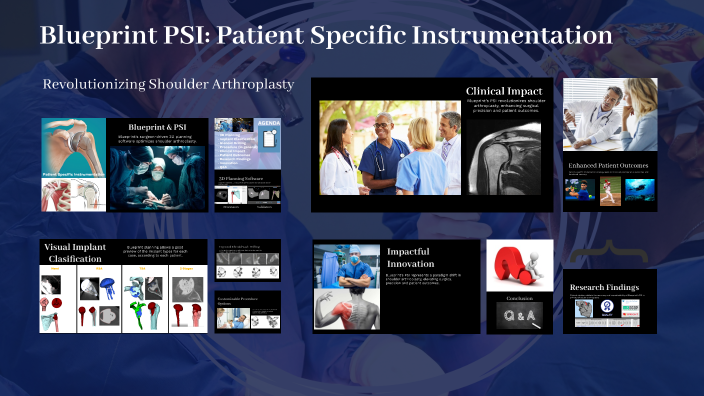
Patient-Specific Instrumentation (PSI) Blocks: Revolutionizing Orthopedic Precision
In the evolving landscape of orthopedic surgery, the pursuit of enhanced precision, personalized patient care, and superior long-term outcomes remains paramount. Patient-Specific Instrumentation (PSI) Blocks represent a significant leap forward in achieving these goals, particularly in complex joint replacement procedures like Total Knee Arthroplasty (TKA). These innovative, custom-designed surgical guides are transforming how surgeons approach bone resections, offering unparalleled accuracy tailored to each patient's unique anatomy.
Comprehensive Introduction & Overview
Patient-Specific Instrumentation (PSI) Blocks are bespoke surgical cutting guides meticulously crafted for an individual patient based on their pre-operative imaging data. Unlike traditional, "off-the-shelf" instrumentation that provides a general fit, PSI blocks are engineered to perfectly conform to the intricate contours of a patient's bone. This level of customization allows orthopedic surgeons to execute bone cuts and pin placements with exceptional accuracy, optimizing implant positioning and overall joint alignment.
The advent of PSI technology is rooted in advancements in medical imaging (CT scans and MRI), 3D modeling software, and additive manufacturing (3D printing). This synergy enables a virtual surgical plan to be translated into a tangible, single-use instrument that serves as a precise template during surgery. The primary objective of PSI blocks is to streamline the surgical process, reduce operative time, minimize potential for error, and ultimately improve patient outcomes by ensuring optimal biomechanical reconstruction of the joint.
Historically, orthopedic surgeons relied on intramedullary (IM) or extramedullary (EM) alignment guides, which, while effective, sometimes introduced variability or were less ideal for patients with significant bone deformities or previous hardware. PSI blocks offer a compelling alternative, providing a direct, external guide that registers precisely on the bone surface, bypassing the need for IM canals and potentially reducing complications associated with their use.
Deep-Dive into Technical Specifications & Mechanisms
The technical sophistication of PSI blocks lies in their integrated design, material science, and the precision manufacturing processes that bring them to life.
Design and Manufacturing Process
The creation of a PSI block is a multi-stage, highly technical process:
- Pre-operative Imaging: The journey begins with high-resolution imaging of the patient's affected joint, typically a CT scan or MRI. These scans capture detailed anatomical information, including bone morphology, joint alignment, and any existing deformities.
- 3D Reconstruction and Virtual Planning: The imaging data is then processed to create a detailed 3D computer model of the patient's bone. Orthopedic engineers, often in collaboration with the surgeon, use specialized software to perform a "virtual surgery." During this phase, the ideal implant size, position, and orientation are determined, and the precise bone resection planes are defined. This virtual planning allows for meticulous adjustments to achieve optimal mechanical axis restoration and ligamentous balance.
- Custom Guide Design: Based on the virtual surgical plan, the PSI blocks are digitally designed. These guides feature unique patient-matching surfaces that perfectly interlock with specific anatomical landmarks on the bone. Integrated into the design are precise slots or holes that guide the surgeon's saw blade for bone resections or drilling pins for accurate guide fixation.
- Additive Manufacturing (3D Printing): The final digital design is then sent to a 3D printer. Using medical-grade, biocompatible polymers, the PSI blocks are printed layer by layer, resulting in a physical guide that is an exact replica of the virtual plan. This technology allows for the creation of complex geometries and intricate details impossible with traditional manufacturing methods.
Materials Used
PSI blocks are typically manufactured from biocompatible, medical-grade polymers designed for single-use applications. Common materials include:
- Medical-grade Polyamides (Nylon): Known for their strength, flexibility, and excellent biocompatibility.
- Polyether ether ketone (PEEK): Offers high strength-to-weight ratio, excellent chemical resistance, and is radiolucent, meaning it doesn't interfere with X-ray imaging.
- Other Biocompatible Polymers: Chosen for their mechanical properties, sterilization compatibility (usually gamma irradiation or ethylene oxide), and inertness within the surgical field.
These materials are selected to ensure the blocks are rigid enough to guide instruments accurately, yet lightweight and easy to handle. They are also designed to withstand the forces encountered during bone cutting without deforming or fracturing.
Biomechanics and Mechanism of Action
The biomechanical advantage of PSI blocks stems from their ability to achieve highly accurate bone resections, directly impacting joint kinematics and implant longevity.
- Precise Bone Registration: The unique fit of the PSI block onto the patient's bone surface ensures that the cutting guide is seated in the exact pre-planned position. This eliminates much of the guesswork associated with manual alignment and reduces inter-surgeon variability.
- Optimized Mechanical Axis Restoration: By guiding precise bone cuts, PSI blocks help the surgeon restore the limb's mechanical axis to its neutral alignment. This is crucial for distributing forces evenly across the knee joint, reducing stress on the implant and potentially extending its lifespan.
- Balanced Ligamentous Tension: Accurate bone cuts contribute to achieving balanced ligamentous tension around the knee, which is vital for post-operative stability and range of motion. An optimally balanced knee functions more naturally and reduces the risk of instability or stiffness.
- Reduced Operative Steps: By integrating multiple cutting planes into a single guide, PSI blocks can simplify the surgical workflow, potentially reducing the number of intraoperative adjustments and overall operating time. This can lead to less soft tissue manipulation and potentially faster recovery.
Extensive Clinical Indications & Usage
PSI blocks have found their most prominent application in Total Knee Arthroplasty (TKA), but their utility is expanding across various orthopedic procedures where precision and customization are critical.
Primary Clinical Applications
- Total Knee Arthroplasty (TKA):
- Complex Deformities: Patients with severe varus (bow-legged) or valgus (knock-kneed) deformities, post-traumatic arthritis, or significant bone loss often present unique anatomical challenges. PSI blocks are invaluable in these cases, allowing for precise planning and execution of corrective bone cuts.
- Revision TKA: In revision surgeries where existing hardware or altered bone anatomy complicates conventional approaches, PSI blocks can provide a tailored solution for accurate component removal and new implant placement.
- Patients with Intramedullary Canal Obstructions: For patients with previous femoral fractures, hardware in the intramedullary canal, or anatomical variations that preclude the use of IM guides, PSI blocks offer an effective alternative.
- Minimally Invasive Approaches: The precision offered by PSI can facilitate smaller incisions by reducing the need for extensive exposure to place conventional guides.
Other Potential Orthopedic Applications
- Total Hip Arthroplasty (THA): PSI can be used to guide precise acetabular reaming and component positioning, optimizing cup inclination and anteversion for reduced dislocation risk and improved biomechanics.
- Shoulder Arthroplasty: Custom guides can assist in glenoid component positioning and humeral head resection, especially in cases of severe glenoid wear or deformity.
- Corrective Osteotomies: For procedures like high tibial osteotomy, PSI blocks can guide precise bone cuts to realign a joint, preserving native tissue and delaying joint replacement.
- Tumor Resection: In oncology, patient-specific guides can delineate precise resection margins for bone tumors, ensuring complete tumor removal while preserving as much healthy bone as possible.
Surgical Workflow with PSI Blocks
- Pre-operative Planning: As detailed above, imaging, 3D modeling, and virtual surgery are performed.
- Sterilization and Delivery: The manufactured PSI blocks are typically supplied sterile-packed by the manufacturer, ready for single-use.
- Intraoperative Application:
- After surgical exposure of the joint, the surgeon carefully identifies the anatomical landmarks.
- The PSI block is then placed onto the bone surface. Its custom fit ensures it can only be seated in the correct, pre-planned position.
- The surgeon verifies the fit and stability of the block.
- Small fixation pins are typically used to secure the block firmly to the bone.
- Using the integrated slots, the surgeon performs the precise bone resections with an oscillating saw.
- Once all necessary cuts are made, the fixation pins and PSI block are removed.
- The surgical procedure then continues with standard implant trial and final component placement.
Risks, Side Effects, or Contraindications
While PSI blocks offer significant advantages, it's essential to understand potential considerations and limitations.
Potential Risks and Disadvantages
- Imaging and Planning Errors: The accuracy of PSI blocks is entirely dependent on the quality of the pre-operative imaging and the precision of the virtual surgical planning. Any errors at these stages can be propagated into the surgical execution.
- Logistical Considerations: There is a lead time required for imaging, planning, and manufacturing of custom blocks, which can range from a few days to a couple of weeks. This may not be suitable for urgent cases.
- Cost: PSI technology can incur higher upfront costs compared to traditional off-the-shelf instrumentation due to the custom design and manufacturing process.
- Need for Backup Instrumentation: Despite their accuracy, surgeons often have conventional instrumentation available as a backup in case of unforeseen intraoperative issues (e.g., block breakage, improper fit due to unexpected anatomy, or a need for intraoperative adjustments).
- Potential for Block Breakage: Although rare with proper material selection and manufacturing, excessive force or improper handling could theoretically lead to a block fracturing.
- Sterilization Integrity: While blocks are supplied sterile, improper handling in the operating room could compromise their sterility.
Side Effects (Indirectly Related to PSI, but Procedure-Specific)
The use of PSI blocks does not introduce unique biological side effects. However, the general risks associated with any joint replacement surgery still apply:
- Infection: As with any invasive surgery.
- Bleeding and Hematoma: Normal surgical risks.
- Nerve or Vascular Damage: Though PSI aims to reduce this by improving precision, it remains a general surgical risk.
- Deep Vein Thrombosis (DVT) / Pulmonary Embolism (PE): Standard post-operative risks.
- Implant Loosening or Failure: Long-term risk, though PSI aims to reduce this by optimizing alignment.
- Stiffness or Instability: Potential outcomes if joint balance is not perfectly achieved, even with precise cuts.
Contraindications
- Acute Infection: Active infection at the surgical site is a absolute contraindication for any elective joint replacement surgery, including those using PSI.
- Unstable Patient Condition: Patients who are medically unstable or have severe comorbidities that significantly increase surgical risk.
- Severe Bone Loss or Poor Bone Quality: While PSI can help with complex cases, extremely poor bone quality might compromise the stable seating of the block or fixation pins.
- Allergy to Block Materials: Though rare due to the use of highly biocompatible polymers, a documented allergy would be a contraindication.
Expert Tips from Dr. Mohammed Hutaif
"As an orthopedic specialist, I've witnessed firsthand the transformative potential of Patient-Specific Instrumentation (PSI) Blocks. Their integration into our surgical practice represents a significant stride towards truly personalized medicine. Here are my key insights for patients considering this advanced approach:
- Precision Starts with Imaging: The foundation of successful PSI surgery is exceptionally accurate pre-operative imaging. Ensure your surgeon and their team emphasize high-quality CT or MRI scans, as the virtual plan is only as good as the data it's built upon.
- Collaborative Planning is Key: The design of your PSI blocks involves a close collaboration between the surgeon and specialized orthopedic engineers. This ensures that the virtual surgical plan perfectly aligns with my clinical experience and your unique anatomical needs.
- Intraoperative Verification is Paramount: While PSI blocks are designed for perfect fit, I always perform thorough intraoperative checks to confirm precise seating and stability before making any bone cuts. This crucial step ensures that the real-world application matches the virtual plan.
- Beyond the Cuts: Biomechanical Harmony: PSI blocks empower us to achieve incredibly accurate bone resections, which is fundamental. However, the ultimate goal is to create a biomechanically balanced joint. This means not just precise cuts, but also meticulous soft tissue balancing to ensure optimal stability and range of motion post-surgery.
- Not Just for Complex Cases: While PSI shines in challenging anatomies, its benefits extend to routine cases by enhancing efficiency and consistency. It's about optimizing every patient's outcome.
- Discuss Your Options: Every patient is unique. I encourage you to have an open discussion with me about whether PSI technology is the most suitable approach for your specific condition and surgical goals. It's a powerful tool, but always part of a comprehensive surgical strategy."
Massive FAQ Section
1. What exactly are Patient-Specific Instrumentation (PSI) Blocks?
PSI Blocks are custom-made surgical guides, often 3D-printed, designed precisely for an individual patient's anatomy. They fit uniquely onto the bone surfaces of the joint undergoing surgery, guiding the surgeon to make extremely accurate bone cuts and pin placements according to a detailed pre-operative plan.
2. How are PSI Blocks made?
The process begins with a high-resolution CT or MRI scan of your joint. This imaging data is used to create a 3D digital model of your bones. Specialized software then allows your surgeon and engineers to plan the ideal surgery virtually. Based on this plan, the custom PSI blocks are designed digitally and then 3D-printed from medical-grade, biocompatible polymers.
3. Are PSI Blocks used for all knee replacement surgeries?
While PSI blocks are increasingly popular, they are not universally used for all knee replacement surgeries. They are particularly beneficial for patients with complex anatomical deformities, prior hardware, or specific challenges that make traditional instrumentation less precise. Many surgeons, however, are adopting them for routine cases due to their efficiency and accuracy benefits.
4. What are the main advantages of using PSI Blocks?
The primary advantages include:
* Enhanced Precision: More accurate bone resections and implant positioning.
* Personalized Approach: Tailored to your unique anatomy.
* Improved Alignment: Better restoration of the limb's mechanical axis.
* Potential for Faster Recovery: Due to reduced operative time and less soft tissue manipulation.
* Reduced Surgical Steps: Simplifies the surgical workflow for the surgeon.
* Better Long-Term Outcomes: Optimizing implant placement can lead to greater implant longevity and function.
5. Are there any disadvantages or risks associated with PSI Blocks?
Disadvantages can include a longer lead time for manufacturing, potentially higher initial costs, and reliance on accurate pre-operative imaging. Risks are mainly associated with the overall surgery (infection, bleeding, etc.), but specific to PSI, there's a theoretical risk of errors in imaging or planning, or rare block breakage. Surgeons always have backup traditional instruments.
6. How does PSI compare to traditional instrumentation for knee replacement?
Traditional instrumentation uses standard, "one-size-fits-all" guides that require the surgeon to make intraoperative adjustments based on anatomical landmarks and alignment rods. PSI blocks, in contrast, are custom-fit, eliminating much of the intraoperative measurement and adjustment, leading to a more streamlined and potentially more accurate procedure based on a pre-planned virtual surgery.
7. Will my surgery take longer if PSI Blocks are used?
Generally, no. In fact, the use of PSI blocks is often associated with shorter operative times because they streamline the bone cutting process, reducing the need for extensive intraoperative measurements and adjustments. The planning phase occurs before the surgery, not during.
8. Are PSI Blocks covered by insurance?
Coverage for PSI blocks can vary widely depending on your insurance provider and specific policy. While the technology is becoming more mainstream, it's always best to check with your insurance company and discuss the costs with your surgeon's office well in advance of your procedure.
9. How accurate are PSI Blocks in guiding bone cuts?
Studies have consistently shown that PSI blocks can achieve highly accurate bone resections, often within 1-2 degrees of the planned cuts. This precision is a significant improvement over traditional methods and directly contributes to better implant alignment and biomechanical function.
10. What materials are PSI Blocks typically made from?
PSI blocks are usually made from medical-grade, biocompatible polymers like polyamide (nylon) or PEEK (Polyether ether ketone). These materials are selected for their strength, rigidity, and inertness, ensuring they are safe for use in the surgical environment and can accurately guide surgical instruments.
11. Can PSI Blocks be reused for future surgeries?
No, PSI blocks are strictly single-use devices. They are designed, manufactured, and sterilized for one-time use on a specific patient to ensure maximum safety, sterility, and precision. After the surgery, they are disposed of.
12. Who is a good candidate for surgery using PSI Blocks?
Many patients undergoing joint replacement can benefit from PSI technology. It is particularly advantageous for individuals with:
* Severe bone deformities (e.g., extreme varus or valgus).
* Prior hardware in the bone (e.g., from previous fractures).
* Altered anatomy from previous surgeries or conditions.
* Those seeking the highest level of precision and a personalized approach to their joint replacement.
Your surgeon will evaluate your specific condition to determine if PSI is the best option for you.