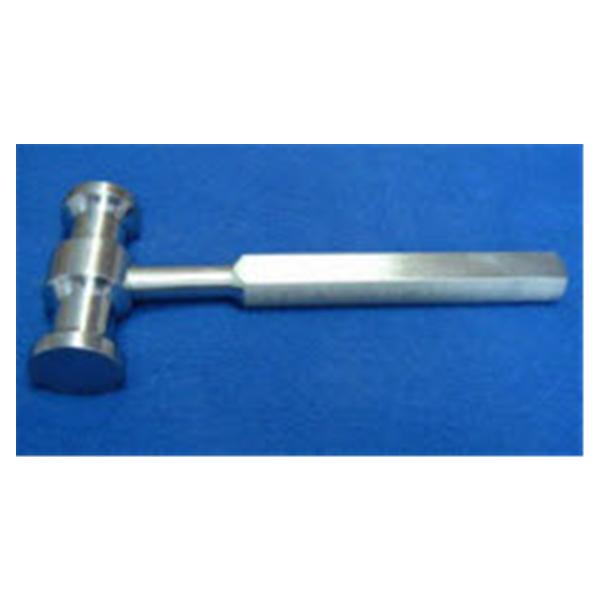
The Orthopedic Surgical Mallet: A Foundation of Precision in Bone Surgery
In the intricate world of orthopedic surgery, precision is paramount. Every instrument, no matter how seemingly simple, plays a critical role in achieving optimal patient outcomes. Among these foundational tools, the orthopedic surgical mallet stands out as an indispensable instrument, central to countless procedures involving bone manipulation, implant placement, and tissue remodeling. Far from being a blunt instrument, it is a sophisticated tool designed for controlled force application, enabling surgeons to execute delicate yet impactful maneuvers with unparalleled accuracy.
This comprehensive guide delves into the multifaceted aspects of the orthopedic surgical mallet, exploring its design, materials (Teflon, Stainless Steel), weight variations (1lb, 2lb, 3lb), extensive clinical applications, biomechanical principles, and the critical role it plays in enhancing patient safety and recovery. Our aim is to provide patients with a deeper understanding of the meticulous tools and techniques employed by orthopedic specialists, underscoring the commitment to excellence in every surgical procedure.
Deep-Dive into Technical Specifications and Mechanisms
The effectiveness of an orthopedic surgical mallet lies in its meticulous design and the careful selection of materials, each tailored for specific intraoperative demands.
Design and Materials
Surgical mallets are engineered to deliver controlled kinetic energy, transmitting force from the surgeon's hand through an intermediate instrument (like an osteotome, chisel, or implant impactor) to the target bone or implant. The choice of material for the mallet head is crucial, dictating the nature of the impact.
1. Stainless Steel Mallets
- Material Properties: Typically crafted from high-grade surgical stainless steel, known for its exceptional durability, corrosion resistance, and strength.
- Impact Characteristics: Delivers a firm, high-energy impact. The density of stainless steel ensures efficient transmission of force with minimal energy loss.
- Applications: Ideal for procedures requiring significant force, such as:
- Dense Bone Impaction: Driving osteotomes through cortical bone.
- Fracture Reduction: Indirectly impacting bone fragments for alignment.
- Heavy Implant Seating: For large, robust implants where maximum stability is required.
- Sterilization: Fully autoclavable and resistant to standard sterilization protocols, ensuring aseptic conditions.
2. Teflon (PTFE) Mallets
- Material Properties: Polytetrafluoroethylene (PTFE), commonly known as Teflon, is a high-performance fluoropolymer. It is characterized by its low friction, non-stick properties, and relative softness compared to metal.
- Impact Characteristics: Provides a softer, more cushioned impact. This reduces the risk of marring, scratching, or deforming delicate instruments and implants. It also minimizes rebound force, offering better control.
- Applications: Preferred for tasks demanding a gentler approach, such as:
- Delicate Implant Seating: Seating acetabular cups, femoral components, or small joint implants without damaging their surfaces.
- Minimizing Instrument Wear: Protecting the striking end of costly instruments like implant broaches or trials.
- Bone Grafting: Gently impacting bone graft material.
- Sterilization: Most surgical-grade Teflon mallets are designed to be autoclavable, though specific manufacturer guidelines must always be followed.
3. Hybrid Designs
Some mallets feature a stainless steel body with an interchangeable or permanently affixed Teflon striking face. This combines the robust feel of stainless steel with the protective qualities of Teflon, offering versatility.
Weight Variations (1lb, 2lb, 3lb)
The weight of a surgical mallet is a critical factor in determining the force of impact and the level of control a surgeon can exert. The common weight categories are 1lb, 2lb, and 3lb.
-
1lb Mallet (Light):
- Purpose: Designed for fine adjustments and delicate procedures.
- Applications: Small bone osteotomies (e.g., hand, foot), precise implant tapping, gentle impaction in fragile bone, or in areas with limited space.
- Benefit: Offers maximum control and minimizes the risk of excessive force.
-
2lb Mallet (Medium):
- Purpose: The most versatile and commonly used weight for general orthopedic procedures.
- Applications: Moderate impaction for a wide range of tasks, including initial broach impaction in hip arthroplasty, general osteotomy work, and seating medium-sized implants.
- Benefit: Balances force and control, suitable for a majority of surgical scenarios.
-
3lb Mallet (Heavy):
- Purpose: Reserved for high-force applications and dense bone.
- Applications: Driving large intramedullary nails, impacting robust components in total joint replacements (e.g., dense femoral stems), or working with very dense cortical bone.
- Benefit: Generates significant kinetic energy for challenging impaction tasks where lighter mallets would be insufficient.
Ergonomics and Biomechanics
- Ergonomics: Mallet handles are designed for a secure, comfortable grip, minimizing surgeon fatigue and maximizing control. Features like textured grips and balanced weight distribution are crucial.
- Biomechanics: The principle of operation relies on the transfer of kinetic energy (KE = 0.5 * mv²) from the moving mallet to the stationary instrument. The surgeon controls the mass (by selecting the mallet) and the velocity (by controlling the swing). A precise strike delivers a controlled impulse (Force x Time) to achieve the desired effect – whether it's seating an implant, advancing an osteotome, or reducing a fracture. Understanding this energy transfer is key to preventing unintended bone damage or implant failure.
Extensive Clinical Indications & Usage
The orthopedic surgical mallet is a cornerstone instrument across virtually all subspecialties of orthopedic surgery. Its applications are diverse, ranging from delicate bone reshaping to the robust impaction of prosthetic components.
General Principles of Usage
- Controlled Strikes: The mallet is used with a controlled, rhythmic motion, not brute force. The goal is precise energy transfer.
- Intermediate Instrument: Always strike an intermediate instrument (osteotome, chisel, impactor, broach), never directly on tissue or bone. This protects soft tissues and allows for focused force application.
- Appropriate Mallet Selection: Choosing the correct mallet weight and head material for the specific task is paramount to surgical success and patient safety.
- Stable Grip: The surgeon maintains a firm, stable grip on both the mallet and the instrument being struck to ensure accurate targeting.
Specific Surgical Applications
| Surgical Subspecialty | Mallet Type (Recommended) | Specific Application | Biomechanical Rationale |
|---|---|---|---|
| Joint Replacement (Arthroplasty) | Teflon (often), Stainless Steel (for initial impaction) | - Hip: Acetabular cup impaction, femoral broach seating. - Knee: Tibial/femoral component seating, osteotomy guide impaction. - Shoulder/Elbow: Smaller component seating. |
Controlled impaction ensures full seating and primary stability of implants, crucial for long-term survival. Teflon minimizes implant damage. |
| Trauma Surgery | Stainless Steel (often) | - Fracture Reduction: Indirect impaction to align bone fragments. - Intramedullary Nailing: Insertion of intramedullary nails/rods. - Plate & Screw Fixation: Assisting in bone reduction and plate contouring. |
Generating sufficient force to overcome bone resistance for reduction and implant advancement, without excessive trauma. |
| Spine Surgery | Stainless Steel, Teflon | - Pedicle Screw Placement: Tapping pedicle screw pathways, inserting cages. - Interbody Cage Impaction: Seating spinal fusion cages. - Osteotomy: For deformity correction. |
Precise, controlled force for navigating complex spinal anatomy and securing fusion constructs. |
| Foot & Ankle Surgery | 1lb or 2lb (Teflon/Stainless) | - Osteotomies: Bunion correction, midfoot fusions. - Implant Seating: Small joint implants. |
Fine control for delicate bone work and small implant placement in complex foot anatomy. |
| Hand & Wrist Surgery | 1lb (Teflon/Stainless) | - Small Osteotomies: Corrective procedures. - Implant Seating: Small joint replacements. |
Utmost precision required due to the small, intricate bones and delicate neurovascular structures. |
| Bone Grafting | Teflon (preferred) | - Impaction of bone graft material: Autograft or allograft. | Gentle, uniform force to condense graft material for optimal healing and integration, without crushing. |
| Osteotomy Procedures | Stainless Steel | - Precise bone cuts: With chisels and osteotomes for realignment. | Sharp, decisive impact to achieve clean, controlled bone cuts as planned pre-operatively. |
Risks, Side Effects, or Contraindications
While an essential tool, the orthopedic surgical mallet, if misused, carries potential risks. Understanding these and adhering to strict protocols is vital for patient safety.
Potential Risks Associated with Improper Use
- Damage to Instruments: Excessive force or striking at an incorrect angle can bend, dull, or break osteotomes, chisels, broaches, or other instruments.
- Damage to Implants: Striking an implant directly (especially with a stainless steel mallet) or with excessive force can cause marring, deformation, or structural damage, compromising its integrity and potentially leading to early failure.
- Unintended Bone Fracture or Splintering: Applying too much force, using an inappropriate mallet weight, or striking fragile/osteoporotic bone can lead to iatrogenic fractures or unwanted comminution.
- Soft Tissue Injury: Though rare, direct contact with soft tissue due to mishandling or slippage can cause contusion or laceration.
- Inadequate Impaction: Insufficient force can lead to incomplete seating of implants or bone fragments, resulting in instability, loosening, or non-union.
- Excessive Impaction: Conversely, too much force can cause stress fractures, bone bruising, or even lead to over-penetration of instruments.
Contraindications
- Direct Tissue Contact: Surgical mallets are strictly contra-indicated for direct contact with soft tissues or bone. They must always be used with an intermediate instrument.
- Fragile or Osteoporotic Bone: While sometimes necessary, extreme caution and the lightest effective mallet (often Teflon) are required when working with compromised bone quality to prevent iatrogenic fractures.
- Instruments Not Designed for Impaction: Never use a mallet on instruments that are not specifically designed to withstand impact, as this can damage both the instrument and potentially the patient.
Mitigation Strategies
- Surgeon Training and Experience: Proper training in biomechanics of impaction and extensive practice are crucial.
- Appropriate Instrument Selection: Matching the mallet weight and head material to the specific surgical task and bone quality.
- Regular Instrument Inspection: Ensuring all mallets and companion instruments are in perfect condition, free from wear or damage.
- Controlled Technique: Emphasizing precise, controlled strikes rather than uncontrolled force.
Expert Tips from Dr. Mohammed Hutaif
As an orthopedic specialist, I've seen firsthand how the judicious use of a surgical mallet can define the success of a procedure. Here are my key recommendations:
- "Always choose the lightest effective mallet for the task." This minimizes the risk of over-impaction and provides finer control, especially in delicate areas or with compromised bone quality.
- "Understand the biomechanics: it's about controlled kinetic energy, not brute force." Think of it as a precise energy transfer. Each strike should be deliberate, aiming to achieve a specific, measured effect.
- "Regular inspection of mallet heads for wear, especially Teflon, is non-negotiable." A worn Teflon face can lose its protective qualities, and a damaged stainless steel head can compromise sterilization or impact quality.
- "The mallet is an extension of your hand – precision is paramount." Develop a feel for the instrument. Your grip, stance, and swing should become second nature, allowing for intuitive and accurate striking.
- "Ensure the striking surface of both the mallet and the instrument being struck is clean and dry." Any debris or moisture can reduce the efficiency of energy transfer and potentially cause slippage.
- "For implant impaction, particularly with delicate prosthetics, a Teflon mallet is almost always the superior choice." It safeguards the implant's surface, preserving its integrity and longevity.
- "Never rush an impaction." Take your time, assess the resistance, and adjust your force accordingly. Multiple gentle taps are often more effective and safer than one forceful strike.
Maintenance and Sterilization Protocols
Maintaining surgical mallets in pristine condition is critical for patient safety and surgical efficacy.
- Immediate Post-Use Cleaning:
- Remove gross contaminants (blood, tissue) immediately after use to prevent drying.
- Rinse under running water.
- Manual Cleaning:
- Use a soft brush and enzymatic detergent to thoroughly scrub all surfaces, paying attention to crevices and textured grips.
- Ensure all visible soil is removed.
- Ultrasonic Cleaning:
- Place mallets in an ultrasonic cleaner with appropriate solution for the recommended cycle time to dislodge microscopic debris.
- Rinsing:
- Thoroughly rinse with purified water to remove all detergent residue.
- Drying:
- Completely dry the mallets using a lint-free cloth or compressed air to prevent spotting and corrosion, especially for stainless steel.
- Inspection:
- Visually inspect each mallet for:
- Wear: Especially on Teflon heads, look for flattening, cracking, or deep gouges.
- Corrosion: Rust spots or discoloration on stainless steel.
- Damage: Bending, cracks, or loose components.
- Any damaged mallet should be removed from service.
- Visually inspect each mallet for:
- Sterilization:
- Autoclaving (Steam Sterilization): This is the most common and effective method for both stainless steel and most Teflon mallets. Follow manufacturer's instructions for temperature, pressure, and exposure time (e.g., 121°C for 20-30 min or 132°C for 4-10 min, depending on cycle type).
- Packaging: Mallets should be properly packaged in sterilization wraps or containers to maintain sterility until use.
Patient Outcome Improvements
The meticulous use of the orthopedic surgical mallet directly translates to tangible improvements in patient outcomes.
- Enhanced Implant Longevity: Precise seating of implants (e.g., hip or knee prostheses) ensures optimal primary stability, reducing the risk of early loosening and subsequent revision surgery. Teflon mallets play a key role here by preserving implant surfaces.
- Improved Functional Recovery: Accurate bone cuts and realignment through controlled osteotomies lead to better anatomical restoration, improved joint mechanics, and ultimately, superior functional outcomes and mobility for the patient.
- Reduced Post-Operative Complications: Minimizing intraoperative trauma (e.g., preventing unintended bone splintering or excessive soft tissue manipulation) can lead to less post-operative pain, swelling, and faster healing times.
- Decreased Risk of Revision Surgery: By contributing to the precise execution of the initial surgery, mallets indirectly reduce the likelihood of complications that might necessitate further surgical intervention.
- Optimal Bone Healing: Controlled impaction in fracture reduction or bone grafting encourages proper bone apposition and stability, which are crucial for robust and timely healing.
Massive FAQ Section
Q1: What is the primary purpose of an orthopedic surgical mallet?
A1: The primary purpose of an orthopedic surgical mallet is to apply controlled, precise kinetic energy to other surgical instruments (like osteotomes, chisels, broaches, or implant impactors) to perform tasks such as cutting bone, seating implants, reducing fractures, or advancing surgical pins and nails. It is designed for controlled force transmission, not blunt trauma.
Q2: Why are there different materials like Teflon and Stainless Steel for mallets?
A2: Different materials are chosen based on the desired impact characteristics. Stainless steel mallets deliver a firm, high-energy impact, ideal for dense bone or robust implant impaction. Teflon (PTFE) mallets provide a softer, non-marring impact, preferred for delicate implants to prevent surface damage and for reducing instrument wear.
Q3: How do surgeons choose the correct mallet weight (1lb, 2lb, 3lb)?
A3: The choice of mallet weight depends on the specific surgical task, the density of the bone, and the required force.
* 1lb (Light): For delicate procedures, small bones, and fine adjustments where minimal force is needed.
* 2lb (Medium): The most versatile, used for general orthopedic procedures requiring moderate impaction.
* 3lb (Heavy): For high-force applications, very dense bone, or impacting large, robust implants. Surgeons aim to use the lightest effective mallet for the task.
Q4: Can a surgical mallet be used directly on bone or soft tissue?
A4: No, a surgical mallet should never be used directly on bone or soft tissue. It is designed to strike an intermediate instrument (like an osteotome, chisel, or implant impactor) which then transmits the force to the target. Direct contact can cause unintended trauma, injury, or damage.
Q5: How often should surgical mallets be inspected for wear and damage?
A5: Surgical mallets should be thoroughly inspected before and after every use, and certainly before sterilization. This includes checking for any signs of wear (especially on Teflon heads), corrosion, cracks, bending, or loose components. Any damaged instrument should be immediately removed from service.
Q6: What is the specific benefit of a Teflon mallet over a stainless steel one in certain situations?
A6: The specific benefit of a Teflon mallet is its ability to deliver a softer, non-marring impact. This is crucial when seating delicate implants (like highly polished prosthetic components) or impacting instruments where surface integrity is paramount, preventing scratches, dents, or damage that could compromise the implant's longevity or instrument's function.
Q7: Are surgical mallets sterilized? If so, how?
A7: Yes, all surgical instruments, including mallets, must be thoroughly cleaned and sterilized before each use to prevent infection. The most common sterilization method for both stainless steel and most surgical-grade Teflon mallets is autoclaving (steam sterilization), following specific temperature, pressure, and exposure time protocols.
Q8: What are the potential risks of using the wrong type or weight of mallet?
A8: Using the wrong mallet can lead to several risks:
* Too heavy: Can cause unintended bone fracture, splintering, or excessive impaction damage to implants.
* Too light: May result in inadequate impaction, leading to implant loosening or incomplete bone reduction.
* Stainless steel instead of Teflon: Can mar or damage delicate implant surfaces.
* Teflon instead of stainless steel: May not provide enough force for dense bone or robust impaction tasks.
Q9: How does the use of a surgical mallet contribute to better patient outcomes?
A9: The precise and controlled application of force by a surgical mallet contributes to better patient outcomes by ensuring:
* Optimal seating and primary stability of implants, leading to longer implant life.
* Accurate bone cuts and realignment, improving functional recovery and joint mechanics.
* Reduced intraoperative trauma, leading to less post-operative pain and faster healing.
* Overall surgical success and reduced need for revision surgeries.
Q10: Is there a specific technique for striking with a surgical mallet?
A10: Yes, the technique involves a controlled, deliberate swing rather than a forceful hit. The surgeon holds the mallet firmly but comfortably, aiming for the center of the striking surface of the intermediate instrument. The force is generated from the forearm and wrist, with the goal of a clean, precise impulse. It's about kinetic energy transfer, not brute strength.
Q11: Can these mallets be used in minimally invasive surgery (MIS)?
A11: While the mallets themselves are not typically designed for insertion into small incisions, they are absolutely crucial for many MIS procedures. For example, in MIS joint replacements, mallets are used to impact specialized broaches and trials through small portals, and to seat implant components once they are navigated into place. Their design allows for precise external force application to instruments working internally.
Q12: What innovations are there in surgical mallet design?
A12: Innovations often focus on ergonomics, material science, and modularity. This includes:
* Improved handle designs: For better grip, balance, and reduced surgeon fatigue.
* Advanced polymer heads: Even more durable or impact-absorbing materials than standard Teflon.
* Modular systems: Mallets with interchangeable heads of different materials or sizes, allowing for greater versatility in a single instrument set.
* Integrated sensors (experimental): Some research explores mallets with force-sensing capabilities to provide real-time feedback on impact force.