The Mini-Fragment LCP System (1.5mm / 2.0mm / 2.4mm): A Revolution in Small Bone Fracture Fixation
Welcome to an in-depth guide about the Mini-Fragment Locking Compression Plate (LCP) System, a sophisticated orthopedic solution designed for the precise and stable fixation of small bone fractures. As an expert in orthopedic care, Dr. Mohammed Hutaif understands the critical role that advanced technology plays in achieving optimal patient outcomes. This comprehensive overview aims to demystify this innovative system, explaining its design, applications, and the profound benefits it offers in modern fracture management.
1. Comprehensive Introduction & Overview
The Mini-Fragment LCP System represents a significant leap forward in the treatment of intricate fractures involving smaller bones or bone fragments. Unlike traditional plating systems that rely solely on compression, the LCP technology combines the benefits of both locking screws and compression screws, offering unparalleled stability and flexibility.
What is the Mini-Fragment LCP System?
At its core, the Mini-Fragment LCP System is a specialized set of implants (plates and screws) used by orthopedic surgeons to stabilize bone fractures, particularly those in areas where space is limited or bone fragments are small. The "Mini-Fragment" designation highlights its suitability for bones like those found in the hand, foot, wrist, ankle, and certain craniofacial regions. The "LCP" stands for "Locking Compression Plate," referring to its unique dual-purpose screw holes that can accommodate both traditional compression screws and innovative locking screws.
Key Features & Philosophy:
* Locking Technology: The defining feature of LCP systems is the ability of screws to "lock" into the plate, creating a fixed-angle construct. This acts like an internal fixator, providing enhanced stability even in comminuted (multiple fragments) or osteoporotic (weakened) bone.
* Versatility in Screw Sizes: The system is available with various screw diameters – 1.5mm, 2.0mm, and 2.4mm – allowing surgeons to select the most appropriate size based on the bone's dimensions, fracture pattern, and patient's anatomy.
* Low Profile & Anatomical Design: Mini-fragment plates are typically thin and often pre-contoured to match specific anatomical shapes, minimizing soft tissue irritation and promoting quicker healing.
* Biocompatible Materials: Manufactured from medical-grade stainless steel or titanium, these implants are designed for long-term compatibility within the human body.
Why is it Important for Patients?
For patients, the Mini-Fragment LCP System translates to a higher likelihood of successful fracture healing, reduced pain, earlier return to function, and potentially fewer complications compared to older methods. Its precision allows for minimal disruption to surrounding tissues, fostering a better environment for bone recovery.
2. Deep-dive into Technical Specifications / Mechanisms
Understanding the technical nuances of the Mini-Fragment LCP System reveals why it is so effective in complex orthopedic scenarios.
Design & Materials
The success of the Mini-Fragment LCP System lies in its meticulously engineered components:
-
Plates:
- Material: Primarily crafted from either medical-grade stainless steel or titanium alloy. Titanium is often preferred due to its superior biocompatibility, lower artifact on MRI scans, and excellent strength-to-weight ratio. Stainless steel offers robust strength and cost-effectiveness.
- Profile: Designed to be low-profile, meaning they are thin and lie close to the bone surface, reducing impingement on surrounding soft tissues, tendons, and ligaments.
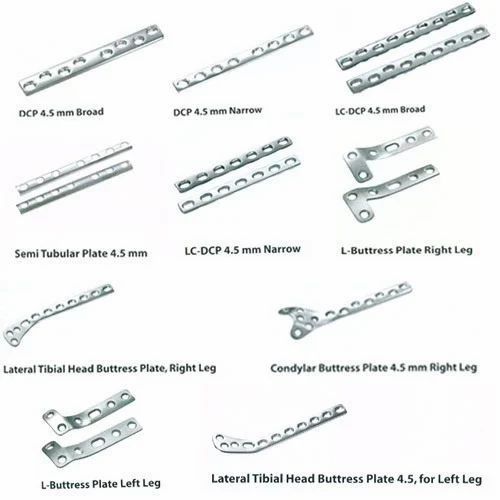
- Shapes & Sizes: Available in a vast array of shapes, including straight, L-shaped, T-shaped, Y-shaped, and anatomically specific designs (e.g., for distal radius, metacarpals, calcaneus). The length and number of screw holes vary to match different fracture patterns and bone sizes.
- Combination Holes: A hallmark of LCP technology, these holes feature both a dynamic compression unit (DCU) segment for traditional compression screws and a threaded locking segment for locking screws. This allows the surgeon to choose between axial compression, angular stability, or a combination of both.
-
Screws:
- Diameters: The system offers screw diameters of 1.5mm, 2.0mm, and 2.4mm. This range allows for precise fixation in small bones, where larger screws could be detrimental or impractical.
- 1.5mm screws: Ideal for very small bone fragments, intricate hand/foot fractures, or delicate craniofacial applications.
- 2.0mm screws: A versatile option for many hand, foot, wrist, and ankle fractures.
- 2.4mm screws: Used for slightly larger mini-fragment applications, offering increased strength and purchase.
- Types:
- Locking Screws: These screws feature a threaded head that locks into the threaded holes of the LCP plate. This creates a fixed-angle construct, preventing screw loosening, pull-out, and loss of reduction, especially beneficial in osteoporotic bone or comminuted fractures.
- Cortex Screws (Compression Screws): Traditional screws that compress the bone fragments against the plate, providing interfragmentary compression.
- Design: Often self-tapping and self-drilling, simplifying surgical technique and reducing operative time.
- Diameters: The system offers screw diameters of 1.5mm, 2.0mm, and 2.4mm. This range allows for precise fixation in small bones, where larger screws could be detrimental or impractical.
Mechanism (LCP Technology)
The "Locking Compression Plate" mechanism is what sets this system apart:
- Fixed-Angle Construct: When a locking screw is inserted, its threaded head engages with the corresponding threads in the plate hole. This creates a rigid, fixed-angle connection between the plate and the screw. The screw angle relative to the plate remains constant, independent of bone quality.
- Internal Fixator: This fixed-angle stability allows the plate to act as an "internal fixator." The screws do not rely on friction between the plate and the bone for stability; instead, they lock directly into the plate, forming a construct that supports the bone fragments.
- Preservation of Periosteal Blood Supply: Unlike traditional plates that must be tightly compressed against the bone, LCPs can be placed slightly off the bone surface without compromising stability. This "bridge plating" technique minimizes disruption to the periosteum (the membrane covering the bone), which is crucial for blood supply and bone healing.
- Dynamic Compression (Optional): The combination holes also allow for the use of traditional cortex screws to achieve dynamic compression between bone fragments, if deemed necessary by the surgeon, before locking screws are applied. This provides ultimate flexibility in fracture management.
Biomechanics
The biomechanical advantages of the Mini-Fragment LCP System are significant:
- Enhanced Torsional and Bending Stiffness: The fixed-angle construct provides superior resistance to twisting (torsional) and bending forces compared to conventional plating, especially in unstable fractures.
- Load Sharing vs. Stress Shielding: While traditional plates can sometimes "stress shield" the bone (carrying too much load, leading to bone weakening), LCPs are designed to promote a more physiological "load sharing" environment. The rigidity of the construct supports the fracture, but the slight standoff from the bone surface and the internal fixator concept allow for some micro-motion that stimulates bone healing, without excessive stress shielding.
- Stability in Comminuted Fractures: The fixed-angle stability is invaluable for highly fragmented (comminuted) fractures where there are many small pieces of bone. Each fragment can be securely held without relying on direct plate-to-bone compression, which might compromise blood flow to the fragments.
- Improved Stability in Osteoporotic Bone: In patients with weakened bones (osteoporosis), traditional screws can pull out easily. Locking screws, by engaging directly with the plate, provide much stronger purchase, distributing stress over a wider area and reducing the risk of screw failure.
3. Extensive Clinical Indications & Usage
The Mini-Fragment LCP System is a versatile tool in the orthopedic surgeon's arsenal, indicated for a wide range of fractures, particularly in areas where conventional implants are either too large or provide insufficient stability.
General Principle
The system is primarily used for the stable internal fixation of small bone fractures, intra-articular and extra-articular fractures, osteotomies (surgical bone cuts), and non-unions (failed healing) in small bones or small fragments of larger bones.
Specific Anatomical Regions & Applications
- Hand & Wrist: This is one of the most common application areas due to the intricate anatomy and numerous small bones.
- Metacarpal Fractures: Fractures of the long bones in the palm.
- Phalangeal Fractures: Fractures of the finger bones.
- Distal Radius Fractures: Certain complex patterns of wrist fractures, especially those involving small articular fragments or metaphyseal comminution.
- Carpal Bone Fractures: Fractures of the small bones within the wrist.
- Foot & Ankle: Similar to the hand, the foot contains many small bones that benefit from precise fixation.
- Metatarsal Fractures: Fractures of the long bones in the foot.
- Phalangeal Fractures: Fractures of the toe bones.
- Calcaneal Fractures: Specific intra-articular patterns of heel bone fractures.
- Malleolar Fractures: Fractures of the ankle bones, particularly when dealing with small, unstable fragments.
- Midfoot Fractures: Fractures in the middle part of the foot.
- Elbow:
- Olecranon Fractures: Fractures of the bony tip of the elbow.
- Radial Head Fractures: Certain types of fractures of the bone in the forearm near the elbow.
- Clavicle & Scapula: Fixation of small fragments in complex shoulder girdle fractures.
- Craniofacial Fractures: In some specialized cases, the 1.5mm and 2.0mm systems are used for facial bone fractures (e.g., orbital, zygomatic, mandibular fractures) due to their low profile and precise fixation capabilities.
Surgical Application Process (Simplified for Patients)
While the exact procedure varies based on the fracture, the general steps for applying the Mini-Fragment LCP System include:
- Pre-operative Planning: Detailed imaging (X-rays, CT scans) is used to assess the fracture pattern. The surgeon plans the incision, plate type, and screw placement.
- Anesthesia: The patient receives appropriate anesthesia (local, regional, or general).
- Incision & Exposure: A small incision is made to access the fractured bone. Minimally invasive techniques are often employed where possible.
- Fracture Reduction: The bone fragments are carefully manipulated back into their correct anatomical alignment. This is a critical step for restoring function and preventing long-term issues.
- Plate Selection & Contouring: The surgeon selects the appropriate LCP plate. While many are pre-contoured, some may require slight bending to perfectly match the bone's anatomy.
- Temporary Fixation: The plate and bone fragments are temporarily held in place using wires or clamps.
- Screw Insertion:
- Drilling: Holes are drilled through the plate and bone.
- Measurement: Screw length is measured.
- Insertion: Screws (either compression or locking, depending on the surgical plan) are carefully inserted. Locking screws are tightened to engage the plate's threads, creating the rigid construct.
- Confirmation: Intraoperative imaging (fluoroscopy/X-ray) is used to confirm optimal plate and screw placement and fracture reduction.
- Wound Closure: The incision is closed in layers.
Patient Outcome Improvements
The adoption of Mini-Fragment LCP Systems has led to significant improvements in patient recovery:
- Enhanced Stability: The fixed-angle construct provides superior stability, reducing the risk of fracture displacement post-surgery.
- Accelerated Healing: By creating a stable environment and preserving periosteal blood supply, the system promotes faster and more reliable bone healing.
- Earlier Mobilization: Patients can often begin gentle rehabilitation and weight-bearing (where appropriate) sooner, leading to a quicker return to daily activities and work.
- Reduced Pain: Stable fixation minimizes pain associated with fracture movement.
- Lower Complication Rates: Decreased rates of non-union, malunion, and implant failure in suitable cases.
- Improved Functional Outcomes: Better restoration of anatomical alignment leads to improved long-term function and range of motion.
- Cosmetic Benefits: Low-profile plates and often smaller incisions can lead to better aesthetic results.
4. Risks, Side Effects, or Contraindications
While the Mini-Fragment LCP System offers substantial advantages, like any surgical procedure involving implants, it carries potential risks and contraindications that patients should be aware of.
General Surgical Risks
These risks are common to most surgical procedures:
- Infection: Despite sterile techniques, infection at the surgical site remains a possibility.
- Bleeding: Excessive bleeding during or after surgery.
- Nerve or Vessel Damage: Injury to surrounding nerves, arteries, or veins.
- Anesthesia Risks: Adverse reactions to anesthesia.
- Scarring: Formation of scar tissue at the incision site.
Implant-Specific Risks and Side Effects
- Implant Prominence/Irritation: Even low-profile plates can sometimes be felt under the skin, especially in thin patients or in areas with minimal soft tissue coverage. This may cause discomfort or irritation to tendons and could necessitate implant removal after healing.
- Screw Breakage or Loosening: Although rare with locking screws, implant components can theoretically break or loosen, especially under excessive load or if bone healing is delayed.
- Non-union or Malunion: Despite optimal fixation, complete bone healing (non-union) or healing in an incorrect position (malunion) can still occur, particularly in complex fractures, smokers, or patients with underlying health conditions affecting bone healing.
- Allergic Reaction: Extremely rare, but patients can have an allergic reaction to the implant materials (e.g., nickel in stainless steel). Titanium implants significantly reduce this risk.
- Loss of Reduction: In rare cases, the fracture fragments may shift after surgery, despite fixation, requiring revision surgery.
- Pain: Persistent pain at the fracture site or around the implant.
Contraindications
The Mini-Fragment LCP System may not be suitable for all patients or fracture types. Contraindications include:
- Active Infection: Presence of an active infection in the surgical area or elsewhere in the body.
- Insufficient Bone Stock: Extremely poor bone quality or insufficient bone fragments to securely hold the screws.
- Severe Osteoporosis: While locking plates are beneficial for osteoporosis, in very severe cases, the bone may be too weak to provide adequate purchase for any screw.
- Compromised Soft Tissue: Severely damaged or avascular soft tissue around the fracture site, which could impair healing or increase infection risk.
- Patient Non-Compliance: Patients unwilling or unable to follow post-operative instructions (e.g., weight-bearing restrictions, rehabilitation protocols).
- Certain Fracture Patterns: Some highly comminuted or specific fracture configurations may be better managed with external fixation, intramedullary nails, or other specialized techniques.
A thorough evaluation by a qualified orthopedic surgeon like Dr. Mohammed Hutaif is essential to determine the most appropriate treatment plan for each individual case.
5. Expert Tips from Dr. Mohammed Hutaif
As an experienced orthopedic specialist, Dr. Mohammed Hutaif offers invaluable insights for patients considering or undergoing treatment with the Mini-Fragment LCP System:
- Precision is Paramount: "The success of the Mini-Fragment LCP System hinges on meticulous surgical technique. Achieving anatomical reduction – putting the bone fragments back exactly where they belong – is crucial. Coupled with precise plate and screw placement, this sets the stage for optimal healing and functional recovery."
- Individualized Treatment Plans: "No two fractures are exactly alike, and no two patients are identical. My approach always involves a thorough assessment to determine if the Mini-Fragment LCP System is the best option for your specific fracture pattern, bone quality, and lifestyle. We tailor the treatment to you."
- Adherence to Post-Operative Care: "Surgery is just the first step. Your commitment to post-operative instructions, including wound care, activity restrictions, and especially physical therapy, is vital. This partnership between surgeon and patient is key to unlocking the full benefits of the LCP system."
- Early Mobilization, Guided by Caution: "One of the great advantages of LCP technology is the potential for earlier mobilization due to enhanced stability. However, 'earlier' doesn't mean 'unrestricted.' We will provide a carefully structured rehabilitation plan to gradually restore strength and range of motion without jeopardizing the healing fracture."
- Understanding Your Implant: "Don't hesitate to ask questions about your implant. Knowing whether it's titanium or stainless steel, or if it might eventually be removed, can help you feel more informed and comfortable throughout your recovery journey. Most mini-fragment implants are designed to be permanent, but removal is an option if they cause irritation later."
- Long-Term Follow-Up is Key: "Even after initial healing, regular follow-up appointments are important. We monitor your progress, assess implant integrity, and ensure that you are regaining full function. Your long-term health and mobility are our priority."
6. Massive FAQ Section
Here are some frequently asked questions about the Mini-Fragment LCP System:
Q1: What exactly is an LCP system?
A1: LCP stands for "Locking Compression Plate." It's an advanced orthopedic plating system that uses screws which can "lock" into the plate, creating a fixed-angle construct that provides superior stability. This is different from traditional plates where screws only compress the plate against the bone. LCP systems offer both locking and compression screw options in their plate holes, providing versatility.
Q2: What does "mini-fragment" mean in this context?
A2: "Mini-fragment" refers to the small size of the plates and screws within the system. It means they are specifically designed for fixing fractures in small bones (like those in the hand, foot, wrist) or for stabilizing small fragments of larger bones, where larger, conventional plates would be too bulky or unsuitable.
Q3: What do the 1.5mm, 2.0mm, and 2.4mm numbers refer to?
A3: These numbers refer to the diameter of the screws used with the system.
* 1.5mm screws: Used for very delicate bones or tiny fragments, often in the hand, wrist, foot, or craniofacial regions.
* 2.0mm screws: A common and versatile size for many small bone fractures.
* 2.4mm screws: Used for slightly larger small bones or where increased strength is desired in mini-fragment applications.
The surgeon chooses the appropriate screw diameter based on the bone size, fracture pattern, and bone quality.
Q4: What types of fractures are typically treated with the Mini-Fragment LCP System?
A4: This system is commonly used for fractures of the metacarpals and phalanges (hand and fingers), metatarsals and phalanges (foot and toes), distal radius (wrist), calcaneus (heel bone), and malleoli (ankle). It's particularly effective for comminuted fractures (multiple fragments) or fractures in osteoporotic bone where stable fixation is challenging.
Q5: Is the implant permanent, or will it need to be removed?
A5: In most cases, the Mini-Fragment LCP System is designed to be a permanent implant, remaining in your body indefinitely. The materials (titanium or stainless steel) are highly biocompatible. However, if the implant causes irritation, pain, or if an infection develops, surgical removal may be recommended after the fracture has fully healed.
Q6: How long is the typical recovery period after surgery with this system?
A6: Recovery varies significantly depending on the specific bone fractured, the complexity of the fracture, and individual patient factors. Generally, initial healing may take 6-12 weeks. Full recovery, including regaining strength and range of motion through physical therapy, can extend from 3 months to over a year. Your surgeon and physical therapist will provide a personalized timeline.
Q7: Will I be able to move my hand/foot normally after surgery?
A7: The primary goal of using the LCP system is to restore anatomical alignment and function, aiming for as close to normal movement as possible. While the fixed-angle stability allows for early, guided motion, full range of motion may take time and dedicated physical therapy. Some individuals may experience minor stiffness or limitations, especially in very severe injuries.
Q8: Are there any restrictions on my activities after the surgery?
A8: Yes, significant restrictions will be in place initially to protect the healing fracture. These typically include avoiding weight-bearing (for lower limb fractures), heavy lifting, strenuous activities, or specific movements that could stress the implant. Your surgeon will provide detailed instructions on when you can gradually increase your activity level and when it's safe to return to sports or other demanding tasks.
Q9: What are the main benefits of LCP over traditional plates for small bone fractures?
A9: The main benefits include:
* Superior Stability: Locking screws create a fixed-angle construct, resisting pull-out and loss of reduction, especially in poor bone quality.
* Preserved Blood Supply: The plate doesn't need to be tightly compressed against the bone, minimizing disruption to the periosteal blood supply, which is vital for healing.
* Versatility: Allows for both compression and locking techniques within the same plate.
* Earlier Mobilization: Enhanced stability often permits earlier, controlled motion, aiding rehabilitation.
* Reduced Complications: Lower rates of non-union and implant failure in appropriate cases.
Q10: Can I have an MRI scan if I have Mini-Fragment LCP implants?
A10: Generally, yes. Most modern Mini-Fragment LCP systems are made from titanium or specific types of stainless steel that are considered MRI-safe (non-ferromagnetic or weakly ferromagnetic). However, it is crucial to always inform the MRI technician and your doctor about your implants before undergoing an MRI. They will need to know the specific material and manufacturer of your implant to ensure safety and minimize image artifact.
Q11: What happens if a screw loosens or breaks?
A11: While rare with locking screws, if a screw loosens or breaks, it can compromise the stability of the fracture fixation. This might lead to pain, loss of fracture reduction, or delayed healing. Symptoms might include increased pain, swelling, or instability. If this occurs, it typically requires further medical evaluation and potentially revision surgery to replace or remove the faulty components.
Q12: How is the Mini-Fragment LCP System prepared for my surgery to ensure safety?
A12: The Mini-Fragment LCP System components (plates, screws, instruments) undergo stringent sterilization protocols before being used in surgery. They are typically supplied in sterile packaging and are sterilized using validated methods like high-pressure steam (autoclaving) or ethylene oxide. Hospitals adhere to strict guidelines from regulatory bodies to ensure all surgical instruments and implants are sterile, minimizing the risk of infection.
Disclaimer: This information is for educational purposes only and should not be considered medical advice. Always consult with a qualified healthcare professional, such as Dr. Mohammed Hutaif, for diagnosis and treatment of any medical condition.