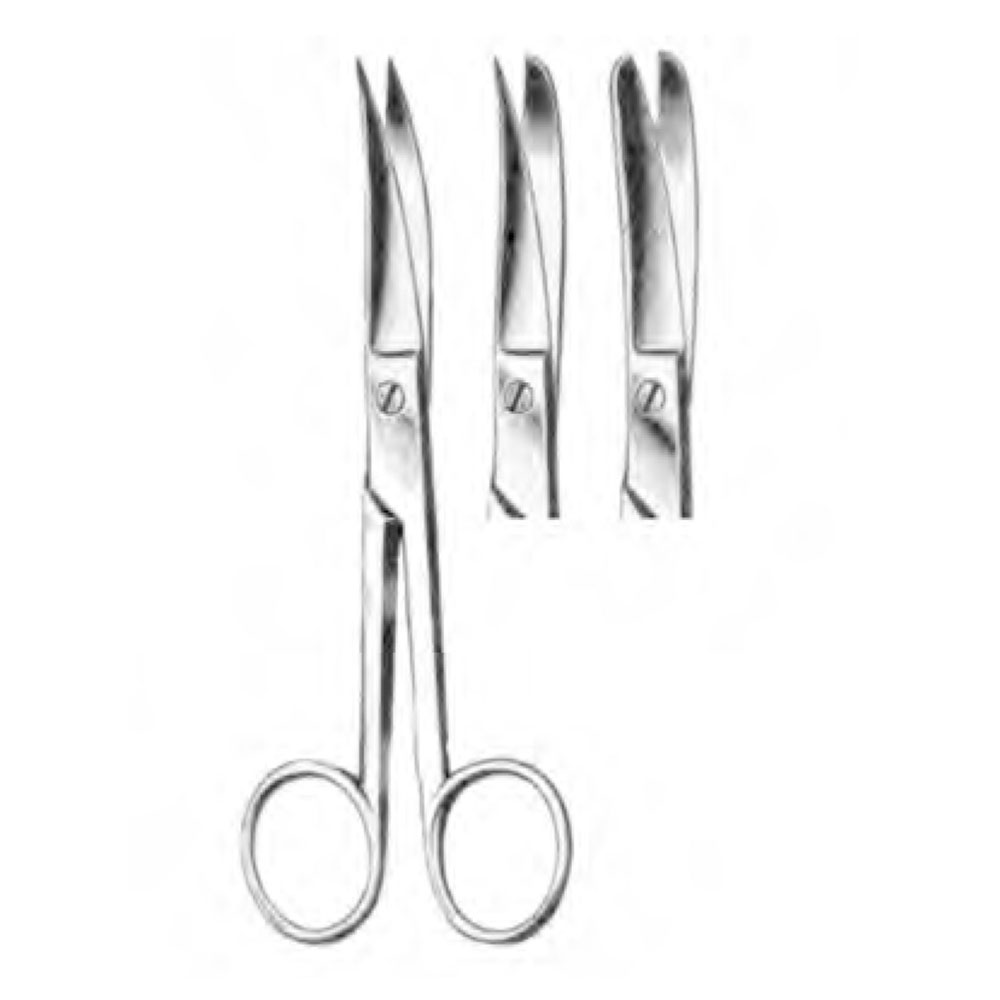
Metzenbaum Scissors (Curved, 7"-11"): The Art of Precision in Orthopedic Surgery
Welcome to an in-depth exploration of one of the most fundamental and revered instruments in the surgical suite: the Metzenbaum Scissors. While seemingly simple, these scissors are a testament to surgical precision, playing an indispensable role in countless procedures, especially within the delicate realm of orthopedic surgery. This guide will delve into their design, applications, maintenance, and the profound impact they have on patient outcomes.
1. Comprehensive Introduction & Overview
Metzenbaum scissors are a type of surgical scissor designed for dissecting and cutting delicate tissues. Characterized by their long shanks and short, blunt-tipped blades, they are engineered for meticulous work, allowing surgeons to navigate complex anatomical structures with unparalleled accuracy. The specific variant we are discussing – curved, with lengths ranging from 7 to 11 inches – highlights their adaptability and necessity for accessing various depths and angles within the surgical field.
Originally designed by Dr. Myron Metzenbaum in the early 20th century, these scissors revolutionized soft tissue dissection by offering a tool that could separate tissues with minimal trauma, unlike the more robust Mayo scissors used for tougher materials. In orthopedic surgery, where precision is paramount to preserve nerves, vessels, and surrounding soft tissues while repairing bone and joint structures, Metzenbaum scissors are an invaluable asset. Their curved design, in particular, enhances visibility and maneuverability around anatomical curves, making them essential for procedures from joint reconstructions to spinal decompressions.
2. Deep-dive into Technical Specifications & Mechanisms
The efficacy of Metzenbaum scissors lies in their ingenious design and material composition, which together facilitate precise and controlled tissue manipulation.
2.1. Design and Ergonomics
The defining features of Metzenbaum scissors include:
* Longer Shank-to-Blade Ratio: This provides a mechanical advantage, allowing the surgeon to apply minimal force for cutting while maximizing reach and control over the cutting edge.
* Blunt Tips: Typically, Metzenbaum scissors feature blunt tips, which are crucial for blunt dissection (spreading tissues) and for preventing inadvertent punctures or damage to underlying vital structures.
* Curved Blades: The curved profile is perhaps the most significant design element for versatility. It allows surgeons to follow natural anatomical contours, dissect around structures like blood vessels and nerves, and improve visibility in deep or confined surgical fields. The curvature facilitates a "scooping" or "sweeping" motion, enhancing the surgeon's ability to create clean dissection planes.
* Finger Rings: Ergonomically designed finger rings (typically for thumb and ring finger) ensure a comfortable and stable grip, reducing hand fatigue during prolonged procedures. The index finger often rests on the pivot joint for added control and precision.
* Screw Joint: A meticulously engineered screw joint ensures smooth, consistent blade action, preventing "binding" or uneven cutting.
2.2. Materials
The choice of materials directly impacts the instrument's performance, durability, and sterilization capabilities.
* High-Grade Stainless Steel: Most Metzenbaum scissors are crafted from medical-grade stainless steel.
* Martensitic Stainless Steel: Used for the blades, this type of steel can be hardened to achieve excellent sharpness and edge retention.
* Austenitic Stainless Steel: Often used for the handles and shanks, providing superior corrosion resistance and flexibility.
* Tungsten Carbide Inserts: Many premium Metzenbaum scissors feature tungsten carbide inserts on the cutting edges. This incredibly hard material (identified by gold-colored rings) significantly enhances:
* Durability: Extends the lifespan of the blades.
* Sharpness Retention: Allows the blades to remain sharper for longer periods, reducing the need for frequent sharpening.
* Cutting Efficiency: Provides a cleaner, more precise cut with less effort.
2.3. Mechanisms of Action
Metzenbaum scissors primarily operate through a shearing action. As the blades close, they create a precise cutting force that separates delicate tissues. The controlled nature of this action, combined with the instrument's design, allows surgeons to:
* Minimize Collateral Tissue Damage: The sharp, fine blades cut cleanly rather than crush or tear, preserving surrounding healthy tissue.
* Achieve Clean Dissection Planes: Essential for identifying and isolating anatomical structures clearly.
* Perform Blunt Dissection: The blunt tips can be used to gently spread tissue layers, creating a path without cutting, further minimizing trauma.
2.4. Length Variations (7"-11")
The availability of Metzenbaum scissors in various lengths (7 to 11 inches) is critical for surgical adaptability:
* 7-inch Scissors: Ideal for superficial dissections and procedures requiring fine control in relatively shallow surgical fields (e.g., hand surgery, superficial soft tissue repairs).
* 9-inch Scissors: A versatile intermediate length, suitable for a wide range of general and orthopedic procedures.
* 11-inch Scissors: Designed for deep surgical fields, providing the necessary reach for procedures in the abdomen, pelvis, or deep spinal approaches, where longer instruments are essential to access the target anatomy without obscuring the view.
3. Extensive Clinical Indications & Usage
Metzenbaum scissors are indispensable across a spectrum of surgical disciplines, with their role in orthopedic surgery being particularly noteworthy due to the intricate nature of musculoskeletal anatomy.
3.1. General Surgical Applications
While our focus is orthopedics, it's important to acknowledge their broader utility:
* General Surgery: Dissecting adipose tissue, fascia, and peritoneum.
* Plastic and Reconstructive Surgery: Meticulous tissue shaping and separation.
* Vascular Surgery: Careful dissection around delicate blood vessels.
* Neurosurgery: Precision work around neural structures.
3.2. Orthopedic Specific Applications
In orthopedics, Metzenbaum scissors are crucial for preserving the integrity of soft tissues while addressing bone and joint pathologies.
* Knee Surgery (e.g., ACL Reconstruction, Meniscus Repair):
* Graft Preparation: Precisely trimming soft tissue grafts (e.g., hamstring tendons) to the exact size and shape required for ligament reconstruction.
* Arthrotomy/Capsulotomy: Creating controlled incisions in the joint capsule or synovium.
* Neurovascular Protection: Carefully dissecting around vital nerves and blood vessels in the popliteal fossa.
* Shoulder Surgery (e.g., Rotator Cuff Repair, Labral Repair):
* Bursotomy/Capsulotomy: Incising the bursa or joint capsule to expose underlying structures.
* Deltoid Dissection: Meticulously separating muscle fibers to gain access to the glenohumeral joint without excessive trauma.
* Tissue Debridement: Removing frayed or damaged soft tissue with precision.
* Spine Surgery (e.g., Laminectomy, Fusion):
* Muscle Dissection: Separating layers of paraspinal muscles and fascia to expose the vertebral column, crucial for minimizing muscle damage and post-operative pain.
* Ligamentous Resection: Carefully excising hypertrophied ligaments (e.g., ligamentum flavum) during decompression procedures.
* Nerve Root Protection: Dissecting scar tissue or adhesions away from delicate nerve roots.
* Hand & Wrist Surgery (e.g., Carpal Tunnel Release, Tendon Repair):
* Tendon Sheath Incision: Opening tendon sheaths with precision.
* Neurolysis: Freeing nerves from surrounding scar tissue or compression.
* Adipose Tissue Removal: Delicate trimming of fat pads.
* Foot & Ankle Surgery (e.g., Bunionectomy, Ankle Fusion):
* Soft Tissue Releases: Precisely releasing tight ligaments or capsules.
* Incision Management: Extending or refining incisions in areas with critical neurovascular bundles.
3.3. Biomechanics and Patient Outcome Improvements
The biomechanical advantages of Metzenbaum scissors directly translate into superior patient outcomes:
* Reduced Tissue Trauma: The sharp, fine blades and the ability to perform blunt dissection minimize crushing or tearing of tissues. This leads to:
* Faster Healing: Less tissue damage means the body can focus on repair rather than extensive inflammation.
* Reduced Scarring: Cleaner cuts heal with less fibrous tissue formation.
* Decreased Post-operative Pain and Swelling: Less trauma results in a milder inflammatory response.
* Minimized Bleeding: Precise cuts through tissue planes can help avoid unnecessary damage to small vessels, leading to less intraoperative bleeding.
* Lower Risk of Nerve/Vessel Damage: The controlled, delicate action allows surgeons to meticulously work around vital neurovascular structures, significantly reducing the risk of iatrogenic injury.
* Improved Functional Outcomes: By preserving surrounding healthy tissues and nerve function, patients often experience better post-operative mobility and a quicker return to normal activities.
* Enhanced Surgical Efficiency: A well-designed, sharp instrument allows the surgeon to work more efficiently and confidently, potentially shortening operative times.
3.4. Fitting/Usage Instructions (Patient Perspective)
While specific usage is for the surgical team, patients should understand why proper handling is critical:
* Precision Grip: Surgeons typically hold Metzenbaum scissors with their thumb and ring finger in the finger rings, using the index finger to stabilize the pivot joint. This grip maximizes control and allows for delicate, precise movements.
* Cutting Technique: The blades are designed for a smooth, shearing cut. Surgeons learn to use the tips for fine dissection and the base of the blades for slightly larger tissue sections.
* Blunt Dissection: The blunt tips are often used in a "spread and cut" technique, where the closed blades are inserted into a tissue plane, spread gently to separate tissues, and then closed to cut any remaining attachments.
* Pre-operative Inspection: Before use, the surgical team meticulously inspects the scissors for sharpness, alignment, and any signs of damage to ensure optimal performance and patient safety.
4. Risks, Side Effects, or Contraindications
While Metzenbaum scissors are designed for safety and precision, their misuse or improper maintenance can lead to adverse outcomes. It's important for patients to understand that even the best tools require skilled hands and proper care.
4.1. Risks Associated with Improper Use
- Tissue Damage: If the blades are dull, misaligned, or used with excessive force, they can crush or tear tissue instead of cutting cleanly, leading to increased trauma, bleeding, and prolonged healing.
- Inadvertent Injury to Vital Structures: Despite their design for delicate work, improper technique or hurried movements can result in accidental cutting of nerves, blood vessels, or other critical structures, potentially causing significant complications.
- Instrument Damage/Breakage: Using Metzenbaum scissors to cut hard tissues (e.g., sutures, bone, heavy fascia) for which they are not designed can damage or dull the blades, bend the tips, or even break the instrument, rendering it unsafe for delicate work.
4.2. Contraindications
- Cutting Hard Tissues: Metzenbaum scissors are explicitly contraindicated for cutting sutures, heavy ligaments, bone, or any material tougher than delicate soft tissue. For these tasks, instruments like Mayo scissors or bone cutters are appropriate.
- Blunt Dissection as a Primary Tool for Tough Adhesions: While they can perform blunt dissection, they are not designed for forceful prying or separating dense, fibrous adhesions, which could damage the tips.
- Use When Damaged or Dull: A dull or damaged instrument is a hazard. It compromises surgical precision, increases tissue trauma, and poses a risk of instrument failure during a procedure.
5. Expert Tips from Dr. Mohammed Hutaif
As an orthopedic specialist, I emphasize the critical role of understanding and respecting every instrument in our surgical arsenal. Metzenbaum scissors, though seemingly simple, are a cornerstone of delicate tissue management. Here are my key insights:
- "Feel" the Tissue: A surgeon develops a tactile "feel" for tissue resistance. Metzenbaum scissors are an extension of the hand, allowing us to discern tissue planes and cut with minimal force, respecting the body's natural architecture.
- Sharpness is Non-Negotiable: A dull Metzenbaum is a liability. It tears, doesn't cut, leading to more trauma, more bleeding, and a less clean surgical field. Always ensure the blades are impeccably sharp.
- Choose the Right Length: The 7-inch, 9-inch, or 11-inch length isn't arbitrary. It's chosen based on the depth of the surgical field and the need for optimal visibility and leverage. Using an 11-inch scissor for superficial work is cumbersome; using a 7-inch for deep work is ineffective and dangerous.
- Master the "Spread and Cut" Technique: This technique, where closed blades are inserted, spread gently to create a plane, and then closed to cut, is fundamental for minimizing trauma and precisely separating tissue layers without cutting vital structures.
- Never Force It: If the scissors aren't cutting easily, stop. Re-evaluate the tissue, the angle, or consider if the instrument is dull or inappropriate for the task. Forcing it always leads to damage – to the tissue or the instrument.
- Synergy with Other Instruments: Metzenbaum scissors often work in conjunction with forceps or retractors. Proper counter-traction and exposure are vital for their effective and safe use.
- Meticulous Maintenance: Our surgical instruments are precision tools. Proper cleaning, inspection, and sterilization after every use are paramount not only for infection control but also for preserving the instrument's integrity and ensuring its readiness for the next delicate procedure.
- Continuous Training: Even experienced surgeons continually refine their technique. Understanding the biomechanics of the instrument and practicing its nuanced use is an ongoing process that directly benefits our patients.
6. Massive FAQ Section
Here are some frequently asked questions about Metzenbaum scissors, providing further clarity for patients:
Q1: What are Metzenbaum scissors primarily used for in surgery?
A1: Metzenbaum scissors are primarily used for dissecting and cutting delicate soft tissues, such as fascia, fat, muscle sheaths, and thin membranes, with high precision and minimal trauma during surgical procedures.
Q2: Why are Metzenbaum scissors often curved?
A2: The curved design of Metzenbaum scissors allows surgeons to follow the natural contours of anatomical structures, improve visibility in deep or angled surgical fields, and dissect around vital organs, nerves, and vessels more effectively, enhancing precision and safety.
Q3: What is the main difference between Metzenbaum and Mayo scissors?
A3: The main difference lies in their design and intended use. Metzenbaum scissors have a longer shank-to-blade ratio and finer, often blunt-tipped blades, making them ideal for delicate tissue dissection. Mayo scissors have a shorter shank-to-blade ratio and more robust blades, designed for cutting tougher tissues like fascia, sutures, or heavy connective tissue.
Q4: Are Metzenbaum scissors used in orthopedic surgery? If so, how?
A4: Absolutely, Metzenbaum scissors are extensively used in orthopedic surgery. They are crucial for tasks like precise soft tissue dissection to expose joints or bones, trimming grafts for ligament reconstruction, separating muscle layers during spinal surgery, and meticulously working around neurovascular bundles to prevent damage.
Q5: What materials are Metzenbaum scissors typically made from?
A5: They are typically made from high-grade medical stainless steel. Premium versions often feature tungsten carbide inserts on the cutting blades, identified by gold-colored finger rings, which enhance sharpness retention and durability.
Q6: How does the length of the scissors (7"-11") affect their use?
A6: The length determines the reach of the instrument. Shorter scissors (e.g., 7-inch) are used for superficial procedures or in confined spaces, offering more control. Longer scissors (e.g., 11-inch) are essential for deep surgical fields, allowing the surgeon to reach target anatomy without obstructing their view or working space.
Q7: How are Metzenbaum scissors sterilized after use?
A7: Like all surgical instruments, Metzenbaum scissors undergo rigorous sterilization processes to eliminate microorganisms. This typically involves thorough cleaning to remove all organic matter, followed by high-temperature steam sterilization (autoclaving) or other approved chemical sterilization methods, adhering to strict medical guidelines.
Q8: Can patients feel a difference if a surgeon uses dull Metzenbaum scissors?
A8: While a patient is under anesthesia, they won't feel the immediate difference. However, the consequences of dull scissors – increased tissue trauma, more bleeding, and potentially less precise dissection – can lead to greater post-operative pain, swelling, longer recovery times, and a higher risk of complications, which the patient would certainly experience.
Q9: What are the risks if Metzenbaum scissors are used incorrectly?
A9: Incorrect use, such as using dull blades or applying excessive force, can lead to increased tissue damage, inadvertent cutting of vital nerves or blood vessels, and longer healing times. Using them on materials too tough for their design can also damage the instrument itself.
Q10: How do Metzenbaum scissors contribute to better patient outcomes?
A10: Their precision design allows for minimal tissue trauma, cleaner dissection planes, and reduced risk of damage to surrounding vital structures. This translates to faster healing, less post-operative pain and swelling, reduced scarring, and ultimately, improved functional recovery and overall patient satisfaction.
Q11: Are there different types of Metzenbaum scissors, besides curved?
A11: Yes, Metzenbaum scissors also come in straight versions. While curved are highly versatile, straight Metzenbaum scissors are preferred for cutting directly across tissue planes or in areas where a straight approach is more suitable. Some may also have slightly sharper tips for specific cutting needs.
Q12: Is patient safety a primary concern when using these instruments?
A12: Absolutely. Patient safety is the paramount concern in all surgical procedures. The design of Metzenbaum scissors, combined with stringent sterilization protocols and the surgeon's skill, are all geared towards ensuring the safest possible outcome for the patient, minimizing risks, and optimizing recovery.
This comprehensive guide underscores the significance of Metzenbaum scissors as more than just a tool; they are an extension of the surgeon's skill, precision, and commitment to optimal patient care.