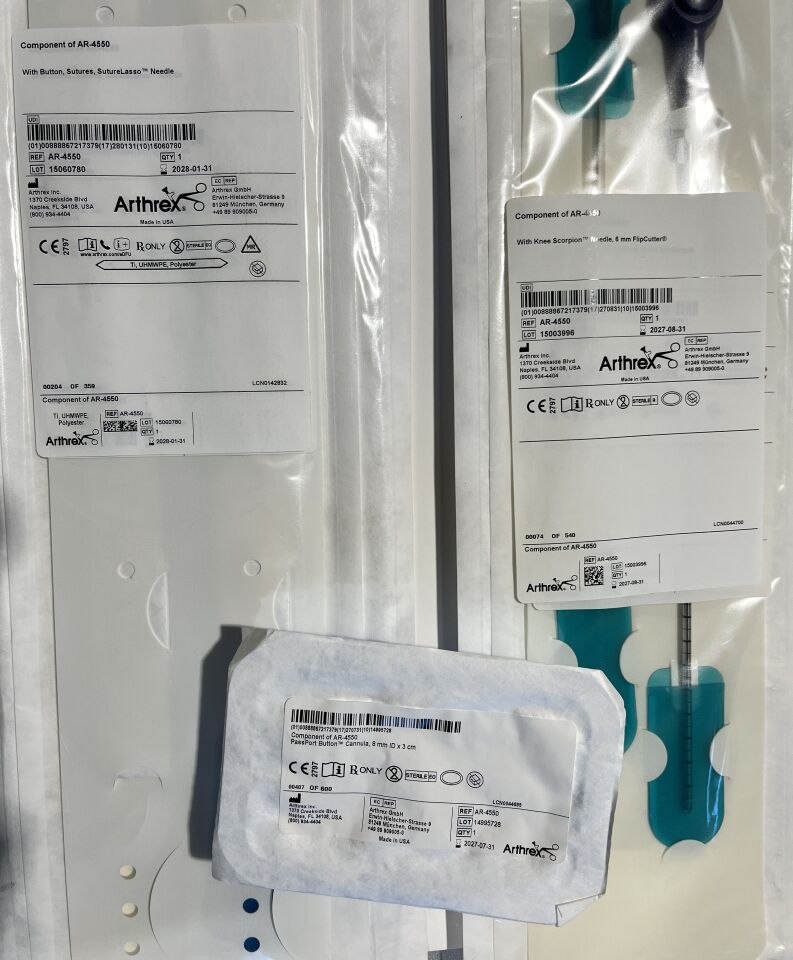
The Meniscal Root Repair Kit: A Comprehensive Guide to Restoring Knee Health
As an expert medical SEO copywriter and orthopedic specialist, we understand the critical importance of clear, authoritative, and patient-friendly information. This guide delves into the "Meniscal Root Repair Kit," a vital orthopedic instrument designed to address a specific and often debilitating knee injury. This content is for patient information only and is not medical advice. Always consult with a licensed medical professional for diagnosis and treatment.
1. Comprehensive Introduction & Overview
The knee joint is a marvel of biomechanical engineering, allowing for a wide range of motion and supporting significant loads. Central to its function are the menisci – two C-shaped pieces of cartilage (medial and lateral) that act as shock absorbers, stabilize the joint, and distribute weight evenly across the knee. A healthy meniscus is crucial for long-term knee health, protecting the articular cartilage from excessive wear and tear, which can lead to osteoarthritis.
A "meniscal root tear" is a particularly insidious injury where the meniscus detaches from its bony attachment point on the tibial plateau. Unlike more common meniscal tears that occur within the body of the meniscus, root tears compromise the entire meniscal function, effectively rendering it useless as a shock absorber. This can lead to rapid degeneration of the knee joint, mimicking the effects of a total meniscectomy (surgical removal of the meniscus). Untreated, these tears can cause significant pain, instability, and accelerate the progression of arthritis.
The "Meniscal Root Repair Kit" represents a significant advancement in orthopedic surgery, offering a specialized set of instruments and implants engineered to reattach the torn meniscal root to its anatomical insertion site. The primary goal of this repair is to restore the crucial "hoop stress" function of the meniscus, preventing meniscal extrusion (where the meniscus shifts outside the joint) and preserving the health of the articular cartilage. By facilitating a robust and stable repair, these kits aim to mitigate the long-term consequences of root tears, improve patient outcomes, and potentially delay or prevent the need for more extensive procedures like knee replacement.
2. Deep-dive into Technical Specifications / Mechanisms
The efficacy of a Meniscal Root Repair Kit lies in its meticulously designed components and the biomechanical principles it leverages. These kits are not a single tool but a collection of specialized instruments and implants working in concert to achieve a precise anatomical repair.
Design and Materials
A typical Meniscal Root Repair Kit includes several key components, each engineered for specific roles during the arthroscopic procedure:
- Suture Anchors: These are small, biocompatible devices used to secure high-strength sutures to the bone.
- Types: Can be traditional rigid anchors (e.g., PEEK, titanium) or all-suture anchors (made entirely of high-strength suture material). All-suture anchors are increasingly popular due to their smaller bone footprint and strong fixation.
- Materials:
- PEEK (Polyetheretherketone): A high-performance thermoplastic known for its excellent mechanical properties, biocompatibility, and radiolucency (doesn't interfere with X-rays).
- Titanium: Biocompatible metal, known for its strength and osseointegration potential.
- UHMWPE (Ultra-High Molecular Weight Polyethylene): Used in the construction of high-strength sutures, offering exceptional tensile strength and abrasion resistance.
- Absorbable Polymers (PLLA, PLGA): Some anchors are made from bioabsorbable materials like Poly-L-lactic acid (PLLA) or Poly(lactic-co-glycolic acid) (PLGA), which gradually resorb over time, leaving only bone behind.
- High-Strength Sutures: Typically braided, non-absorbable sutures made from UHMWPE, designed to withstand significant tensile forces and provide durable fixation. They are pre-loaded into anchors or passed through specific instruments.
- Suture Passers/Retrievers: Specialized instruments with various tip configurations (e.g., curved, straight, retrograde) to precisely pass sutures through meniscal tissue in tight arthroscopic spaces.
- Tibial Tunnel Guides: Instruments used to accurately drill a tunnel in the tibia, through which sutures are passed to secure the meniscal root.
- Cannulas: Working channels inserted into the knee joint to provide access for instruments and visualization.
- Tensioning Devices: Tools to apply controlled tension to the sutures, ensuring optimal meniscal reduction and fixation.
Mechanism of Action
The kit facilitates an arthroscopic (minimally invasive) repair. The general mechanism involves:
- Preparation: The torn meniscal root attachment site on the tibial plateau is prepared (debrided) to promote healing.
- Suture Placement: High-strength sutures are carefully passed through the meniscal root using specialized passers, capturing the torn tissue.
- Fixation:
- Transosseous technique (Pull-out repair): The sutures are then passed through a pre-drilled tibial bone tunnel (created using a guide) and secured on the outer cortex of the tibia, typically with a button or screw, pulling the meniscal root back into its anatomical position.
- Anchor technique: Suture anchors, pre-loaded with sutures, are deployed into the tibial plateau adjacent to the meniscal root. The sutures are then tied, securing the root.
- Tensioning: The sutures are tensioned appropriately to achieve anatomical reduction of the meniscal root, restoring its native footprint and stability.
Biomechanics and Patient Outcome Improvements
The primary biomechanical goal of a meniscal root repair is to restore the "hoop stress" mechanism. In a healthy meniscus, radial tears or root detachments disrupt this hoop stress, allowing the meniscus to extrude radially, which significantly increases contact pressures on the articular cartilage. By reattaching the meniscal root, the repair kit helps:
- Restore Hoop Stress: Re-establishes the circumferential tension within the meniscus, allowing it to function as a stable ring.
- Prevent Meniscal Extrusion: Keeps the meniscus properly seated within the joint, ensuring it can effectively distribute loads.
- Reduce Contact Pressures: By restoring load distribution, it significantly reduces the abnormal stresses on the articular cartilage, thereby protecting it from accelerated degeneration.
- Improve Knee Stability: A properly functioning meniscus contributes to overall knee stability.
- Pain Reduction: Stabilizing the meniscus and reducing abnormal joint mechanics typically leads to significant pain relief.
- Enhanced Function: Patients can experience improved range of motion, strength, and ability to return to activities.
- Osteoarthritis Prevention/Delay: By preserving articular cartilage, the repair aims to delay or prevent the onset and progression of knee osteoarthritis, which is a major long-term benefit for patients.
3. Extensive Clinical Indications & Usage
The Meniscal Root Repair Kit is utilized in specific clinical scenarios where the benefits of repair outweigh the risks, aiming to preserve knee function and prevent long-term degeneration.
Clinical Indications
A meniscal root tear is often diagnosed after an acute traumatic event, such as a sports injury or a fall, but can also occur due to degenerative changes, particularly in older individuals.
- Acute Meniscal Root Tears: These are tears that occur suddenly, often with a distinct injury mechanism and associated pain, swelling, and mechanical symptoms (e.g., clicking, locking). Repair is generally recommended for acute tears, especially in younger, active patients.
- Posterior Medial Meniscal Root Tears: Most common type, often associated with varus alignment (bow-legged) and high-impact activities.
- Posterior Lateral Meniscal Root Tears: Less common, often associated with ACL injuries or hyperextension trauma.
- Chronic Meniscal Root Tears: Tears that have been present for some time, potentially leading to progressive pain, swelling, and early arthritic changes. Repair can still be beneficial, particularly if significant cartilage damage has not yet occurred.
- Meniscal Extrusion: Radiographic evidence of the meniscus shifting out of its normal position, indicating a loss of hoop stress. Repair aims to reduce this extrusion.
- Painful Knee: Persistent pain localized to the meniscal root area, especially with weight-bearing or twisting motions.
- Young and Active Patients: Individuals with high functional demands are excellent candidates, as preserving their native meniscus is paramount for their long-term activity levels.
- Absence of Severe Osteoarthritis: The repair is most effective when the articular cartilage is relatively preserved. Severe, pre-existing osteoarthritis may contraindicate the repair.
Pre-operative Assessment
A thorough evaluation is critical to determine candidacy for meniscal root repair.
- Clinical Examination: Assessment of knee pain, swelling, range of motion, stability, and specific meniscal provocative tests.
- Imaging Studies:
- X-rays: To assess alignment, joint space narrowing, and rule out significant arthritis. Weight-bearing views are crucial.
- MRI (Magnetic Resonance Imaging): The gold standard for diagnosing meniscal root tears, revealing the detachment, meniscal extrusion, and assessing the condition of articular cartilage and other knee structures.
- Patient History: Understanding the mechanism of injury, symptom duration, activity level, and patient expectations.
Detailed Surgical Application (Arthroscopic Procedure)
The repair is typically performed arthroscopically, a minimally invasive technique that uses small incisions, a camera (arthroscope), and specialized instruments.
- Patient Positioning and Anesthesia: Patient is usually supine, and a tourniquet may be applied. Regional (spinal/epidural) or general anesthesia is used.
- Portal Placement: Small incisions (portals) are made around the knee to insert the arthroscope and surgical instruments.
- Diagnostic Arthroscopy: A thorough inspection of the knee joint is performed to confirm the meniscal root tear, assess meniscal tissue quality, and evaluate the articular cartilage.
- Debridement and Root Preparation: The torn meniscal root and its bony attachment site on the tibial plateau are carefully debrided (cleaned) to remove any frayed tissue and create a bleeding bone bed, which promotes healing.
- Tibial Tunnel Creation (for Pull-out Repair):
- A specialized guide is used to accurately drill a tunnel from the anterior tibia to the anatomical meniscal root footprint on the tibial plateau.
- The guide ensures the tunnel is correctly positioned to allow for anatomical reduction.
- Suture Passage through Meniscal Root:
- Using specialized suture passers from the kit, high-strength sutures are carefully passed through the substance of the meniscal root, typically in a mattress or figure-of-eight configuration, to create a robust purchase.
- Multiple sutures (e.g., two or three) are often used for optimal fixation.
- Suture Passage through Tibial Tunnel/Anchor Placement:
- Pull-out technique: The sutures are then retrieved through the tibial tunnel to the anteromedial aspect of the tibia.
- Anchor technique: If using anchors, they are deployed into the tibial plateau, and sutures are tied to secure the root.
- Tensioning and Fixation:
- For pull-out repair, the sutures are tensioned externally over a cortical button or post on the anterior tibia, carefully reducing the meniscal root back to its anatomical footprint.
- The tension is crucial – too loose and the repair fails; too tight and it can damage the meniscus.
- The repair is then secured with knot tying or a tensioning device.
- Verification: The repair is visually inspected arthroscopically to confirm anatomical reduction, stability, and appropriate tension. The meniscal extrusion should be reduced.
- Closure: Portals are closed, and a sterile dressing is applied.
Post-operative Protocol and Rehabilitation
Post-operative care is as critical as the surgery itself for successful outcomes.
- Immobilization: A knee brace is typically worn for 4-6 weeks, often locked in extension for weight-bearing or allowing a limited range of motion.
- Weight-Bearing Restrictions: Strict non-weight-bearing or touch-down weight-bearing for 4-6 weeks to protect the healing repair. Gradual progression to full weight-bearing follows.
- Physical Therapy: A structured rehabilitation program is essential, progressing through phases:
- Phase 1 (Protection): Focus on pain/swelling control, gentle range of motion (passive), muscle activation (quads, hamstrings) without stressing the repair.
- Phase 2 (Controlled Motion): Gradual increase in range of motion, light resistance exercises, introduction of balance and proprioception.
- Phase 3 (Strength and Endurance): Progressive strengthening, functional exercises, sport-specific training.
- Phase 4 (Return to Sport): Gradual return to high-impact activities, typically 6-9 months post-surgery, depending on tear severity and individual healing.
4. Risks, Side Effects, or Contraindications
While meniscal root repair offers significant benefits, it is a surgical procedure with inherent risks and specific contraindications that patients should be aware of.
General Surgical Risks
These risks are common to most orthopedic surgeries:
- Infection: Despite sterile techniques, there is a small risk of infection at the surgical site or within the joint.
- Bleeding/Hematoma: Accumulation of blood around the surgical site.
- Neurovascular Injury: Damage to nerves or blood vessels around the knee, potentially leading to numbness, weakness, or circulatory problems.
- Deep Vein Thrombosis (DVT) / Pulmonary Embolism (PE): Blood clots forming in the leg veins, which can potentially travel to the lungs.
- Arthrofibrosis: Excessive scar tissue formation within the joint, leading to stiffness and reduced range of motion.
- Anesthesia Risks: Adverse reactions to anesthesia.
Repair-Specific Risks and Side Effects
These are specific to meniscal root repair:
- Re-tear or Failure of Repair: The meniscal root may re-tear or the repair may fail to heal, requiring further intervention. This can be due to poor tissue quality, non-compliance with post-operative restrictions, or traumatic re-injury.
- Anchor Pull-out or Suture Failure: The implanted anchors may pull out of the bone, or the sutures may break, compromising the repair.
- Malreduction: The meniscal root may not be perfectly reduced to its anatomical position, potentially leading to suboptimal biomechanics.
- Persistent Pain: Despite a successful repair, some patients may experience ongoing knee pain.
- Meniscal Extrusion: While the repair aims to correct extrusion, some residual extrusion may persist, or it may recur.
- Stiffness: The prolonged immobilization and healing period can lead to knee stiffness, requiring intensive physical therapy.
- Hardware Irritation: In pull-out repairs, the cortical button or knot on the anterior tibia can sometimes cause irritation or require removal.
Contraindications
Certain conditions may make a patient unsuitable for meniscal root repair:
- Severe Knee Osteoarthritis (OA): If significant articular cartilage damage and joint space narrowing are already present, the benefits of meniscal repair are often outweighed by the existing arthritic changes. In such cases, other treatments like knee replacement may be more appropriate.
- Inflammatory Arthritis: Conditions like rheumatoid arthritis can compromise healing and increase surgical risks.
- Poor Meniscal Tissue Quality: If the meniscal tissue is severely degenerated, frayed, or calcified, it may not hold sutures effectively, leading to a high risk of repair failure.
- Non-compliant Patient: Patients unwilling or unable to adhere to the strict post-operative weight-bearing restrictions and rehabilitation protocol are not ideal candidates, as non-compliance significantly increases the risk of re-tear.
- Active Infection: Any active infection in or around the knee is an absolute contraindication to elective surgery.
- Advanced Age with Low Functional Demands: While age is not an absolute contraindication, very elderly patients with low activity levels might be better served by non-surgical management or other less invasive procedures if their overall health and functional goals do not align with the demands of a complex repair and lengthy recovery.
5. Expert Tips from Dr. Mohammed Hutaif
As an orthopedic specialist, Dr. Mohammed Hutaif emphasizes several crucial points for patients considering or undergoing meniscal root repair:
- Accurate Diagnosis is Paramount: "The first step to a successful outcome is an accurate diagnosis. A meniscal root tear can be subtle on initial imaging, but its implications are profound. A detailed clinical exam combined with high-resolution MRI is essential to confirm the tear and assess its characteristics."
- Early Intervention Matters: "For acute meniscal root tears, especially in active individuals, early surgical intervention typically yields better results. Delaying treatment can lead to further cartilage damage and meniscal extrusion, making a successful repair more challenging."
- Anatomical Reduction is Key: "During surgery, our primary focus is to achieve a precise anatomical reduction of the meniscal root. This means reattaching it exactly where it originated, restoring the native footprint. This precision is critical for re-establishing the meniscus's normal biomechanical function and hoop stress."
- Optimal Suture Tension: "Achieving the correct suture tension is an art and a science. Too loose, and the repair won't hold; too tight, and you risk damaging the meniscal tissue or causing extrusion. We use specialized techniques to ensure optimal tension for robust fixation."
- Strict Adherence to Post-operative Protocol: "The surgery is only half the battle. Your commitment to the post-operative weight-bearing restrictions and the prescribed rehabilitation program is absolutely vital. Disregarding these instructions is the fastest way to compromise the repair and lead to a re-tear."
- Patience and Persistence in Rehabilitation: "Recovery from meniscal root repair is a marathon, not a sprint. It requires patience, persistence, and a dedicated approach to physical therapy. Don't rush the process; trust your physical therapist and your body's healing capacity."
- Patient Education is Empowering: "Understanding your injury, the surgical procedure, and the recovery process empowers you to be an active participant in your healing journey. Ask questions, understand the 'why' behind each step, and communicate openly with your medical team."
6. Massive FAQ Section
Q1: What exactly is a meniscal root tear, and why is it serious?
A meniscal root tear is an injury where the meniscus detaches from its bony attachment point on the shinbone (tibia). Unlike other meniscus tears, a root tear completely compromises the meniscus's ability to act as a shock absorber and distribute weight, similar to having no meniscus at all. This loss of function dramatically increases stress on the articular cartilage, leading to rapid degeneration and a high risk of developing early onset osteoarthritis if not repaired.
Q2: Why is it important to repair a meniscal root tear instead of just removing the damaged part?
Repairing a meniscal root tear is crucial because it aims to restore the meniscus's natural function (hoop stress), which is vital for protecting the knee joint. Removing the damaged part (meniscectomy) for a root tear doesn't address the fundamental loss of function and leaves the knee vulnerable to accelerated cartilage wear and osteoarthritis. Repairing helps preserve the knee's long-term health.
Q3: What does a Meniscal Root Repair Kit typically contain?
A Meniscal Root Repair Kit typically contains a specialized set of instruments and implants. This includes high-strength sutures (often made of UHMWPE), suture anchors (made from materials like PEEK, titanium, or absorbable polymers), specialized suture passers and retrievers, tibial tunnel guides, and cannulas. These components work together to facilitate the precise reattachment of the meniscal root to the bone.
Q4: Is the meniscal root repair surgery a minimally invasive procedure?
Yes, meniscal root repair surgery is typically performed arthroscopically, which is a minimally invasive technique. This involves making a few small incisions around the knee, through which a small camera (arthroscope) and specialized instruments from the repair kit are inserted. This approach minimizes tissue damage, reduces post-operative pain, and often leads to a quicker recovery compared to open surgery.
Q5: How long is the typical recovery period after meniscal root repair?
The recovery period for meniscal root repair is substantial and requires patience. Patients typically wear a brace for 4-6 weeks and are on strict non-weight-bearing or touch-down weight-bearing for the first 4-6 weeks to allow the repair to heal. Full recovery, including a return to sports or high-impact activities, can take anywhere from 6 to 9 months, depending on individual healing, rehabilitation adherence, and the complexity of the repair.
Q6: Will I regain full function and be able to return to sports after the repair?
The goal of meniscal root repair is to restore knee function and allow a return to previous activity levels, including sports. While many patients achieve excellent outcomes and return to their desired activities, the degree of recovery can vary. Factors like the initial severity of the tear, the presence of other knee injuries, patient age, and adherence to rehabilitation all play a role. A dedicated rehabilitation program significantly improves the chances of regaining full function.
Q7: What are the alternatives to meniscal root repair?
Alternatives depend on the patient's condition and goals. For patients who are not candidates for repair (e.g., severe osteoarthritis), non-surgical management (pain medication, physical therapy, injections) might be considered, though it doesn't address the underlying mechanical issue. In some cases, if the tear is irreparable or has failed, a partial meniscectomy (if applicable), meniscal transplant, or eventually total knee replacement might be options, but these are generally less desirable for preserving native knee function.
Q8: What are the success rates for meniscal root repair?
Success rates for meniscal root repair are generally encouraging, with studies reporting good to excellent clinical outcomes in 70-90% of appropriately selected patients. Success is often defined by pain reduction, improved knee function, and evidence of biological healing on follow-up MRI. However, success can be influenced by factors such as tear chronicity, patient age, BMI, and compliance with post-operative protocols.
Q9: Can the meniscal root tear happen again after a successful repair?
While the goal is a durable repair, there is always a risk of re-tear or failure, especially if the knee experiences another significant injury or if the patient does not adhere to rehabilitation guidelines. The risk of re-tear is typically lower with successful healing and proper post-operative care, but it's important for patients to understand that no surgical repair offers a 100% guarantee against future injury.
Q10: What kind of anesthesia is used for meniscal root repair surgery?
Meniscal root repair surgery can be performed under various types of anesthesia. Commonly, patients receive regional anesthesia, such as a spinal or epidural block, which numbs the lower body, often combined with sedation to keep the patient comfortable. General anesthesia, which puts the patient completely to sleep, is also an option. The choice of anesthesia is made in consultation with the anesthesiologist, considering the patient's health and preferences.
Q11: Who is considered a good candidate for meniscal root repair?
Good candidates for meniscal root repair are typically active individuals with an acute or chronic meniscal root tear, minimal to no significant pre-existing osteoarthritis, good quality meniscal tissue, and a strong commitment to adhering to a rigorous post-operative rehabilitation program. Younger patients with high functional demands are often ideal candidates as the repair aims to preserve their native knee joint for many years.
Q12: How important is physical therapy after this surgery?
Physical therapy is not just important; it is absolutely crucial for a successful outcome after meniscal root repair. It guides you through a progressive program to regain range of motion, strength, stability, and proprioception. Without dedicated physical therapy, the knee can become stiff, weak, and the repair may be compromised, leading to suboptimal recovery and a higher risk of re-injury. It's an integral part of the healing process.