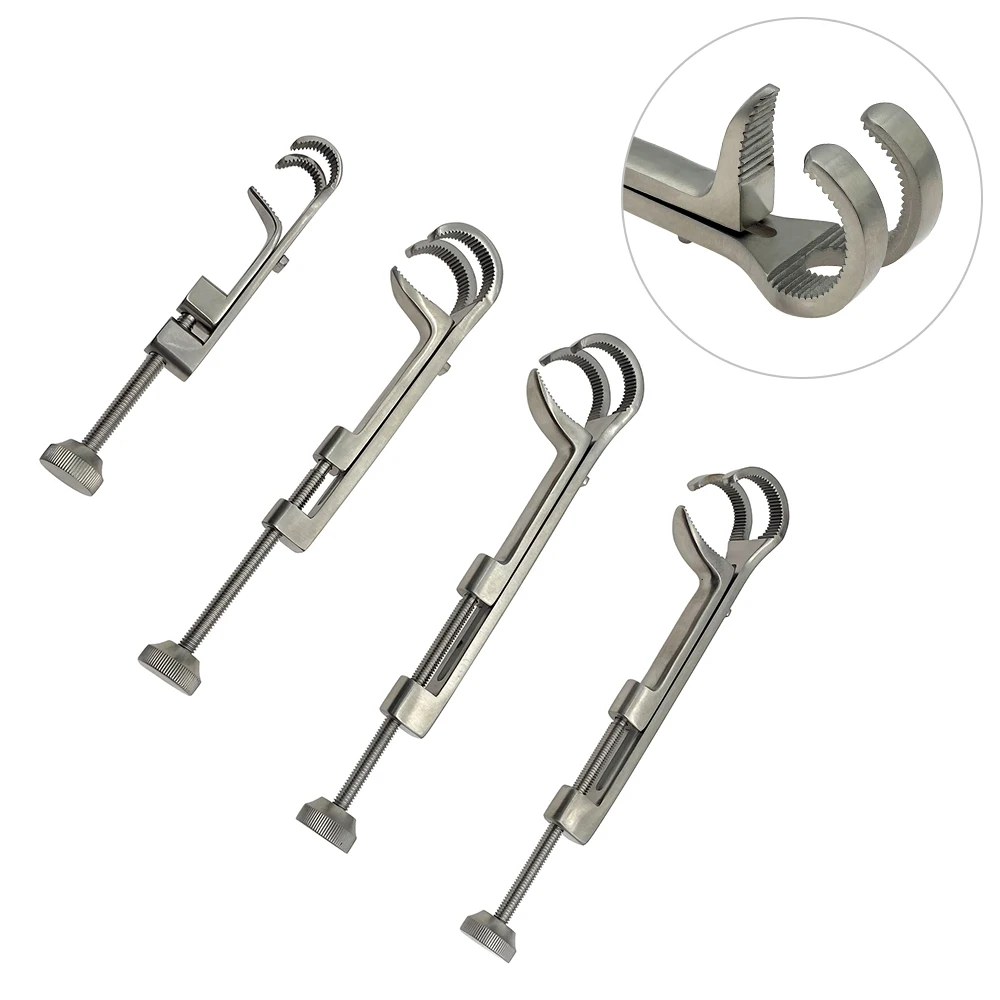
The Lowman Bone Clamp: An Essential Tool in Orthopedic Surgery
Comprehensive Introduction & Overview
The Lowman Bone Clamp stands as a cornerstone instrument in the orthopedic surgeon's arsenal, a testament to precision and stability in fracture management. Designed specifically for the temporary reduction and stabilization of bone fragments during complex orthopedic procedures, this specialized surgical tool plays a pivotal role in achieving optimal anatomical alignment. Its primary function is to grasp and hold fractured bone segments securely, allowing the surgeon to perform definitive internal fixation (such as plating, screwing, or intramedullary nailing) with confidence and accuracy.
Named after its inventor, the Lowman Bone Clamp is engineered to provide controlled compression and distraction, facilitating the meticulous reassembly of fractured bones. In the demanding environment of the operating room, where milliseconds can impact outcomes, the reliability and ergonomic design of the Lowman clamp are invaluable. This guide will delve into the intricate details of its design, its myriad clinical applications, precise usage instructions, rigorous maintenance protocols, the biomechanical principles it leverages, and its profound impact on improving patient outcomes.
Deep-dive into Technical Specifications / Mechanisms
The efficacy of the Lowman Bone Clamp lies in its sophisticated design and the robust materials from which it is crafted. Understanding these technical aspects is crucial for appreciating its role in modern orthopedics.
Design and Materials
The Lowman Bone Clamp is typically constructed from high-grade surgical stainless steel, most commonly 316L. This material is chosen for its exceptional properties:
* Corrosion Resistance: Essential for repeated sterilization cycles and exposure to bodily fluids.
* Biocompatibility: Ensures no adverse reactions with tissues.
* Strength and Durability: Capable of withstanding significant mechanical stress during bone manipulation.
* Malleability: Allows for precise manufacturing and fine finishing.
Key design features include:
* Handles: Ergonomically shaped, often with finger loops, to provide a comfortable and secure grip for the surgeon, facilitating precise control.
* Shaft: Connects the handles to the jaws, providing the necessary length to reach the surgical site.
* Ratcheted Locking Mechanism: A critical feature that allows the surgeon to apply and maintain a precise amount of compressive force on the bone fragments without continuous manual pressure. This mechanism ensures stable reduction throughout the fixation process.
* Jaws/Tips: These are the working ends of the clamp, designed to securely grasp bone. They come in various configurations:
* Serrated: For enhanced grip on cortical bone.
* Toothed/Pointed: For penetrating the cortical bone slightly to prevent slippage, particularly in dense bone.
* Blunt/Smooth: For gentler handling of fragile or osteoporotic bone, or when avoiding periosteal damage is paramount.
* Curved or Angled: To facilitate access to difficult anatomical locations.
Mechanism of Action
The Lowman Bone Clamp operates on the principle of controlled mechanical reduction. When the handles are squeezed, the jaws close, grasping the bone fragments. The ratcheted locking mechanism then engages, allowing the surgeon to apply and incrementally increase compressive force. This force is distributed across the bone fragments, bringing them into anatomical alignment. Once locked, the clamp maintains this reduction, freeing the surgeon's hands to perform subsequent steps such as drilling pilot holes, inserting screws, or applying plates. The stable purchase provided by the jaws prevents rotation, translation, and distraction of the bone segments, ensuring the integrity of the reduction.
Key Technical Specifications Table
| Feature | Description | Typical Range/Material |
|---|---|---|
| Material | High-grade surgical stainless steel | 316L Stainless Steel |
| Length (Overall) | Varies based on anatomical site and surgical need | 15 cm to 30 cm (approx. 6 to 12 inches) |
| Jaw Type | Designed for secure, atraumatic bone grasp | Serrated, Toothed, Blunt, Curved |
| Jaw Opening | Maximum distance between jaws when fully open | 2 cm to 8 cm (approx. 0.8 to 3.1 inches) |
| Locking Mechanism | Provides controlled, sustained compression | Ratcheted |
| Ergonomics | Designed for surgeon comfort and precise control | Finger ring handles, balanced weight |
| Finish | Reduces glare in the operating room, enhances durability | Matte, Satin |
Extensive Clinical Indications & Usage
The versatility and reliability of the Lowman Bone Clamp make it indispensable across a broad spectrum of orthopedic procedures. Its primary role is to achieve and maintain anatomical reduction, a critical step for successful fracture healing and optimal functional recovery.
Primary Purpose and Specific Surgical Procedures
The Lowman Bone Clamp is predominantly used for the temporary reduction and stabilization of bone fractures during Open Reduction Internal Fixation (ORIF). Specific applications include:
- Long Bone Fractures:
- Femur: Diaphyseal, supracondylar, or intertrochanteric fractures, particularly during plating or intramedullary nailing.
- Tibia: Proximal, diaphyseal, or distal fractures, including pilon fractures, to restore articular congruity.
- Humerus: Proximal, diaphyseal, or distal fractures, especially in complex intra-articular cases.
- Radius and Ulna: Forearm fractures requiring precise alignment for rotational stability.
- Pelvic Fractures: For reduction of iliac wing, sacral, or acetabular fractures, often in conjunction with other reduction clamps or external fixators.
- Spinal Fusion: Temporarily stabilizing vertebral bodies or posterior elements during instrumentation (e.g., pedicle screw insertion, rod placement).
- Joint Reconstruction: During procedures like total knee or hip arthroplasty, or shoulder reconstruction, to stabilize osteotomized segments or reattach bone grafts.
- Trauma Surgery: In multi-trauma patients, for rapid and stable temporary fixation to facilitate damage control orthopedics.
- Hand and Foot Surgery: Smaller versions of the Lowman clamp may be used for carpal, metacarpal, tarsal, or metatarsal fractures requiring precise reduction.
Fitting/Usage Instructions (Step-by-Step)
Proper application of the Lowman Bone Clamp is paramount to prevent complications and ensure effective reduction.
- Pre-operative Planning:
- Imaging: Thorough review of X-rays, CT scans, or 3D reconstructions to understand fracture morphology and plan reduction strategy.
- Clamp Selection: Choose the appropriate size and jaw configuration of the Lowman clamp based on bone size, fracture location, and bone quality.
- Surgical Field Preparation:
- Exposure: Adequate surgical exposure of the fracture site is essential for direct visualization and precise clamp placement.
- Soft Tissue Management: Carefully retract soft tissues to prevent impingement or injury by the clamp.
- Application of the Clamp:
- Initial Grasp: Gently grasp the bone fragments on either side of the fracture line. Ensure adequate bone purchase without excessive soft tissue inclusion. The jaws should ideally engage the cortical bone.
- Achieving Reduction: Manipulate the bone fragments manually or with other instruments (e.g., periosteal elevators, bone hooks) to bring them into anatomical alignment.
- Controlled Compression: As reduction is achieved, slowly close the handles of the Lowman clamp. The ratcheted mechanism will engage, allowing for incremental compression.
- Visual and Palpatory Confirmation: Continuously assess the reduction visually and by palpation to ensure anatomical alignment and stability. Intraoperative fluoroscopy may be used to confirm reduction.
- Locking the Clamp:
- Once satisfactory reduction is achieved, fully engage the ratcheted lock to maintain the compressive force. Avoid overtightening, which can lead to bone crushing or stress risers.
- Stability Check: Gently test the stability of the reduction. The clamp should hold the fragments firmly without slippage or further displacement.
- Subsequent Fixation Steps:
- With the Lowman clamp holding the reduction, proceed with definitive internal fixation (e.g., drilling pilot holes, measuring screw length, inserting screws, applying plates). The clamp provides a stable platform for these precise maneuvers.
- Removal:
- After definitive fixation is secure, carefully release the ratcheted lock and gently open the jaws.
- Inspect the bone for any signs of injury from the clamp (e.g., cortical defects, periosteal stripping).
Biomechanics
The biomechanical principles underlying the Lowman Bone Clamp's function are critical to its success:
- Compressive Force: The clamp applies a controlled compressive force across the fracture site. This compression directly contributes to primary bone healing by minimizing the fracture gap and promoting direct bone-to-bone contact.
- Stability Against Rotational and Translational Forces: By securely grasping the cortical bone, the clamp effectively resists rotational and translational forces that might otherwise cause displacement of the fracture fragments. This temporary stability is crucial for accurate internal fixation.
- Minimizing Stress Risers: While applying pressure, the design of the jaws aims to distribute force over a sufficient area to minimize localized stress concentrations that could create new fracture lines or damage the periosteum.
- Counteracting Muscle Pull: In many fractures, muscle contraction can cause significant distraction or displacement. The Lowman clamp provides a mechanical advantage to overcome these forces and achieve reduction.
- Pre-stressing Bone: The controlled compression can pre-stress the bone, which can contribute to the overall stability of the final construct once plates and screws are applied.
Maintenance/Sterilization Protocols
Maintaining the integrity and sterility of the Lowman Bone Clamp is paramount for patient safety and instrument longevity. Adherence to strict protocols is non-negotiable.
Immediate Post-Use
- Rinsing: Immediately after use, rinse the clamp under cool tap water to remove gross contaminants (blood, tissue, bone fragments). This prevents drying of organic material, which makes subsequent cleaning more difficult.
- Disassembly (if applicable): While most Lowman clamps are single-piece instruments, any removable parts should be separated for thorough cleaning.
Cleaning
- Manual Cleaning:
- Use an enzymatic detergent solution specifically designed for surgical instruments.
- Employ soft brushes (nylon or plastic) to scrub all surfaces, paying close attention to serrations, hinges, and the ratcheted mechanism. Ensure all crevices are reached.
- Open and close the clamp jaws and engage the ratchet mechanism several times while submerged in detergent to ensure internal cleaning.
- Rinse thoroughly under deionized or distilled water to remove all detergent residue.
- Automated Cleaning (Washer-Disinfectors, Ultrasonic Cleaners):
- Ultrasonic Cleaning: Place the clamp in an ultrasonic cleaner with an appropriate enzymatic solution. The cavitation action helps dislodge microscopic debris from hard-to-reach areas. Ensure the clamp is in the open position.
- Washer-Disinfector: Follow manufacturer's instructions for loading and cycle selection. Washer-disinfectors automate the cleaning and thermal disinfection process. Ensure the clamp is placed in a way that allows water to reach all surfaces.
Inspection
After cleaning, thoroughly inspect the clamp under magnification:
* Damage: Check for cracks, dents, bends, or signs of impact.
* Corrosion: Look for rust spots or pitting, especially in crevices.
* Wear: Examine the jaw serrations or teeth for blunting or damage. Check the ratcheted mechanism for wear that could compromise its locking ability.
* Functionality: Open and close the clamp, engage and disengage the ratchet several times to ensure smooth operation and secure locking. The jaws should meet precisely.
Lubrication
- Apply a water-soluble, steam-permeable surgical instrument lubricant to the hinge points and ratcheted mechanism. This prevents friction, ensures smooth operation, and inhibits corrosion during sterilization.
Sterilization
Autoclaving (steam sterilization) is the preferred method for Lowman Bone Clamps.
- Packaging:
- Place the cleaned, inspected, and lubricated clamp in a sterile wrap, pouch, or rigid sterilization container.
- Ensure the clamp is in an open or partially open position to allow steam to penetrate all surfaces, especially the ratcheted mechanism.
- Autoclave Parameters: Follow validated parameters for steam sterilization. Common cycles include:
| Cycle Type | Temperature | Pressure (gauge) | Exposure Time (min) | Dry Time (min) |
|---|---|---|---|---|
| Gravity | 121°C (250°F) | 15 psi | 30 | 15-30 |
| Pre-vacuum | 132°C (270°F) | 27-30 psi | 4 | 20-30 |
| Flash/Immediate Use | 132°C (270°F) | 27-30 psi | 3-10 | 0-1 (for immediate use) |
- Storage: Store sterilized clamps in a clean, dry, and protected environment until needed, maintaining their sterile barrier.
Patient Outcome Improvements
The precise function of the Lowman Bone Clamp directly translates into significant improvements in patient care and long-term outcomes.
- Achieving Anatomical Reduction: The clamp's ability to hold bone fragments in their exact pre-injury position is crucial. Anatomical reduction minimizes residual deformity, leading to better joint congruity, improved range of motion, and reduced incidence of post-traumatic arthritis.
- Stable Fixation: By providing a stable temporary reduction, the Lowman clamp facilitates the application of definitive internal fixation hardware. This stable environment is critical for primary bone healing, reducing the risk of non-union (failure of bone to heal) or malunion (healing in an incorrect position).
- Reduced Operative Time: Efficient and reliable reduction shortens the overall surgical time. This reduces patient exposure to anesthesia, minimizes blood loss, and lowers the risk of surgical site infection.
- Minimized Complications: Precise reduction reduces the likelihood of neurovascular injury during fixation. By controlling bone fragments, the clamp helps prevent further soft tissue damage.
- Faster Rehabilitation and Return to Function: Stable early fixation allows for earlier initiation of rehabilitation protocols, including passive and active range of motion exercises. This accelerates recovery, reduces muscle atrophy, and enables patients to return to their normal activities or work sooner.
- Improved Long-term Quality of Life: Patients who achieve anatomical reduction and stable healing experience less chronic pain, improved functional capacity, and a higher quality of life in the long term, avoiding secondary surgeries or debilitating conditions.
Risks, Side Effects, or Contraindications
While invaluable, the use of the Lowman Bone Clamp is not without potential risks and contraindications that surgeons must consider.
Risks and Side Effects
- Soft Tissue Damage:
- Crushing/Pinching: Improper placement can lead to crushing of muscle, nerve, or vascular structures.
- Neurovascular Injury: Direct compression or excessive force near neurovascular bundles can cause temporary or permanent damage.
- Periosteal Stripping: Aggressive application or removal can strip the periosteum, which is vital for bone healing.
- Bone Damage:
- Fracture Comminution: Excessive force, especially in osteoporotic bone, can cause further fragmentation of the bone.
- Stress Risers: Creating localized high-stress points on the bone surface, which could lead to new microfractures or compromise the integrity of the definitive fixation.
- Cortical Perforation: Pointed jaws, if not carefully applied, can perforate the cortical bone unnecessarily.
- Inadequate Reduction: If the clamp slips or is not applied correctly, the achieved reduction may not be anatomical, leading to malunion.
- Clamp Slippage: Insufficient bone purchase or excessive force can cause the clamp to slip, potentially leading to further injury or loss of reduction.
- Instrument Failure: While rare with high-quality instruments, wear and tear or manufacturing defects can lead to clamp failure (e.g., ratchet mechanism failure, jaw breakage) during a procedure.
- Infection: As with any surgical instrument, inadequate sterilization poses a risk of surgical site infection.
Contraindications
- Severely Comminuted Fractures: In cases of extreme comminution, where there are many small fragments, the clamp may not be able to gain secure purchase without causing further damage or soft tissue injury. Alternative methods like external fixation or bridging plates might be preferred.
- Extremely Osteoporotic Bone: Bone with very low density may be too fragile to withstand the compressive forces of the clamp, risking crushing or creating large defects. Gentler techniques or clamps with broader, blunt jaws might be considered.
- Infection at the Surgical Site: The presence of an active infection is a general contraindication for elective internal fixation and the use of implants or instruments that could spread or exacerbate the infection.
- Inadequate Surgical Exposure: Without clear visualization of the fracture site and surrounding neurovascular structures, applying the clamp can be hazardous.
- Anatomical Constraints: In certain anatomical locations where access is extremely limited, or critical structures are immediately adjacent, the use of a Lowman clamp might be contraindicated due to the risk of iatrogenic injury.
Massive FAQ Section
Q1: What is the primary function of a Lowman Bone Clamp?
A1: The primary function of a Lowman Bone Clamp is to provide temporary, stable reduction and fixation of bone fragments during orthopedic surgical procedures, particularly during Open Reduction Internal Fixation (ORIF). It holds the bone segments in anatomical alignment while the surgeon applies definitive fixation hardware.
Q2: What materials are Lowman Bone Clamps typically made from?
A2: Lowman Bone Clamps are almost exclusively made from high-grade surgical stainless steel, most commonly 316L. This material is chosen for its superior corrosion resistance, strength, durability, and biocompatibility, making it ideal for repeated sterilization and use within the human body.
Q3: In which orthopedic procedures is this clamp most commonly used?
A3: It is most commonly used in procedures involving long bone fractures (femur, tibia, humerus, radius, ulna), pelvic and acetabular fractures, and sometimes in spinal fusion surgeries. Its role is crucial wherever precise anatomical reduction of bone fragments is required before permanent fixation.
Q4: How does the ratcheted mechanism contribute to its effectiveness?
A4: The ratcheted mechanism is key to its effectiveness as it allows the surgeon to apply and maintain a controlled, constant compressive force on the bone fragments without continuous manual pressure. This frees the surgeon's hands to perform other critical steps like drilling and screw insertion, ensuring stable reduction throughout the process.
Q5: What are the key steps for applying a Lowman Bone Clamp safely?
A5: Key steps include: 1) careful pre-operative planning and selection of the correct clamp size; 2) adequate surgical exposure; 3) gentle grasping of bone fragments without soft tissue impingement; 4) manipulating fragments into anatomical reduction; 5) slowly closing and locking the ratchet to apply controlled compression; and 6) confirming reduction visually and radiographically.
Q6: How should a Lowman Bone Clamp be cleaned and sterilized?
A6: After use, the clamp should be immediately rinsed to remove gross debris. It then undergoes thorough cleaning, either manually with enzymatic detergents and brushes, or via automated washer-disinfectors or ultrasonic cleaners. After cleaning and inspection for damage, it is lubricated and typically steam sterilized (autoclaved) in an open or partially open position, following validated temperature, pressure, and time parameters.
Q7: Can a Lowman Bone Clamp be used on all types of bone fractures?
A7: No, it cannot be used on all types. It is generally not suitable for severely comminuted (many small fragments) or extremely osteoporotic (fragile) bone, as it may cause further damage or fail to gain secure purchase. Its use is also contraindicated in the presence of active infection.
Q8: What are the potential risks associated with using a Lowman Bone Clamp?
A8: Potential risks include soft tissue damage (crushing of nerves, vessels, or muscle), further bone damage (comminution, stress risers), inadequate reduction if it slips, and, rarely, instrument failure. Proper technique and careful application minimize these risks.
Q9: How does the Lowman Bone Clamp improve patient outcomes?
A9: It improves patient outcomes by facilitating anatomical reduction and stable temporary fixation, which are crucial for optimal bone healing. This leads to reduced pain, improved functional recovery, lower rates of non-union or malunion, potentially shorter operative times, and a faster return to daily activities and overall better quality of life.
Q10: Are there different sizes or types of Lowman Bone Clamps?
A10: Yes, Lowman Bone Clamps come in various sizes and jaw configurations. Different lengths are available for different anatomical sites, and jaw types can include serrated, toothed, or blunt tips, as well as curved or angled designs, to accommodate different bone types, fracture patterns, and surgical approaches.
Q11: What is the expected lifespan of a Lowman Bone Clamp?
A11: With proper cleaning, maintenance, inspection, and careful use, a high-quality surgical stainless steel Lowman Bone Clamp can last for many years, often decades. Regular inspection is crucial to identify wear or damage that could compromise its integrity or function, leading to its eventual retirement from service.
Q12: Is specialized training required to use this instrument?
A12: Yes, the Lowman Bone Clamp is a specialized surgical instrument and its use requires extensive knowledge of orthopedic anatomy, fracture biomechanics, and surgical technique. It should only be used by qualified orthopedic surgeons or trained medical professionals under their direct supervision.