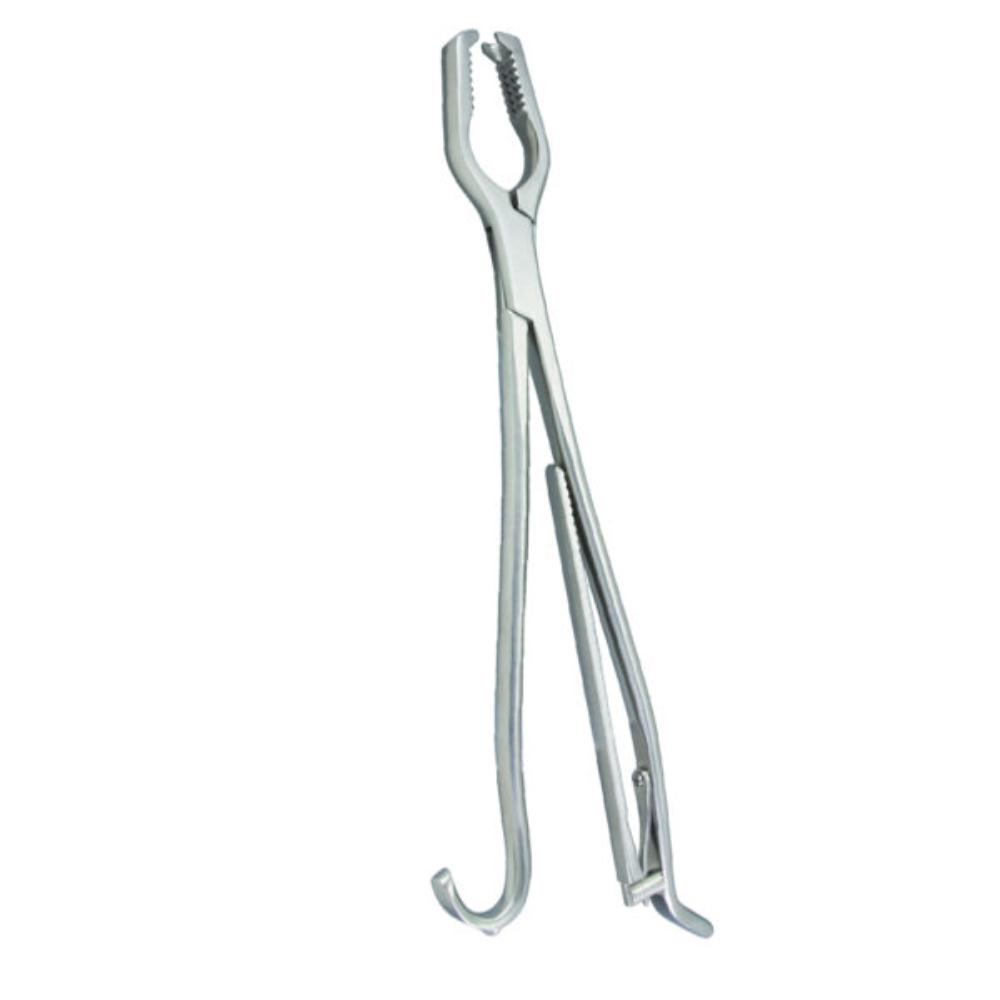
Lane Bone Holding Forceps: The Cornerstone of Orthopedic Precision
Welcome to our in-depth guide on the Lane Bone Holding Forceps, a fundamental instrument in the orthopedic surgeon's toolkit. As experts in musculoskeletal health, we understand the critical role that precision instruments play in achieving optimal patient outcomes. This comprehensive guide will explore the design, applications, biomechanics, and maintenance of these essential forceps, providing valuable insight into how they contribute to successful orthopedic procedures.
1. Comprehensive Introduction & Overview
The Lane Bone Holding Forceps are specialized surgical instruments designed to grasp, hold, and stabilize bone fragments during orthopedic procedures. Named after Sir William Arbuthnot Lane, a pioneering British surgeon, these forceps are indispensable for achieving accurate reduction (realigning broken bones) and maintaining stability during the internal fixation of fractures with plates, screws, or wires. Their robust design and reliable gripping mechanism allow surgeons to precisely manipulate bone while freeing their hands for other critical tasks, thereby enhancing surgical efficiency and precision.
In the complex field of orthopedic surgery, where even millimeter adjustments can significantly impact healing and long-term function, the Lane Bone Holding Forceps stand out as a testament to effective surgical design. They are crucial for:
* Fracture Reduction: Bringing misaligned bone fragments back into their anatomical position.
* Stabilization: Holding bone fragments firmly in place during the application of fixation hardware.
* Enhanced Precision: Allowing surgeons to work with greater accuracy and control.
This instrument, while seemingly simple, embodies decades of surgical innovation, ensuring that patients receive the highest standard of care for bone-related injuries and conditions.
2. Deep-dive into Technical Specifications / Mechanisms
The effectiveness of Lane Bone Holding Forceps lies in their meticulous design and robust construction. Understanding these technical aspects illuminates their indispensable role in orthopedic surgery.
Design Principles
The core design features include:
* Serrated Jaws: The inner surfaces of the jaws are typically serrated or finely textured to provide a secure, non-slip grip on bone fragments without causing undue trauma. Some variations may feature smooth jaws for specific applications.
* Ratchet Locking Mechanism: A key feature, the ratchet allows the surgeon to apply and maintain a precise, consistent level of compression on the bone fragments. Once engaged, the ratchet holds the jaws closed, freeing the surgeon's hands to perform other tasks. This self-locking capability is vital for prolonged stabilization.
* Ergonomic Handles: Designed for comfortable and secure handling, reducing surgeon fatigue during lengthy procedures. The handles provide optimal leverage for controlled manipulation.
* Pivot Joint: A strong, smooth pivot joint ensures seamless opening and closing of the jaws and distributes force evenly.
Materials
Lane Bone Holding Forceps are manufactured from high-grade, surgical-quality stainless steel. This material is chosen for several critical properties:
* Biocompatibility: Safe for use within the human body, minimizing adverse reactions.
* Corrosion Resistance: Withstands repeated sterilization cycles and exposure to biological fluids without degrading.
* Strength and Durability: Capable of enduring significant mechanical stress during bone manipulation without deforming or breaking.
* Ease of Sterilization: Smooth, non-porous surface facilitates thorough cleaning and sterilization.
Biomechanics of Grip
The biomechanical advantage of the Lane Forceps stems from its lever-arm design and ratchet mechanism.
* Controlled Compression: The long handles provide excellent leverage, allowing the surgeon to apply significant, yet controlled, compressive force to bone fragments with minimal effort.
* Even Pressure Distribution: The broad, serrated jaws are designed to distribute pressure evenly across the bone surface, minimizing the risk of localized crushing or damage, especially important in osteoporotic bone.
* Stable Fixation: Once the ratchet is engaged, the instrument maintains constant, stable compression, preventing slippage and ensuring the bone fragments remain in their reduced position. This stability is crucial for accurate drilling and screw insertion.
Variations
While the fundamental design remains consistent, variations exist to suit different surgical needs:
* Straight vs. Curved Jaws: Straight jaws are common for easily accessible bones, while curved jaws are preferred for navigating around anatomical structures or accessing difficult angles.
* Different Jaw Sizes and Lengths: Available in various sizes to accommodate different bone sizes (e.g., small bones of the hand/foot vs. large long bones) and surgical depths.
* Self-Centering Designs: Some advanced designs incorporate features that automatically center the bone fragments within the jaws for even more precise alignment.
Key Technical Specifications Table
| Feature | Description | Benefit for Patient Outcomes |
|---|---|---|
| Material | High-grade Surgical Stainless Steel | Ensures instrument integrity, prevents contamination, longevity. |
| Jaw Design | Serrated (common), Smooth (specific uses), Broad Contact Area | Secure, non-slip grip; minimizes bone trauma; even pressure. |
| Locking Mechanism | Ratchet (self-locking) | Sustained compression, surgeon's hands free, precise alignment. |
| Handle Ergonomics | Contoured for comfortable, secure grip | Reduces surgeon fatigue, enhances control, improves surgical precision. |
| Sizes Available | Various lengths and jaw widths | Adaptability to diverse bone sizes and surgical sites. |
3. Extensive Clinical Indications & Usage
The Lane Bone Holding Forceps are versatile instruments, indispensable across a wide spectrum of orthopedic surgical procedures. Their primary role is to facilitate the precise reduction and temporary stabilization of bone fragments, paving the way for definitive internal fixation.
Primary Clinical Applications
-
Fracture Reduction and Fixation:
- Long Bone Fractures: Essential for realigning complex fractures of the femur, tibia, humerus, and radius/ulna before applying plates, screws, or intramedullary nails.
- Flat Bone Fractures: Used in pelvic fractures, scapular fractures, and certain cranial or facial bone reconstructions to hold fragments in place.
- Articular Fractures: Crucial for anatomically reducing joint surface fractures (e.g., tibial plateau, pilon fractures) to restore smooth joint congruence and prevent post-traumatic arthritis.
-
Joint Reconstruction (Arthroplasty):
- During total hip or knee replacement, these forceps can be used to hold bone segments or position components precisely before final implantation.
- In osteotomies (bone cutting to correct deformity), they help maintain the corrected alignment.
-
Spinal Surgery:
- While more specialized clamps exist for spinal fusion, Lane forceps can be used in certain situations to stabilize vertebral segments or hold bone grafts during instrumentation.
-
Trauma Surgery:
- In multi-fragmentary or open fractures, these forceps are vital for initial stabilization and reduction, often as part of a staged surgical approach.
-
Orthopedic Oncology:
- When resecting bone tumors and reconstructing the defect with bone grafts or prostheses, the forceps aid in holding the graft or host bone securely.
Fitting/Usage Instructions (Simplified for Patient Understanding)
While the actual surgical application is performed by highly trained professionals, understanding the general steps can demystify the process:
- Selection: The surgeon carefully selects the appropriate size and type of Lane Bone Holding Forceps based on the specific bone, fracture pattern, and surgical approach.
- Placement: The jaws of the forceps are carefully opened and positioned to encompass the bone fragments that need to be aligned. Great care is taken to avoid pinching soft tissues (muscles, nerves, blood vessels).
- Reduction and Compression: The surgeon gently manipulates the bone fragments into their correct anatomical position. Once aligned, the handles of the forceps are slowly closed, applying controlled compression to hold the fragments together.
- Locking: The ratchet mechanism is engaged, locking the jaws in place and maintaining the desired compression. This frees the surgeon's hands.
- Fixation: With the bone fragments securely held, the surgeon proceeds with definitive fixation, such as drilling holes and inserting screws and plates across the fracture site.
- Release: Once the permanent fixation is complete and verified, the ratchet is disengaged, and the forceps are carefully removed.
Patient Outcome Improvements
The precise application of Lane Bone Holding Forceps directly translates to significant benefits for the patient:
- Enhanced Surgical Precision: By providing a stable, controlled grip, the forceps enable surgeons to achieve near-perfect anatomical reduction, which is paramount for proper healing.
- Reduced Operating Time: The efficiency gained by securely holding bone fragments allows for smoother, faster placement of fixation hardware, potentially reducing anesthesia exposure.
- Improved Fracture Alignment: Accurate reduction leads to better bone union, minimizing complications like malunion (healing in an incorrect position) or non-union (failure to heal).
- Minimized Soft Tissue Damage: The design allows for targeted bone manipulation, reducing the need for excessive retraction or manipulation of surrounding muscles and nerves.
- Lower Revision Rates: Optimal initial fixation due to precise alignment reduces the likelihood of requiring follow-up surgeries to correct poor healing or hardware failure.
- Faster Rehabilitation: Better alignment and stable healing contribute to a quicker and more effective rehabilitation process, allowing patients to regain function sooner.
4. Risks, Side Effects, or Contraindications
While Lane Bone Holding Forceps are invaluable tools, their use, like all surgical interventions, carries potential risks and specific contraindications that surgeons meticulously consider.
Potential Risks and Side Effects (Instrument-Specific)
- Bone Crushing or Damage: If excessive force is applied, or if the bone is particularly osteoporotic or fragile, the jaws of the forceps could potentially crush or damage the bone fragments. This risk is mitigated by careful technique and appropriate instrument selection.
- Soft Tissue Injury: Improper placement or careless application can lead to pinching or trauma to surrounding soft tissues, including muscles, nerves, or blood vessels. Surgeons are highly trained to avoid this through careful dissection and visualization.
- Instrument Slippage: Although designed for a secure grip, slippage can occur if the bone surface is excessively smooth, greasy, or if the fragments are unstable, potentially leading to loss of reduction or further damage.
- Instrument Failure: Extremely rare with high-quality instruments, but material fatigue or manufacturing defects could theoretically lead to breakage during use. Regular inspection and proper maintenance significantly reduce this risk.
- Infection: As with any surgical instrument introduced into the body, there's a minimal risk of introducing infection if sterilization protocols are not strictly followed. This is a general surgical risk, not specific to the forceps themselves.
Contraindications
While not absolute in all cases, certain situations may contraindicate the use of Lane Bone Holding Forceps or require extreme caution:
- Severe Osteoporosis: In cases of severe bone fragility, the risk of crushing the bone fragments with the forceps may outweigh the benefits of their use. Alternative methods or gentler manipulation might be preferred.
- Highly Comminuted Fractures: In fractures with numerous very small fragments, it might be difficult to get a stable grip without further comminution or displacement.
- Compromised Vascularity: If there is concern that applying pressure with the forceps could further compromise the blood supply to a bone fragment, alternative stabilization methods may be considered.
- Inadequate Visualization: The instrument should only be used when the surgeon has clear visualization of the bone fragments and surrounding anatomy to prevent iatrogenic injury.
It is crucial to remember that these potential risks are carefully managed by the surgical team through extensive training, meticulous surgical planning, and strict adherence to safety protocols. The benefits of precise bone stabilization typically far outweigh these rare risks.
5. Expert Tips from Dr. Mohammed Hutaif
As an orthopedic specialist, I've seen firsthand how the judicious use of instruments like the Lane Bone Holding Forceps can transform complex procedures into precise, predictable outcomes. Here are some key insights and tips I emphasize:
- "Precision Starts with Selection": Always choose the appropriate size and jaw configuration for the specific bone and fracture pattern. A "one-size-fits-all" approach is detrimental. For delicate bones, opt for finer jaws; for robust long bones, a larger, more powerful grip is needed.
- "Gentle but Firm": The goal is stable fixation, not crushing. Apply just enough pressure to achieve secure reduction. The ratchet mechanism is your friend here – it allows for controlled, incremental compression. Over-tightening can compromise bone integrity, especially in osteoporotic patients.
- "Mind the Soft Tissues": Always be acutely aware of surrounding nerves, vessels, and muscles. Dissecting carefully to expose the bone adequately minimizes the risk of collateral damage when applying the forceps. Visualization is paramount.
- "Regular Inspection is Non-Negotiable": Before every procedure, I personally ensure that all instruments, especially critical ones like bone holders, are thoroughly inspected. Check for any signs of wear, damage, or dullness in the serrations. A compromised instrument compromises patient safety and surgical efficacy.
- "Sterilization is Paramount": The efficacy of the instrument is only as good as its sterility. Strict adherence to sterilization protocols is not just a guideline; it's a patient safety imperative. Any breach can lead to devastating infections.
- "Communication with the Surgical Team": A successful surgery is a team effort. Clear communication with your scrub nurse and assistants regarding instrument needs, placement, and release ensures a smooth workflow and minimizes errors.
- "Focus on the Patient's Future": Every action in the operating room, from selecting the right instrument to its precise application, must be driven by the goal of optimal patient recovery and long-term function. The Lane Bone Holding Forceps, when used expertly, directly contributes to this goal by facilitating the best possible anatomical reduction and stable fixation.
By adhering to these principles, surgeons can maximize the benefits of the Lane Bone Holding Forceps, leading to superior surgical outcomes and improved quality of life for our patients.
6. Massive FAQ Section
Here are some frequently asked questions about Lane Bone Holding Forceps, designed to provide patients with clear and comprehensive answers:
Q1: What are Lane Bone Holding Forceps primarily used for in surgery?
A1: Lane Bone Holding Forceps are specialized surgical instruments primarily used in orthopedic surgery to grasp, hold, and stabilize broken bone fragments. Their main purpose is to help the surgeon accurately realign (reduce) the fractured bones and hold them firmly in place while permanent fixation devices like plates, screws, or rods are applied.
Q2: How do these forceps improve the outcome of bone fracture surgery?
A2: By providing a stable and precise grip on bone fragments, Lane Bone Holding Forceps allow the surgeon to achieve optimal anatomical alignment of the broken bone. This precision leads to better bone healing, reduces the risk of complications like bones healing in the wrong position (malunion) or not healing at all (non-union), and ultimately contributes to faster recovery and better long-term function for the patient.
Q3: Are there different types or sizes of Lane Bone Holding Forceps?
A3: Yes, Lane Bone Holding Forceps come in various sizes and designs to suit different surgical needs. They can have straight or curved jaws, and the jaw size can vary to accommodate different bone sizes, from small bones in the hand or foot to large long bones like the femur. This variety ensures the surgeon has the most appropriate tool for each specific case.
Q4: What materials are these instruments made from, and why?
A4: These forceps are typically made from high-grade, surgical-quality stainless steel. This material is chosen for its strength, durability, resistance to corrosion (especially important for repeated sterilization), and biocompatibility (meaning it's safe to use inside the human body without causing adverse reactions).
Q5: How are Lane Bone Holding Forceps sterilized to ensure patient safety?
A5: All surgical instruments, including Lane Bone Holding Forceps, undergo rigorous sterilization processes before each use. The most common method is steam sterilization (autoclaving), which uses high-pressure steam at elevated temperatures to kill all microorganisms. Strict protocols are followed to ensure every instrument is completely sterile to prevent surgical site infections.
Q6: Can the use of these forceps damage the bone?
A6: When used correctly by a skilled surgeon, the risk of bone damage is very low. The forceps are designed to distribute pressure evenly. However, if excessive force is applied or if the bone is very fragile (e.g., due to severe osteoporosis), there is a theoretical risk of crushing the bone. Surgeons are highly trained to use these instruments with precision and care to avoid such complications.
Q7: Is the use of Lane Bone Holding Forceps painful for the patient?
A7: No, the patient is under general anesthesia during the surgical procedure, so they will not feel any pain during the use of the forceps. Post-operatively, pain management protocols are in place to ensure patient comfort as they recover from the overall surgery.
Q8: Who typically uses Lane Bone Holding Forceps during surgery?
A8: Lane Bone Holding Forceps are used by orthopedic surgeons and other surgical specialists who perform procedures involving bone manipulation and fixation. Their expertise ensures the instruments are used safely and effectively to achieve the best possible surgical outcome.
Q9: How long do these surgical instruments last, and are they reusable?
A9: High-quality Lane Bone Holding Forceps are designed for durability and can last for many years with proper care and maintenance. Yes, they are reusable instruments. After each use, they are thoroughly cleaned, inspected for wear or damage, and then sterilized according to strict medical guidelines before being used again.
Q10: What is the significance of the "Lane" name in these forceps?
A10: The forceps are named after Sir William Arbuthnot Lane (1856–1943), a prominent British surgeon who was a pioneer in orthopedic surgery and developed several innovative surgical techniques and instruments. His contributions significantly advanced the field, and these forceps are a lasting legacy of his work in improving fracture treatment.
Q11: Are there alternatives to using Lane Bone Holding Forceps for bone stabilization?
A11: While Lane Bone Holding Forceps are highly effective and widely used, surgeons may employ other types of bone clamps or reduction techniques depending on the specific fracture, bone, and surgical approach. Examples include pointed bone clamps, Verbrugge bone clamps, or specialized external fixators for temporary stabilization. The choice of instrument is always tailored to the individual patient's needs.
Q12: How do Lane Bone Holding Forceps contribute to faster patient recovery?
A12: By enabling precise anatomical reduction and stable internal fixation, these forceps help create an optimal environment for bone healing. When bones heal correctly and are stable, patients can often begin rehabilitation sooner, experience less pain, and regain their mobility and function more quickly compared to cases with less precise initial fixation.
Disclaimer: This content is for informational purposes only and is not intended as medical advice. Always consult with a qualified healthcare professional for any health concerns or before making any decisions related to your health or treatment.