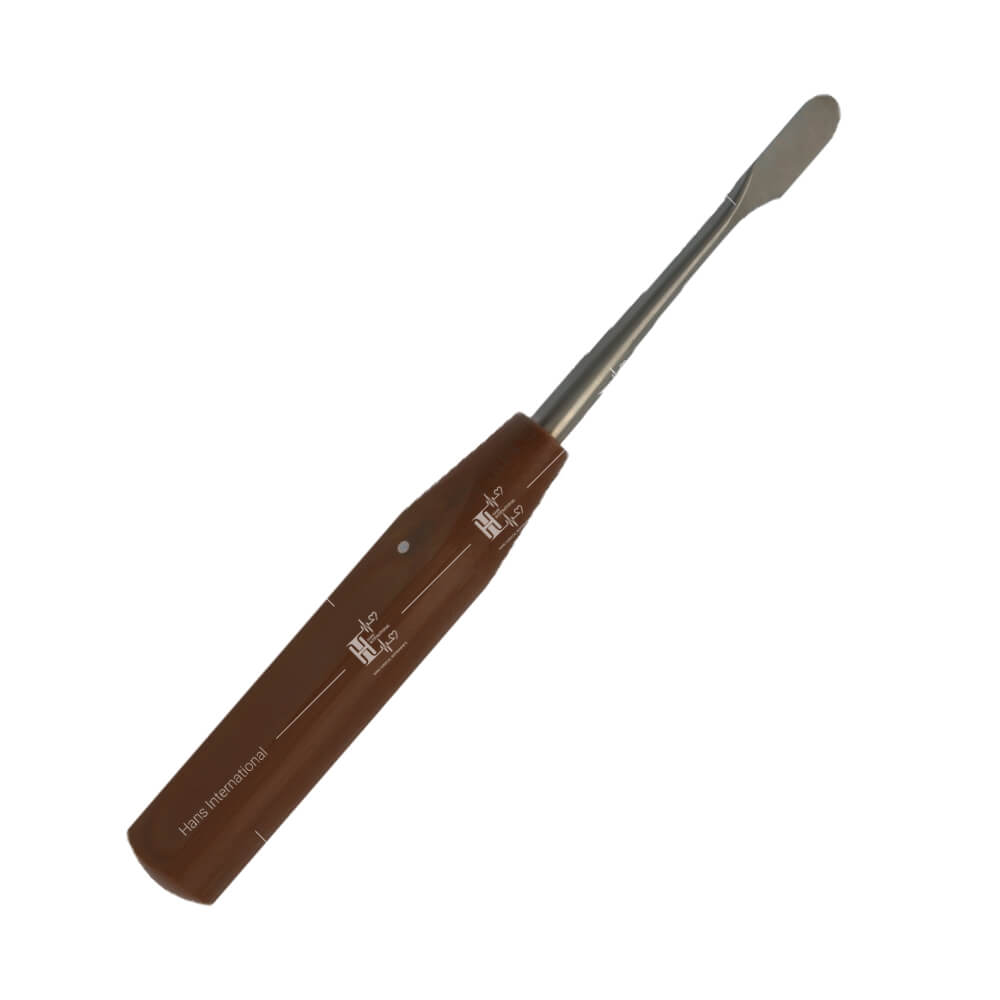
The Key Elevator (Periosteal Elevator): A Cornerstone in Orthopedic Surgery
Comprehensive Introduction & Overview: The Key Elevator in Orthopedic Surgery
In the intricate world of orthopedic surgery, precision and patient safety are paramount. Among the myriad of specialized instruments, the Key Elevator, also widely known as the Periosteal Elevator, stands out as a fundamental tool. This instrument is not merely a piece of metal; it is a meticulously designed device critical for separating the periosteum – a dense, fibrous membrane covering the surface of most bones – from the underlying bone structure.
What is the Periosteum and Why is its Elevation Critical?
The periosteum plays a vital role in bone healing, growth, and nutrition. It houses blood vessels, nerves, and osteoblasts (bone-forming cells). During many orthopedic procedures, surgeons need to access the bone directly, which requires carefully lifting this membrane without causing undue damage. The Key Elevator facilitates this delicate separation, creating a clear surgical field and protecting the periosteum's integrity, which is crucial for optimal post-operative bone regeneration and recovery.
Why is the Key Elevator Crucial for Patient Outcomes?
The careful and atraumatic elevation of the periosteum directly impacts patient recovery. By minimizing tissue trauma, the Key Elevator helps to:
* Reduce intraoperative bleeding: A clean separation means less damage to the blood vessels within the periosteum.
* Improve surgical visualization: A clear view of the bone allows for more precise execution of the surgical plan.
* Promote faster and stronger bone healing: Preserving the periosteum's vascularity and cellular components is essential for the bone's natural repair mechanisms.
* Decrease post-operative pain and complications: Less tissue damage generally leads to a smoother recovery.
For patients, understanding the role of such instruments provides insight into the meticulous nature of modern orthopedic surgery and how every tool is selected and used with their best interest in mind.
Deep-Dive into Technical Specifications & Mechanisms
The effectiveness of a Key Elevator lies in its thoughtful design and material composition, which together enable its precise biomechanical function.
Design & Materials: Engineered for Precision
Key Elevators come in various designs, each tailored for specific anatomical locations and surgical approaches. Despite the variations, common elements define these instruments:
-
Handle: The handle is designed for ergonomic comfort and a secure grip, crucial for the surgeon's control.
- Shapes: Can be flat, round, octagonal, or even contoured to fit the surgeon's hand.
- Texture: Often knurled or grooved to prevent slippage, even when wet.
- Material: Typically solid, providing a good balance and feel.
-
Shaft: This connects the handle to the working end. It can be straight or angled, depending on the need to reach specific areas without obstructing the surgeon's view.
-
Blade/Working End: This is the most critical part, responsible for the actual elevation.
- Shapes: Blades vary widely, including:
- Straight: For broad, flat bone surfaces.
- Curved/Angled: To navigate around bone contours or access deeper areas.
- Rounded/Blunt: For initial, gentle separation or areas where delicate structures are nearby.
- Sharp/Chisel-like: For more adherent periosteum or to define dissection planes.
- Spatula-like: For broad, even elevation.
- Sizes: Blades come in different widths and lengths, from very fine tips for intricate work (e.g., hand surgery) to broader blades for large bone surfaces (e.g., femur).
- Specific Types: While "Key Elevator" is a general term, specific designs often carry names, such as:
- Langenbeck Periosteal Elevator: Often double-ended, one sharp, one blunt.
- Freer Periosteal Elevator: Typically smaller, double-ended, with a blunt and a semi-sharp end, common in hand/foot or spinal surgery.
- Sayre Periosteal Elevator: Features a curved, broader blade.
- Key Periosteal Elevator: Often refers to a robust, single-ended elevator with a slightly curved, rounded working tip.
- Shapes: Blades vary widely, including:
-
Materials: The vast majority of Key Elevators are crafted from high-grade surgical stainless steel.
- Benefits of Stainless Steel:
- Corrosion Resistance: Withstands repeated sterilization cycles and exposure to bodily fluids.
- Strength and Durability: Maintains its shape and edge over time, even with significant force.
- Biocompatibility: Does not react adversely with body tissues.
- Sterilizability: Can be thoroughly cleaned and sterilized to prevent infection.
- Titanium: Occasionally used for specific applications due to its lighter weight and even greater biocompatibility, though less common for standard elevators.
- Benefits of Stainless Steel:
Biomechanics of Periosteal Elevation
The Key Elevator operates on the principle of controlled leverage. The surgeon applies force through the handle, which is transferred to the blade. The design of the blade allows for:
- Precise Force Distribution: The broad, smooth, or slightly sharp edge of the blade distributes force evenly, preventing concentrated pressure points that could damage the periosteum or bone.
- Atraumatic Separation: The primary goal is to separate the periosteum from the bone atraumatically. This means lifting it cleanly without tearing or shredding. A well-designed elevator, when used correctly, slides between the periosteum and the bone, minimizing damage to both.
- Minimizing Damage to Periosteum: The periosteum's delicate nature requires instruments that can gently dissect without stripping away its vital cellular layers or disrupting its blood supply. The specific curvature and edge profile of an elevator are crucial for this.
- Reducing Bleeding and Improving Visualization: By carefully dissecting along the natural plane between the periosteum and bone, the surgeon can avoid unnecessary tearing of small vessels, leading to a drier surgical field and better visibility.
Extensive Clinical Indications & Usage
The Key Elevator is indispensable across a wide spectrum of orthopedic and related surgical procedures. Its ability to precisely separate the periosteum is fundamental for achieving surgical goals while preserving critical biological structures.
General Applications in Orthopedic Surgery
- Fracture Repair (Open Reduction and Internal Fixation - ORIF): To expose the fractured bone ends for reduction (realignment) and subsequent fixation with plates, screws, or rods. The periosteum must be carefully elevated to allow access to the bone surface.
- Osteotomies (Bone Cutting): Procedures where bone is cut and reshaped to correct deformities or improve joint mechanics. The periosteum is elevated to define the cutting lines and protect surrounding soft tissues.
- Joint Replacement Surgery (Arthroplasty - Hip, Knee, Shoulder): During hip, knee, or shoulder replacement, the periosteum around the joint needs to be lifted to prepare the bone for implant placement.
- Tumor Resection: When removing bone tumors, the periosteum around the affected area is elevated to ensure clear surgical margins and protect healthy tissue.
- Spinal Surgery (Laminectomy, Fusion): In spinal procedures, the periosteum and other soft tissues are carefully elevated from the vertebral bodies or laminae to access the spinal canal or prepare for fusion.
- Ligament and Tendon Repair/Reconstruction: To expose bone attachment sites for reattaching ligaments or tendons, or for drilling tunnels for graft placement.
- Bone Grafting Procedures: For harvesting bone grafts or preparing recipient sites where bone material will be added.
- Dental and Oral Surgery: While primarily an orthopedic instrument, smaller periosteal elevators are routinely used in oral surgery for tooth extractions, implant placements, and other procedures requiring flap elevation.
Detailed Usage Instructions (Patient-Friendly Explanation)
While the surgeon performs the actual procedure, understanding the steps provides insight into the care taken:
- Initial Incision and Access: After the initial skin incision, the surgeon carefully dissects through layers of soft tissue to reach the bone.
- Identifying the Periosteum: Once the bone surface is reached, the glistening, fibrous periosteum is identified.
- Gentle, Controlled Sweeping Motion: The surgeon selects the appropriate Key Elevator based on the bone's anatomy and the periosteum's adherence. With a gentle, sweeping, and firm motion, the blade is carefully advanced along the bone surface, lifting the periosteum.
- Maintaining Contact with Bone: A critical technique is to always keep the tip of the elevator in contact with the bone. This ensures the periosteum is lifted cleanly and protects the delicate soft tissues (nerves, vessels) that lie above the periosteum from accidental damage.
- Selecting the Right Size/Shape: The surgeon will have a tray of various Key Elevators. A smaller, sharper elevator might be used initially to start the dissection, followed by a broader, blunter one for wider elevation. Curved elevators are used for contoured bone surfaces, while straight ones are for flat areas.
Table: Common Key Elevators and Their Typical Orthopedic Uses
| Elevator Type | Common Blade Shape | Typical Orthopedic Use | Key Feature for Patients |
|---|---|---|---|
| Key | Slightly curved, rounded tip | Broad elevation, large bones (femur, tibia) | Robust, efficient for exposing large bone areas. |
| Langenbeck | Double-ended (sharp/blunt) | General purpose, medium to large bones | Versatile, allows for initial sharp dissection then blunt. |
| Freer | Double-ended (blunt/semi-sharp) | Smaller bones, hand/foot, spine, delicate dissection | Precise for intricate areas, minimizes soft tissue damage. |
| Cobb | Larger, curved, blunt | Spinal surgery, large muscle detachment | Strong, for detaching dense muscle/ligament from spine. |
| Sayre | Broad, curved, spatula-like | General bone exposure, broad periosteal elevation | Provides wide, even lift for excellent bone visibility. |
Maintenance, Sterilization Protocols & Longevity
The effectiveness and safety of a Key Elevator, like all surgical instruments, heavily depend on rigorous maintenance and sterilization protocols. These steps are crucial to prevent infection and ensure the instrument performs optimally.
Cleaning & Decontamination
Immediately after surgery, instruments are subjected to initial cleaning to remove gross contaminants.
- Immediate Post-Operative Cleaning: Instruments are wiped down to remove blood and tissue before they dry. This prevents bioburden from hardening, which makes subsequent cleaning difficult.
- Manual Cleaning: Often involves scrubbing instruments with specialized brushes and enzymatic detergents to break down organic matter. All crevices and working surfaces must be meticulously cleaned.
- Automated Cleaning:
- Ultrasonic Cleaners: Use high-frequency sound waves to create microscopic bubbles that dislodge debris from instrument surfaces, including hard-to-reach areas.
- Washer-Disinfectors: Automated machines that clean, rinse, and thermally disinfect instruments, often a preferred method for consistency and safety.
- Importance of Removing All Biological Debris: Any remaining organic material can shield microorganisms from the sterilization process, leading to potential contamination.
Sterilization
Sterilization renders an instrument free of all living microorganisms, including bacterial spores.
- Autoclaving (Steam Sterilization): This is the gold standard for heat-stable instruments like Key Elevators.
- Process: Instruments are exposed to saturated steam under pressure at high temperatures.
- Parameters: Typically 121°C (250°F) for 20-30 minutes, or 132°C (270°F) for 4-10 minutes, depending on the load and specific autoclave.
- Mechanism: Moist heat denatures and coagulates proteins in microorganisms, effectively killing them.
- Packaging for Sterility: After cleaning and before sterilization, instruments are carefully inspected and then packaged in specialized wraps, pouches, or rigid containers that allow steam penetration but maintain sterility until opened in the operating room.
Inspection & Storage
- Checking for Damage: Before and after each sterilization cycle, instruments are meticulously inspected for:
- Dullness: A dull blade requires more force, increasing the risk of tissue damage.
- Corrosion: Rust or pitting compromises the instrument's integrity and can harbor bacteria.
- Cracks or Bends: Structural damage can lead to breakage during surgery.
- Proper Storage: Instruments are stored in a clean, dry environment, protected from dust and physical damage, until needed for surgery.
- Impact on Patient Safety and Instrument Lifespan: Regular maintenance and inspection not only ensure patient safety by preventing infection and surgical complications but also extend the lifespan of these valuable instruments, representing a significant investment in quality patient care.
Risks, Side Effects, or Contraindications
While the Key Elevator is a safe and effective instrument in skilled hands, like any surgical tool, its improper use or unforeseen circumstances can lead to potential risks.
Potential Intraoperative Risks
- Damage to the Periosteum: If the elevator is used with excessive force, at an incorrect angle, or if the blade is dull, it can tear, shred, or strip away the periosteum. This can impair the periosteum's ability to contribute to bone healing, potentially leading to delayed union or non-union of fractures.
- Damage to Underlying Bone: Aggressive use can cause scoring, grooving, or even unintended fractures of the underlying cortical bone, especially in patients with osteopenia or osteoporosis where bone density is reduced.
- Soft Tissue Damage: While the elevator is designed to protect soft tissues, careless manipulation can inadvertently damage adjacent nerves, blood vessels, or muscles, leading to complications such as numbness, bleeding, or muscle weakness.
- Infection: Although rare with stringent sterilization protocols, any breach in sterility can introduce bacteria to the surgical site, leading to surgical site infection (SSI), a serious complication.
Contraindications
It's important to clarify that there are generally no absolute contraindications to the instrument itself. The Key Elevator is a tool, and its use is dictated by the surgical need. However, certain patient conditions or surgical scenarios require heightened caution or may influence the manner in which it is used:
- Severe Osteopenia/Osteoporosis: In patients with significantly weakened bones, the surgeon must use extreme gentleness and perhaps opt for blunter instruments to avoid inadvertent bone fracture or damage during elevation.
- Highly Vascularized Areas: In regions with a dense network of blood vessels, the surgeon must exercise extra care and precision to minimize bleeding, though this is a general surgical principle rather than a contraindication to the elevator specifically.
- Adherent Scar Tissue: In revision surgeries or areas with previous trauma, the periosteum may be heavily scarred and adherent. This requires more careful and often sharper dissection, increasing the risk of tissue damage if not handled expertly.
The surgeon's skill, experience, and careful judgment are the primary factors in mitigating these risks and ensuring the safe and effective use of the Key Elevator.
Expert Tips from Dr. Mohammed Hutaif
As an orthopedic specialist, Dr. Mohammed Hutaif emphasizes the critical role of the Key Elevator in achieving optimal patient outcomes. His expert tips highlight the blend of science, skill, and artistry required for its effective use:
-
"Precision is Paramount: Always Maintain Bone Contact."
"The golden rule of periosteal elevation is to keep the tip of the elevator firmly against the bone surface. This isn't just about efficiency; it's about protection. By staying on the bone, we create a natural barrier, shielding delicate nerves and blood vessels in the overlying soft tissues from harm. It ensures a clean plane of dissection and significantly reduces the risk of complications." -
"Choose the Right Tool: Different Elevators for Different Anatomies."
"Orthopedic surgery is incredibly diverse, and so are our instruments. We have a range of Key Elevators – sharp, blunt, curved, straight, broad, narrow. Selecting the appropriate elevator for the specific bone, its contour, and the adherence of the periosteum is crucial. Using a broad elevator for a fine dissection can be clumsy, just as a delicate elevator might fail on densely adherent periosteum. The right tool ensures efficiency and minimizes tissue trauma." -
"Gentle Yet Firm: Avoid Excessive Force to Protect Tissue."
"While some force is necessary to lift adherent periosteum, it must always be controlled and deliberate. Excessive force can tear the periosteum, damage the bone, or slip and injure adjacent structures. It's a balance – firm enough to achieve separation, but gentle enough to preserve the integrity of the periosteum, which is vital for bone healing." -
"Regular Inspection: A Dull Elevator is a Dangerous One."
"The sharpness and integrity of the elevator's working edge are critical. A dull elevator requires more force, increasing the risk of slippage and tissue damage. We meticulously inspect every instrument before and after sterilization. Any sign of dullness, bending, or corrosion means it's either re-sharpened or retired. This vigilance is a non-negotiable aspect of patient safety." -
"Patient Outcome Focus: Proper Periosteal Elevation Directly Impacts Healing."
"The periosteum is a living, vital membrane, rich in blood supply and bone-forming cells. Our careful elevation technique is not just about gaining access; it's about preserving this biological asset. A healthy, intact periosteum post-surgery directly contributes to faster, stronger bone healing and ultimately, a better long-term outcome for the patient. Every sweep with the Key Elevator is performed with the patient's recovery in mind."
Frequently Asked Questions (FAQ)
1. What is a Key Elevator (Periosteal Elevator) used for in surgery?
The Key Elevator is primarily used in orthopedic surgery to carefully separate the periosteum (a protective membrane) from the surface of the bone. This allows the surgeon to access the bone directly for procedures like fracture repair, joint replacement, or tumor removal, while preserving the vital periosteum.
2. How does the Key Elevator help in bone healing after surgery?
By precisely and gently lifting the periosteum without tearing it, the Key Elevator helps preserve the blood supply and bone-forming cells within this membrane. An intact and healthy periosteum is crucial for initiating and supporting the bone healing process post-surgery, leading to faster and stronger recovery.
3. Is it painful to use the Key Elevator during surgery?
No, patients are under anesthesia during orthopedic surgery, so they do not feel any pain from the use of the Key Elevator or any other surgical instrument. The careful technique employed by surgeons aims to minimize tissue trauma, which contributes to less post-operative pain and a smoother recovery once the anesthesia wears off.
4. What are the different types of Key Elevators?
Key Elevators come in various shapes and sizes, each designed for specific anatomical locations and surgical needs. Common types include those with straight, curved, sharp, blunt, or spatula-like blades. Examples are the Langenbeck, Freer, Sayre, and Cobb elevators, each having unique features for different surgical approaches.
5. How is a Key Elevator kept sterile for surgery?
After each use, Key Elevators undergo a rigorous cleaning process to remove all biological debris. They are then sterilized, typically using an autoclave (steam sterilization), which exposes them to high-temperature steam under pressure to kill all microorganisms. They are then packaged to maintain sterility until needed.
6. Can a Key Elevator damage bone or surrounding tissues?
In the hands of an experienced surgeon, the Key Elevator is a very safe instrument. However, if used improperly or with excessive force, there is a small risk of damaging the periosteum, scoring the underlying bone, or inadvertently injuring nearby nerves or blood vessels. Surgeons are highly trained to mitigate these risks through precise technique.
7. Why is the periosteum important, and why is it crucial to protect it?
The periosteum is a vital membrane covering most bones. It contains blood vessels that nourish the bone and specialized cells (osteoblasts) that are essential for bone growth and repair. Protecting the periosteum during surgery ensures that the bone has the best possible chance to heal effectively and regenerate healthy tissue.
8. Is the Key Elevator used in all bone surgeries?
While very common, the Key Elevator is used in surgeries where direct access to the bone surface beneath the periosteum is required. Not all bone surgeries necessitate extensive periosteal elevation, but it is a fundamental step in a large number of orthopedic procedures, especially those involving fracture fixation, joint replacement, or osteotomies.
9. How does Dr. Hutaif ensure the safe and effective use of the Key Elevator?
Dr. Hutaif emphasizes meticulous technique, including maintaining constant contact with the bone, selecting the correct elevator for the specific anatomy, and using controlled, gentle force. He also stresses rigorous instrument inspection and adherence to sterilization protocols to ensure both patient safety and optimal surgical outcomes.
10. What materials are Key Elevators typically made from?
Most Key Elevators are made from high-grade surgical stainless steel. This material is chosen for its excellent corrosion resistance, strength, durability, and biocompatibility, ensuring the instrument can withstand repeated sterilization and use without degrading or reacting negatively with body tissues.
11. Does the design of the Key Elevator affect patient recovery?
Yes, indirectly. The precise design of the Key Elevator allows surgeons to perform delicate tissue separation with minimal trauma. Less tissue trauma during surgery often translates to reduced post-operative pain, less bleeding, and a quicker, more comfortable recovery period for the patient.
12. How long do Key Elevators typically last?
With proper maintenance, cleaning, sterilization, and regular inspection, high-quality Key Elevators can last for many years, even decades, in a surgical setting. Their longevity is a testament to the robust materials and manufacturing standards used for surgical instruments.