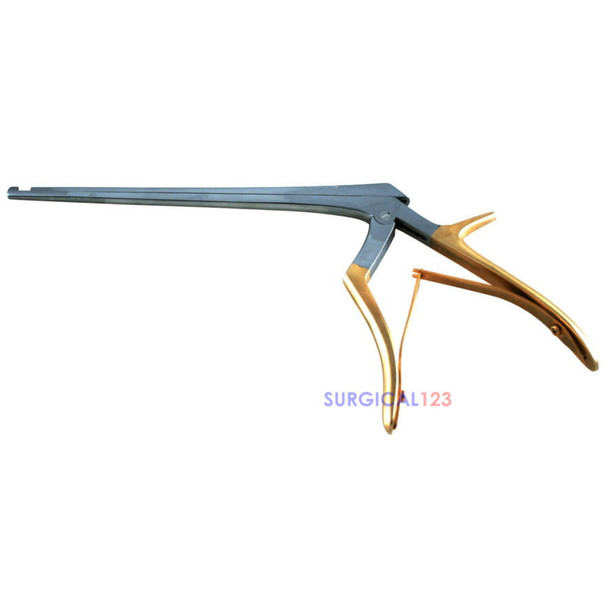
The Kerrison Rongeur: A Cornerstone of Precision in Orthopedic and Neurosurgical Procedures
Welcome to our comprehensive guide on the Kerrison Rongeur, a fundamental and highly specialized instrument in the arsenal of orthopedic and neurosurgeons. As experts in musculoskeletal health, we understand the critical role that precision instruments play in achieving optimal patient outcomes. The Kerrison Rongeur, with its unique design and diverse applications, exemplifies this commitment to precision, particularly in delicate procedures involving bone removal near vital neurological structures. This guide aims to provide patients with a deep understanding of this instrument, its purpose, and how it contributes to safer, more effective surgical interventions.
Comprehensive Introduction & Overview
The Kerrison Rongeur is a surgical instrument designed for precisely biting off small pieces of bone or soft tissue. Its name is synonymous with controlled, measured bone removal, making it indispensable in procedures where accuracy is paramount. Unlike general bone cutters, the Kerrison Rongeur excels in delicate scenarios, such as spinal decompression surgeries, where the removal of bone spurs or parts of the vertebral lamina needs to be performed meticulously to relieve pressure on nerves or the spinal cord.
What sets the Kerrison Rongeur apart is its specific design, featuring a slender shaft, a spring-loaded handle for controlled action, and distinctively angled jaws with various tip sizes. These features allow surgeons to navigate complex anatomical spaces, reaching areas that larger instruments cannot, and removing bone with minimal disruption to surrounding healthy tissue. The availability of up-biting and down-biting configurations, along with tip sizes ranging from 2mm to 5mm, provides surgeons with the versatility needed to address a wide array of surgical challenges.
Deep-Dive into Technical Specifications & Mechanisms
Understanding the technical nuances of the Kerrison Rongeur sheds light on why it is so highly valued in orthopedic and neurosurgical fields.
Design & Materials
The construction of a Kerrison Rongeur is a testament to sophisticated engineering, prioritizing durability, precision, and patient safety.
- High-Grade Stainless Steel: The primary material for the instrument is medical-grade stainless steel, often specific alloys like 420 or 440A. These materials are chosen for their exceptional strength, resistance to corrosion (especially important for repeated sterilization), and biocompatibility.
- Tungsten Carbide Inserts: The cutting edges of the rongeur's jaws are frequently reinforced with tungsten carbide inserts. This ultra-hard material significantly enhances the sharpness retention and longevity of the cutting surface, ensuring clean, precise bone removal even after numerous uses.
- Leverage Mechanism: The instrument operates on a compound leverage system. The spring-loaded handle allows for a controlled, incremental closing of the jaws, giving the surgeon tactile feedback and preventing sudden, uncontrolled movements that could damage delicate structures.
- Shaft & Jaws: The slender shaft allows access to confined spaces. The jaws are cup-shaped, designed to "bite" and remove small, precise pieces of bone.
- Ergonomic Handle: Modern Kerrison Rongeurs often feature ergonomic handle designs to reduce surgeon fatigue during lengthy procedures and enhance grip stability, further contributing to precision.
Mechanism of Action & Biomechanics
The operational principle of the Kerrison Rongeur is centered on controlled, precise bone resection.
- Controlled Bone Removal: The spring-loaded handle facilitates a smooth, controlled closing action. This mechanism allows the surgeon to apply gradual pressure, ensuring that only the intended bone is removed, piece by piece.
- Biting Angle Variations:
- Up-Biting Rongeur: The jaws open upwards, making it ideal for removing bone from the superior aspect of a structure or when approaching from below and needing to bite upwards. This is often used for removing the superior lamina or osteophytes.
- Down-Biting Rongeur: The jaws open downwards, suitable for removing bone from the inferior aspect or when approaching from above and needing to bite downwards. This is commonly used for removing the inferior lamina or disc fragments.
- Angled Jaws: Some Kerrison Rongeurs have jaws angled at 40, 90, or even 130 degrees to the shaft, allowing for access around corners and into difficult-to-reach areas without obstructing the surgeon's view.
- Tip Sizes (2mm-5mm):
- 2mm/3mm: Used for extremely fine, detailed bone removal, often in very narrow spaces or when working directly adjacent to nerves.
- 4mm/5mm: Used for removing larger pieces of bone when more aggressive decompression is required, but still with precision.
- The selection of tip size is crucial for matching the instrument to the specific anatomical requirements and the amount of bone to be removed.
- Biomechanics: The instrument's design leverages mechanical advantage to transmit force efficiently from the surgeon's hand to the cutting jaws. This allows for effective bone removal with relatively little manual effort, reducing surgeon fatigue and enhancing control. The sharp, cup-shaped jaws are designed to shear bone cleanly, minimizing fracturing or splintering that could lead to unintended damage. The controlled action minimizes the risk of "skiving" or slipping, which is critical when working near delicate neural tissues.
Maintenance & Sterilization Protocols
The integrity and sterility of surgical instruments are non-negotiable for patient safety.
- Cleaning: After each use, the rongeur undergoes meticulous cleaning to remove all tissue, bone fragments, and blood. This often involves manual scrubbing, ultrasonic cleaning, and enzymatic detergents.
- Inspection: Instruments are rigorously inspected for sharpness, alignment of jaws, freedom of movement, and any signs of wear, damage, or corrosion. Damaged instruments are immediately removed from circulation.
- Sterilization: Kerrison Rongeurs are typically sterilized using steam sterilization (autoclaving) at high temperatures and pressure. This process effectively kills all microorganisms, ensuring the instrument is completely sterile for the next surgical procedure. Proper packaging and handling post-sterilization are also critical to maintain sterility until use.
Extensive Clinical Indications & Usage
The Kerrison Rongeur is a versatile instrument with a broad range of applications, primarily in surgeries requiring precise bone removal.
Spinal Surgery
This is where the Kerrison Rongeur truly shines, being a staple in various spinal decompression procedures.
- Laminectomy/Laminotomy: Removal of part or all of the vertebral lamina to relieve pressure on the spinal cord or nerve roots, often due to spinal stenosis. The Kerrison allows for controlled, incremental removal of bone, protecting neural structures.
- Discectomy: While primarily for disc removal, a Kerrison Rongeur may be used to remove adjacent bone (osteophytes) or parts of the lamina to access the herniated disc more safely.
- Foraminotomy: Widening the neural foramen (the opening where nerve roots exit the spinal canal) to relieve pressure on a pinched nerve. The precise tips are invaluable here.
- Osteophyte Removal: Excision of bone spurs that impinge on nerves or restrict joint movement.
- Spinal Fusion Preparation: Preparing bone surfaces for fusion by removing cartilage or creating bleeding bone surfaces.
Neurosurgery
Beyond the spine, Kerrison Rongeurs are used in cranial procedures.
- Craniotomy: While larger instruments create the initial bone flap, Kerrisons are often used for refining the edges of the craniotomy, removing small bone fragments, or accessing deeper structures through small bone windows.
- Tumor Removal: When a brain or spinal tumor requires bone removal for access, the Kerrison provides the precision needed, especially near delicate neural tissue.
General Orthopedic Surgery
While less common than in spinal surgery, the Kerrison Rongeur can be utilized in other orthopedic contexts.
- Arthroscopy: In certain arthroscopic procedures (e.g., knee, shoulder, ankle), small bone spurs or osteophytes that limit joint movement can be precisely removed.
- Hand & Foot Surgery: For delicate procedures involving small bones, such as removing bone spurs or shaping bone in conditions like bunions or hammer toes.
Fitting/Usage Instructions (General Principles for Surgeons, Explained for Patients)
For patients, understanding the principles behind the instrument's use highlights the surgeon's skill and the instrument's design.
- Careful Selection: The surgeon meticulously selects the correct Kerrison Rongeur based on the specific anatomical location, the amount of bone to be removed, and the required approach (up-biting, down-biting, or angled, with appropriate tip size).
- Controlled Application: The instrument is gently advanced to the target bone. The surgeon applies controlled, gradual pressure to the handle, allowing the sharp jaws to bite off a small, precise piece of bone.
- Clear Surgical Field: Maintaining an unobstructed view of the surgical site is paramount. This ensures the surgeon can clearly see the bone being removed and avoid vital structures.
- Avoidance of Excessive Force: Surgeons are trained to use minimal, controlled force. This prevents inadvertent slippage or damage to surrounding tissues and ensures the instrument's longevity.
- Sequential Removal: Bone is typically removed incrementally, piece by piece, allowing the surgeon to constantly assess the decompression and protect adjacent nerves or spinal cord.
Risks, Side Effects, or Contraindications
While the Kerrison Rongeur is designed for precision and safety, like any surgical instrument, its use carries inherent risks, particularly if not handled by a highly skilled surgeon. Patients should be aware of potential complications, which are generally rare but serious.
- Damage to Neural Structures: The most significant risk, especially in spinal surgery, is inadvertent damage to the spinal cord or nerve roots. This can occur from uncontrolled force, improper instrument angle, or slippage.
- Excessive Bone Removal: Removing too much bone can compromise the structural integrity of the spine, potentially leading to instability or future complications.
- Bleeding: While the Kerrison Rongeur is precise, any bone removal can lead to localized bleeding.
- Instrument Breakage: Although rare with high-quality instruments and proper use, an instrument could theoretically break during a procedure, requiring careful retrieval of fragments.
- Infection: As with any surgical procedure, there's a risk of infection at the surgical site.
- Contraindications: The Kerrison Rongeur is specifically for bone and sometimes dense soft tissue. It is not indicated for large-volume bone removal best handled by osteotomes or saws, nor for delicate soft tissue dissection where scalpels or scissors are more appropriate. It should not be used in areas where bone removal would unnecessarily destabilize a structure.
Expert Tips from Dr. Mohammed Hutaif
"As an orthopedic specialist, I view the Kerrison Rongeur as an extension of my hands—a tool that embodies precision and control in the most delicate of surgical environments. My guiding principles when utilizing this instrument are centered on patient safety and optimal outcomes.
- Mastery Through Training: The proficiency with a Kerrison Rongeur comes from extensive training and experience. Understanding the tactile feedback and the subtle nuances of bone resistance is crucial.
- 'Right Tool, Right Job': Always select the appropriate size and biting angle. A 2mm up-biting rongeur is entirely different in application from a 5mm down-biting one. This choice directly impacts the safety and efficacy of bone removal.
- Visual Acuity is Paramount: Maintain an absolutely clear and magnified view of the surgical field. I always ensure optimal lighting and, when necessary, use surgical microscopes or loupes to enhance visibility, especially when working near critical neural structures.
- Gentle, Deliberate Movements: Avoid any hurried or forceful actions. Each 'bite' should be deliberate and controlled, removing only the intended bone while meticulously protecting surrounding tissues.
- Pre-operative Planning: Thorough pre-operative imaging review and planning are essential. Knowing the exact anatomical variations and the extent of bone to be removed minimizes surprises and guides precise instrument placement.
- Regular Instrument Inspection: Before every procedure, I personally ensure that the Kerrison Rongeur is in perfect working order – sharp, clean, and free from any defects. A dull or damaged instrument compromises patient safety and surgical efficacy."
Massive FAQ Section
Q1: What is a Kerrison Rongeur primarily used for?
A1: The Kerrison Rongeur is primarily used in orthopedic and neurosurgical procedures for the precise removal of small pieces of bone or dense soft tissue. It is especially vital in spinal surgeries (like laminectomies or foraminotomies) to relieve pressure on nerves or the spinal cord.
Q2: Why are there different types like "up-biting" and "down-biting"?
A2: The "up-biting" and "down-biting" designations refer to the direction the jaws open. An up-biting rongeur opens upwards, making it suitable for removing bone from the superior aspect of a structure. A down-biting rongeur opens downwards, ideal for removing bone from the inferior aspect. This versatility allows surgeons to approach bone removal from various angles, optimizing access and safety.
Q3: What do the different tip sizes (2mm-5mm) signify?
A3: The tip sizes (e.g., 2mm, 3mm, 4mm, 5mm) refer to the width of the rongeur's cutting jaws. Smaller tips (2mm-3mm) are used for very fine, delicate bone removal in tight spaces or when working extremely close to nerves. Larger tips (4mm-5mm) are used for removing slightly larger pieces of bone when more aggressive but still controlled decompression is needed.
Q4: Is the Kerrison Rongeur a dangerous instrument?
A4: In the hands of a highly trained and experienced surgeon, the Kerrison Rongeur is a safe and indispensable instrument for precise bone removal. Like any surgical tool, improper use can lead to complications, but its design emphasizes control and precision to minimize risks.
Q5: How does this instrument improve patient outcomes?
A5: The Kerrison Rongeur significantly improves patient outcomes by allowing surgeons to perform highly precise bone removal. This precision helps decompress nerves and the spinal cord effectively while minimizing collateral damage to surrounding healthy tissue. This can lead to reduced post-operative pain, faster recovery times, and better long-term neurological function.
Q6: What materials are Kerrison Rongeurs typically made from?
A6: Kerrison Rongeurs are typically manufactured from high-grade medical stainless steel, which provides strength, durability, and resistance to corrosion. Many also feature tungsten carbide inserts on their cutting edges to enhance sharpness and prolong the instrument's life.
Q7: How is a Kerrison Rongeur sterilized?
A7: After each use, Kerrison Rongeurs undergo a rigorous sterilization process. This usually involves thorough cleaning to remove all organic matter, followed by high-temperature steam sterilization (autoclaving) to ensure all microorganisms are destroyed.
Q8: Can the Kerrison Rongeur be used in surgeries other than spinal procedures?
A8: Yes, while most commonly associated with spinal surgery, Kerrison Rongeurs can also be used in other neurosurgical procedures (like craniotomies) and occasionally in general orthopedic surgeries (e.g., arthroscopy for osteophyte removal, hand/foot surgery) where precise bone removal in confined spaces is required.
Q9: Are there alternatives to the Kerrison Rongeur for bone removal?
A9: For larger bone removal, instruments like osteotomes, chisels, or high-speed burrs might be used. However, for the specific need of controlled, incremental, and precise bone removal in delicate areas, especially near neural structures, the Kerrison Rongeur is often considered the gold standard due to its unique design and mechanism.
Q10: How does the "spring-loaded" handle benefit the surgeon and patient?
A10: The spring-loaded handle provides the surgeon with a controlled, tactile feel, allowing for gradual and precise closure of the jaws. This prevents sudden, forceful movements that could lead to unintended damage, enhancing safety and precision during delicate procedures, ultimately benefiting the patient by minimizing risks.
Q11: Does the use of a Kerrison Rongeur imply a more serious condition?
A11: The use of a Kerrison Rongeur signifies that the surgery involves bone removal, often to relieve pressure on nerves or the spinal cord. While this can indicate a condition requiring surgical intervention, it doesn't necessarily mean the condition is "more serious" than others. It simply means the surgeon needs to perform a precise bone resection.
Q12: How do surgeons ensure they don't remove too much bone?
A12: Surgeons ensure they don't remove too much bone through a combination of meticulous pre-operative planning (using MRI, CT scans), intra-operative visual assessment, and the precise, incremental action of the Kerrison Rongeur itself. The instrument's design allows for removing very small pieces at a time, giving the surgeon continuous control over the extent of bone resection.