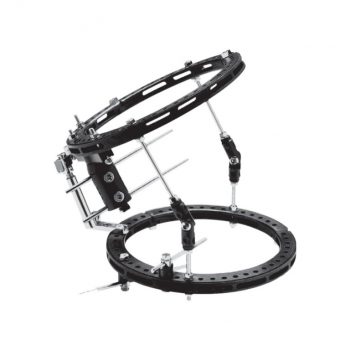
The Hybrid External Fixator: A Comprehensive Orthopedic Guide
The Hybrid External Fixator represents a significant advancement in orthopedic trauma and reconstructive surgery. Combining the best features of traditional ring fixators and unilateral external fixators, this versatile device offers robust stabilization and precise control for a wide array of complex musculoskeletal conditions. As expert orthopedic specialists and medical SEO copywriters, we aim to provide an exhaustive guide to understanding the design, applications, biomechanics, and patient benefits of this indispensable instrument.
1. Introduction & Overview of the Hybrid External Fixator
A Hybrid External Fixator is an orthopedic surgical device used to stabilize bone fractures or correct bone deformities from outside the body. It derives its "hybrid" nature from integrating elements of two distinct external fixation systems: a circular (ring) fixator, typically used for periarticular stabilization, and a unilateral (half-pin) fixator, commonly employed for diaphyseal fractures. This unique combination allows surgeons to achieve multiplanar stability, precise bone fragment manipulation, and controlled load-bearing capabilities, particularly in complex periarticular fractures where soft tissue conditions preclude internal fixation or in cases requiring gradual deformity correction.
Key Advantages of Hybrid External Fixators:
* Versatility: Adaptable to various fracture patterns and anatomical locations, especially around joints.
* Enhanced Stability: Offers rigid fixation with multiplanar control, crucial for complex fractures.
* Minimally Invasive: Reduces soft tissue dissection compared to open internal fixation, preserving blood supply.
* Damage Control Orthopedics: Ideal for initial stabilization in polytrauma patients or open fractures with significant soft tissue injury.
* Gradual Correction: Facilitates limb lengthening and complex deformity correction over time.
* Adjustability: Allows for post-operative adjustments to optimize fracture reduction or deformity correction.
* Reduced Infection Risk: Keeps hardware away from the fracture site, minimizing deep infection risk in contaminated wounds.
2. Deep-dive into Technical Specifications & Mechanisms
The efficacy of a Hybrid External Fixator lies in its sophisticated design and the biomechanical principles it leverages.
2.1. Design & Materials
Hybrid external fixators are modular systems composed of various interconnected components, allowing for customized constructs tailored to individual patient needs and fracture configurations.
Primary Components:
* Rings: Full or partial rings (usually carbon fiber or aluminum alloy) that encircle the limb, providing a stable base for wire attachment, particularly near joints.
* Half-Pins (Schanz Screws): Threaded pins inserted directly into the bone from one side, offering strong anchorage in the diaphysis. Made of stainless steel or titanium.
* Wires (Kirschner Wires, Olive Wires): Thin wires passed through the bone and tensioned to rings, primarily used for epiphyseal/metaphyseal segments. Olive wires have a stop bead to allow for compression/distraction.
* Connecting Rods: Link rings to half-pins or connect different ring segments, providing structural integrity and allowing for length adjustment. Made of stainless steel, titanium, or carbon fiber.
* Clamps & Posts: Used to secure connecting rods to rings or half-pins, facilitating angular and translational adjustments.
* Hinges & Articulated Joints: Enable controlled movement or gradual correction of angular deformities.
Material Considerations:
* Stainless Steel: High strength, biocompatible, widely used for pins, rods, and clamps.
* Titanium: Lighter, excellent biocompatibility, lower artifact on MRI/CT scans, often used for pins and specific components.
* Carbon Fiber: Lightweight, radiolucent (allowing better radiographic visualization of the bone), used for rings and some rods. This material is particularly beneficial for reducing overall frame weight and improving imaging quality.
* Hydroxyapatite Coating: Some pins may feature this coating to promote osteointegration and reduce pin loosening or infection risk.
2.2. Biomechanics
The biomechanical behavior of a hybrid external fixator is critical for successful treatment outcomes. It must provide sufficient stability for healing while allowing controlled micromotion to stimulate callus formation.
Key Biomechanical Principles:
* Multiplanar Stability: Achieved by combining tensioned wires (providing axial and torsional stability) with half-pins (providing rigid fixation in one plane). This is particularly important for periarticular fractures.
* Load Sharing: The frame shares the load with the bone, preventing excessive stress shielding while protecting the fracture site.
* Stiffness vs. Dynamization: The construct can be designed for rigid fixation initially, then "dynamized" (reducing stiffness) later in the healing process to encourage weight-bearing and bone remodeling.
* Axial Compression/Distraction: Achieved through nuts on threaded rods or specific distraction/compression units, allowing for fragment apposition or gradual lengthening.
* Torsional Stability: Provided by the geometry of the frame, especially the tensioned wires in ring components, which resist twisting forces.
* Bending Stability: Achieved by the overall construct rigidity and the distance of the frame from the bone.
Factors Influencing Stability:
* Number and diameter of pins/wires.
* Pin/wire configuration (spread, angle, tension).
* Distance of the frame from the bone.
* Material properties of components.
* Overall frame design (e.g., number of rings, connecting rods).
3. Extensive Clinical Indications & Usage
Hybrid External Fixators are highly versatile and indicated for a broad spectrum of orthopedic conditions, particularly those that are complex, require gradual correction, or involve significant soft tissue compromise.
3.1. Detailed Surgical or Clinical Applications
Common Indications:
| Application Area | Specific Conditions | Why Hybrid Fixator is Used The Hybrid External Fixator is a marvel of orthopedic engineering, representing a synthesis of two distinct external fixation principles: the stability and versatility of an Ilizarov-type ring fixator and the directness of a unilateral (half-pin) external fixator. This combination allows for optimized treatment of complex fractures, major deformity corrections, and bone transport procedures, especially in situations where soft tissue conditions are compromised or when gradual correction is paramount.
This comprehensive guide delves into every critical aspect of the Hybrid External Fixator, from its intricate design to its profound impact on patient outcomes.
2. Deep-dive into Technical Specifications / Mechanisms
The intelligent design and robust materials of the Hybrid External Fixator are fundamental to its clinical success.
2.1. Design & Materials
The Hybrid External Fixator is a modular system, allowing for bespoke constructs tailored to the specific anatomical location and pathological condition. Its components are engineered for strength, biocompatibility, and adjustability.
Core Components and Their Materials:
| Component | Primary Materials | Function The Hybrid External Fixator is a versatile and robust surgical implant designed to stabilize bone fragments, manage complex fractures, facilitate limb lengthening, and correct deformities without the need for internal hardware at the fracture site. Its "hybrid" designation stems from its ability to combine the principles of both unilateral (half-pin) external fixators and circular (ring) fixators. This allows for superior stability and adaptability, particularly in juxta-articular and periarticular fractures where a full ring fixator might be cumbersome or a unilateral fixator insufficient.
This comprehensive guide, crafted by an expert Medical SEO Copywriter and Orthopedic Specialist, will explore the Hybrid External Fixator in exhaustive detail, covering its design, intricate biomechanics, wide range of clinical applications, patient care protocols, and the significant improvements it offers in patient outcomes.
2. Deep-dive into Technical Specifications / Mechanisms
The sophisticated engineering of the Hybrid External Fixator is what makes it such a powerful tool in orthopedic surgery. Understanding its components, materials, and biomechanical principles is key to appreciating its clinical utility.
2.1. Design & Materials
The Hybrid External Fixator is a modular system, allowing surgeons to construct a custom frame tailored to the specific needs of each patient and the unique characteristics of their injury or deformity. The components are designed for strength, adjustability, and biocompatibility.
Key Components and Their Properties:
| Component Type | Primary Materials | Function in the Frame