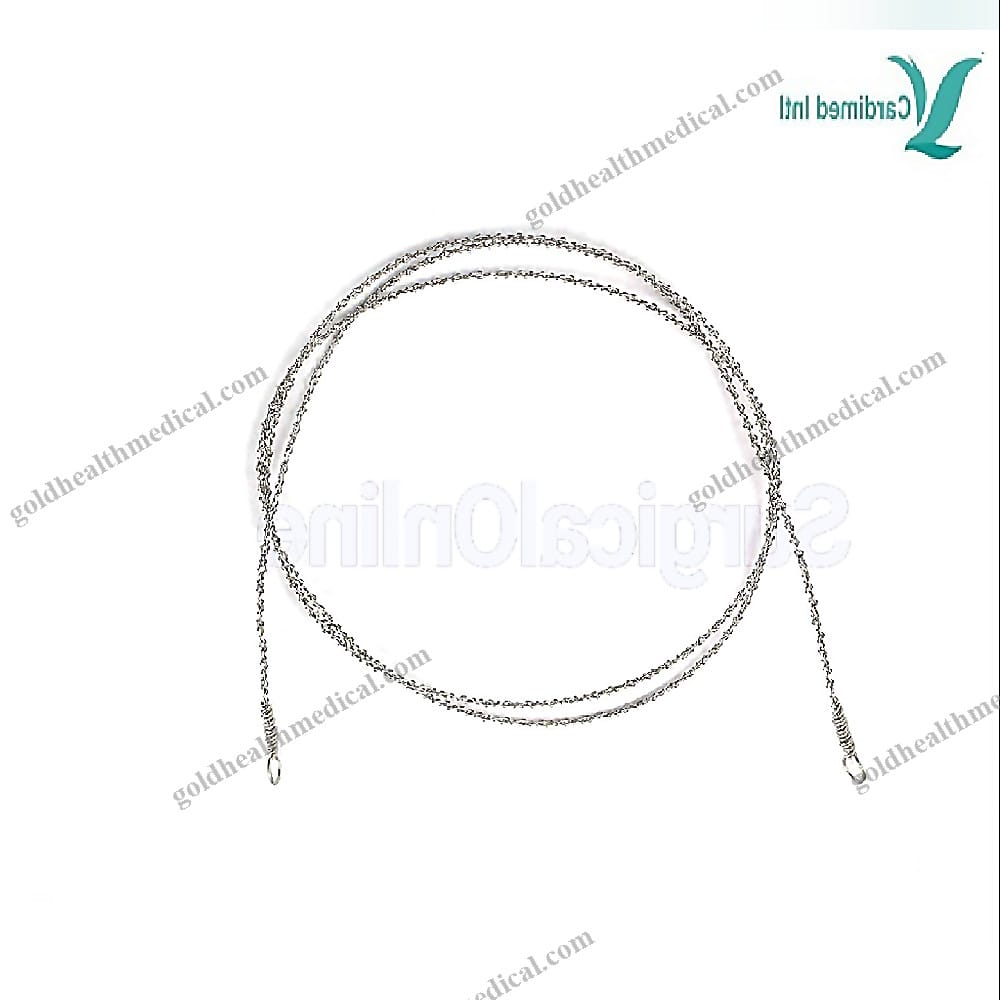
The Gigli Saw (Wire Saw): Precision in Orthopedic Bone Surgery
Welcome to our comprehensive guide on the Gigli Saw, a fundamental and highly specialized instrument in orthopedic surgery. As an essential tool for precise bone cutting, understanding the Gigli Saw offers valuable insight into the intricate world of surgical procedures designed to improve patient mobility and quality of life. While modern orthopedics utilizes a vast array of advanced technologies, the Gigli Saw maintains its relevance due to its unique design, versatility, and ability to perform specific types of bone cuts with remarkable accuracy. This guide aims to provide patients with an authoritative yet easy-to-understand overview of this critical surgical instrument, covering its design, applications, maintenance, and impact on patient outcomes.
Comprehensive Introduction & Overview
The Gigli Saw, named after its inventor, Italian gynecologist Leonardo Gigli, is a specialized wire saw designed for cutting bone. Developed in the late 19th century, initially for obstetric procedures (symphysiotomy), its utility quickly expanded into orthopedic and neurosurgical fields. Unlike conventional saws with a flat blade, the Gigli Saw consists of a flexible, abrasive wire with sharp cutting edges, typically operated by two handles. This unique design allows surgeons to make precise, controlled cuts in bone, often in hard-to-reach areas or when a curved osteotomy (bone cut) is required.
In contemporary orthopedic practice, the Gigli Saw serves as a testament to elegant simplicity and effective design. It is employed in a variety of procedures where accuracy, minimal bone loss, and controlled bone division are paramount. Understanding this instrument helps demystify a part of the surgical process, empowering patients with knowledge about the tools and techniques used to restore their musculoskeletal health. It's important to remember that while the Gigli Saw is a powerful tool, its effective and safe use relies entirely on the skill and experience of the operating surgeon.
Deep-dive into Technical Specifications & Mechanisms
Design and Materials
The Gigli Saw's design is deceptively simple yet highly effective, built for durability, flexibility, and cutting efficiency:
- Wire Construction: The core of the Gigli Saw is a slender wire, typically manufactured from high-tensile medical-grade stainless steel. This wire is not a solid strand but rather composed of multiple smaller wires twisted together in a helix pattern. This twisting creates a continuous series of sharp, abrasive edges along the length of the wire, enabling it to effectively abrade and cut through bone tissue. Some modern variants may incorporate other alloys for enhanced strength and flexibility.
- Handle Mechanism: The wire is designed to attach to two distinct handles, one at each end. These handles come in various designs, including T-handles, loop handles, or ring handles, made from stainless steel or high-grade polymers. They provide the surgeon with a secure grip and leverage to apply the necessary sawing motion. The detachable nature of the handles allows for easy threading of the wire around a bone or through a small incision.
- Length and Diameter: Gigli Saws are available in various lengths (e.g., 20 cm to 50 cm or more) and diameters to suit different surgical requirements and bone sizes. A finer wire might be used for smaller bones or more delicate cuts, while a thicker, more robust wire is suitable for larger bone structures.
- Cutting Action: The cutting mechanism is based on abrasive friction. The twisted wire, when pulled back and forth through bone tissue, grinds away microscopic particles of bone, progressively deepening the cut.
Biomechanics of Bone Cutting
The biomechanics of the Gigli Saw are critical to its efficacy and safety:
- Controlled Osteotomy: The hand-powered, controlled motion allows the surgeon to make precise cuts with a high degree of tactile feedback. This is crucial for complex osteotomies where the exact angle and plane of the cut are vital for reconstructive success.
- Minimizing Heat Generation: Any bone cutting generates heat, which can lead to thermal necrosis (death) of bone cells, impairing healing. The Gigli Saw, when used with proper technique and often accompanied by continuous irrigation with saline solution, helps dissipate heat effectively. The relatively thin wire and the back-and-forth motion distribute heat more evenly than some high-speed rotary tools.
- Narrow Kerf: The "kerf" refers to the width of the cut made by a saw. The Gigli Saw creates a very narrow kerf compared to many oscillating or reciprocating power saws. This means less bone material is removed during the cut, which can be advantageous in reconstructive procedures where preserving bone stock is important.
- Versatility in Plane: Its flexibility allows for cuts that are straight, curved, or angled, depending on the surgeon's manipulation and the bone's anatomy. This is particularly useful in procedures requiring complex bone re-alignment.
Extensive Clinical Indications & Usage
The Gigli Saw's versatility makes it valuable across several surgical disciplines, particularly in orthopedics.
Orthopedic Surgical Applications
- Amputations: Historically, the Gigli Saw was a primary tool for amputations, providing a clean and efficient way to transect bone. While power saws are now common, it still finds use in certain trauma situations or specific settings.
- Osteotomies (Bone Reshaping): This is perhaps its most common application. Osteotomies involve cutting and reshaping bones to correct deformities, realign joints, or address conditions like arthritis.
- Corrective Osteotomies: Used in procedures to correct angular deformities in long bones (e.g., tibia, femur) or to address conditions like genu varum (bow-legs) or genu valgum (knock-knees).
- Pelvic Osteotomies: Employed in pediatric orthopedics for procedures like Salter osteotomy or Dega osteotomy to reshape the pelvis and improve hip joint coverage in conditions like developmental dysplasia of the hip.
- Limb Lengthening: Essential for precise bone cuts when performing osteotomies prior to the application of external fixators for limb lengthening procedures.
- Joint Arthroplasty (e.g., Hip/Knee Replacement): While specific cutting blocks and power saws are standard for primary cuts, the Gigli Saw can be used for revision surgeries or for specific, intricate cuts around prosthetics where a flexible, fine instrument is needed.
- Bone Tumor Resection: In some cases, for precise margins around bone tumors, a Gigli Saw can be utilized to achieve clean cuts while preserving as much healthy bone as possible.
- Spinal Surgery: Less common today with the advent of high-speed burrs, but historically used for specific laminotomies or laminectomies to decompress neural structures.
- Craniotomy (Neurosurgery): Specialized Gigli Saws are used in neurosurgery to create precise openings in the skull for accessing the brain, offering a controlled method for bone flap creation.
Fitting and Usage Instructions (Simplified for Patient Understanding)
From a patient's perspective, understanding how the Gigli Saw is used by the surgical team can provide reassurance regarding the precision of the procedure.
- Preparation: After making an incision, the surgeon carefully exposes the bone to be cut. In many cases, a guide wire or drill hole might be created to facilitate the passage of the Gigli Saw wire around or through the bone.
- Threading the Wire: The Gigli Saw wire, often attached to a specialized introducer tool, is carefully guided around the bone segment that needs to be cut. This ensures that the wire is positioned precisely along the intended line of osteotomy.
- Attaching Handles: Once the wire is correctly positioned, the handles are securely attached to each end of the wire.
- Sawing Motion: The surgeon, often assisted by another team member, then applies a controlled, back-and-forth sawing motion. Both hands are used to maintain tension and guide the wire. The movement is smooth and rhythmic, allowing the abrasive wire to gradually cut through the bone.
- Irrigation: Throughout the cutting process, sterile saline solution is continuously irrigated onto the bone and saw wire. This serves two critical purposes:
- Cooling: To prevent excessive heat buildup, which could damage bone cells (thermal necrosis).
- Clearing Debris: To wash away bone dust and debris, maintaining a clear field of vision and preventing clogging of the saw wire.
- Completion: Once the bone is fully transected, the handles are detached, and the wire is carefully removed. The surgeon then proceeds with the next steps of the procedure, such as repositioning the bone segments or implanting fixation devices.
The surgeon's skill in maintaining proper tension, angle, and rhythm is paramount for achieving a clean, precise cut and minimizing collateral tissue damage.
Maintenance and Sterilization Protocols
Strict adherence to maintenance and sterilization protocols is critical for patient safety and the longevity of surgical instruments.
- Immediate Post-Operative Cleaning: Immediately after use, the Gigli Saw wire and handles are thoroughly cleaned to remove all visible blood, tissue, and bone debris. This often involves manual scrubbing with enzymatic detergents.
- Disassembly: The wire is typically detached from the handles for separate cleaning and sterilization.
- Sterilization: The standard method for sterilizing Gigli Saws (and most surgical instruments) is autoclaving (steam sterilization) at high temperatures and pressures. This process effectively kills all microorganisms, including bacteria, viruses, and spores.
- Inspection: Before and after each sterilization cycle, the instruments are meticulously inspected for any signs of wear, damage, kinks in the wire, or dullness. Wires showing any signs of compromise are discarded.
- Single-Use vs. Reusable: While the handles are typically reusable, the Gigli Saw wires themselves are often designated as single-use items by manufacturers due to the risk of dulling, fatigue, or potential for bioburden retention after repeated use. This ensures maximum cutting efficiency and patient safety.
- Storage: Sterilized instruments are stored in sterile packaging in a clean, dry environment until needed for surgery.
Risks, Side Effects, or Contraindications
While the Gigli Saw is a valuable surgical tool, its use, like any surgical intervention, carries potential risks. Patients should always discuss these with their surgeon.
Potential Risks Associated with Gigli Saw Use
- Thermal Necrosis: As mentioned, excessive heat generated during bone cutting can lead to the death of bone cells. This risk is mitigated by proper surgical technique, continuous irrigation, and the surgeon's experience.
- Inaccurate Cuts: Although designed for precision, the accuracy of the cut depends heavily on the surgeon's skill, experience, and the proper guidance of the wire. An imprecise cut can lead to suboptimal surgical outcomes, requiring further intervention.
- Wire Breakage: While rare with high-quality instruments and proper handling, the Gigli Saw wire can potentially break during a procedure, especially if subjected to excessive force, improper tension, or if the wire is fatigued or damaged. This would necessitate removal of the broken segment and replacement, potentially prolonging surgery.
- Soft Tissue Damage: If not adequately protected by retractors or careful manipulation, surrounding soft tissues (muscles, nerves, blood vessels) can be inadvertently damaged by the moving wire.
- Infection: This is a general risk with any surgical procedure involving an incision and is not specific to the Gigli Saw. Strict sterile techniques are always employed to minimize this risk.
Contraindications or Limitations
- Extremely Dense or Sclerotic Bone: In cases of very dense or sclerotic (hardened) bone, the Gigli Saw might be less efficient and could generate more heat. Power saws or pre-drilling might be preferred in such scenarios.
- Very Fine, Intricate Cuts: For extremely delicate or intricate bone work, such as in hand or foot surgery, high-speed burrs or micro-oscillating saws might offer greater control and precision than a Gigli Saw.
- Large-Scale Resections: For very large bone resections, especially in joint replacement, power saws are often preferred for their speed and ability to use specific cutting guides.
Expert Tips from Dr. Mohammed Hutaif
"As an orthopedic specialist, I view the Gigli Saw not as an outdated instrument, but as a timeless tool that perfectly complements our modern surgical armamentarium. Its strength lies in its elegant simplicity and the unparalleled tactile feedback it provides.
My primary focus when utilizing the Gigli Saw is always on precision and patient safety. The ability to make a controlled, clean osteotomy is paramount for achieving optimal long-term outcomes, especially in corrective surgeries. I emphasize meticulous technique, ensuring the wire is precisely positioned and that the sawing motion is smooth and rhythmic. Constant irrigation is non-negotiable to protect the bone from thermal injury, a critical factor in promoting healthy bone healing.
While we have advanced power tools today, the Gigli Saw offers unique advantages, particularly in situations requiring flexibility, access to confined spaces, or when a specific type of controlled, curved cut is needed. It allows for minimal bone loss, which is incredibly beneficial in reconstructive procedures where preserving bone stock is key for future joint health.
For my patients, understanding that such a precise tool is part of their surgical journey can be reassuring. We strive to use the most appropriate instruments for each specific case, always with the goal of minimizing trauma, optimizing bone healing, and ultimately, improving their functional recovery and quality of life. The Gigli Saw, in the hands of an experienced surgeon, remains an invaluable asset in achieving these goals."
Massive FAQ Section
1. What is a Gigli Saw and why is it used?
The Gigli Saw is a specialized, flexible wire saw used in surgery, primarily for cutting bone. It consists of a twisted wire with abrasive edges and two handles. It's used for precise bone cuts (osteotomies) in orthopedic, neurosurgical, and other procedures, allowing surgeons to reshape bones, correct deformities, or remove bone segments with control.
2. Is the Gigli Saw still used in modern surgery?
Yes, absolutely. While power saws are common, the Gigli Saw remains a relevant and valuable instrument. Its unique flexibility and ability to make precise, controlled cuts, especially in confined spaces or for specific types of osteotomies, ensure its continued use in modern orthopedic, neurosurgical, and even veterinary surgery.
3. How does the Gigli Saw compare to power saws?
The Gigli Saw is hand-powered, offering superior tactile feedback and control for specific types of cuts, often with less bone loss (narrower kerf). Power saws, on the other hand, are faster and more efficient for large, straight cuts, and often used with cutting guides for high-volume procedures like joint replacements. Each has its specific advantages depending on the surgical need.
4. What kind of material is the Gigli Saw made from?
The wire of a Gigli Saw is typically made from high-tensile, medical-grade stainless steel, often twisted into a specific pattern to create abrasive cutting edges. The handles can be made from stainless steel or high-grade polymers, designed for sterilization and ergonomic grip.
5. Is the Gigli Saw sterilized before use?
Yes, all surgical instruments, including the Gigli Saw wire and handles, undergo rigorous sterilization procedures before use in surgery. The most common method is autoclaving (steam sterilization), which effectively eliminates all microorganisms to prevent infection.
6. How does the surgeon ensure a precise cut with the Gigli Saw?
Surgeons ensure precision through a combination of factors:
* Careful Planning: Pre-operative imaging and planning determine the exact line of the cut.
* Accurate Placement: The wire is meticulously threaded and positioned along the intended osteotomy line.
* Controlled Technique: The surgeon uses a smooth, rhythmic, two-handed sawing motion, maintaining constant tension and angle.
* Tactile Feedback: The hand-powered nature provides direct feedback, allowing the surgeon to feel the bone's resistance.
* Experience: The surgeon's skill and experience are paramount in achieving precise outcomes.
7. Are there any risks associated with using a Gigli Saw?
Like any surgical tool, there are potential risks, though they are minimized by skilled surgeons and proper protocols. These include:
* Thermal Necrosis: Damage to bone cells from excessive heat, mitigated by continuous irrigation.
* Inaccurate Cuts: Risk of imprecise cuts if technique is not optimal.
* Wire Breakage: Rare, but possible if the wire is fatigued or improperly used.
* Soft Tissue Damage: Risk to surrounding tissues if not adequately protected.
These risks are carefully managed by the surgical team.
8. Will I feel anything if a Gigli Saw is used during my surgery?
No, you will not feel anything. All procedures involving the Gigli Saw are performed under general anesthesia or regional anesthesia, ensuring you are completely unconscious or the surgical area is entirely numb during the operation.
9. How does the Gigli Saw contribute to patient recovery?
By enabling precise and controlled bone cuts, the Gigli Saw contributes to better patient outcomes. Precise osteotomies lead to better alignment and stability, which can result in faster and more predictable healing, reduced post-operative complications, and improved long-term functional recovery and mobility.
10. Can the Gigli Saw be used for any type of bone?
The Gigli Saw is primarily used for cutting cortical bone (the dense outer layer of bone). While versatile, it's most effective in areas where its flexibility and precise cutting action are advantageous. For very delicate, intricate bone work or extremely dense, sclerotic bone, other specialized instruments might be preferred.
11. What is an osteotomy, and how does the Gigli Saw help?
An osteotomy is a surgical procedure that involves cutting a bone to shorten, lengthen, or change its alignment. The Gigli Saw is an ideal tool for performing osteotomies because its flexible wire allows for precise, clean cuts, sometimes even curved ones, that are essential for correcting bone deformities or realigning joints with accuracy.
12. Is the Gigli Saw painful?
No, the Gigli Saw is not painful. It is used exclusively in a surgical setting while the patient is under appropriate anesthesia (general or regional), ensuring complete pain relief during the procedure. Any post-operative pain is managed with standard pain relief protocols.