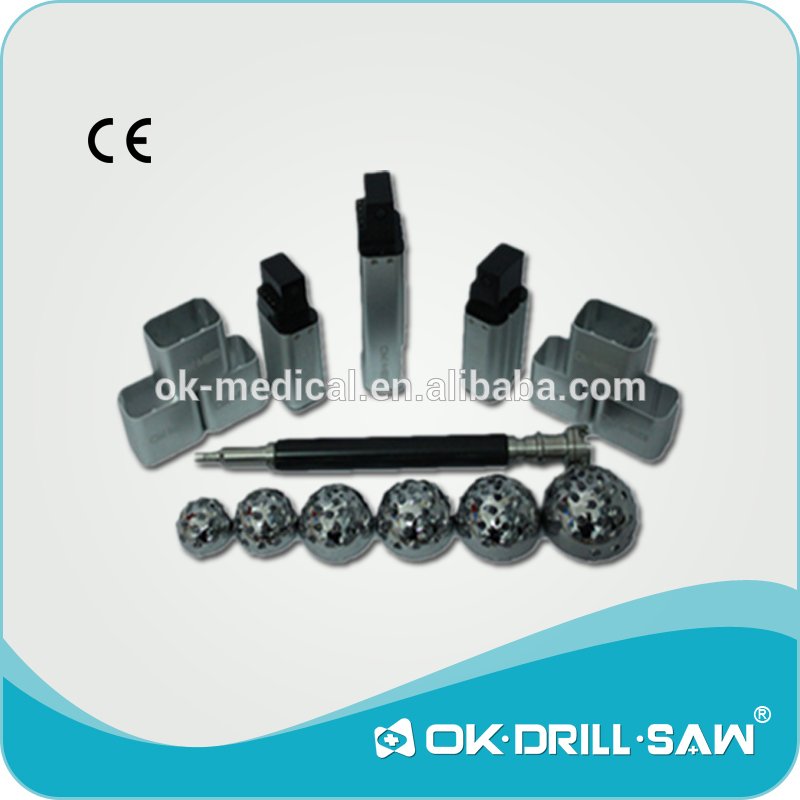
The Flexible Intramedullary Reamer System (8.0mm-16.0mm): An Orthopedic Essential
The Flexible Intramedullary Reamer System, specifically designed for a versatile range of 8.0mm to 16.0mm in increments, stands as a cornerstone instrument in modern orthopedic trauma and reconstructive surgery. This sophisticated system is indispensable for preparing the intramedullary canal of long bones, such as the femur and tibia, to accept an intramedullary nail. Its inherent flexibility allows surgeons to navigate the natural curvatures of bone, ensuring optimal canal preparation and ultimately, superior implant fit and patient outcomes.
This comprehensive guide delves deep into the technical intricacies, clinical applications, biomechanical advantages, and critical maintenance protocols associated with the Flexible Intramedullary Reamer System. Our aim is to provide orthopedic surgeons, surgical technicians, and healthcare administrators with an authoritative resource on this vital surgical tool.
Comprehensive Introduction & Overview
Intramedullary (IM) nailing has revolutionized the treatment of long bone fractures, offering stable internal fixation that allows for early mobilization and weight-bearing. Central to the success of IM nailing is the precise preparation of the intramedullary canal, a process known as reaming. Reaming involves progressively enlarging the medullary canal to create a snug fit for the IM nail, thereby maximizing cortical contact and enhancing biomechanical stability.
The Flexible Intramedullary Reamer System addresses the challenges posed by the anatomical complexities of long bones, which are rarely perfectly straight. Traditional rigid reamers struggle with these curves, potentially leading to cortical perforation, eccentric reaming, or inadequate canal preparation. Flexible reamers, however, adapt to the bone's natural contours, ensuring a concentric and uniform canal enlargement.
This system, available in a critical range of 8.0mm to 16.0mm, covers the vast majority of adult long bone reaming requirements. The incremental sizing, typically in 0.5mm or 1.0mm steps, allows for a controlled and gradual expansion of the canal, minimizing stress on the bone and reducing the risk of iatrogenic injury.
Key Advantages of Flexible Intramedullary Reaming:
- Anatomical Adaptation: Navigates natural bone curvatures (e.g., femoral bow, tibial anterior bow).
- Concentric Reaming: Creates a uniformly sized canal, optimizing nail-bone contact.
- Enhanced Stability: A tight-fitting nail provides superior primary stability, crucial for healing.
- Reduced Stress Shielding: Improved load sharing between implant and bone.
- Versatility: Suitable for various long bone fractures and pathologies.
- Controlled Process: Gradual reamer size increments allow for precise canal preparation.
Deep-Dive into Technical Specifications / Mechanisms
The efficacy of the Flexible Intramedullary Reamer System lies in its ingenious design and choice of advanced materials. Each component is engineered for precision, durability, and biological compatibility.
Design & Materials
The system typically comprises three main components: the reamer heads, the flexible shaft, and the connecting mechanism to a power source.
Reamer Heads
- Material: Primarily constructed from high-grade medical stainless steel (e.g., 17-4 PH stainless steel) or specialized high-carbon steel alloys. These materials offer exceptional hardness, wear resistance, and corrosion resistance, crucial for maintaining sharp cutting flutes.
- Cutting Flute Design: Features helical or straight flutes designed for efficient bone removal and effective debris evacuation. The geometry of the flutes is optimized to minimize heat generation and prevent clogging.
- Diameter Increments: Available in precise increments, commonly 0.5mm or 1.0mm, spanning the 8.0mm to 16.0mm range. This allows for controlled, stepwise reaming.
- Tip Design: Often features a blunt, bullet-shaped tip to follow the guide wire safely, preventing false passages.
Flexible Shaft
- Core Material: Typically made from a multi-strand, high-tensile strength, flexible alloy (e.g., specialized spring steel or nickel-titanium alloys). This core provides the necessary torque transmission while allowing for significant bending.
- Outer Sheath: A low-friction, biocompatible polymer (e.g., PTFE or medical-grade silicone) or a smooth metal coil protects the core, facilitates smooth passage within the bone, and aids in debris removal.
- Torque Transmission: Engineered to efficiently transmit rotational torque from the power drill to the reamer head, even through curved segments, without significant energy loss or shaft wind-up.
- Flexibility: The defining characteristic, allowing the shaft to conform to the natural anatomical bow of the femur or tibia, ensuring concentric reaming.
Connecting Mechanisms
- Quick-Connect Couplings: Designed for secure, rapid attachment and detachment of reamer heads and the flexible shaft to the power drill. These mechanisms are robust and prevent accidental disengagement during high-torque operations.
- Universal Compatibility: Many systems are designed to be compatible with standard orthopedic power drill systems, utilizing industry-standard AO or Hudson-type couplings.
Ergonomics
- While the reamer system itself doesn't have a "handle" in the traditional sense, the overall system design considers ease of assembly, handling during surgery, and compatibility with existing surgical instrumentation.
Table 1: Technical Specifications Overview
| Feature | Specification Detail | Benefit |
|---|---|---|
| Reamer Head Sizes | 8.0mm - 16.0mm | Covers majority of adult long bone IM nailing requirements |
| Increment Steps | 0.5mm or 1.0mm | Allows for controlled, gradual canal enlargement |
| Reamer Material | Medical-grade Stainless Steel (e.g., 17-4 PH), High-Carbon Steel Alloys | Sharpness, wear resistance, corrosion resistance |
| Shaft Core Material | Multi-strand Flexible Alloy (e.g., Spring Steel, NiTi) | High torque transmission, anatomical flexibility |
| Shaft Sheath | Biocompatible Polymer (PTFE, Silicone) or Smooth Metal Coil | Reduced friction, debris management, protection |
| Coupling Type | Quick-connect (e.g., AO, Hudson compatible) | Secure, rapid assembly/disassembly |
| Working Length | Varies (typically 300mm-450mm) | Accommodates different bone lengths |
Mechanism of Action
The flexible intramedullary reamer operates on the principle of progressive, rotational bone removal guided by a pre-inserted guide wire.
- Guide Wire Insertion: A guide wire is first inserted into the medullary canal, spanning the fracture site and extending into the distal segment. Its position is critical and confirmed by fluoroscopy.
- Initial Reaming: The smallest reamer head (e.g., 8.0mm or 8.5mm) is attached to the flexible shaft and advanced over the guide wire.
- Rotational Bone Removal: The power drill rotates the flexible shaft and reamer head. The cutting flutes shave away bone from the inner cortex, gradually enlarging the canal.
- Advance and Withdraw Technique: The surgeon employs a controlled "advance and withdraw" motion. This technique allows for efficient debris removal, prevents reamer binding, and dissipates heat.
- Sequential Sizing: The surgeon progressively increases the reamer head size in increments (e.g., 0.5mm or 1.0mm) until the desired canal diameter is achieved, which is typically 1.0mm to 1.5mm larger than the chosen intramedullary nail diameter.
- Flexibility in Action: As the reamer advances, the flexible shaft bends to follow the guide wire, which itself conforms to the bone's natural curvature. This ensures concentric reaming along the entire length of the canal, even in highly bowed bones.
- Debris Management: The design of the reamer flutes and the advance/withdraw motion facilitate the removal of bone marrow and fragments, preventing pressure buildup and potential fat embolism. Copious irrigation is often used to cool the bone and aid debris clearance.
Extensive Clinical Indications & Usage
The Flexible Intramedullary Reamer System is a critical tool for a wide array of orthopedic procedures focused on long bone stabilization.
Primary Clinical Indications
The system is primarily indicated for reaming the intramedullary canal prior to the insertion of an intramedullary nail.
- Femoral Shaft Fractures:
- Diaphyseal fractures (transverse, oblique, spiral, comminuted).
- Subtrochanteric fractures.
- Supracondylar/distal femoral fractures (often requiring retrograde nailing).
- Tibial Shaft Fractures:
- Diaphyseal fractures (transverse, oblique, spiral, comminuted).
- Proximal and distal metaphyseal fractures extending into the diaphysis.
- Humeral Shaft Fractures: While less common than plate fixation, IM nailing can be used for certain humeral shaft fractures, especially in polytrauma patients or those with poor bone quality.
- Pathological Fractures: Fractures occurring through diseased bone (e.g., metastatic lesions, primary bone tumors) requiring prophylactic or therapeutic stabilization.
- Non-unions and Mal-unions: Revision surgeries for failed fracture healing, where reaming helps to prepare the canal for a larger, more stable nail.
- Bone Tumor Resections: Following resection of bone tumors, intramedullary reaming prepares the defect for reconstruction with an IM nail.
- Osteotomies: In certain corrective osteotomies of long bones requiring IM fixation.
Detailed Surgical Technique / Usage Instructions
Successful reaming requires meticulous technique and adherence to established protocols.
-
Pre-operative Planning:
- Imaging: Obtain high-quality radiographs (AP and lateral views) and often a CT scan to assess fracture pattern, bone quality, and canal morphology.
- Templating: Use radiographic templates to estimate the appropriate nail length and diameter. The reamer size should typically be 1.0mm to 1.5mm larger than the chosen nail diameter to ensure a snug fit.
- Patient Positioning: Position the patient appropriately (e.g., supine for femoral nailing, semi-lateral for tibial nailing) to allow for optimal access and fluoroscopic visualization.
-
Access Portal Creation:
- Make an incision at the entry point (e.g., piriformis fossa or greater trochanter for femur, patellar tendon or medial parapatellar for tibia).
- Use an awl or drill to create an entry portal into the medullary canal.
-
Guide Wire Insertion & Placement:
- Insert a flexible guide wire (often J-tipped) through the entry portal, across the fracture site, and into the distal fragment.
- Crucial Step: Confirm the guide wire's central position in both AP and lateral fluoroscopic views along its entire length. Any eccentric placement will lead to eccentric reaming.
-
Initial Reaming:
- Attach the smallest reamer head (e.g., 8.0mm or 8.5mm) to the flexible shaft and connect it to the power drill.
- Advance the reamer over the guide wire, ensuring it is properly seated before engaging the drill.
-
Reaming Technique:
- Speed: Maintain a slow, controlled rotational speed (typically 200-400 RPM) to minimize heat generation.
- Advance and Withdraw: Advance the reamer slowly into the canal for 1-2 cm, then withdraw it slightly to clear bone debris. Repeat this motion. Avoid continuous, rapid advancement.
- Irrigation: Copiously irrigate the reaming site with saline to cool the bone and flush out debris. This is crucial for preventing thermal necrosis and reducing the risk of fat embolism.
- Fluoroscopic Monitoring: Continuously monitor the reamer's progression and guide wire position with fluoroscopy.
-
Sequential Sizing:
- After the smallest reamer has reached the desired depth, remove it.
- Select the next larger reamer head (e.g., 0.5mm or 1.0mm increment) and repeat the reaming process.
- Continue this stepwise enlargement until the canal is prepared to the desired diameter for the chosen IM nail.
-
Endpoint:
- The reaming is complete when the desired diameter is reached, and the surgeon feels a characteristic "cortical chatter" or a noticeable increase in resistance, indicating that the reamer is contacting the cortical bone along the entire circumference.
- Confirm the final reamed diameter and depth with fluoroscopy.
-
Troubleshooting:
- Hard Bone: Proceed very slowly, use smaller increments, and ensure adequate irrigation.
- Reamer Binding: If the reamer binds, withdraw it, clear debris, and reassess the guide wire position. Never force a bound reamer.
- Reamer Breakage: A rare but serious complication. Requires careful retrieval of fragments, often with specialized instruments and fluoroscopic guidance.
Risks, Side Effects, or Contraindications
While highly effective, intramedullary reaming carries inherent risks and contraindications that surgeons must carefully consider.
Risks & Side Effects
- Reamer Breakage: Can occur due to excessive force, reaming through very dense bone, or if the reamer becomes entrapped in a narrow segment or a malpositioned guide wire. Retrieval can be challenging and prolong surgery.
- Iatrogenic Fracture: The bone can fracture during reaming, especially in osteoporotic patients, through stress risers, or with an overly aggressive technique.
- Thermal Necrosis: Excessive heat generation from rapid reaming or insufficient irrigation can lead to osteocyte death, impairing bone healing and increasing the risk of infection.
- Fat Embolism Syndrome (FES): The most serious potential complication. Reaming increases intramedullary pressure, forcing bone marrow fat globules into the venous circulation, which can lead to pulmonary or systemic embolism.
- Mitigation: Slow, controlled reaming; adequate irrigation; venting the canal; maintaining normotension and oxygenation.
- Infection: As with any surgical procedure, there is a risk of surgical site infection, potentially exacerbated by thermal necrosis or devitalized bone.
- Neurovascular Injury: Rare, but possible with improper guide wire placement or reamer advancement, particularly near joint lines or anatomical danger zones.
- Malpositioning of Nail: If reaming is not concentric or the guide wire is eccentric, the subsequent nail may be malpositioned, leading to suboptimal fixation.
- Increased Blood Loss: Reaming can disrupt the intramedullary vascular supply, potentially leading to increased blood loss compared to unreamed techniques.
Contraindications
Absolute Contraindications:
- Active Infection: Presence of active osteomyelitis or soft tissue infection at the fracture site. Reaming in this scenario can spread infection.
- Patient Unfit for Surgery: Patients with severe comorbidities that preclude general anesthesia or major orthopedic surgery.
Relative Contraindications:
- Severely Comminuted Fractures: In some highly comminuted fractures, reaming might further destabilize fragments, making reduction and fixation more challenging. Unreamed nailing might be considered.
- Very Narrow Medullary Canals: If the canal is extremely narrow (e.g., <8.0mm in some cases) and cannot accommodate even the smallest reamer, unreamed nailing or alternative fixation methods must be considered.
- Significant Bone Defects: Large cortical defects or segmental bone loss can make reaming difficult and increase the risk of iatrogenic fracture.
- Open Fractures: While not an absolute contraindication, open fractures require thorough debridement and often antibiotic prophylaxis before reaming to minimize infection risk.
- Pediatric Patients with Open Physes: Intramedullary nailing, especially reamed nailing, is generally avoided in skeletally immature patients due to the risk of growth plate injury. Flexible nails (e.g., ESIN) are preferred in this population.
Maintenance & Sterilization Protocols
Proper maintenance and sterilization are paramount to ensure the longevity, safety, and effectiveness of the Flexible Intramedullary Reamer System. Adherence to strict protocols prevents infection and preserves instrument integrity.
Post-Use Cleaning
- Immediate Decontamination: Immediately after use, remove all gross contaminants (blood, tissue, bone debris) from the reamer heads and flexible shafts. This prevents drying and adherence of biological material.
- Manual Cleaning: Use enzymatic detergents and soft brushes to thoroughly clean all surfaces, especially the cutting flutes and internal lumen of the flexible shaft. Pay close attention to connections and crevices.
- Ultrasonic Cleaning: Follow manual cleaning with ultrasonic cleaning in an enzymatic solution to remove microscopic debris from hard-to-reach areas. Ensure instruments are fully immersed and follow manufacturer's recommended cycle times.
- Rinsing: Rinse thoroughly with demineralized or distilled water to remove all detergent residues.
Inspection
- Visual Examination: Carefully inspect each reamer head for dullness, nicks, bends, or missing cutting flutes. Inspect the flexible shaft for kinks, tears in the sheath, corrosion, or signs of fatigue.
- Functional Check: Verify that connecting mechanisms operate smoothly and securely. Ensure the shaft's flexibility is unimpaired.
- Damage Assessment: Any damaged, dull, or corroded components must be immediately removed from service and either repaired by the manufacturer or replaced. Using compromised instruments can lead to surgical complications.
Sterilization Protocols
Steam sterilization (autoclaving) is the universally accepted and most effective method for sterilizing these reusable instruments.
- Method: Steam Sterilization (Autoclaving).
- Preparation:
- Ensure all components are thoroughly cleaned and dried.
- Disassemble multi-part instruments as per manufacturer instructions (e.g., separate reamer heads from shafts if applicable) to allow steam penetration.
- Place instruments in sterilization trays or baskets, ensuring they are not overcrowded.
- Packaging: Wrap instruments in appropriate sterilization wraps or place them in rigid sterilization containers designed for steam penetration.
- Cycle Parameters (Typical, always refer to manufacturer IFU):
- Pre-vacuum Steam Sterilization:
- Temperature: 132°C (270°F) to 135°C (275°F)
- Exposure Time: 4 minutes
- Drying Time: 20-30 minutes (or as per cycle validation)
- Gravity Displacement Steam Sterilization:
- Temperature: 121°C (250°F)
- Exposure Time: 15-20 minutes
- Drying Time: 30-45 minutes (or as per cycle validation)
- Pre-vacuum Steam Sterilization:
- Validation: Adhere strictly to AAMI (Association for the Advancement of Medical Instrumentation) and ISO (International Organization for Standardization) standards for sterilization. Ensure all sterilizer monitoring (chemical indicators, biological indicators) is performed and passes.
Storage
- Store sterilized instruments in a clean, dry, temperature-controlled environment, protected from dust, moisture, and physical damage.
- Maintain the integrity of the sterile packaging until the point of use.
- Adhere to any specified shelf-life guidelines for sterile-packed components.
Biomechanics & Patient Outcome Improvements
The precise reaming achieved with a flexible system has profound implications for the biomechanics of fracture fixation and, consequently, for patient recovery and long-term outcomes.
Biomechanical Advantages
- Optimized Load Sharing: A tightly reamed canal allows the intramedullary nail to achieve maximal cortical contact. This distributes axial and torsional loads more effectively between the implant and the bone, reducing stress shielding (where the implant carries too much load, leading to bone atrophy) and promoting physiological bone remodeling.
- Enhanced Primary Stability: A snug fit within the medullary canal provides superior primary stability against bending, torsional, and axial forces. This is critical for preventing micromotion at the fracture site, which can delay or prevent healing (non-union).
- Increased Nail Stiffness: A larger diameter nail, facilitated by reaming, is inherently stiffer and stronger, capable of withstanding greater physiological loads without deformation or fatigue failure.
- Improved Fatigue Resistance: By distributing stress more evenly and minimizing micromotion, a well-reamed canal reduces the risk of implant fatigue failure over time.
- Callus Formation: The reaming process itself can stimulate the endosteal blood supply and release growth factors from the bone marrow, potentially enhancing callus formation and accelerating healing.
Patient Outcome Improvements
The biomechanical benefits directly translate into significant improvements in patient outcomes:
- Reduced Non-Union Rates: Enhanced primary stability and improved load sharing significantly lower the incidence of non-union, preventing the need for revision surgeries.
- Faster Fracture Healing: An optimal biomechanical environment and potential biological stimulation contribute to more rapid and robust fracture healing.
- Earlier Mobilization and Weight-Bearing: Patients can often begin partial or full weight-bearing sooner due to the stable fixation, accelerating rehabilitation.
- Reduced Post-operative Pain: Stable fixation minimizes micromotion at the fracture site, leading to less pain and discomfort during recovery.
- Improved Functional Recovery: Quicker healing and earlier mobilization lead to a faster return to pre-injury functional levels and daily activities.
- Lower Revision Surgery Rates: The durability and effectiveness of reamed intramedullary nailing translate to fewer implant failures and subsequent revision procedures.
- Reduced Risk of Implant Failure: Stronger fixation and better stress distribution decrease the likelihood of nail bending, breakage, or loosening.
- Potential for Smaller Incisions: While reaming itself is an invasive step, the overall IM nailing technique, when optimized, can sometimes allow for less extensive soft tissue dissection compared to plate osteosynthesis, though this is highly dependent on fracture type and location.
Massive FAQ Section
1. What is the primary purpose of a flexible intramedullary reamer system?
The primary purpose of a flexible intramedullary reamer system is to progressively enlarge and prepare the intramedullary canal of long bones (e.g., femur, tibia) to accept a precisely sized intramedullary nail. Its flexibility allows it to navigate the natural anatomical curvatures of the bone, ensuring concentric reaming and an optimal fit for the implant.
2. Why is flexibility important in intramedullary reaming?
Flexibility is crucial because long bones are not perfectly straight; they have natural curvatures (e.g., the anterior bow of the femur). A flexible reamer can follow these curves, guided by a pre-inserted guide wire, ensuring that the canal is reamed concentrically and uniformly along its entire length. This prevents eccentric reaming, cortical perforation, and allows for a better fit of the intramedullary nail.
3. What materials are typically used for flexible reamer heads and shafts?
Reamer heads are commonly made from high-grade medical stainless steel (e.g., 17-4 PH) or specialized high-carbon steel alloys for their sharpness, wear resistance, and corrosion resistance. The flexible shaft typically consists of a multi-strand, high-tensile strength flexible alloy core (like spring steel or nickel-titanium) for torque transmission, encased in a low-friction, biocompatible polymer (e.g., PTFE, silicone) or smooth metal coil sheath.
4. What is the typical increment size for flexible reamers (e.g., 0.5mm, 1.0mm)?
Flexible reamer systems typically offer increments of 0.5mm or 1.0mm, ranging from 8.0mm up to 16.0mm or even larger. This allows the surgeon to gradually and precisely enlarge the canal, minimizing stress on the bone and controlling the reaming process.
5. How does reaming improve the stability of an intramedullary nail?
Reaming creates a uniformly sized canal that allows for the insertion of a larger diameter intramedullary nail. This larger nail achieves maximal cortical contact within the bone, enhancing primary stability by resisting bending, torsional, and axial forces more effectively. This snug fit optimizes load sharing between the implant and the bone, leading to a more stable construct.
6. What are the main risks associated with intramedullary reaming?
The main risks include reamer breakage, iatrogenic fracture of the bone, thermal necrosis (bone death due to heat), fat embolism syndrome (release of fat globules into the bloodstream), infection, neurovascular injury, and malpositioning of the nail if reaming is not concentric.
7. How can the risk of thermal necrosis be minimized during reaming?
The risk of thermal necrosis can be minimized by using a slow, controlled rotational speed (typically 200-400 RPM), employing an "advance and withdraw" technique to clear debris, and most importantly, through copious irrigation of the reaming site with saline to cool the bone.
8. What is the recommended sterilization method for these instruments?
The recommended and most widely used sterilization method for flexible intramedullary reamer systems is steam sterilization (autoclaving). Instruments must be thoroughly cleaned, inspected, and properly packaged before undergoing a validated steam sterilization cycle (e.g., 132-135°C for 4 minutes in a pre-vacuum cycle).
9. Can flexible reamers be used in pediatric patients?
Generally, reamed intramedullary nailing, and thus flexible reamers, are avoided in pediatric patients, especially those with open physes (growth plates), due to the risk of growth plate injury and subsequent growth disturbances. Flexible nails (e.g., elastic stable intramedullary nails, ESIN) that do not require reaming are typically preferred for pediatric long bone fractures.
10. What are the signs that reaming is complete and the canal is adequately prepared?
Reaming is considered complete when the desired canal diameter (typically 1.0mm to 1.5mm larger than the chosen nail) is achieved. Surgeons often feel a characteristic "cortical chatter" or a distinct increase in resistance, indicating that the reamer is contacting the cortical bone along the entire circumference. Fluoroscopic confirmation of the reamer's depth and concentricity is also essential.
11. How do flexible reamers contribute to faster patient recovery?
By enabling a larger, more stable intramedullary nail, flexible reamers facilitate superior primary stability and load sharing. This leads to faster fracture healing, reduced post-operative pain, and allows for earlier patient mobilization and weight-bearing, all of which contribute to a significantly quicker and more complete functional recovery.
12. What specific types of fractures benefit most from reamed intramedullary nailing?
Diaphyseal fractures of the femur and tibia (transverse, oblique, spiral, comminuted) are the primary beneficiaries. Additionally, subtrochanteric and supracondylar femoral fractures, certain humeral shaft fractures, pathological fractures, and non-unions/mal-unions requiring revision surgery also benefit significantly from the stable fixation provided by reamed intramedullary nailing.