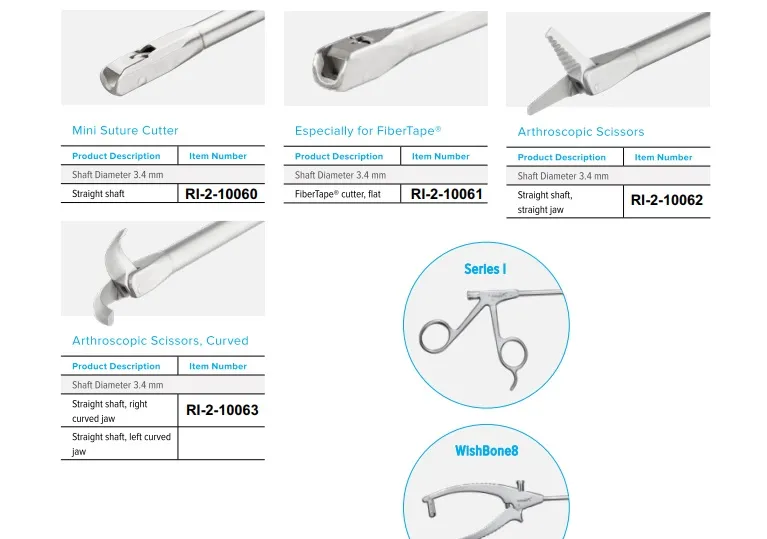
Flat Suture Tape (FiberTape): A Comprehensive Orthopedic Innovation Guide
The landscape of orthopedic surgery is continually evolving, driven by innovations that promise stronger repairs, faster recoveries, and improved patient outcomes. Among these advancements, Flat Suture Tape, often exemplified by products like FiberTape®, stands out as a revolutionary tool. This comprehensive guide delves into the intricate details of Flat Suture Tape, exploring its design, biomechanical advantages, extensive clinical applications, usage protocols, and its transformative impact on modern orthopedic practice.
1. Introduction & Overview: Redefining Orthopedic Repair
Flat Suture Tape represents a significant paradigm shift from traditional round sutures, offering superior strength, reduced tissue damage, and enhanced load distribution. Developed from ultra-high molecular weight polyethylene (UHMWPE), this specialized tape provides surgeons with a robust solution for a myriad of soft tissue repairs and augmentations, particularly in high-demand joints like the shoulder, knee, and ankle. Its unique flat profile is engineered to optimize the biomechanical environment, fostering more secure repairs and facilitating accelerated rehabilitation protocols.
Key Advantages of Flat Suture Tape:
- Superior Strength: Significantly stronger than conventional sutures.
- Reduced Tissue Cut-Through: Wider footprint minimizes damage to delicate tendons and ligaments.
- Enhanced Load Distribution: Spreads forces over a larger area, reducing stress concentrations.
- Improved Fixation: Creates a more stable construct, especially with suture anchors.
- Biocompatibility: Made from inert, well-tolerated materials.
- Versatility: Applicable across numerous orthopedic procedures.
This guide aims to provide orthopedic surgeons, residents, physical therapists, and patients with an authoritative resource on the technical specifications, clinical utility, and patient benefits associated with Flat Suture Tape technology.
2. Deep-Dive into Technical Specifications & Mechanisms
The innovation of Flat Suture Tape lies in its meticulously engineered design and material composition, which collectively contribute to its unparalleled performance in orthopedic repair.
2.1 Design and Materials
Flat Suture Tape is predominantly constructed from Ultra-High Molecular Weight Polyethylene (UHMWPE), a material renowned for its exceptional properties.
- UHMWPE Properties:
- High Tensile Strength: One of the strongest fibers by weight, providing robust repairs.
- Abrasion Resistance: Highly resistant to wear and tear, crucial for dynamic joint environments.
- Low Friction Coefficient: Smooth surface helps minimize tissue irritation.
- Chemical Inertness: Highly biocompatible, eliciting minimal tissue response.
- Hydrophobic: Does not absorb water, maintaining strength in bodily fluids.
- Flat Profile vs. Round Suture:
- Increased Surface Area: The flat configuration distributes load over a significantly larger area compared to a round suture of equivalent cross-sectional area. This is critical for preventing the "cheese-wire" effect, where round sutures can cut through soft tissue under tension.
- Reduced Pressure Points: By spreading the force, it minimizes localized pressure on delicate tissues, promoting better healing and reducing the risk of tissue necrosis.
- Enhanced Bone-Suture Interface: When used with suture anchors, the flat tape creates a wider footprint against the bone, potentially improving pull-out strength and stability.
- Weave/Construction:
- Flat Suture Tapes are typically constructed using a multi-strand braided technique, similar to traditional sutures, but adapted for the flat profile. This braiding contributes to its high strength and resistance to fraying.
- Some tapes may incorporate specific coatings or color patterns for enhanced visibility during arthroscopic procedures.
- Sizes and Configurations:
- Available in various widths (e.g., 1.3 mm to 2.0 mm) and lengths to accommodate different anatomical structures and surgical requirements.
- Often supplied pre-loaded onto specialized needles or integrated into all-suture anchor systems for ease of use.
2.2 Biomechanics
The biomechanical advantages of Flat Suture Tape are at the core of its clinical efficacy.
- Optimized Load Distribution:
- The primary biomechanical benefit is its ability to distribute forces over a wider area. In studies, Flat Suture Tape has been shown to reduce peak stresses on tissue by up to 2.5 times compared to traditional sutures, significantly mitigating the risk of tissue cut-through.
- This wider "footprint" allows for more effective compression of the repaired tissue against bone or other tissues, promoting a stronger biological healing response.
- Superior Tensile Strength:
- Flat Suture Tapes exhibit significantly higher ultimate tensile strength than comparable traditional sutures. This means they can withstand greater forces before breaking, providing a more secure initial repair.
- For example, a 1.3 mm FiberTape can have a tensile strength comparable to or exceeding multiple strands of a larger traditional suture.
- Enhanced Resistance to Cyclic Loading:
- Orthopedic repairs are subjected to repetitive stresses during daily activities and rehabilitation. Flat Suture Tape demonstrates excellent resistance to cyclic loading, meaning it maintains its integrity and strength over numerous cycles of stress, reducing the risk of fatigue failure. This property is crucial for early mobilization and accelerated rehabilitation protocols.
- Improved Bone-Suture Interface:
- When secured with suture anchors, the flat profile of the tape provides a broader contact area with the anchor and the bone tunnel, leading to improved fixation strength. This reduces the likelihood of anchor pull-out, especially in compromised bone quality.
- The reduced profile when compressed into an anchor eyelet can also minimize bulk, which is advantageous in confined anatomical spaces.
3. Extensive Clinical Indications & Usage
Flat Suture Tape has revolutionized numerous orthopedic procedures, offering surgeons enhanced repair capabilities and improved outcomes.
3.1 Detailed Surgical Applications
The versatility and strength of Flat Suture Tape make it indispensable across various orthopedic subspecialties.
- Rotator Cuff Repair (Shoulder):
- Application: Used for repairing tears of the supraspinatus, infraspinatus, subscapularis, and teres minor tendons. Can be used in single-row, double-row, or transosseous equivalent repair techniques.
- Benefits:
- Reduced Re-tear Rates: Studies show lower re-tear rates compared to traditional sutures due to superior initial fixation and reduced cut-through.
- Wider Compression Footprint: Better compression of the tendon-bone interface promotes more robust healing.
- Enhanced Strength: Allows for more aggressive early rehabilitation.
- ACL/PCL Reconstruction (Knee):
- Application: Primarily used for internal bracing or augmentation of graft constructs. Can also be used for primary graft fixation in certain scenarios.
- Benefits:
- Internal Bracing: Provides immediate mechanical stability to the reconstructed ligament, protecting the graft during the critical healing phase and allowing for earlier, more aggressive rehabilitation.
- Graft Augmentation: Enhances the strength of the graft, particularly in revision cases or in patients with high activity levels.
- Reduced Graft Strain: Protects the biological graft from excessive forces, potentially improving graft incorporation and maturation.
- Achilles Tendon Repair (Ankle):
- Application: Used for primary repair of acute Achilles tendon ruptures or chronic repairs.
- Benefits:
- Stronger Repair: Offers superior strength for robust fixation, crucial for a tendon subjected to high loads.
- Reduced Gapping: Minimizes gapping at the repair site, promoting better healing.
- Early Mobilization: Allows for earlier weight-bearing and range of motion, accelerating recovery.
- Shoulder Instability (Labral Repair, Capsular Shift):
- Application: Repairing Bankart lesions, SLAP tears, and for capsular plication procedures.
- Benefits:
- Secure Fixation: Provides strong fixation of the labrum to the glenoid, reducing the risk of recurrent instability.
- Reduced Tissue Damage: Less likelihood of cutting through delicate labral or capsular tissue.
- AC Joint Reconstruction (Shoulder):
- Application: Used for coracoclavicular ligament reconstruction or augmentation in acute or chronic AC joint dislocations.
- Benefits:
- Robust Stabilization: Provides strong and durable fixation to restore AC joint stability.
- Dynamic Stability: Can be used in internal bracing techniques to allow some physiological motion while protecting healing ligaments.
- Medial Patellofemoral Ligament (MPFL) Reconstruction (Knee):
- Application: Used to reconstruct the MPFL in cases of recurrent patellar instability.
- Benefits:
- Strong Fixation: Ensures secure attachment of the reconstructed ligament to the patella and femur.
- Precise Tensioning: Allows for accurate tensioning to restore patellar tracking without overtightening.
- Foot & Ankle Procedures:
- Application: Lateral ankle ligament repair (Brostrom repair augmentation), syndesmosis repair (e.g., in ankle fractures), spring ligament repair.
- Benefits:
- Enhanced Ligament Strength: Provides robust repair for critical stabilizing ligaments.
- Dynamic Syndesmosis Repair: Can be used in "suture button" constructs for syndesmosis fixation, allowing micro-motion that may promote healing while maintaining stability.
3.2 Fitting and Usage Instructions (General Principles)
While specific techniques vary by procedure and surgeon preference, general principles guide the effective use of Flat Suture Tape.
- Pre-operative Planning:
- Anchor Selection: Choose suture anchors compatible with flat tape. Many modern all-suture anchors and some traditional screw-in anchors are designed for tape.
- Tunnel Placement: Ensure bone tunnels are appropriately sized and positioned to accommodate the tape and prevent impingement.
- Handling and Preparation:
- Aseptic Technique: Always maintain strict aseptic technique as the tape is a sterile implant.
- Inspection: Inspect packaging for integrity prior to opening.
- Sterilization: Flat Suture Tape is supplied pre-sterilized and is for single-use only. Re-sterilization is not permitted.
- Tissue Passage:
- Use appropriate suture passers or specialized instruments designed to accommodate the flat profile.
- Ensure the tape lies flat as it passes through tissue to maximize its load-distributing properties and avoid twisting.
- Knot Tying:
- Specific Knots: While traditional knots can be used, surgeons often adapt techniques or utilize specific locking knots (e.g., modified surgeon's knot, flat tape specific knots) to ensure security and minimize bulk.
- Flat Lay: Aim for knots that lie flat and do not create excessive bulk, especially in confined spaces.
- Security: Ensure adequate throws to achieve knot security, as the slick nature of UHMWPE can sometimes challenge knot integrity if not tied correctly.
- Tensioning:
- Appropriate Tension: Apply tension gradually and evenly to achieve the desired tissue apposition without overtightening, which can lead to tissue strangulation or necrosis.
- Visual Confirmation: Visually confirm tissue compression and stability.
- Post-operative Management:
- Rehabilitation: The enhanced strength of Flat Suture Tape often allows for more aggressive, early rehabilitation protocols, but these must be tailored to the specific repair and patient.
- Imaging: The tape is radiolucent and generally does not interfere with MRI or X-ray imaging.
3.3 Maintenance and Sterilization Protocols
Flat Suture Tape is a single-use, sterile implant.
- Sterilization: The product is terminally sterilized by the manufacturer (e.g., using ethylene oxide or gamma irradiation) and delivered in a sterile, sealed package.
- Handling: Only open the sterile package in a sterile field immediately prior to use.
- Storage: Store in its original packaging at room temperature, away from direct sunlight and moisture. Do not use if the package is damaged or expired.
- Disposal: Any unused product or packaging must be disposed of as medical waste in accordance with hospital protocols. Re-sterilization and reuse are strictly prohibited.
3.4 Patient Outcome Improvements
The adoption of Flat Suture Tape directly translates into tangible benefits for patients.
- Reduced Re-tear Rates: Particularly well-documented in rotator cuff repair, leading to fewer revision surgeries.
- Earlier Rehabilitation & Return to Activity: The robust initial fixation allows for more aggressive physical therapy, leading to faster recovery times and an earlier return to daily activities, work, and sports.
- Improved Functional Outcomes: Patients often experience better range of motion, strength, and overall joint stability post-operatively.
- Reduced Post-operative Pain: Potentially due to less tissue trauma from reduced cut-through and a more stable repair construct.
- Enhanced Patient Satisfaction: A combination of faster recovery, better function, and reduced complications contributes to higher patient satisfaction.
4. Risks, Side Effects, or Contraindications
While Flat Suture Tape offers significant advantages, it is essential to be aware of potential risks, side effects, and contraindications, similar to any surgical implant.
4.1 Potential Risks and Side Effects
- Infection: As with any surgical procedure involving an implant, there is a risk of infection. Strict aseptic technique is crucial.
- Suture Irritation/Inflammation: Although UHMWPE is highly biocompatible, some patients may experience mild, localized inflammatory reactions to the foreign material. This is generally rare and self-limiting.
- Suture Breakage: While extremely strong, the tape can break under extreme, unanticipated loads or due to improper surgical technique (e.g., knot slippage, overtightening leading to material fatigue).
- Anchor Pull-out/Loosening: The security of the repair relies on the integrity of the bone-anchor interface. Poor bone quality, improper anchor placement, or excessive early loading can lead to anchor failure.
- Tissue Necrosis: Overtightening of the tape can compromise blood supply to the repaired tissue, potentially leading to tissue death.
- Stiffness/Reduced Range of Motion (ROM): If the repair is too tight or if rehabilitation is not adequately performed, it can lead to joint stiffness.
- Nerve or Vascular Injury: A general surgical risk, particularly during suture passage or anchor insertion.
4.2 Contraindications
- Active Infection: The presence of an active infection in or around the surgical site is an absolute contraindication to implanting any foreign material, including Flat Suture Tape.
- Compromised Tissue Quality: In cases of severely compromised bone quality (e.g., severe osteoporosis) or extremely poor soft tissue quality that cannot adequately hold sutures, the effectiveness of the tape may be limited, and alternative fixation methods or augmentation may be necessary.
- Known Allergies: While rare for UHMWPE, a known allergy to the material or any components of the device would be a contraindication.
- Insufficient Surgical Skill/Training: The proper use of Flat Suture Tape, particularly knot tying and tensioning, requires specific training and experience. Inexperienced users may face challenges, increasing the risk of complications.
- Inadequate Patient Compliance: Patients unable or unwilling to adhere to post-operative rehabilitation protocols may not achieve optimal outcomes, regardless of the strength of the repair.
5. Massive FAQ Section
Q1: What is Flat Suture Tape?
A1: Flat Suture Tape (e.g., FiberTape) is an advanced orthopedic suture material made from ultra-high molecular weight polyethylene (UHMWPE). Unlike traditional round sutures, it has a flat, ribbon-like profile designed to distribute load over a wider area, reducing tissue cut-through and enhancing the strength of surgical repairs.
Q2: How is Flat Suture Tape different from traditional sutures?
A2: The primary difference is its flat cross-section, which provides a larger surface area in contact with tissue. This translates to superior load distribution, significantly reduced tissue cut-through ("cheese-wire" effect), and generally higher tensile strength compared to traditional round sutures of similar material or size.
Q3: What are the main advantages of using Flat Suture Tape in surgery?
A3: Key advantages include significantly stronger repairs, reduced risk of tissue damage (cut-through), improved load distribution, enhanced fixation stability (especially with suture anchors), and the potential for earlier and more aggressive post-operative rehabilitation due to the robust initial construct.
Q4: Is Flat Suture Tape stronger than conventional sutures?
A4: Yes, Flat Suture Tape made from UHMWPE is generally much stronger than conventional sutures of comparable size. Its material properties and flat design contribute to superior tensile strength and resistance to cyclic loading.
Q5: What types of orthopedic surgeries benefit most from Flat Suture Tape?
A5: Flat Suture Tape is widely used in surgeries requiring strong soft tissue-to-bone or soft tissue-to-soft tissue repair. Common applications include rotator cuff repair, ACL/PCL reconstruction (for internal bracing or augmentation), Achilles tendon repair, shoulder labral repair for instability, AC joint reconstruction, and various foot and ankle ligament repairs.
Q6: Is Flat Suture Tape safe? What are the risks?
A6: Flat Suture Tape is considered very safe due to its high biocompatibility. However, like any surgical implant, risks include infection, localized inflammation, rare instances of suture breakage, anchor pull-out, and potential tissue necrosis if overtightened. These risks are minimized with proper surgical technique and patient selection.
Q7: How does Flat Suture Tape improve patient recovery?
A7: By providing a stronger and more stable initial repair, Flat Suture Tape often allows surgeons to implement more aggressive and accelerated rehabilitation protocols. This can lead to earlier weight-bearing, improved range of motion, faster return to daily activities and sports, and ultimately, better long-term functional outcomes and reduced re-tear rates.
Q8: Is Flat Suture Tape absorbable or non-absorbable?
A8: Flat Suture Tape is non-absorbable. It is designed to remain permanently in the body, providing long-term mechanical support to the repaired tissue. UHMWPE is highly inert and does not degrade over time.
Q9: Does its flat design make knot tying more difficult for surgeons?
A9: While the flat profile requires surgeons to adapt their knot-tying techniques slightly compared to round sutures, it is not inherently more difficult. Surgeons often use specific locking knots or modified traditional knots to ensure the tape lies flat and the knot is secure, minimizing bulk. A short learning curve is typical.
Q10: Can Flat Suture Tape be used with any type of suture anchor?
A10: Not all suture anchors are designed to accommodate flat tape. It is crucial to use suture anchors specifically designed or indicated for use with flat suture tape to ensure proper seating, fixation, and optimal biomechanical performance. Many modern all-suture anchors are tape-compatible.
Q11: How long does Flat Suture Tape stay in the body?
A11: Flat Suture Tape is a permanent implant. It is made from non-absorbable UHMWPE and is designed to remain in the body indefinitely, providing continuous mechanical support to the repaired anatomical structures.
Q12: Is Flat Suture Tape visible on X-rays or MRI scans?
A12: Flat Suture Tape made from UHMWPE is radiolucent, meaning it does not show up on X-rays. It is also largely artifact-free on MRI scans, allowing for clear visualization of the surrounding soft tissues and bone without obscuring the surgical site.