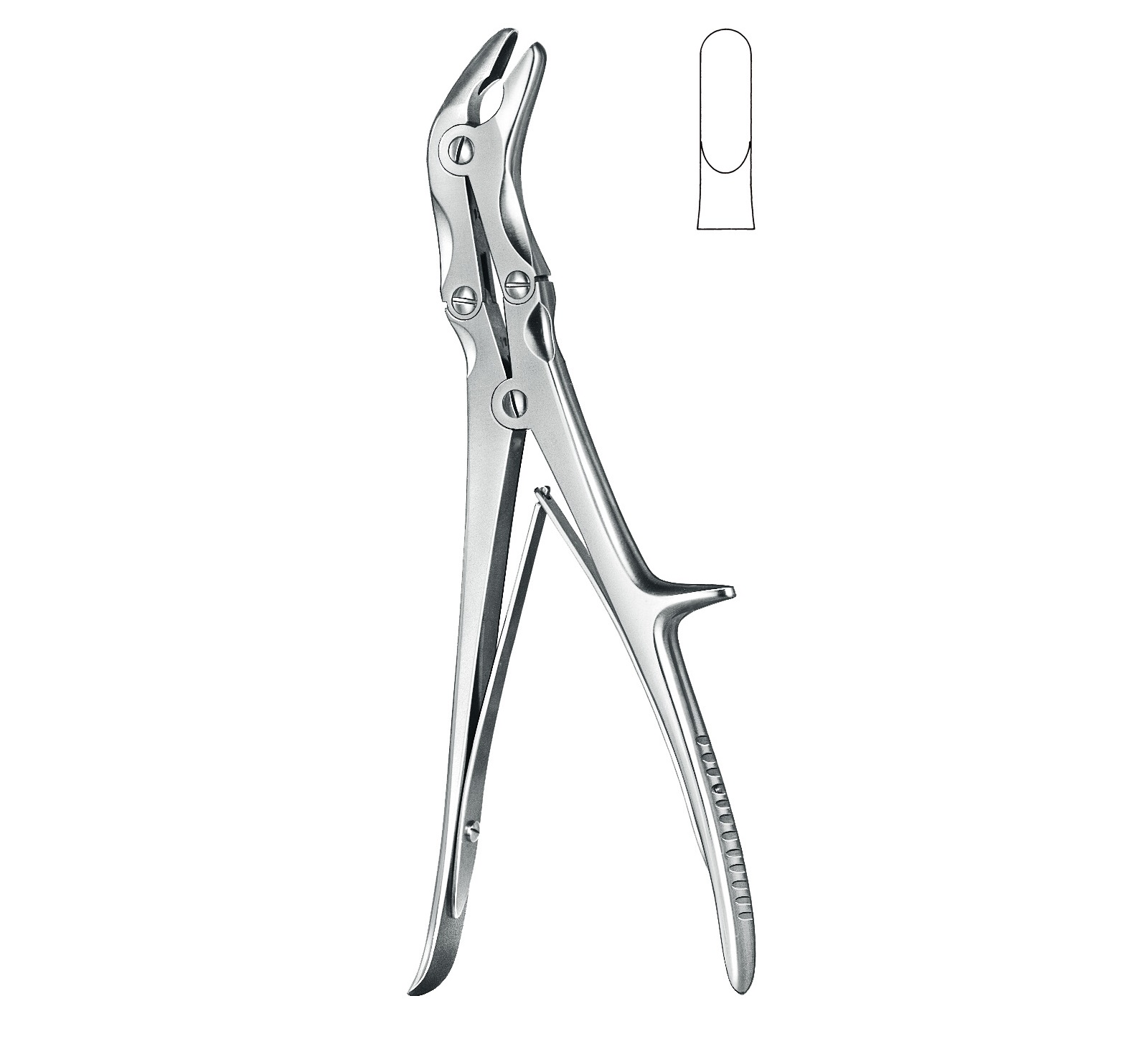
The Double-Action Bone Rongeur (Stille): An Orthopedic Essential
Comprehensive Introduction & Overview
In the intricate world of orthopedic and neurosurgical procedures, precision and control are paramount. Among the myriad of specialized instruments, the Double-Action Bone Rongeur (Stille) stands out as a foundational tool, indispensable for its ability to meticulously remove small pieces of bone, cartilage, or soft tissue with unparalleled efficiency and minimal trauma. This comprehensive guide delves into every facet of this critical instrument, from its sophisticated design and biomechanical principles to its extensive clinical applications, rigorous maintenance protocols, and the profound impact it has on patient outcomes.
The term "rongeur" originates from the French word "ronger," meaning "to gnaw," perfectly encapsulating its function. The Stille pattern, named after the renowned Swedish surgical instrument manufacturer Stille-Werner, signifies a specific design known for its robust construction, ergonomic handling, and superior cutting performance. What truly sets the "double-action" variant apart is its ingenious lever mechanism, which significantly amplifies the surgeon's applied force, allowing for smooth, powerful, and controlled bone resection with reduced hand fatigue. This guide aims to provide an exhaustive resource for surgeons, surgical technologists, sterile processing professionals, and anyone seeking a deep understanding of this vital orthopedic instrument.
Deep-Dive into Technical Specifications & Mechanisms
The Double-Action Bone Rongeur (Stille) is a marvel of surgical engineering, meticulously crafted to achieve specific biomechanical advantages. Its design, choice of materials, and the innovative double-action mechanism are central to its efficacy.
Design and Ergonomics
The Stille rongeur typically features a scissor-like configuration with two handles, a shaft, and a pair of jaws.
* Handles: Often equipped with finger rings, the handles are ergonomically designed to provide a comfortable and secure grip, minimizing hand fatigue during prolonged procedures. The length and curvature can vary to suit different surgical approaches.
* Shaft: The shaft connects the handles to the jaws, available in various lengths (e.g., 6, 8, 10 inches) to accommodate different surgical depths and access requirements.
* Jaws: The business end of the rongeur, jaws come in multiple configurations to suit specific surgical tasks:
* Straight Jaws: For general bone removal in accessible areas.
* Curved Jaws: Ideal for reaching around structures or accessing curved bone surfaces.
* Angled Jaws (e.g., 45° or 90°): Designed for navigating tight spaces and accessing bone from different orientations (e.g., up-biting, down-biting).
* Cup-Shaped Jaws: For scooping out bone fragments or soft tissue.
* Luer-Style Jaws: Known for their sharp, delicate cutting edges and often used for finer bone work.
* Kerrison-Style Jaws: Though distinct, some Stille rongeurs incorporate features for laminotomy and foraminotomy, resembling aspects of Kerrison rongeurs.
* Double-Action Mechanism: This is the defining feature. Unlike single-action rongeurs which have one pivot point, double-action rongeurs incorporate two pivot points. This sophisticated linkage system provides a compounded mechanical advantage, meaning that a smaller force applied by the surgeon's hand translates into a significantly greater cutting force at the jaws. This results in:
* Enhanced Cutting Power: Easier and more efficient removal of dense bone.
* Smoother Operation: Reduced resistance and less jerky movement.
* Reduced Hand Fatigue: Surgeons can maintain precision for longer periods.
Materials
The longevity, sharpness, and biocompatibility of the rongeur depend heavily on its material composition.
* High-Grade Stainless Steel: The primary material for most surgical instruments, specifically medical-grade austenitic stainless steel (e.g., 300 series). This material offers:
* Corrosion Resistance: Essential for enduring repeated sterilization cycles and exposure to bodily fluids.
* Durability: Withstands mechanical stresses during use.
* Biocompatibility: Minimizes adverse tissue reactions.
* Tungsten Carbide (TC) Inserts: Many premium Stille rongeurs feature TC inserts on the cutting edges of the jaws. TC is an extremely hard and wear-resistant material, providing:
* Superior Edge Retention: Jaws remain sharper for longer, leading to cleaner cuts.
* Increased Lifespan: Reduces the frequency of sharpening or replacement.
* Enhanced Cutting Efficiency: Particularly beneficial for dense cortical bone.
Biomechanics of Bone Resection
The biomechanics of the double-action design are critical to its performance.
* Leverage System: The dual pivot points create a compound lever system. When the surgeon squeezes the handles, the force is first amplified at the initial pivot, and then this amplified force is further magnified at the second pivot point, which directly actuates the jaws. This multiplicative effect is why double-action rongeurs feel so powerful yet require less effort.
* Force Distribution: The design ensures that the cutting force is distributed evenly across the jaw's cutting edges, promoting a clean, precise bite rather than crushing or tearing the bone. This minimizes microfractures in the remaining bone, which is crucial for healing and stability.
* Precision Control: Despite the increased power, the double-action mechanism allows for fine control over the jaw closure, enabling surgeons to take small, deliberate bites. This is vital when working near delicate neurovascular structures.
* Interaction with Bone Tissue: The sharp edges, especially with TC inserts, cleanly sever bone rather than simply fracturing it. This is important for both cortical bone (dense outer layer) and cancellous bone (spongy inner layer). For cortical bone, a clean cut prevents splintering; for cancellous bone, it allows for efficient removal without excessive fragmentation.
Extensive Clinical Indications & Usage
The Double-Action Bone Rongeur (Stille) is a versatile instrument utilized across a broad spectrum of orthopedic and neurosurgical procedures. Its ability to remove bone precisely and efficiently makes it indispensable in many scenarios.
General Principle of Use
The primary function is the removal of small, controlled pieces of bone, cartilage, or soft tissue to achieve:
* Decompression of neural structures (e.g., spinal canal, nerve roots).
* Contouring of bone for joint reconstruction or defect repair.
* Excision of osteophytes (bone spurs) or abnormal bony growths.
* Debridement of devitalized or fragmented bone in trauma cases.
* Access creation for instrumentation or implant placement.
Detailed Clinical Applications
| Surgical Specialty | Specific Procedures & Applications |
|---|---|
| Spinal Surgery | - Laminectomy/Laminotomy: Removing part of the vertebral lamina to decompress the spinal cord or nerve roots. - Discectomy: Excising herniated disc material and associated osteophytes. - Foraminotomy: Enlarging the neural foramen to relieve nerve root compression. - Osteophyte Removal: Clearing bone spurs that impinge on nerves or vessels. - Spinal Fusion Preparation: Decortication of bone surfaces to promote fusion. |
| Joint Arthroplasty | - Hip Replacement: Acetabular reaming, femoral neck osteotomy refinement, removal of osteophytes. - Knee Replacement: Meniscal remnant removal, osteophyte excision, bone contouring for implant seating. - Shoulder Arthroplasty: Glenoid preparation, humeral head shaping, removal of rotator cuff calcifications. |
| Trauma Surgery | - Fracture Debridement: Removing small bone fragments, devitalized tissue, or contaminants from open fractures. - Fracture Reduction: Preparing bone ends for precise alignment and fixation. - Non-union/Mal-union Repair: Reshaping bone ends to facilitate healing. |
| Tumor Resection | - Excision of Benign/Malignant Bone Tumors: Precisely removing tumor-affected bone while preserving healthy tissue margins. - Biopsy: Obtaining bone samples for pathological examination. |
| Hand & Foot Surgery | - Exostosis Removal: Excising bony prominences (e.g., bunions, heel spurs). - Small Joint Debridement: Cleaning out arthritic debris or osteophytes in hand/foot joints. - Tendon/Ligament Release: Creating space or removing bone that impinges on soft tissues. |
| Craniofacial Surgery | - Bone Contouring: Reshaping facial bones. - Craniectomy/Craniotomy: Creating bone windows in the skull (though often larger bone cuts are made with saws, rongeurs are used for refinement). |
Fitting/Usage Instructions for Optimal Performance
Proper handling and technique are crucial for maximizing the rongeur's effectiveness and ensuring patient safety.
* Pre-operative Inspection: Before use, the surgeon or scrub nurse must inspect the rongeur for:
* Sharpness: Ensure cutting edges are free from nicks or dullness.
* Alignment: Jaws should meet perfectly without overlap or gapping.
* Smooth Action: Handles should open and close smoothly without binding or excessive play.
* Cleanliness: Ensure no residual debris from sterilization.
* Ergonomic Grip: Hold the rongeur with a comfortable, balanced grip, typically with the thumb and ring finger in the rings, and the index finger guiding the shaft for precision.
* Controlled Approach: Position the rongeur jaws precisely over the bone to be removed. Avoid forcing the jaws into position.
* Small, Deliberate Bites: Engage only a small amount of bone with each closure. Attempting to remove too much bone at once can dull the instrument, damage the bone, or lead to uncontrolled bone removal.
* Avoid Twisting or Prying: The rongeur is designed for cutting, not prying. Twisting can damage the jaws, loosen the pivot points, or cause uncontrolled bone fracture.
* Maintain Visualization: Always ensure a clear field of view of the jaws and the surrounding anatomical structures (nerves, blood vessels, dura mater).
* Depth Control: Be acutely aware of the depth of penetration, especially in confined spaces or near vital structures. Use rongeurs with built-in depth stops if available or employ careful manual control.
* Post-Use Immediate Cleaning: After use, wipe down the instrument with a damp sponge to remove gross debris and prevent blood/tissue from drying onto the surface.
Risks, Side Effects, or Contraindications
While the Double-Action Bone Rongeur (Stille) is an invaluable tool, its use is not without potential risks if not handled correctly or if the instrument is compromised.
Surgical Risks and Potential Side Effects
- Neurovascular Injury: The most significant risk, especially in spinal or craniofacial surgery. Accidental contact with nerves, blood vessels, or the dura mater can lead to permanent neurological deficits, hemorrhage, or cerebrospinal fluid (CSF) leaks.
- Excessive Bone Removal/Structural Weakening: Overzealous or uncontrolled bone removal can compromise the structural integrity of the bone, leading to instability, increased fracture risk, or poor fusion outcomes.
- Incomplete Bone Removal: Insufficient removal of bone or osteophytes can lead to inadequate decompression, persistent symptoms, or the need for revision surgery.
- Instrument Breakage: Although rare with high-quality instruments, excessive force, misuse (e.g., prying), or material fatigue can lead to jaw breakage or detachment, potentially leaving fragments in the surgical field.
- Dull or Damaged Instrument: Using a dull rongeur requires more force, leading to less precise cuts, bone crushing, increased tissue trauma, and prolonged operative time. A damaged instrument (e.g., misaligned jaws) can cause similar issues and may not function as intended.
- Infection: Improper sterilization protocols can lead to surgical site infections (SSIs), a severe complication.
Contraindications
- Large Bone Resection: The Stille rongeur is not designed for removing large sections of bone. For such tasks, instruments like osteotomes, bone saws, or drills are more appropriate.
- Prying or Levering: Using the rongeur as a lever to elevate or pry bone can damage the instrument and potentially cause uncontrolled bone fractures.
- Compromised Bone: While often used in compromised bone (e.g., osteoporotic bone), extreme caution is advised. Very brittle bone may fragment unpredictably, and the rongeur may not provide the clean cut desired. In such cases, alternative methods or very delicate technique may be necessary.
- Damaged or Dull Instrument: A rongeur that shows signs of dullness, corrosion, misalignment, cracks, or any functional impairment should be immediately removed from circulation and sent for repair or replacement.
Maintenance & Sterilization Protocols
Proper maintenance and rigorous sterilization are critical for ensuring the longevity, performance, and safety of the Double-Action Bone Rongeur (Stille). Adherence to these protocols prevents surgical site infections and extends the instrument's lifespan.
1. Immediate Post-Use Care
- Wipe Down: Immediately after use, wipe the rongeur with a damp, lint-free cloth or sponge to remove gross blood, tissue, and bone fragments. This prevents organic material from drying and hardening, which makes subsequent cleaning difficult.
- Rinse: Rinse under cool, running water to further remove debris. Avoid hot water, as it can coagulate proteins, making them harder to remove.
- Disassembly (if applicable): Some rongeurs are designed to be partially or fully disassembled for thorough cleaning. Follow manufacturer's instructions.
2. Pre-Cleaning
- Enzymatic Soak: Place the rongeur in an enzymatic cleaner solution immediately after the rinse. This solution helps break down organic matter. Ensure the instrument is fully submerged.
- Manual Brushing: Using a soft-bristled brush, carefully clean all surfaces, especially the jaws, pivot points, and serrations. Pay close attention to the cutting edges and any crevices where debris might accumulate. Use medical-grade cleaning brushes.
- Ultrasonic Cleaning: This is a crucial step for removing microscopic debris from hard-to-reach areas. Place the rongeur in an ultrasonic cleaner filled with an appropriate cleaning solution. Follow manufacturer's recommended cycle times and solution concentrations.
3. Rinsing
- Thorough Rinse: After pre-cleaning, thoroughly rinse the rongeur under copious amounts of distilled or deionized water to remove all cleaning solution residues. Residues can interfere with sterilization and cause instrument staining or corrosion.
4. Drying
- Air Dry/Lint-Free Cloth: Dry the instrument completely using a lint-free towel or compressed medical-grade air. Moisture can lead to corrosion (rusting) during sterilization.
5. Inspection & Lubrication
- Visual Inspection: Meticulously inspect the rongeur under magnification for:
- Sharpness: Check cutting edges for nicks, burrs, or dullness.
- Alignment: Ensure jaws meet perfectly without crossing or gapping.
- Functionality: Open and close the handles to check for smooth action, proper spring tension, and absence of stiffness or binding.
- Damage: Look for cracks, corrosion (pitting, rust), loose pins, or bent components.
- Lubrication: Apply a medical-grade, water-soluble instrument lubricant (milk) to all moving parts, especially the pivot points. This ensures smooth operation and protects against corrosion during sterilization. Do NOT use silicone-based lubricants, as they can interfere with steam penetration.
6. Packaging
- Protective Packaging: Place the rongeur in a sterilization tray, pouch, or wrap designed for surgical instruments. Ensure the jaws are slightly open to allow steam penetration. Use tip protectors if necessary to prevent damage to delicate jaws.
7. Sterilization
- Autoclave (Steam Sterilization): This is the most common and effective method for the Stille rongeur.
- Parameters: Follow the manufacturer's validated sterilization instructions and your facility's protocols for temperature, pressure, and exposure time (e.g., 270°F (132°C) for 4-10 minutes, followed by a drying cycle).
- Gravity Displacement vs. Pre-vacuum: Pre-vacuum cycles are generally preferred for instruments with lumens or complex designs as they ensure better steam penetration.
- Flash Sterilization: While possible in emergencies, flash sterilization (unwrapped, short cycle) should be avoided as it reduces drying time, increases corrosion risk, and offers less assurance of sterility.
- Other Methods: While less common for rongeurs, other methods like low-temperature sterilization (e.g., ethylene oxide, hydrogen peroxide gas plasma) may be used for heat-sensitive instruments, but are generally not required for stainless steel rongeurs.
8. Storage
- Clean, Dry Environment: Store sterilized rongeurs in a clean, dry, and protected area, away from dust, moisture, and extreme temperatures, until needed for surgery.
Massive FAQ Section
Q1: What makes a "Double-Action" bone rongeur different from a "single-action" one?
A1: The key difference lies in the pivot points and mechanical advantage. A single-action rongeur has one pivot point, directly linking the handles to the jaws. A double-action rongeur, like the Stille, incorporates two pivot points, creating a compound lever system. This design significantly amplifies the force applied by the surgeon, resulting in greater cutting power with less hand fatigue and smoother jaw closure.
Q2: Why is the "Stille" pattern specifically referenced?
A2: The "Stille" pattern refers to a specific design lineage originating from the Swedish surgical instrument manufacturer Stille-Werner. Instruments bearing the Stille name are historically known for their robust construction, ergonomic design, and superior cutting performance, making them a benchmark in orthopedic instrumentation.
Q3: Can a Double-Action Bone Rongeur be used for soft tissue removal?
A3: While primarily designed for bone, it can be used for removing tough fibrous tissue, cartilage, or other soft tissue structures that are firmly attached to bone. However, for delicate soft tissue dissection, instruments like scissors or scalpels are more appropriate.
Q4: How often should a bone rongeur be sharpened?
A4: The frequency of sharpening depends on usage intensity, the type of bone removed, and whether the rongeur has Tungsten Carbide (TC) inserts. Rongeurs with TC inserts retain their sharpness longer. Regular inspection is key; if the rongeur feels dull, requires excessive force, or produces crushed rather than clean bone, it needs professional sharpening. This is typically done by specialized instrument repair services.
Q5: What are Tungsten Carbide (TC) inserts, and why are they important?
A5: Tungsten Carbide inserts are extremely hard, wear-resistant metal pieces brazed onto the cutting edges of the rongeur jaws. They are important because they provide:
* Enhanced Durability: The edges remain sharper for a significantly longer time.
* Superior Cutting Efficiency: They cut through dense cortical bone more cleanly.
* Extended Instrument Lifespan: Reduces the need for frequent sharpening or replacement.
Q6: What should I do if a rongeur feels stiff or sticky during use?
A6: A stiff or sticky rongeur indicates a problem with lubrication, cleaning, or potential damage. It should be removed from the sterile field, thoroughly re-cleaned, inspected, and lubricated. If the issue persists, it should be sent for professional repair or taken out of service. Never force a stiff instrument, as it can break or cause patient injury.
Q7: Are there different sizes or jaw configurations of the Stille rongeur?
A7: Yes, the Stille Double-Action Bone Rongeur comes in various sizes (e.g., overall length from 6 to 10 inches) and numerous jaw configurations. Common jaw types include straight, curved, angled (up-biting, down-biting), and cup-shaped, each designed for optimal access and bone removal in specific anatomical regions or surgical approaches.
Q8: How does the use of a Stille rongeur improve patient outcomes?
A8: The precision and efficiency of the Stille rongeur contribute to several positive patient outcomes:
* Reduced Operative Time: Efficient bone removal shortens the surgical procedure.
* Minimized Tissue Trauma: Clean cuts reduce damage to surrounding soft tissues, leading to less post-operative pain and swelling.
* Improved Surgical Precision: Allows for accurate bone contouring and decompression, leading to better functional results and reduced risk of complications like nerve impingement.
* Faster Recovery: Less trauma and precise surgery contribute to quicker healing and earlier mobilization.
* Reduced Complications: Lower incidence of neurovascular injury, excessive bleeding, or incomplete bone removal.
Q9: What are the critical steps for sterilizing a bone rongeur?
A9: The critical steps include:
1. Immediate Post-Use Cleaning: Removing gross debris.
2. Pre-Cleaning: Manual brushing and ultrasonic cleaning with enzymatic solutions.
3. Thorough Rinsing: Using distilled or deionized water.
4. Complete Drying: Preventing corrosion.
5. Inspection & Lubrication: Checking function and applying medical-grade lubricant.
6. Proper Packaging: Ensuring jaws are slightly open.
7. Autoclave Sterilization: Following validated temperature, pressure, and time parameters.
Q10: Can a bone rongeur be used to remove foreign bodies from bone?
A10: Yes, in certain situations, a bone rongeur can be effectively used to grasp and remove small foreign bodies embedded in bone, such as bullet fragments, small pieces of fractured implants, or other debris. The precision and grip of the jaws make it suitable for this task, provided the foreign body is within the rongeur's capacity and accessible.
Q11: How do I know if a rongeur is beyond repair and needs replacement?
A11: A rongeur is typically beyond repair if it exhibits:
* Significant Corrosion/Pitting: Deep rust that compromises structural integrity.
* Cracks: Especially near pivot points or on the jaws.
* Loose or Broken Pins: Critical for the double-action mechanism.
* Irreparably Misaligned Jaws: If professional sharpening/realignment cannot restore proper occlusion.
* Extreme Wear: If the metal is significantly thinned or fatigued.
* Multiple Previous Repairs: Indicating the instrument is nearing the end of its service life.
Q12: Is it safe to use a rongeur on a patient with osteoporosis?
A12: Yes, but with extreme caution. Osteoporotic bone is more brittle and prone to fragmentation. Surgeons must use a very delicate technique, taking even smaller bites to avoid uncontrolled fracture or splintering of the bone. The increased power of a double-action rongeur makes precise, gentle removal possible, but the surgeon's tactile feedback and experience are paramount.