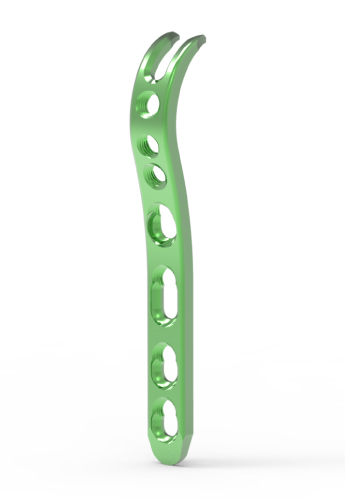
The Distal Ulna Hook Plate: An In-Depth Orthopedic Guide
The distal ulna hook plate represents a sophisticated and essential advancement in orthopedic trauma and reconstructive surgery. Designed specifically for complex injuries involving the distal ulna and the distal radioulnar joint (DRUJ), this specialized implant provides crucial stability, facilitating optimal healing and restoration of function. This comprehensive guide delves into every aspect of the distal ulna hook plate, from its intricate design and biomechanical principles to its detailed clinical applications, surgical considerations, and profound impact on patient outcomes.
1. Comprehensive Introduction & Overview
The distal radioulnar joint (DRUJ) is a pivotal articulation in the forearm, enabling pronation and supination and contributing significantly to wrist stability and function. Injuries to the distal ulna, particularly fractures affecting its metaphysis or diaphysis, or those compromising the integrity of the DRUJ (e.g., ulnar styloid fractures, Essex-Lopresti injuries, Galeazzi fractures with DRUJ disruption), often present significant challenges for orthopedic surgeons. Traditional fixation methods may struggle to provide adequate stability, especially against rotational forces and axial loading inherent to forearm movement.
The Distal Ulna Hook Plate was engineered to address these specific challenges. It is a low-profile, anatomically contoured locking plate system characterized by a unique "hook" or "claw" design at its distal end. This distinctive feature is specifically crafted to engage and stabilize the ulnar styloid or other critical bony structures around the DRUJ, providing robust fixation and preventing displacement. Its primary role is to restore stability to the distal ulna and the DRUJ, thereby preventing chronic instability, malunion, and long-term functional deficits.
This guide aims to serve as an authoritative resource for orthopedic surgeons, residents, medical professionals, and informed patients seeking a deeper understanding of this critical implant.
2. Deep-Dive into Technical Specifications & Mechanisms
The efficacy of the distal ulna hook plate lies in its meticulous design and advanced material science.
2.1 Design & Materials
- Anatomical Contouring: Most modern hook plates are pre-contoured to match the natural anatomy of the distal ulna. This minimizes the need for intraoperative bending, reducing stress on the plate and bone, and ensuring a low-profile fit to prevent soft tissue irritation.
- Low Profile: The plate's thin design is crucial for minimizing soft tissue impingement and irritation, especially given the superficial location of the ulna.
- Hook/Claw Feature: This is the defining characteristic. The distal end features one or more small, sharp hooks or a claw-like extension designed to securely grasp the ulnar styloid, the base of the ulnar head, or other small distal ulna fragments. This provides an additional point of fixation, particularly beneficial for small, comminuted fragments or avulsion injuries that are difficult to capture with screws alone.
- Locking Screw Technology: The plate incorporates threaded screw holes that mate with locking screws. This creates a fixed-angle construct, where the screws lock into the plate, providing angular stability independent of bone quality. This is particularly advantageous in osteoporotic bone or comminuted fractures where screw purchase in bone might be compromised.
- Combination Holes: Many plates feature combination holes that allow for both locking and non-locking (compression) screws. This versatility enables the surgeon to apply interfragmentary compression where desired, followed by locking screws for rigid fixation.
- Material Composition:
- Titanium Alloys (e.g., Ti-6Al-4V): The most common material due to its excellent biocompatibility, high strength-to-weight ratio, and MRI compatibility. Titanium is generally inert and has a lower incidence of allergic reactions compared to other metals.
- Stainless Steel (e.g., 316L): Less common for modern plates but still used. It is stronger but less biocompatible and can cause more artifact on MRI.
- Screw Types:
- Locking Screws: Provide angular stability, creating a "internal fixator" effect.
- Non-Locking Cortical Screws: Used for interfragmentary compression or where plate-to-bone compression is desired.
- Variable Angle Locking Screws: Some systems offer screws that can be angled within a specific cone, providing greater flexibility in screw trajectory to capture optimal bone purchase.
2.2 Biomechanics
The distal ulna hook plate's design directly addresses the complex biomechanical demands of the distal forearm:
- Fixed-Angle Stability: The locking screw mechanism creates a rigid construct that resists axial, torsional, and bending forces. This is paramount for stabilizing the distal ulna, especially when the DRUJ is compromised.
- Load Sharing vs. Load Bearing: While providing strong fixation, the plate aims for a degree of load sharing with the bone, promoting natural healing. However, in highly comminuted fractures or instances of severe DRUJ instability, it acts more as a load-bearing device, protecting the healing bone.
- Resistance to Rotational Forces: The DRUJ is subjected to significant rotational forces during pronation and supination. The hook feature, combined with multiple locking screws, provides enhanced resistance to these forces, preventing redisplacement of small fragments or the ulnar head.
- Maintenance of Ulnar Length: Accurate reduction and rigid fixation are crucial for maintaining appropriate ulnar length relative to the radius, preventing positive or negative ulnar variance, which can lead to impingement syndromes or DRUJ instability.
- Preservation of DRUJ Kinematics: By stabilizing the ulna and its relationship with the radius, the plate helps to restore the natural biomechanics of the DRUJ, crucial for pain-free forearm rotation.
- Early Mobilization: The rigid fixation achieved with the hook plate often allows for earlier, controlled mobilization, which is vital for preventing joint stiffness and promoting quicker functional recovery.
3. Extensive Clinical Indications & Usage
The versatility and robust fixation offered by the distal ulna hook plate make it indispensable for a range of complex injuries and conditions.
3.1 Clinical Indications
The primary indications for using a distal ulna hook plate include:
- Distal Ulna Fractures with DRUJ Instability:
- Fractures of the ulnar neck or metaphysis extending into the DRUJ.
- Fractures of the ulnar styloid that are significantly displaced or unstable, particularly when associated with distal radius fractures (e.g., Galeazzi equivalent injuries) or complete disruption of the DRUJ ligaments.
- Comminuted distal ulna fractures where conventional screw fixation is inadequate.
- Essex-Lopresti Injuries: Fractures of the radial head with associated DRUJ disruption and interosseous membrane injury. While the radial head is the primary focus, the hook plate can be used to stabilize the DRUJ if the ulna is fractured or if chronic DRUJ instability persists after radial head fixation.
- Chronic DRUJ Instability: In select cases of chronic, symptomatic DRUJ instability not amenable to soft tissue repair or other bony procedures, a hook plate might be considered for stabilization, sometimes in conjunction with osteotomy or reconstruction.
- Ulnar Styloid Non-unions: Symptomatic non-union of the ulnar styloid that contributes to DRUJ instability or pain.
- Reconstructive Procedures: Following tumor resection of the distal ulna, a hook plate might be used in conjunction with bone graft or prosthetic reconstruction to stabilize the remaining ulna and DRUJ.
3.2 Surgical Application & Usage Instructions
The surgical technique for implanting a distal ulna hook plate requires meticulous attention to detail and a thorough understanding of forearm anatomy.
3.2.1 Preoperative Planning
- Imaging: Obtain high-quality radiographs (AP, lateral, oblique views) and often a CT scan to fully characterize the fracture pattern, comminution, and DRUJ involvement.
- Plate Selection: Based on imaging and fracture morphology, select the appropriate plate length and configuration. Pre-contoured plates are generally preferred.
- Patient Education: Discuss the procedure, potential risks, expected outcomes, and post-operative rehabilitation with the patient.
3.2.2 Surgical Approach & Exposure
- Patient Positioning: Supine position on the operating table, with the arm on a hand table, often with a tourniquet.
- Incision: Typically, a straight dorsal-ulnar or direct ulnar incision is used to expose the distal ulna. Care must be taken to protect the dorsal cutaneous branch of the ulnar nerve and the extensor carpi ulnaris (ECU) tendon sheath.
- Exposure: Subperiosteal dissection exposes the distal ulna and DRUJ. The fracture fragments are identified.
3.2.3 Fracture Reduction & Provisional Fixation
- Reduction: The fracture fragments are anatomically reduced using gentle traction, manipulation, and reduction forceps.
- Provisional Fixation: K-wires are often used to temporarily hold the reduction in place. DRUJ stability is assessed at this stage.
3.2.4 Plate Application
- Plate Placement: The distal ulna hook plate is positioned on the ulnar aspect of the bone, ensuring the hooks engage the ulnar styloid or the desired distal fragment. The plate should sit flush against the bone.
- Contouring (if necessary): While pre-contoured plates are common, minor adjustments may be needed. Bending should be done carefully with specific plate benders to avoid weakening the implant.
- Proximal Fixation: Non-locking cortical screws are typically inserted first through the most proximal combination hole to achieve plate-to-bone compression, if desired, and to secure the plate's position.
- Distal Hook Engagement: Ensure the hooks are properly seated and provide secure purchase on the ulnar styloid or fragment.
- Locking Screw Insertion: Once the plate is optimally positioned, locking screws are inserted. The sequence often involves starting proximally and working distally, or vice-versa, depending on the fracture pattern and surgeon preference. Screw length is critical and determined using a depth gauge to avoid over-penetration or insufficient purchase.
- DRUJ Assessment: After plate fixation, the DRUJ stability is re-assessed through pronation, supination, and stress tests. The goal is a stable, congruent, and pain-free DRUJ.
3.2.5 Wound Closure
- Layered closure of the soft tissues, taking care to repair the periosteum and any disrupted DRUJ ligaments.
- Skin closure.
3.2.6 Post-operative Management
- Immobilization: A short arm splint or cast is often applied for a period (e.g., 2-4 weeks) to protect the repair, followed by gradual mobilization.
- Rehabilitation: A structured physical therapy program is crucial, focusing on pain management, edema control, gentle range of motion exercises for the wrist and forearm, and progressive strengthening.
- Follow-up: Regular radiographic follow-up monitors fracture healing and implant integrity.
4. Maintenance & Sterilization Protocols
While the distal ulna hook plate itself is an implant, the instrumentation used for its implantation and the implant's initial state require strict adherence to sterilization protocols.
4.1 Implant Sterilization
- Pre-Sterilized Implants: Most distal ulna hook plates are supplied by manufacturers as pre-sterilized, single-use items. They are typically packaged in sterile pouches or trays and sterilized using gamma irradiation or ethylene oxide (EO) gas.
- On-Demand Sterilization: If an implant is not pre-sterilized (less common for these specific plates), it must be sterilized according to the manufacturer's validated instructions before use. This usually involves steam sterilization (autoclaving).
- Handling: Sterile implants must be handled only within the sterile field by scrubbed personnel, maintaining aseptic technique at all times.
4.2 Instrumentation Sterilization
The surgical instruments used to implant the hook plate (e.g., drills, screwdrivers, plate holders, depth gauges, reduction clamps, retractors) are reusable and require rigorous reprocessing.
- Cleaning and Decontamination:
- Point-of-Use Cleaning: Immediately after surgery, instruments should be wiped down to remove gross contaminants and kept moist (e.g., with enzymatic spray or damp towel) to prevent blood and tissue from drying.
- Manual Cleaning: Instruments are manually scrubbed with brushes and enzymatic detergents to remove all visible debris. Ultrasonic cleaners may be used for fine instruments or to dislodge debris from lumens/crevices.
- Rinsing: Thorough rinsing with purified water is essential to remove detergent residues.
- Inspection: Each instrument is meticulously inspected for cleanliness, functionality, and integrity (e.g., sharpness, cracks, corrosion). Damaged instruments are removed from circulation.
- Packaging: Instruments are arranged into trays or sets according to manufacturer guidelines, often with instrument stringers or holders to ensure steam penetration. They are then wrapped in sterilization wraps or placed in rigid sterilization containers.
- Sterilization:
- Steam Sterilization (Autoclaving): This is the most common method. Instruments are exposed to saturated steam at high temperatures and pressure for a specified duration. Parameters vary based on load type and sterilizer (e.g., 270°F/132°C for 4 minutes for gravity displacement, or dynamic air removal).
- Low-Temperature Sterilization: For heat-sensitive instruments, methods like ethylene oxide (EO) or hydrogen peroxide gas plasma may be used, though less common for standard orthopedic instruments.
- Storage: Sterilized instruments are stored in a clean, dry, and secure environment, protecting the integrity of the sterile barrier until use.
- Traceability: All sterilization cycles and instrument sets should be meticulously documented for patient safety and quality control.
5. Biomechanics and Patient Outcome Improvements
The biomechanical advantages of the distal ulna hook plate directly translate into superior patient outcomes.
5.1 Biomechanical Impact
- Enhanced Stability: The fixed-angle construct and the unique hook design provide unparalleled stability to the distal ulna and DRUJ, critical for resisting the dynamic forces encountered during forearm rotation and wrist movement.
- Reduced Risk of Malunion/Non-union: By providing rigid internal fixation, the plate optimizes the mechanical environment for bone healing, significantly lowering the incidence of delayed union, non-union, or malunion.
- Preservation of DRUJ Function: Maintaining the anatomical relationship between the distal radius and ulna is paramount. The hook plate helps ensure proper alignment, preventing chronic instability, impingement, and subsequent degenerative changes in the DRUJ.
- Load Sharing: While providing rigid fixation, the plate allows for some load transfer through the healing bone, stimulating callus formation and biological healing.
5.2 Patient Outcome Improvements
The use of the distal ulna hook plate is associated with several significant improvements in patient outcomes:
- Reduced Pain: Stable fixation minimizes micro-motion at the fracture site, leading to less pain in the immediate post-operative period and throughout the healing process.
- Improved Range of Motion: Early, controlled mobilization, facilitated by rigid fixation, helps prevent joint stiffness, leading to better and quicker restoration of pronation, supination, and wrist range of motion.
- Enhanced Grip Strength: A stable DRUJ and well-healed ulna are fundamental for optimal grip strength. Patients typically report significant improvements in grip strength compared to less stable fixation methods.
- Faster Return to Function: The combination of rigid fixation, reduced pain, and early rehabilitation allows patients to return to daily activities, work, and sports more quickly and safely.
- Lower Complication Rates: Compared to non-operative treatment or less stable fixation, the hook plate often reduces the incidence of chronic DRUJ instability, post-traumatic arthritis, and the need for revision surgery.
- Patient Satisfaction: Ultimately, patients experience greater satisfaction due to reduced pain, improved function, and a quicker return to their pre-injury quality of life.
6. Risks, Side Effects, or Contraindications
While highly effective, the use of a distal ulna hook plate is not without potential risks, side effects, and contraindications.
6.1 General Surgical Risks
These are common to any orthopedic surgical procedure:
- Infection: Superficial or deep surgical site infection.
- Bleeding/Hematoma: Post-operative blood accumulation.
- Nerve Injury: Damage to superficial nerves (e.g., dorsal cutaneous branch of the ulnar nerve) leading to numbness or dysesthesia.
- Vascular Injury: Though rare, damage to blood vessels.
- Anesthesia Risks: Allergic reactions, respiratory or cardiac complications.
- Scarring: Formation of hypertrophic or keloid scars.
6.2 Implant-Specific Risks & Side Effects
- Plate Prominence/Soft Tissue Irritation: The ulna is superficial, and despite low-profile designs, the plate or screw heads can be palpable and cause irritation, requiring eventual hardware removal.
- Screw Loosening/Breakage: Although locking screws are robust, excessive stress or delayed healing can lead to implant failure.
- Non-union/Delayed Union: Despite optimal fixation, biological factors can still lead to impaired healing.
- Malunion: Incorrect anatomical reduction, though rare with precise surgical technique, can lead to malalignment.
- DRUJ Stiffness/Arthritis: Despite stable fixation, severe initial injury or prolonged immobilization can lead to joint stiffness or post-traumatic arthritis.
- Complex Regional Pain Syndrome (CRPS): A rare but severe chronic pain condition that can develop after limb trauma or surgery.
- Hardware Failure: A rare occurrence where the plate itself fractures due to repetitive stress or inadequate bone healing.
- Need for Hardware Removal: Many patients, particularly younger, active individuals, opt for hardware removal once the fracture has healed due to symptoms of irritation.
6.3 Contraindications
- Active Infection: Absolute contraindication. Surgery should be postponed until the infection is resolved.
- Severe Soft Tissue Compromise: Open fractures with significant contamination or extensive soft tissue loss that precludes safe wound closure.
- Non-compliant Patient: Patients unwilling or unable to adhere to post-operative instructions and rehabilitation protocols.
- Severe Osteoporosis: While locking plates are beneficial in osteoporotic bone, extremely poor bone quality might still limit screw purchase, requiring alternative fixation strategies or bone augmentation.
- Uncontrolled Systemic Disease: Uncontrolled diabetes, severe peripheral vascular disease, or other conditions that significantly impair healing or increase surgical risks.
- Allergy to Implant Materials: Extremely rare, but a known allergy to titanium or other plate components would be a contraindication.
7. Massive FAQ Section
Q1: What is a Distal Ulna Hook Plate?
A1: A Distal Ulna Hook Plate is a specialized orthopedic implant, typically made of titanium, designed to stabilize fractures of the distal ulna and injuries affecting the distal radioulnar joint (DRUJ). Its unique feature is a "hook" or "claw" at its end that securely grasps small bone fragments, particularly the ulnar styloid, providing robust fixed-angle stability.
Q2: Why would I need a Distal Ulna Hook Plate?
A2: You might need it if you have a fracture of your distal ulna (the lower part of your forearm bone near the wrist) that is unstable, or if your DRUJ is significantly disrupted. This includes certain ulnar styloid fractures, comminuted distal ulna fractures, or complex forearm injuries where conventional fixation isn't sufficient to restore stability.
Q3: How does the hook plate work to fix my injury?
A3: The plate is anatomically contoured to fit your ulna. It uses locking screws that create a fixed-angle construct, essentially acting as an internal splint. The distal hooks provide extra purchase on small fragments that are difficult to fix with screws alone, ensuring strong stabilization against forces encountered during daily activities, allowing the bone to heal correctly.
Q4: Is the surgery painful? What is the recovery like?
A4: As with any surgery, there will be some post-operative pain, managed with medication. Recovery involves an initial period of immobilization (often 2-4 weeks in a splint or cast), followed by a structured physical therapy program. Full recovery of strength and range of motion can take several months, but the rigid fixation often allows for earlier, controlled movement.
Q5: What materials are these plates made from? Are they safe?
A5: Most modern distal ulna hook plates are made from biocompatible titanium alloys. Titanium is widely used in medical implants due to its strength, durability, and excellent compatibility with the human body, minimizing the risk of allergic reactions or rejection. They are considered very safe.
Q6: Will the plate stay in my arm permanently?
A6: In many cases, especially if the plate is not causing any symptoms, it can remain in permanently. However, some patients, particularly younger and more active individuals, may opt for hardware removal once the bone has fully healed (typically 12-18 months post-surgery) if the plate causes irritation or prominence under the skin.
Q7: Can I go through airport security with a metal plate in my arm?
A7: Yes, you can. Modern titanium implants usually do not trigger metal detectors. If they do, simply inform the security personnel about your implant. It's often helpful to carry a letter from your surgeon or a medical implant card, though it's rarely required.
Q8: What are the potential risks or complications of this surgery?
A8: Risks include general surgical complications like infection, bleeding, or nerve injury. Specific to the implant, there's a small risk of plate prominence causing irritation, screw loosening or breakage, or in rare cases, delayed bone healing or stiffness of the DRUJ. Your surgeon will discuss these thoroughly with you.
Q9: How long does the surgery typically take?
A9: The duration of the surgery can vary depending on the complexity of the fracture and individual patient factors, but it generally ranges from 1 to 2 hours. This does not include anesthesia time or post-operative recovery room time.
Q10: What is the success rate of distal ulna hook plate fixation?
A10: When performed by an experienced orthopedic surgeon for appropriate indications, the success rate for achieving stable fracture healing and restoring DRUJ function is very high. Studies and clinical experience demonstrate excellent outcomes in terms of pain reduction, improved range of motion, and return to function.
Q11: What happens if I don't get surgery for my distal ulna fracture and DRUJ instability?
A11: Without proper stabilization, unstable distal ulna fractures and DRUJ injuries are at high risk of malunion (healing in an incorrect position), non-union (failure to heal), and chronic DRUJ instability. This can lead to persistent pain, limited forearm rotation (pronation and supination), reduced grip strength, and early onset of post-traumatic arthritis, significantly impacting your long-term wrist and forearm function.
Q12: How soon after surgery can I start using my hand and wrist?
A12: Your surgeon and physical therapist will provide a specific rehabilitation protocol. Generally, after an initial period of immobilization (often 2-4 weeks), you will begin gentle range-of-motion exercises for your wrist and forearm. Progressive strengthening will follow. It's crucial to follow these instructions to prevent complications and optimize healing.