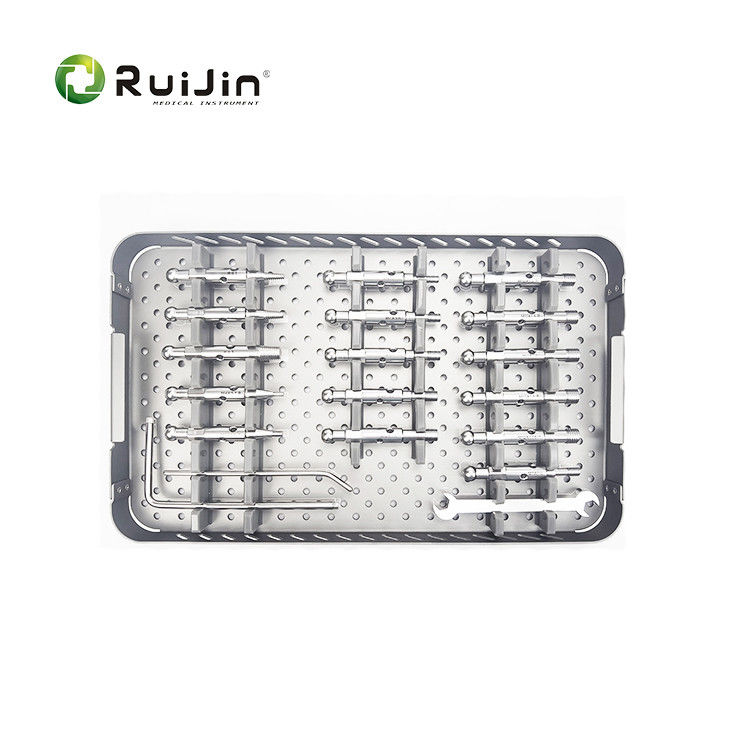
The Condylar Blade Plate: An Orthopedic Specialist's Guide to Humeral and Femoral Fixation
1. Comprehensive Introduction & Overview: The Condylar Blade Plate
The Condylar Blade Plate (CBP) stands as a cornerstone in orthopedic trauma surgery, specifically designed for the stable internal fixation of complex fractures involving the metaphysis and epiphysis of long bones, predominantly the distal humerus and distal femur. This robust implant offers a unique blend of angular stability and compression, crucial for restoring anatomical alignment and facilitating early functional recovery in challenging fracture patterns.
Developed in the mid-20th century, the Condylar Blade Plate represented a significant advancement in fracture management, particularly for supracondylar and intercondylar fractures where traditional plating methods struggled to achieve adequate stability in the cancellous bone of the condyles. Its design, featuring a broad blade inserted directly into the bone's cancellous matrix and a plate secured to the diaphyseal cortex, provides a fixed-angle construct that resists shear, bending, and rotational forces effectively. This guide delves into the intricate details of the Condylar Blade Plate, offering an authoritative resource for orthopedic surgeons, residents, and medical professionals seeking a profound understanding of its application and impact on patient outcomes.
2. Deep-dive into Technical Specifications & Mechanisms
2.1 Design & Materials
The Condylar Blade Plate is characterized by its distinctive "blade" component, which is inserted into the bone, and a "plate" component, which is fixed to the shaft.
- Blade Design:
- Angle: The blade is typically fixed at a specific angle relative to the plate, most commonly 95° or 130°. The 95° angle is frequently used for distal femoral fractures, aligning with the anatomical valgus of the knee, while 130° is often preferred for humeral applications or specific femoral conditions. This fixed angle provides inherent angular stability.
- Shape: The blade is often tapered and sharpened at its tip to facilitate insertion. It may have fluted or ribbed sides to enhance rotational stability within the bone.
- Length: Blade length varies to accommodate different bone sizes and fracture patterns, ensuring adequate purchase in the condyle.
- Plate Design:
- Length: Plates come in various lengths, dictated by the extent of the fracture and the need for diaphyseal fixation. They feature a series of screw holes.
- Hole Configuration: Typically, the plate includes standard cortical screw holes, allowing for compression or neutralization principles. Some modern designs may incorporate limited contact plate (LC-DCP) features for improved vascularity.
- Contouring: While some minor contouring might be possible, blade plates are often pre-contoured to match the typical anatomical curvature of the distal femur or humerus.
- Materials:
- Stainless Steel (316L): Historically, stainless steel has been the primary material due to its excellent mechanical properties, strength, and cost-effectiveness. It offers good fatigue resistance.
- Titanium Alloys (Ti-6Al-4V): Increasingly used for its superior biocompatibility, lower magnetic susceptibility (allowing for better MRI imaging without significant artifact), and reduced stress shielding compared to stainless steel due to its lower elastic modulus. However, titanium is generally more expensive and can be more prone to cold welding with instruments.
2.2 Biomechanics of the Condylar Blade Plate
The biomechanical efficacy of the Condylar Blade Plate stems from its ability to create a fixed-angle construct that provides robust support to the articular segment.
- Angular Stability: Unlike conventional screws, the blade's fixed angle relative to the plate prevents collapse or angulation at the fracture site, a critical feature for maintaining reduction in metaphyseal fractures where the bone is largely cancellous.
- Load Sharing vs. Load Bearing: The CBP is designed to be a load-sharing device, meaning it helps to distribute physiological loads across the bone-implant construct. However, in severely comminuted fractures, it often acts as a load-bearing device, temporarily supporting the entire load until bone healing progresses.
- Compression Capabilities: The plate can be used to achieve interfragmentary compression across a fracture line by strategically placing screws or utilizing a tensioning device, which promotes primary bone healing.
- Resistance to Forces:
- Bending: The robust plate and blade design effectively resist bending forces, preventing varus or valgus collapse.
- Torsion: The broad blade inserted deep into the bone's cancellous structure provides significant resistance to torsional stresses.
- Shear: The fixed-angle design and broad contact surface minimize shear forces at the fracture site.
- Comparison to Other Fixation Methods: While Dynamic Hip Screws (DHS) and Dynamic Condylar Screws (DCS) also offer angular stability, the CBP's blade design provides a larger bone-implant interface in the condyle, often preferred for specific comminuted or osteoporotic fractures where screw purchase might be compromised. Modern locking plates offer multi-planar angular stability, but the CBP remains valuable for its specific biomechanical profile and proven track record.
3. Extensive Clinical Indications & Usage
The Condylar Blade Plate is a versatile implant, indicated for a range of complex fractures in the distal humerus and distal femur.
3.1 Indications for Humeral Application
- Distal Humerus Fractures: Particularly complex intra-articular and supracondylar fractures where stable fixation of the articular segment is paramount.
- AO/OTA Classification: Types 13-C1, C2, C3 (intra-articular, bi-condylar fractures).
- Specific Patterns: T-type, Y-type, H-type fractures of the distal humerus.
- Considerations: Often used in conjunction with a medial plate for bi-columnar fixation, especially in severely comminuted cases. Critical in maintaining the trochlear-capitellar relationship.
3.2 Indications for Femoral Application
- Distal Femur Fractures: Supracondylar and intercondylar fractures of the femur, especially those extending into the knee joint.
- AO/OTA Classification: Types 33-A, B, C (extra-articular, partial articular, complete articular fractures).
- Specific Patterns: Comminuted supracondylar fractures, intercondylar T-type or Y-type fractures, and some periprosthetic fractures around knee implants where sufficient bone stock exists.
- Considerations: Particularly useful in osteoporotic bone where screw purchase might be poor, as the blade provides a large surface area for fixation.
3.3 Pre-operative Planning
Meticulous pre-operative planning is crucial for successful outcomes.
- Imaging:
- Plain Radiographs: AP, lateral, and oblique views to assess fracture pattern and displacement.
- CT Scan with 3D Reconstruction: Essential for detailed understanding of intra-articular involvement, comminution, and fragment orientation, aiding in implant selection and surgical approach.
- Patient Assessment: Evaluation of comorbidities, bone quality (osteoporosis), and patient's functional demands.
- Implant Selection: Choosing the correct blade angle (e.g., 95° for distal femur, 130° for humerus), plate length, and side (left/right) based on anatomical requirements and fracture morphology. Templates are often used.
3.4 Surgical Technique & Fitting Instructions
The surgical technique for Condylar Blade Plate insertion is demanding and requires precision.
- Patient Positioning: Appropriate positioning to allow adequate exposure and intraoperative fluoroscopy (e.g., lateral decubitus for humerus, supine with leg supported for femur).
- Surgical Approach:
- Distal Humerus: Posterior approach (e.g., triceps-splitting or olecranon osteotomy for extensive exposure).
- Distal Femur: Lateral approach, often extending proximally to expose the femoral shaft.
- Fracture Reduction: Meticulous anatomical reduction of articular fragments, often provisionally fixed with K-wires or clamps. Restoration of length, alignment, and rotation is critical.
- Guide Wire Insertion: A specialized guide wire system is used to determine the correct entry point and trajectory for the blade. This is often performed under fluoroscopic guidance to ensure proper placement within the condyle.
- Reaming/Chiseling: A reamer or chisel, corresponding to the blade's dimensions, is used to create a pilot channel for the blade, minimizing bone damage during insertion.
- Blade Insertion: The Condylar Blade Plate is carefully impacted along the guide wire and into the prepared channel until the plate lies flush against the bone cortex. Proper seating is crucial for stability.
- Plate Fixation: Once the blade is fully inserted and the plate is flush, cortical screws are inserted through the plate holes into the femoral or humeral shaft, securing the construct. Compression across the fracture site can be achieved if desired.
- Intraoperative Imaging: Fluoroscopy or X-rays are used throughout the procedure to confirm reduction, blade position, and screw lengths.
- Wound Closure: Standard layered closure, ensuring hemostasis and appropriate soft tissue coverage.
3.5 Post-operative Care & Rehabilitation
- Pain Management: Multimodal analgesia to control post-operative pain.
- Early Mobilization: Encouragement of early, controlled range of motion exercises (e.g., elbow or knee flexion/extension) to prevent stiffness, often with the guidance of a physical therapist.
- Weight-Bearing Restrictions:
- Femur: Typically non-weight bearing or touch-down weight bearing for 6-12 weeks, progressing based on radiographic healing.
- Humerus: Sling immobilization initially, followed by active-assisted and then active range of motion.
- Physical Therapy Progression: Gradual increase in resistance and functional exercises as healing progresses.
- Radiographic Follow-up: Regular X-rays to monitor fracture healing and implant integrity.
4. Risks, Side Effects, & Contraindications
While highly effective, the use of Condylar Blade Plates is associated with potential risks and contraindications.
4.1 Potential Risks & Complications
- Infection: Superficial or deep surgical site infection, potentially requiring prolonged antibiotic treatment or implant removal.
- Non-union or Malunion: Failure of the fracture to heal or healing in an unacceptable position, necessitating revision surgery.
- Hardware Failure: Plate bending, blade pull-out, or screw loosening/breakage, especially with premature weight-bearing or inadequate bone quality.
- Neurovascular Injury: Damage to adjacent nerves (e.g., ulnar nerve in humerus, peroneal nerve in femur) or blood vessels during surgery.
- Implant Impingement/Irritation: The implant may cause soft tissue irritation, bursitis, or impingement, leading to pain and potentially requiring removal.
- Stiffness/Limited Range of Motion: Especially common in intra-articular fractures, requiring aggressive physical therapy or even arthrolysis.
- Avascular Necrosis: Risk to articular fragments, particularly in the femoral condyles, if blood supply is compromised.
- Fat Embolism: A rare but serious complication.
4.2 Contraindications
- Active Infection: Absolute contraindication; must be treated prior to implanting hardware.
- Insufficient Bone Stock: Inability to achieve stable fixation due to severe osteopenia or comminution that leaves no adequate bone for blade purchase.
- Severe Comminution: If reduction to a stable construct is impossible, other fixation methods or arthroplasty might be considered.
- Patient Factors: Uncontrolled systemic diseases (e.g., severe diabetes, immunosuppression), severe peripheral vascular disease, or non-compliance with post-operative instructions.
- Allergy to Implant Materials: Extremely rare, but must be considered if patient has a known allergy to stainless steel or titanium.
5. Maintenance, Sterilization & Quality Assurance
Ensuring the safety and efficacy of Condylar Blade Plates requires strict adherence to maintenance, sterilization, and quality assurance protocols.
5.1 Sterilization Protocols
Implantable devices like Condylar Blade Plates are supplied sterile or must be sterilized according to validated protocols.
- Cleaning: Thorough cleaning of reusable instruments and trial implants is paramount. This involves manual scrubbing with brushes and enzymatic detergents, followed by automated cleaning in ultrasonic baths or washer-disinfectors to remove all organic matter and debris.
- Packaging: Cleaned instruments and implants are carefully packaged in sterilization wraps or rigid containers designed to maintain sterility after processing.
- Sterilization Methods:
- Steam Sterilization (Autoclaving): The most common and preferred method, using saturated steam under pressure at specific temperatures (e.g., 121°C for 30 minutes, 132°C for 4 minutes).
- Ethylene Oxide (EO): Used for heat-sensitive materials, but requires aeration time due to its toxicity.
- Hydrogen Peroxide Plasma: A low-temperature method suitable for heat- and moisture-sensitive devices, with a shorter cycle time and no toxic residuals.
- Validation and Monitoring: Sterilization cycles are regularly validated and monitored using biological and chemical indicators to ensure efficacy.
- Traceability: Implants have unique lot numbers for tracking, crucial for recall procedures and post-market surveillance.
5.2 Quality Assurance & Regulatory Standards
Manufacturers of Condylar Blade Plates adhere to stringent quality assurance programs and regulatory standards.
- ISO 13485: The international standard for quality management systems for medical devices.
- FDA Approval (USA) / CE Mark (Europe): Regulatory clearances ensuring the device meets safety and performance requirements.
- Material Testing: Verification of material composition and mechanical properties (e.g., tensile strength, yield strength, hardness) to ensure consistency and compliance.
- Mechanical Testing:
- Fatigue Testing: Simulates long-term physiological loading to assess implant durability and resistance to cyclic stresses.
- Static Bending and Torsion Testing: Evaluates the implant's strength under extreme loads.
- Biocompatibility Testing: Ensures the materials are non-toxic, non-allergenic, and do not elicit adverse biological responses in vivo.
5.3 Implant Removal (if indicated)
While Condylar Blade Plates are often left in situ indefinitely, removal may be indicated for:
* Symptomatic Hardware: Pain, irritation, or bursitis caused by the implant.
* Infection: If the infection persists despite antibiotic treatment.
* Non-union: In some cases, removal may be part of a revision strategy.
* Patient Request: Although less common, some patients may request removal.
Surgical removal involves a similar approach to insertion, carefully extracting the plate and blade.
6. Patient Outcome Improvements & Future Directions
The Condylar Blade Plate has significantly improved patient outcomes for complex distal humeral and femoral fractures. By providing stable, fixed-angle fixation, it allows for:
- Improved Functional Outcomes: Early mobilization and rehabilitation lead to reduced joint stiffness, better range of motion, and earlier return to pre-injury activities.
- Reduced Pain: Stable fixation minimizes micro-motion at the fracture site, contributing to better pain control.
- Lower Rates of Malunion/Non-union: The robust biomechanical construct enhances the chances of anatomical healing.
- Enhanced Quality of Life: Patients experience a faster recovery trajectory and better long-term joint function.
While the Condylar Blade Plate remains a valuable tool, the field of orthopedic trauma continues to evolve. Future directions may include:
* Integration with Locking Technology: Hybrid designs combining blade stability with locking screw versatility.
* Advanced Materials: Development of bioabsorbable or more osteointegrative materials.
* Patient-Specific Implants: Custom-designed plates based on 3D printing from patient CT data for highly individualized anatomical fit.
* Minimally Invasive Techniques: Refining approaches to insert blade plates with smaller incisions, reducing soft tissue disruption.
7. Frequently Asked Questions (FAQ)
Q1: What is a Condylar Blade Plate?
A Condylar Blade Plate is a specialized orthopedic implant used for internal fixation of complex fractures, primarily in the distal humerus and distal femur. It features a broad, angled blade that inserts into the bone's cancellous condyle and a plate that attaches to the bone shaft, providing fixed-angle stability.
Q2: What types of fractures does it treat?
It primarily treats supracondylar and intercondylar fractures of the distal humerus and distal femur, especially those extending into the joint (intra-articular fractures) or with significant comminution.
Q3: Is it made of titanium or stainless steel?
Condylar Blade Plates are typically made from either medical-grade stainless steel (316L) or titanium alloys (Ti-6Al-4V). Titanium offers better biocompatibility and less MRI artifact, while stainless steel is known for its strength and cost-effectiveness.
Q4: How long does the recovery take after surgery?
Recovery time varies depending on the individual, fracture severity, and bone involved. Generally, initial healing takes 6-12 weeks, with full functional recovery often extending for several months to a year, involving extensive physical therapy.
Q5: Will the plate need to be removed?
Not always. The Condylar Blade Plate is often left in place indefinitely. Removal may be considered if it causes pain, irritation, infection, or if revision surgery is necessary.
Q6: What are the main advantages of this plate?
Its main advantages include providing fixed-angle stability in cancellous bone, excellent resistance to bending and torsional forces, and facilitating anatomical reduction and early mobilization, leading to improved functional outcomes.
Q7: Are there alternatives to the Condylar Blade Plate?
Yes, alternatives include Dynamic Condylar Screws (DCS), locking plates (e.g., LCPs), intramedullary nails (for some supracondylar femoral fractures), and external fixators. The choice depends on fracture pattern, bone quality, and surgeon preference.
Q8: Can I bear weight on my leg/arm after surgery?
Weight-bearing restrictions are common, especially for femoral fractures, often requiring non-weight bearing or touch-down weight bearing for several weeks. For humeral fractures, early controlled motion is encouraged, but lifting heavy objects is restricted. Your surgeon will provide specific instructions.
Q9: What are the risks of Condylar Blade Plate surgery?
Risks include infection, non-union or malunion, hardware failure, nerve or blood vessel injury, implant irritation, and joint stiffness. These risks are discussed in detail with your surgeon.
Q10: How does it differ from a locking plate?
A Condylar Blade Plate provides fixed-angle stability through its blade, which is inserted into the bone at a specific angle relative to the plate. Locking plates, on the other hand, use screws that "lock" into the plate, providing angular stability at each screw-plate interface, allowing for multi-directional screw placement. While both offer angular stability, their mechanisms and flexibility differ.
Q11: What angles are available for the blade?
Common blade angles are 95 degrees (often for the distal femur) and 130 degrees (often for the distal humerus or specific femoral applications). These angles are designed to match the natural anatomy of the bone and provide optimal biomechanical support.
Q12: Is the Condylar Blade Plate MRI compatible?
Most Condylar Blade Plates made from stainless steel or titanium alloys are considered MRI conditional, meaning they are safe for MRI under specific conditions (e.g., certain field strengths, SAR limits). However, they can cause significant image artifact, especially stainless steel implants. Always inform the MRI technician about your implant.