Comprehensive Introduction & Overview
The clavicle, or collarbone, is a critical strut connecting the upper limb to the axial skeleton. Fractures of the clavicle are among the most common orthopedic injuries, accounting for approximately 2.6% of all fractures and 44% of those involving the shoulder girdle. While many clavicle fractures can be managed non-operatively, displaced or comminuted fractures, certain lateral fractures, and non-unions often necessitate surgical intervention to restore anatomical alignment, facilitate healing, and optimize patient function.
The "Clavicle Superior Locking Plate" represents a significant advancement in the surgical management of these complex fractures. This specialized orthopedic implant is designed to provide stable internal fixation, promoting early mobilization and improved functional outcomes. Its evolution stems from a deep understanding of clavicle anatomy, biomechanics, and the inherent challenges of fixing a bone subjected to multi-directional forces. Early fixation methods often involved intramedullary pins or non-locking plates, which had limitations in terms of rotational stability and resistance to pull-out, especially in osteoporotic bone. The advent of locking plate technology revolutionized fracture management by creating a fixed-angle construct, where screws lock into the plate, forming a stable unit that resists various forces more effectively. Superior plating, specifically, has gained prominence due to its biomechanical advantages and ability to accommodate the unique S-shape of the clavicle while minimizing soft tissue irritation.
Deep-dive into Technical Specifications / Mechanisms
Design Principles
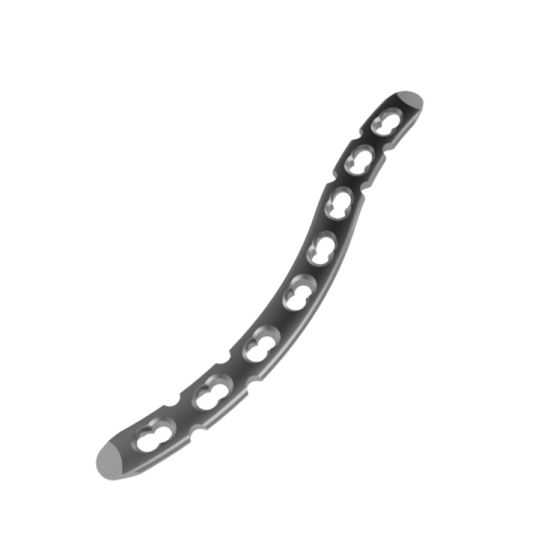
Clavicle superior locking plates are meticulously engineered to conform to the complex anatomy of the clavicle while providing robust fixation. Key design features include:
- Anatomical Contouring: Most plates are pre-contoured to match the natural S-shape of the clavicle, minimizing the need for intraoperative bending and reducing stress on the plate. This anatomical fit is crucial for optimal load distribution and reduced prominence.
- Low-Profile Design: The plate's thickness and edges are designed to be as low-profile as possible to reduce soft tissue irritation, particularly the overlying skin and muscle, which is a common complaint with clavicle hardware.
- Combination Holes: Modern plates typically feature combination holes that allow for both locking and non-locking (compression) screw insertion.
- Locking Holes: Threaded holes that accept locking screws, creating a fixed-angle construct. This provides angular stability, preventing screw toggle and pull-out, and is particularly beneficial in comminuted fractures or osteoporotic bone where screw purchase in the bone may be compromised.
- Compression Slots (Non-locking): Oval holes that allow for dynamic compression across the fracture site using standard cortical screws. These can be used to achieve interfragmentary compression before locking screws are inserted, or for primary fixation in less complex fracture patterns.
- Screw Trajectory: The angles of the locking screw holes are pre-determined to optimize bicortical purchase within the clavicle, ensuring maximum stability and resistance to pull-out. Multiple screw options (e.g., varying lengths, diameters) are available to accommodate patient-specific anatomy and fracture patterns.
- Plate Lengths: Available in various lengths to match the fracture pattern and the extent of comminution, allowing for adequate fixation points proximal and distal to the fracture.
Materials Science
The choice of material for clavicle superior locking plates is critical for biocompatibility, mechanical strength, and imaging compatibility.
- Titanium Alloys (e.g., Ti-6Al-4V ELI): This is the most common material used for modern locking plates due to its exceptional properties:
- Biocompatibility: Titanium is highly biocompatible, meaning it integrates well with biological tissues and minimizes adverse reactions.
- High Strength-to-Weight Ratio: Offers excellent mechanical strength while being relatively lightweight, reducing bulk.
- Corrosion Resistance: Highly resistant to corrosion in the physiological environment.
- MRI Compatibility: Titanium is non-ferromagnetic, allowing patients to undergo MRI scans without significant artifacts or safety concerns.
- Radiolucency: While visible on X-rays, titanium implants cause less scatter and artifact than stainless steel, providing clearer images of fracture healing.
- Stainless Steel (e.g., 316L): Historically used, but less common for locking plates today. It is strong and cost-effective but has limitations:
- Ferromagnetic: Can interfere with MRI scans, creating artifacts and potential safety issues.
- Higher Density: Can be more prominent under the skin.
- Corrosion: While resistant, it can still corrode over time, though rare with modern alloys.
- Surface Treatments: Many plates undergo surface treatments like anodization to enhance corrosion resistance, improve fatigue strength, and potentially reduce bacterial adhesion.
Biomechanics of Superior Locking Plates
The biomechanical advantages of superior locking plates are fundamental to their efficacy:
- Fixed-Angle Construct: The primary benefit of locking plates is the creation of a fixed-angle construct. Screws lock into the plate, transforming the plate-screw interface into a single, stable unit. This distributes forces over a larger area, reducing stress on the bone-screw interface and preventing screw pull-out.
- Load Sharing vs. Load Bearing: Locking plates are designed for "load sharing" rather than pure "load bearing." While they provide rigid fixation, they allow for micro-motion at the fracture site to stimulate callus formation, promoting secondary bone healing. However, the construct itself bears a significant portion of the load, protecting the healing fracture.
- Resistance to Bending, Torsion, and Axial Compression: The superior placement of the plate, combined with the fixed-angle construct, provides robust resistance to the multi-directional forces acting on the clavicle.
- Bending: The plate's strength and anatomical contour resist bending moments.
- Torsion: Locking screws provide excellent resistance to rotational forces.
- Axial Compression: The fixed-angle construct maintains reduction against axial compression, preventing collapse or shortening.
- Prevention of Screw Pull-out: This is a major advantage, especially in comminuted fractures or osteoporotic bone, where traditional non-locking screws might lose purchase. The locking mechanism essentially creates an internal fixator, independent of direct plate-to-bone compression.
- Comparison with Inferior Plating: While inferior plating has its proponents, superior plating often offers:
- Better anatomical fit along the tension side of the clavicle.
- Less interference with the subclavian neurovascular bundle.
- Potentially less soft tissue irritation due to superior muscle coverage.
- Stronger resistance to specific bending moments experienced by the clavicle.
Extensive Clinical Indications & Usage
Specific Fracture Patterns
Clavicle superior locking plates are indicated for a range of clavicle fractures, particularly those where non-operative management carries a high risk of non-union, malunion, or poor functional outcomes.
- Midshaft Clavicle Fractures (Neer Type I, II, III; Edinburgh Classification):
- Displaced Fractures: Displacement greater than one cortical width or significant shortening (>2cm) often benefits from operative fixation to restore length and alignment.
- Comminuted Fractures: Multiple fragments make stable non-operative healing challenging. Locking plates provide excellent stability for these complex patterns.
- Segmental Fractures: Fractures with multiple breaks along the shaft.
- Lateral Clavicle Fractures (Neer Type II, V; Rockwood Classification):
- Type II: Fractures medial to the coracoclavicular ligaments, with the medial fragment displaced superiorly. Locking plates provide stable fixation, often incorporating suture fixation around the coracoid for additional stability.
- Type V: Comminuted fractures involving the lateral fragment and often extending into the acromial articulation.
- Non-unions and Malunions: For patients experiencing failed healing (non-union) or healing in a deformed position (malunion) that causes pain or functional deficit, revision surgery with a superior locking plate (often with bone grafting) is a common and effective solution.
- Pathological Fractures: Fractures occurring through bone weakened by disease (e.g., tumor, cyst) may also be stabilized with these plates, often in conjunction with oncological treatment.
Surgical Technique (Fitting/Usage Instructions)
The successful application of a clavicle superior locking plate requires meticulous surgical technique.
- Patient Positioning: Typically, the patient is placed in a "beach chair" position or supine with a bolster under the ipsilateral scapula to allow the shoulder to fall back and expose the clavicle.
- Incision Planning: A transverse or slightly oblique incision is made directly over the palpable clavicle, centered over the fracture. A subplatysmal dissection is performed to expose the fracture site and surrounding bone. Care must be taken to identify and protect the supraclavicular nerves.
- Fracture Reduction: The fracture fragments are anatomically reduced using various techniques, including manual traction, manipulation, pointed reduction clamps, or temporary K-wires. Achieving anatomical length and rotation is paramount.
- Plate Placement: The pre-contoured superior locking plate is placed on the superior aspect of the clavicle. It should be centered over the fracture, ensuring adequate length for at least three bicortical screws on each side of the fracture. The plate should sit flush with the bone to minimize prominence.
- Screw Insertion Sequence:
- Often, a non-locking cortical screw is placed eccentrically in a compression slot (if available) to achieve interfragmentary compression, especially for simple transverse or oblique fractures.
- Once compression and reduction are satisfactory, locking screws are inserted, typically starting with the screws closest to the fracture and then moving outwards.
- Drill guides are used to ensure correct screw trajectory and depth. Bicortical purchase is confirmed.
- Intraoperative Imaging: Fluoroscopy (C-arm) is used to confirm accurate fracture reduction, plate position, and screw length and trajectory throughout the procedure.
- Wound Closure: After irrigation, the wound is closed in layers, paying attention to the platysma and subcutaneous tissues to minimize scarring and soft tissue prominence.
Postoperative Management
- Immobilization: A sling is typically used for comfort and protection for 2-6 weeks, depending on fracture stability and surgeon preference.
- Rehabilitation: Early passive and active-assisted range of motion (ROM) exercises of the shoulder, elbow, wrist, and hand are initiated as tolerated to prevent stiffness.
- Weight-bearing Restrictions: Patients are advised against lifting, pushing, or pulling heavy objects for several weeks to months.
- Pain Management: Appropriate analgesia is prescribed.
- Return to Activity: Gradual progression to strengthening exercises. Return to sports and heavy activities is typically permitted at 3-6 months, once radiographic healing is evident and strength is restored.
Patient Outcome Improvements
The use of clavicle superior locking plates significantly enhances patient outcomes:
- High Union Rates: Locking plate fixation consistently achieves high rates of fracture union, often exceeding 90-95% for appropriately selected fractures.
- Early Mobilization: The stable construct allows for earlier initiation of rehabilitation, preventing shoulder stiffness and atrophy.
- Reduced Pain: Stable fixation minimizes fracture site motion, leading to reduced postoperative pain.
- Improved Functional Outcomes: Patients typically achieve excellent shoulder range of motion, strength, and return to pre-injury activity levels. Studies show better Constant scores and DASH scores compared to non-operative treatment for displaced fractures.
- Lower Rates of Non-union and Malunion: Significantly reduces the incidence of these debilitating complications, which are more common with conservative management of displaced fractures.
- Cosmetic Considerations: Low-profile plates and well-placed incisions can lead to favorable cosmetic results.
Maintenance/Sterilization Protocols
Implantable devices like the clavicle superior locking plate require stringent sterilization and handling protocols to ensure patient safety and device integrity.
- Pre-operative Handling: Plates are supplied sterile and individually packaged. They should only be opened in a sterile field immediately prior to implantation. Any damage to the sterile packaging renders the implant non-sterile.
- Sterilization Methods: The plates themselves are typically supplied pre-sterilized by the manufacturer using validated methods such as gamma irradiation or ethylene oxide (EtO). Surgical instruments used for implantation (drills, screwdrivers, plate benders) are reprocessed and sterilized in the hospital.
- Autoclaving (Steam Sterilization): This is the most common and effective method for reusable surgical instruments. Instruments are cleaned, inspected, packaged, and then exposed to saturated steam under pressure at specific temperatures and times (e.g., 132°C for 4 minutes).
- Packaging and Storage: Sterile implants are stored in controlled environments, protected from temperature extremes, humidity, and physical damage, until ready for use.
- Reprocessing of Instruments: Reusable instruments must undergo a thorough cleaning process (manual and/or automated washers/disinfectors) to remove all organic matter, followed by inspection for damage, lubrication (if necessary), and proper packaging before sterilization.
- Traceability Requirements: Each implant has a unique lot number and serial number, which must be documented in the patient's medical record for traceability in case of a recall or adverse event.
Risks, Side Effects, or Contraindications
While highly effective, clavicle superior locking plate surgery, like any surgical procedure, carries potential risks and complications.
General Surgical Risks
- Infection: Superficial or deep surgical site infection, potentially requiring antibiotics or further surgery.
- Nerve or Vascular Injury: Risk to the supraclavicular nerves (leading to numbness over the shoulder), brachial plexus, subclavian artery, or vein during dissection or screw placement.
- Pneumothorax: Rare, but possible if a screw penetrates the pleura.
- Anesthesia Risks: Standard risks associated with general anesthesia.
Plate-Specific Complications
- Hardware Irritation/Prominence: This is the most common complication, with rates varying from 10-30%. The plate or screws may become palpable and cause discomfort, requiring hardware removal after fracture healing.
- Plate Fracture or Screw Loosening/Breakage: Although rare with locking plates, excessive early loading or a non-union can lead to implant failure.
- Non-union or Malunion: Despite fixation, failure of the bone to heal or healing in a suboptimal position can occur, especially in patients with comorbidities (e.g., smoking, diabetes) or severe comminution.
- Refracture After Hardware Removal: While rare, removal of hardware can create stress risers in the bone, potentially increasing the risk of refracture, especially if activities are resumed too quickly.
- Adverse Reaction to Implant Material: Allergic reactions to titanium are extremely rare but possible.
Contraindications
- Active Infection at the Surgical Site: Surgery should be delayed until the infection is resolved.
- Severe Osteoporosis: While locking plates are beneficial in osteoporotic bone, extremely poor bone quality may compromise screw purchase, necessitating alternative fixation or careful consideration.
- Compromised Skin or Soft Tissue: Significant open wounds, severe burns, or poor skin quality over the fracture site can increase the risk of infection and wound healing complications.
- Patient Inability to Comply with Postoperative Instructions: Non-compliance with immobilization and rehabilitation protocols can lead to implant failure or poor outcomes.
- Certain Pathological Fractures: Depending on the underlying pathology, other treatment modalities might be more appropriate.
Massive FAQ Section
Q1: What is a clavicle superior locking plate used for?
A1: It's primarily used for surgical fixation of displaced, comminuted, or unstable clavicle (collarbone) fractures, as well as non-unions or malunions, to restore anatomical alignment and promote healing.
Q2: How does a locking plate differ from a non-locking plate?
A2: A locking plate has screws that lock into the plate, creating a fixed-angle construct that provides angular stability and prevents screw pull-out. Non-locking plates rely on compression between the plate and bone for stability.
Q3: What materials are clavicle plates typically made from?
A3: Modern clavicle superior locking plates are almost exclusively made from titanium alloys (e.g., Ti-6Al-4V), known for their biocompatibility, strength, and MRI compatibility.
Q4: Is plate removal necessary after clavicle fracture healing?
A4: Plate removal is not always necessary. It is typically considered if the hardware causes persistent irritation, pain, or discomfort, or if there's an infection. Many patients live comfortably with the plate indefinitely.
Q5: What are the main benefits of superior plating compared to other fixation methods?
A5: Superior plating offers excellent anatomical fit along the tension side of the clavicle, strong biomechanical stability against bending and torsion, and often results in less interference with neurovascular structures compared to inferior plating.
Q6: How long is the recovery period after clavicle plate surgery?
A6: Initial healing takes 6-12 weeks, during which a sling is used, followed by progressive rehabilitation. Full return to strenuous activities and sports typically occurs between 3-6 months, depending on individual healing and rehabilitation progress.
Q7: Can I get an MRI with a clavicle plate?
A7: Yes, titanium clavicle plates are non-ferromagnetic and generally considered safe for MRI scans. However, it's crucial to inform the MRI technologist about the implant.
Q8: What are the potential complications of clavicle superior locking plate surgery?
A8: Common complications include hardware irritation (requiring potential removal), infection, nerve injury (e.g., supraclavicular nerve numbness), non-union, or refracture.
Q9: When can I return to sports or heavy lifting after surgery?
A9: Return to sports or heavy lifting is typically advised only after complete radiographic union is confirmed and adequate strength and range of motion are restored, usually 3-6 months post-surgery, under the guidance of your surgeon and physical therapist.
Q10: Is clavicle plate surgery very painful?
A10: Patients will experience pain after surgery, managed with prescribed analgesics. The pain typically subsides significantly within a few weeks as healing progresses. Stable fixation often leads to less pain than an unstable fracture.
Q11: How do surgeons ensure the clavicle plates are sterile?
A11: Clavicle plates are supplied pre-sterilized by the manufacturer using validated methods like gamma irradiation or ethylene oxide. Surgical instruments used during the procedure are sterilized in the hospital via autoclaving (steam sterilization).
Q12: Why is the clavicle plate designed with an S-shape?
A12: The S-shape design allows the plate to conform precisely to the natural curvature of the clavicle. This anatomical contouring minimizes the need for intraoperative bending, reduces plate prominence, and optimizes load distribution, leading to better patient comfort and outcomes.