The Cerclage Cable System: Revolutionizing Orthopedic Stability
In the complex world of orthopedic surgery, achieving robust and stable fixation is paramount for successful patient outcomes. The Cerclage Cable System stands as a cornerstone technology, offering surgeons a versatile and powerful tool for stabilizing challenging fractures, augmenting primary fixation, and facilitating reconstructive procedures. Far beyond simple wires, modern cerclage cable systems are engineered with advanced materials and sophisticated application tools, providing unparalleled circumferential compression and contributing significantly to the biomechanical integrity of bone constructs.
This comprehensive guide, authored by an expert Medical SEO Copywriter and Orthopedic Specialist, delves into every facet of the Cerclage Cable System. We will explore its intricate design, the science behind its biomechanical efficacy, its wide array of clinical applications, precise fitting techniques, essential maintenance protocols, and the profound impact it has on improving patient recovery and long-term stability.
Deep-Dive into Technical Specifications & Mechanisms
The efficacy of the Cerclage Cable System lies in its meticulous design and the advanced materials employed, all working in concert to provide superior fixation.
Design and Materials: Engineered for Strength and Biocompatibility
Modern cerclage cables are a far cry from their predecessors, incorporating innovative design principles and high-performance materials.
-
Cable Composition:
- Medical-Grade Stainless Steel (e.g., 316L): Offers excellent strength, fatigue resistance, and corrosion resistance. It's a well-established material in orthopedic implants.
- Titanium Alloys (e.g., Ti-6Al-4V ELI): Provides superior biocompatibility, lower magnetic susceptibility (advantageous for MRI compatibility), and comparable strength-to-weight ratio.
- Braided vs. Monofilament: Most contemporary systems utilize multi-strand braided cables. This design enhances flexibility, reduces stress concentration points, and improves fatigue life compared to stiff monofilament wires. The braided structure also allows for more even load distribution.
- Cable Diameter: Varies depending on the clinical application, typically ranging from 1.0mm to 2.5mm. Thicker cables offer greater strength but may require more careful soft tissue management.
- Surface Finish: Often polished or electropolished to reduce friction during passage and minimize soft tissue irritation.
-
Locking Mechanisms:
- Crimping Sleeves/Buttons: These are small, specialized components designed to securely lock the cable loop once optimal tension is achieved. They are typically made of the same biocompatible alloys as the cable and require a dedicated crimping instrument for secure closure.
- Self-Locking Devices: Some advanced systems incorporate integrated locking mechanisms within the cable or a specialized tensioner that automatically secures the cable once tensioned, simplifying the surgical technique.
- Low-Profile Design: Modern locking mechanisms are designed to be as low-profile as possible to minimize soft tissue irritation and potential impingement.
-
Application Instruments:
- Cable Passers: Essential tools with various curvatures and tip designs (e.g., blunt, pointed, malleable) to safely navigate the cable around the bone, protecting soft tissues and neurovascular structures.
- Tensioners: Calibrated devices that apply precise and controlled tension to the cerclage cable. This is crucial for achieving optimal compression without overtightening, which can lead to bone necrosis or cable failure.
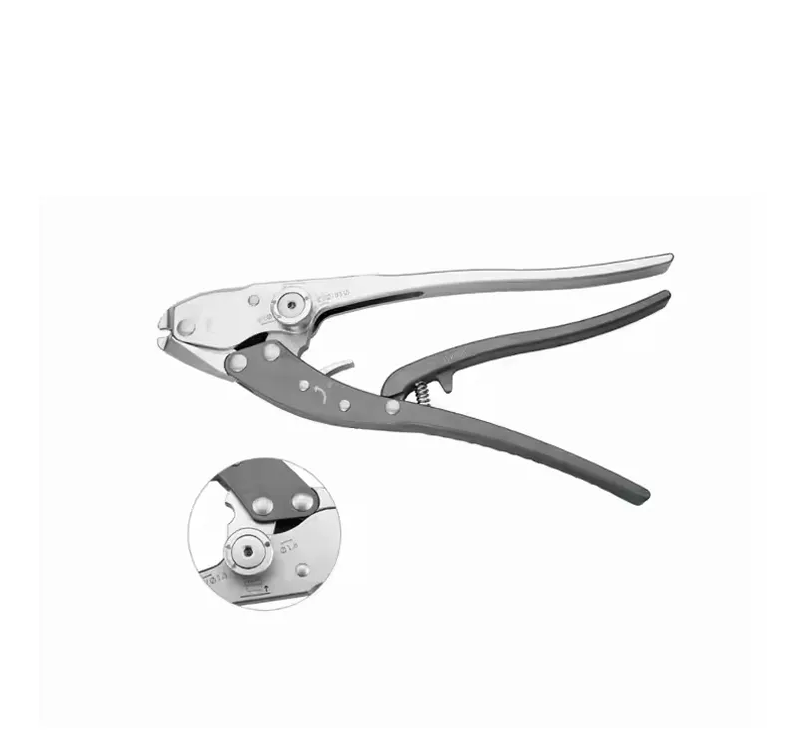
- Crimpers: Specialized pliers designed to securely deform the crimping sleeve, creating a permanent lock on the cable.
- Cutters: High-strength cutters designed to cleanly trim the excess cable without fraying or leaving sharp edges.
Biomechanics: The Science of Circumferential Compression
The Cerclage Cable System's primary biomechanical function is to provide circumferential compression around a bone segment or fracture fragments. This compression offers several critical advantages:
- Fracture Stabilization: By encircling the bone, cables compress fragments together, resisting translational and rotational forces. This is particularly effective in spiral, oblique, or comminuted fractures where interfragmentary compression is difficult to achieve with plates alone.
- Load Sharing: When used in conjunction with other implants (e.g., intramedullary nails or plates), cerclage cables help distribute loads more evenly, reducing stress on the primary implant and mitigating stress shielding effects on the bone. This can significantly reduce the risk of implant failure, especially in osteoporotic bone.
- Augmentation of Primary Fixation: Cables can enhance the stability of intramedullary nail constructs, preventing fragment migration in long bone fractures, or providing additional purchase in periprosthetic fractures where cortical bone is thin.
- Resistance to Specific Forces:
- Torsional Stability: Cables are highly effective at resisting rotational forces, which are common causes of implant failure in long bone fractures.
- Bending Stability: While not their primary role, they contribute to overall bending stability by preventing gapping on the tension side of a construct.
- Axial Compression: Properly tensioned cables provide direct axial compression across fracture lines, promoting primary bone healing.
- Biological Advantage: By creating a stable environment, cerclage cables facilitate direct bone healing without excessive callus formation, provided adequate blood supply is maintained.
Extensive Clinical Indications & Usage
The versatility of the Cerclage Cable System makes it an indispensable tool across a broad spectrum of orthopedic procedures.
Detailed Surgical Applications
- Periprosthetic Fractures: This is one of the most common and critical applications. Cables are used to stabilize fractures occurring around existing orthopedic implants, particularly in the femur around hip or knee prostheses. They provide crucial compression and support to the often-osteoporotic bone, allowing for stable plate or nail fixation.
- Example: Vancouver B1/B2 periprosthetic femoral fractures.
- Long Bone Fractures with Comminution: In fractures of the femur, tibia, or humerus with extensive comminution or long spiral patterns, cerclage cables can effectively reduce and hold fragments in place, converting a complex fracture into a more manageable one for plate or intramedullary nail fixation.
- Example: Highly comminuted diaphyseal femoral fractures.
- Trochanteric Reattachment in Hip Arthroplasty: After performing a trochanteric osteotomy (e.g., for revision hip arthroplasty or complex primary cases), cables are used to securely reattach the greater trochanter to the proximal femur, ensuring proper muscle function and preventing non-union.
- Osteotomies: Beyond trochanteric osteotomies, cables may be used to augment fixation in other osteotomies where strong compression and stability are required.
- Non-unions and Malunions: In cases where previous fixation has failed or bone healing is compromised, cables can be employed to provide additional stability to a revised construct, promoting union.
- Proximal Femoral Fractures (Intertrochanteric/Subtrochanteric): While primarily treated with nails or plates, cables can be used as an adjunct to improve stability, especially in reverse oblique patterns or those with significant comminution.
- Spinal Applications (Less Common): In specific scenarios, such as certain posterior spinal fusion techniques or for stabilizing fractured spinous processes, cerclage wires or cables might be used, though this is less frequent than in long bone trauma.
Fitting and Usage Instructions (General Principles)
While specific techniques vary by manufacturer and surgical approach, the fundamental steps for applying a Cerclage Cable System follow a consistent methodology:
- Exposure and Reduction: The fracture site is surgically exposed, and the bone fragments are meticulously reduced to their anatomical position. This is the foundation for effective cable application.
- Cable Passage:
- Protection: Extreme care is taken to protect surrounding soft tissues, nerves, and vessels.
- Submuscular Pathway: Cables are typically passed submuscularly around the bone using specialized cable passers. The passer is guided closely along the bone surface to avoid soft tissue entrapment.
- Entry/Exit Points: Small incisions may be made to facilitate the entry and exit of the passer, minimizing tissue disruption.
- Loop Formation: Once passed around the bone, the cable ends are brought together to form a loop around the fracture fragments.
- Tensioning:
- Calibrated Tensioner: A dedicated tensioning device is used to apply gradual and controlled tension to the cable.
- Optimal Compression: The goal is to achieve firm interfragmentary compression without overtightening, which can compromise periosteal blood supply and lead to bone necrosis. The tensioner often has a visual indicator or a click mechanism to signify optimal tension.
- Sequential Tensioning: If multiple cables are used, they are typically tensioned sequentially to ensure even compression.
- Locking:
- Crimping: A crimping sleeve is slid over the overlapping cable ends and then securely crimped with a specialized crimping instrument. This creates a permanent, high-strength lock.
- Integrated Locks: For systems with integrated locking mechanisms, the tensioner itself may engage the lock once the desired tension is reached.
- Trimming: Excess cable beyond the locking mechanism is precisely cut using a high-strength cable cutter, ensuring no sharp edges are left that could irritate soft tissues.
- Final Assessment: The stability of the construct is assessed, and the wound is closed layer by layer.
Risks, Side Effects, or Contraindications
While highly effective, the use of a Cerclage Cable System is not without potential risks or contraindications. Surgeons meticulously weigh these factors for each patient.
Potential Risks and Side Effects
- Neurovascular Injury: The most significant risk during cable passage is damage to nerves or blood vessels, especially in areas with complex anatomy. Careful surgical technique, anatomical knowledge, and the use of blunt-tipped passers are critical.
- Soft Tissue Irritation/Necrosis: Overtightening of cables can compress and compromise the blood supply to the underlying periosteum and bone, potentially leading to bone necrosis or delayed healing. Prominent cable ends or locking mechanisms can also irritate overlying soft tissues.
- Infection: As with any implant, there is a risk of surgical site infection, which can be challenging to treat and may necessitate cable removal.
- Cable Breakage or Loosening: Although rare with modern systems, cables can break due to excessive stress, fatigue, or improper tensioning/locking. Loosening can occur if the locking mechanism fails or if bone resorption occurs around the cable.
- Non-union or Malunion: While cables are intended to prevent these, if applied incorrectly, with inadequate reduction, or in an unstable construct, they may not prevent non-union or contribute to malunion.
- Stress Shielding: While less pronounced than with rigid plates, cables can still create some stress shielding if they bear too much load, potentially leading to reduced bone density beneath the cable.
- Hardware Prominence: In certain anatomical locations, the cable and locking mechanism may be palpable, potentially causing discomfort and requiring subsequent removal.
Contraindications
- Active Infection: The presence of an active infection at the surgical site is a contraindication, as it significantly increases the risk of implant-related infection.
- Insufficient Bone Stock: If the bone quality is extremely poor (e.g., severe osteoporosis) or the bone fragments are too small to adequately support the cable, its effectiveness may be compromised, and it could lead to cut-out.
- Allergy to Implant Materials: Although rare, patients with known allergies to stainless steel or titanium alloys would be contraindicated for systems made from those materials.
- Inappropriate Fracture Patterns: For certain simple fracture patterns where primary plate or nail fixation provides sufficient stability without the need for circumferential compression, cables may be unnecessary and could introduce additional risks without commensurate benefit.
- Compromised Soft Tissue Envelope: In situations of severe soft tissue damage or compromised vascularity, the additional compression from a cerclage cable could further jeopardize tissue viability.
Maintenance and Sterilization Protocols
Maintaining the integrity and sterility of the Cerclage Cable System instruments is paramount for patient safety and optimal surgical performance. Strict adherence to manufacturer's guidelines is essential.
Instrument Care and Cleaning
- Immediate Post-Operative Cleaning: Instruments should be cleaned immediately after use to prevent blood and tissue from drying on their surfaces.
- Disassembly: Any multi-part instruments (e.g., tensioners, passers) should be disassembled according to manufacturer instructions.
- Manual Cleaning: Scrubbing with a soft brush and appropriate enzymatic or neutral pH detergent to remove visible debris. Particular attention should be paid to crevices and articulation points.
- Ultrasonic Cleaning: Instruments are typically placed in an ultrasonic cleaner with a suitable detergent solution for a specified duration to remove microscopic debris.
- Rinsing: Thorough rinsing under running deionized or distilled water to remove all detergent residues.
- Drying: Instruments must be completely dried to prevent corrosion. Air drying or using a lint-free cloth is common.
Sterilization Protocols
- Packaging: Cleaned and dried instruments are carefully inspected for damage and then packaged in appropriate sterilization wraps, pouches, or rigid containers, ensuring proper protection and maintaining sterility.
- Sterilization Method:
- Steam Sterilization (Autoclaving): This is the most common and recommended method for cerclage cable system instruments.
- Parameters: Specific temperature, pressure, and exposure times (e.g., 132°C (270°F) for 4 minutes for pre-vacuum steam sterilization) must be strictly followed as per the manufacturer's validated instructions.
- Other Methods: While less common for routine sterilization of these instruments, other methods like hydrogen peroxide gas plasma may be used for heat-sensitive items if validated by the manufacturer.
- Steam Sterilization (Autoclaving): This is the most common and recommended method for cerclage cable system instruments.
- Storage: Sterilized instruments must be stored in a clean, dry, and secure environment to maintain their sterility until use.
- Inspection: Regular inspection of instruments for wear, damage, corrosion, or dullness is critical. Damaged instruments should be repaired by authorized personnel or replaced. Cables and locking mechanisms are single-use implants and must never be re-sterilized or reused.
Patient Outcome Improvements
The judicious application of the Cerclage Cable System significantly contributes to improved patient outcomes through several mechanisms:
- Enhanced Stability and Union Rates: By providing robust circumferential compression and augmenting primary fixation, cables create a biomechanically stable environment conducive to bone healing, leading to higher rates of fracture union and reduced incidence of non-union.
- Earlier Mobilization: Improved stability allows for earlier weight-bearing and mobilization, which is crucial for preventing complications associated with prolonged immobility (e.g., deep vein thrombosis, muscle atrophy, joint stiffness).
- Reduced Risk of Implant Failure: Load sharing and enhanced stability protect primary implants (plates, nails) from excessive stress, thereby reducing the risk of implant loosening or breakage, and potentially avoiding revision surgeries.
- Better Functional Recovery: Stable fixation and early rehabilitation contribute to better restoration of limb function, allowing patients to return to their daily activities and a higher quality of life more quickly.
- Reduced Re-operation Rates: The improved primary outcomes directly translate to fewer re-operations for implant failure, non-union, or other complications related to unstable fixation.
Massive FAQ Section
Q1: What is a Cerclage Cable System?
A1: A Cerclage Cable System is an orthopedic fixation device composed of high-strength, biocompatible cables (often braided stainless steel or titanium alloy) and specialized locking mechanisms. It's used to provide circumferential compression around bone fragments or implants, enhancing stability in various orthopedic surgical procedures.
Q2: When is a Cerclage Cable System typically used?
A2: It's commonly used in orthopedic trauma and reconstructive surgery for indications such as periprosthetic fractures (fractures around existing implants), comminuted long bone fractures, trochanteric reattachment in hip surgery, and to augment primary plate or intramedullary nail fixation.
Q3: What materials are cerclage cables made from?
A3: Modern cerclage cables are typically made from medical-grade stainless steel (e.g., 316L) or titanium alloys (e.g., Ti-6Al-4V ELI) for their high strength, fatigue resistance, and biocompatibility. They are often multi-stranded (braided) for flexibility and strength.
Q4: How do cerclage cables improve fracture stability?
A4: Cerclage cables apply circumferential compression around bone fragments, effectively "hugging" them together. This prevents fragment migration, resists rotational and bending forces, and promotes interfragmentary compression, which is crucial for stable bone healing.
Q5: Are cerclage cables removed after healing?
A5: In most cases, cerclage cables are intended to be permanent implants and are not routinely removed unless they cause symptoms such as soft tissue irritation, infection, or if revision surgery is required for other reasons.
Q6: What are the potential risks associated with cerclage cables?
A6: Potential risks include neurovascular injury during cable passage, soft tissue irritation or necrosis from overtightening, infection, cable breakage or loosening, and in rare cases, delayed union or non-union if not applied correctly.
Q7: Can cerclage cables be used in conjunction with other implants?
A7: Absolutely. Cerclage cables are frequently used as an adjunct to other primary implants like intramedullary nails or orthopedic plates. They enhance the overall stability of the construct, particularly in complex fractures or those involving osteoporotic bone.
Q8: How are cerclage cables different from orthopedic wires?
A8: While both provide circumferential fixation, cerclage cables are generally stronger, more fatigue-resistant, and feature more sophisticated, robust locking mechanisms compared to traditional orthopedic wires. Cables are typically braided, offering better flexibility and load distribution, making them suitable for higher-stress applications.
Q9: What is the recovery period like after surgery involving cerclage cables?
A9: The recovery period largely depends on the underlying fracture and overall surgical procedure. However, the enhanced stability provided by cerclage cables often allows for earlier and more aggressive rehabilitation protocols, potentially leading to a faster return to function compared to less stable fixation methods.
Q10: How are the instruments for the Cerclage Cable System maintained?
A10: Instruments require meticulous cleaning immediately after use, including manual and ultrasonic cleaning, followed by thorough rinsing and drying. They are then inspected for damage and sterilized, typically via steam sterilization (autoclaving), following strict manufacturer-validated protocols to ensure sterility and longevity.
Q11: Is the Cerclage Cable System suitable for all bone types?
A11: The Cerclage Cable System is primarily used in long bones (femur, tibia, humerus) and in situations where there is sufficient bone stock to allow for effective compression. It may be less suitable for very small bones or in cases of extremely poor bone quality where the cable could cut through the bone.
The Cerclage Cable System represents a pinnacle of orthopedic engineering, offering surgeons a reliable and effective means to address some of the most challenging fracture patterns and reconstructive needs. Its continuous evolution in materials, design, and application techniques underscores its critical role in advancing patient care and improving functional outcomes in orthopedic surgery.