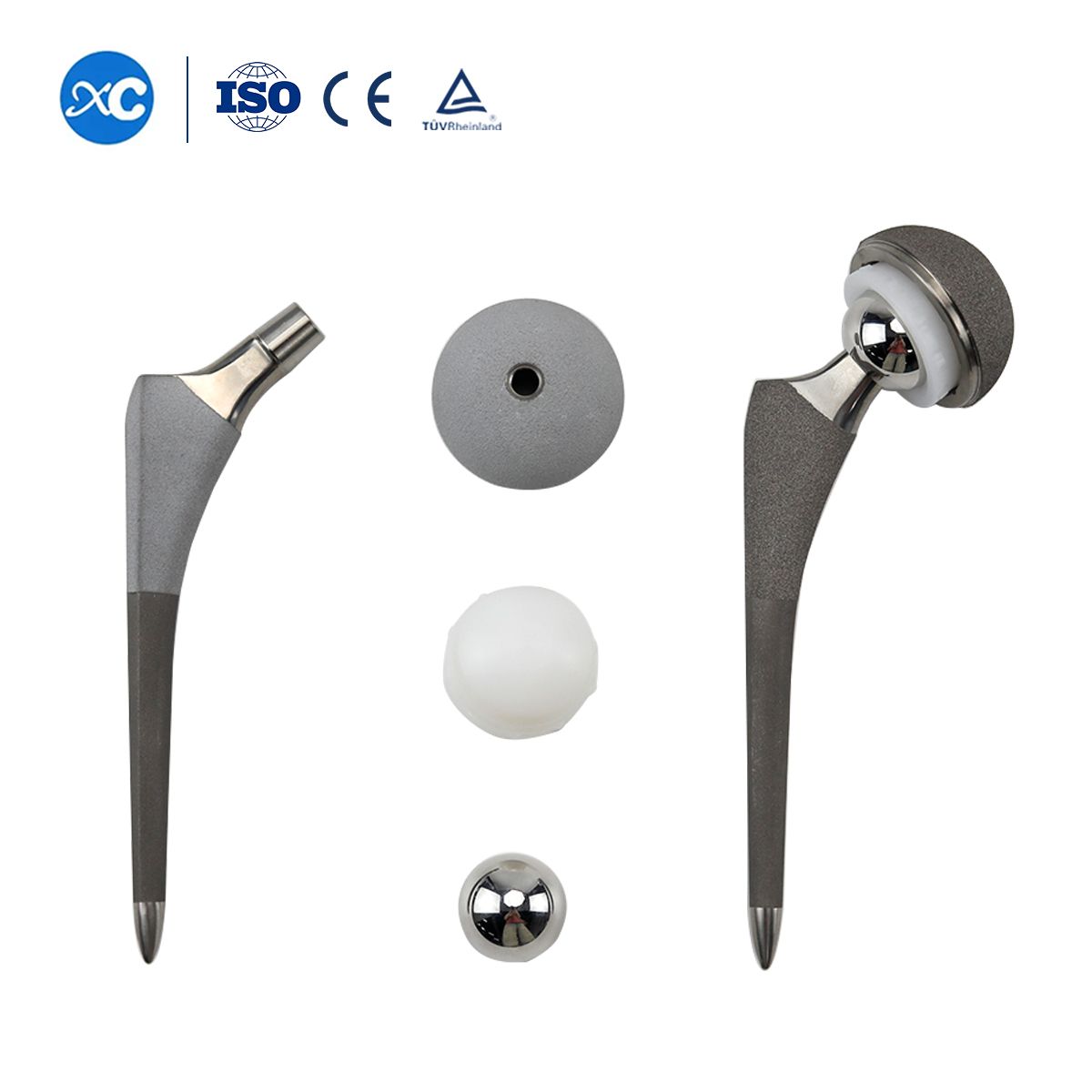
The Cemented Femoral Stem (Cobalt Chrome): An Orthopedic Deep Dive
Total Hip Arthroplasty (THA), commonly known as hip replacement surgery, stands as one of the most successful orthopedic procedures of the last century, dramatically improving the quality of life for millions suffering from debilitating hip conditions. A critical component of this success lies in the design and fixation of the femoral stem, which anchors the prosthetic hip into the thigh bone. Among the various fixation methods, the cemented femoral stem has a long and proven track record, particularly when fabricated from robust materials like Cobalt Chrome.
This comprehensive guide will delve into the intricacies of the cemented femoral stem made from Cobalt Chrome, providing an exhaustive overview for medical professionals, patients, and researchers. We will explore its design principles, material science, detailed surgical applications, the biomechanics of its function, and the profound impact on patient outcomes.
Introduction & Overview of Cemented Femoral Stems
A cemented femoral stem is a prosthetic component designed to be fixed within the medullary canal of the femur using polymethylmethacrylate (PMMA) bone cement. This cement acts as an interface, mechanically interdigitating with both the porous cancellous bone and the surface of the implant, creating a stable construct for load transfer. The concept of cementing orthopedic implants dates back to Sir John Charnley's pioneering work in the 1960s, which revolutionized hip arthroplasty by providing immediate, stable fixation.
Cobalt Chrome (CoCr) is a high-performance alloy widely utilized in orthopedic implants due to its exceptional mechanical properties and biocompatibility. Its specific advantages in femoral stem applications include:
* High Strength and Stiffness: Essential for bearing physiological loads without deformation or fracture.
* Excellent Wear Resistance: Contributes to the longevity of the implant, especially when used in articulating surfaces (though less critical for the stem itself, it speaks to the material's overall durability).
* Corrosion Resistance: Crucial for long-term implantation within the aggressive biological environment of the human body.
* Biocompatibility: Generally well-tolerated by the body, minimizing adverse reactions.
The combination of a well-designed Cobalt Chrome stem with meticulous cementing technique offers a reliable and durable solution for patients requiring hip replacement, particularly those with compromised bone quality or specific anatomical considerations.
Deep-Dive into Technical Specifications & Mechanisms
Understanding the technical aspects of the cemented femoral stem is paramount to appreciating its clinical efficacy.
Design Features of Cemented Femoral Stems
Cemented femoral stems are engineered to optimize stress distribution through the bone cement mantle to the surrounding bone, minimizing stress concentrations and maximizing long-term stability. Key design features include:
- Tapered vs. Straight Designs:
- Tapered stems: More common, designed to achieve circumferential compression of the cement mantle, enhancing its fatigue life. They often feature a highly polished distal section to allow for controlled subsidence within the cement, which can be beneficial.
- Straight stems: Less common in modern cemented designs, but still used.
- Collar vs. Collarless Stems:
- Collared stems: A flange at the proximal end that rests on the resected femoral neck. The idea is to offload the cement mantle proximally, reducing stress. However, if not perfectly seated, it can lead to stress shielding or cement mantle defects.
- Collarless stems: Rely entirely on the cement mantle for load transfer. Modern designs often favor collarless stems with specific surface finishes for optimal cement interdigitation.
- Surface Finish:
- The surface of cemented stems is typically roughened or grit-blasted proximally to maximize the mechanical interlock with the bone cement.
- Distally, some designs feature a polished surface to allow for controlled micromotion or "pistoning" within the cement mantle, which can relieve distal stress and potentially reduce thigh pain.
- Cross-Sectional Geometry: Varies widely, including round, oval, or rectangular sections, each influencing cement mantle thickness and stress distribution.
- Stem Length: Shorter stems are gaining popularity, potentially reducing stress shielding and preserving more bone stock for future revisions.
Material Properties of Cobalt Chrome (CoCr)
Cobalt Chrome alloys used in orthopedic implants, primarily CoCrMo (Cobalt-Chrome-Molybdenum), offer a unique combination of properties.
| Property | Description | Significance in Implants |
|---|---|---|
| Tensile Strength | High resistance to breaking under tension. | Prevents fracture of the stem under physiological loading. |
| Yield Strength | High resistance to permanent deformation. | Ensures the stem maintains its shape and structural integrity over time. |
| Fatigue Strength | Ability to withstand repeated stress cycles without failure. | Critical for long-term durability in a dynamic environment like the hip joint. |
| Elastic Modulus | A measure of stiffness (approx. 200-230 GPa). | While stiffer than bone (10-30 GPa), it's a balance between strength and stress shielding. |
| Hardness | Resistance to localized plastic deformation. | Contributes to wear resistance, though less critical for a cemented stem interface compared to articulating surfaces. |
| Corrosion Resistance | High resistance to degradation in biological fluids. | Essential for long-term biocompatibility and preventing release of metallic ions. |
| Biocompatibility | The ability of a material to perform with an appropriate host response in a specific application. | Generally excellent, though rare cases of hypersensitivity (e.g., to nickel content) can occur. |
Mechanism of Cement Fixation
The stability of a cemented femoral stem hinges on the effective application and properties of polymethylmethacrylate (PMMA) bone cement.
- Interdigitation: The primary mechanism of fixation. As the liquid cement polymerizes, it flows into the irregular surfaces of the cancellous bone and the roughened surface of the femoral stem. Upon hardening, this creates a mechanical interlock.
- Cement Mantle: A uniform and consistent thickness (typically 2-5 mm) of bone cement around the stem is crucial. An optimal mantle distributes stress evenly, preventing localized overloading and fatigue failure.
- Pressurization: During cement application, the cement is pressurized into the medullary canal. This forces the cement deep into the cancellous bone interstices, maximizing interdigitation and creating a dense, void-free mantle.
- Surface Roughness: The specific surface treatment of the Cobalt Chrome stem (e.g., grit-blasting) significantly enhances the bond strength and shear resistance at the stem-cement interface.
- Stress Transfer: The cement mantle acts as a viscoelastic intermediary, transferring loads from the stiff metallic stem to the more compliant bone.
Extensive Clinical Indications & Usage
Cemented femoral stems, particularly those made of Cobalt Chrome, have established indications in primary and revision total hip arthroplasty.
Primary Total Hip Arthroplasty
Cemented femoral stems are often the preferred choice in specific patient populations:
- Elderly Patients: Especially those with osteopenia or osteoporosis, where bone quality may be insufficient to achieve stable press-fit fixation with uncemented stems. The immediate stability of cement allows for early mobilization.
- Patients with Specific Femoral Canal Anatomy: Such as stove-pipe canals or Dorr Type C femurs, where achieving adequate uncemented fixation can be challenging.
- Certain Fracture Patterns: In cases of femoral neck fractures requiring arthroplasty, cemented stems provide reliable fixation in potentially osteoporotic bone.
- Patients with Rheumatoid Arthritis: Often associated with poor bone quality.
Surgical Application & Fitting Instructions
Successful cemented femoral stem implantation requires meticulous surgical technique.
Pre-operative Planning
- Radiographic Assessment: Anteroposterior (AP) pelvis and lateral hip X-rays are crucial for assessing bone quality, femoral canal morphology (Dorr classification), and templating for appropriate stem size and offset.
- Patient-Specific Considerations: Age, activity level, bone mineral density, and comorbidities influence implant choice and surgical approach.
Surgical Technique
- Femoral Preparation:
- Osteotomy: Resection of the femoral neck at the planned level.
- Reaming: Sequential reaming of the femoral canal to create a cavity for the stem.
- Broaching: Using broaches that mimic the final stem's shape to compact cancellous bone, create a precise cavity, and establish proper anteversion/retroversion.
- Pulsatile Lavage: Thorough cleaning of the canal to remove marrow, fat, and debris, ensuring a clean surface for cement adherence.
- Drying: Complete drying of the canal to prevent dilution of the cement.
- Distal Plug Insertion: A cement restrictor or plug is inserted distally to prevent cement extrusion and allow for pressurization.
- Cementing Technique:
- Cement Mixing: PMMA bone cement is mixed under vacuum to reduce porosity and increase mechanical strength.
- Retrograde Filling: The cement is delivered into the femoral canal from distal to proximal using a cement gun, ensuring a continuous, void-free column.
- Pressurization: A cement pressurizer is used to force the cement into the cancellous bone interstices, maximizing interdigitation.
- Stem Insertion:
- The Cobalt Chrome femoral stem is carefully inserted into the cement-filled canal as the cement is in its doughy phase.
- Controlled impaction ensures proper seating, alignment, and orientation (anteversion).
- Excess cement is meticulously removed from around the calcar and greater trochanter before it fully hardens.
- Component Assembly: The femoral head is then impacted onto the stem taper, and the hip is reduced.
Intraoperative Considerations
- Optimal Cement Mantle: Aim for a uniform 2-5 mm cement mantle to optimize load transfer and minimize stress points.
- Prevention of Cement Embolization: Careful pressurization and avoidance of excessive cement volume can reduce the risk of cement entering the vascular system.
- Proper Stem Alignment: Correct anteversion and leg length restoration are critical for joint stability and patient function.
Maintenance & Sterilization Protocols
While the Cobalt Chrome femoral stem itself is a single-use, sterile implant, the instruments used for its implantation require rigorous maintenance and sterilization.
- Pre-Sterilization:
- Decontamination: Immediately after use, surgical instruments are cleaned to remove blood, tissue, and other contaminants. This may involve manual scrubbing, enzymatic soaks, or automated washer-disinfectors.
- Inspection: Instruments are inspected for damage, corrosion, or wear, and any faulty instruments are removed from service.
- Sterilization Methods:
- Steam Sterilization (Autoclave): The most common and effective method for reusable orthopedic instruments. High-pressure saturated steam at specific temperatures (e.g., 121°C or 132°C) for defined exposure times ensures the destruction of all microorganisms.
- Packaging: Instruments are carefully packaged in sterilization wrap or rigid containers that maintain sterility until the point of use.
- Storage: Sterilized instruments are stored in a clean, dry, and temperature-controlled environment to preserve their sterility.
- Traceability: Comprehensive records are maintained for each implant (lot number, expiration date) and the sterilization cycles of reusable instruments to ensure patient safety and facilitate recall if necessary.
Biomechanics of Cemented Femoral Stems
The biomechanical interaction between the Cobalt Chrome stem, bone cement, and host bone is fundamental to the long-term success of cemented THA.
- Load Transfer: The cemented construct functions as a composite structure. Axial and torsional loads are transferred from the femoral head, through the stem, across the cement mantle, and into the surrounding cortical and cancellous bone. A uniform cement mantle ensures even load distribution.
- Stress Shielding: As the Cobalt Chrome stem is significantly stiffer than bone, it can bear a disproportionate amount of stress, particularly proximally. This "stress shielding" can lead to disuse osteoporosis and bone resorption in the proximal femur, potentially weakening the bone over time. While modern cemented stems aim to mitigate this through design, it remains a consideration.
- Micromotion: Excessive micromotion at the bone-cement or cement-stem interface is detrimental, leading to fibrous tissue formation, pain, and eventually aseptic loosening. The goal of cementing is to achieve immediate, rigid fixation that prevents micromotion.
- Fatigue Life: Both the Cobalt Chrome stem and the PMMA cement mantle are subject to cyclic loading. The fatigue life of the cement mantle is a critical factor in long-term survivorship. Factors like cement porosity, mantle thickness, and surgical technique directly impact its fatigue resistance.
- Interface Strength: The strength of the bond at both the bone-cement and cement-implant interfaces is crucial. Mechanical interdigitation provides the primary resistance to shear and tensile forces.
Patient Outcome Improvements with Cemented Femoral Stems
The use of cemented Cobalt Chrome femoral stems has consistently demonstrated excellent clinical outcomes, leading to significant patient benefits.
- Reliable Early Fixation: Cemented stems provide immediate mechanical stability, allowing for early weight-bearing and accelerated rehabilitation protocols. This is particularly beneficial for elderly patients, reducing the risks associated with prolonged immobility.
- Reduced Thigh Pain: Compared to some uncemented stem designs, cemented stems have historically been associated with a lower incidence of postoperative thigh pain, though this can vary with specific stem designs and patient factors.
- Excellent Long-Term Survivorship: Decades of clinical data, particularly from large joint registries, confirm the high long-term survivorship rates of well-implanted cemented femoral stems, especially in older patient cohorts.
- Improved Mobility and Pain Relief: Like all successful THA, cemented stems effectively alleviate pain caused by osteoarthritis, avascular necrosis, or fractures, restoring hip function and significantly improving range of motion.
- Enhanced Quality of Life: By restoring mobility and eliminating chronic pain, patients can return to daily activities, hobbies, and social engagements, leading to a substantial improvement in their overall quality of life.
Risks, Side Effects, or Contraindications
While highly successful, cemented femoral stem implantation is a major surgical procedure and carries potential risks, side effects, and specific contraindications.
Risks & Side Effects
- Intraoperative Complications:
- Femoral Fracture: During broaching or stem insertion.
- Cement Embolization Syndrome: A rare but potentially life-threatening complication where cement particles or marrow contents enter the bloodstream, leading to cardiopulmonary compromise.
- Malposition: Improper stem alignment or rotation, affecting hip biomechanics and stability.
- Early Postoperative Complications:
- Infection: Periprosthetic joint infection (PJI) is a devastating complication requiring extensive treatment.
- Dislocation: The femoral head dislocating from the acetabular component.
- Deep Vein Thrombosis (DVT) / Pulmonary Embolism (PE): Blood clots forming in the legs that can travel to the lungs.
- Nerve Injury: Damage to the sciatic or femoral nerve.
- Late Postoperative Complications:
- Aseptic Loosening: The most common long-term failure mechanism, where the implant loses fixation to the bone without infection. This can be due to cement mantle failure, bone-cement interface failure, or osteolysis from wear debris.
- Periprosthetic Fracture: A fracture of the femur around the implant.
- Osteolysis: Bone resorption caused by the body's reaction to microscopic wear debris from the joint components.
- Thigh Pain: Persistent pain in the thigh, potentially due to stress shielding or micromotion.
- Allergic Reaction: Extremely rare, but patients can develop hypersensitivity to metallic ions released from the Cobalt Chrome alloy (particularly nickel, which is often a component).
Contraindications
- Absolute Contraindications:
- Active Infection: Any active infection, local or systemic, must be treated and resolved before THA.
- Uncontrolled Systemic Disease: Conditions like severe cardiovascular disease, uncontrolled diabetes, or renal failure that significantly increase surgical risk.
- Rapidly Progressive Neurological Disease: Conditions that compromise gait and make rehabilitation impossible or dangerous.
- Relative Contraindications:
- Skeletal Immaturity: Not typically performed in patients with open growth plates.
- Severe Bone Loss or Deformity: May necessitate specialized implants, custom components, or alternative fixation strategies (e.g., impaction grafting).
- Known Allergy to CoCr Components: While rare, a documented allergy to Cobalt, Chrome, or Nickel would contraindicate the use of a CoCr implant.
- Excellent Bone Quality: In younger, active patients with robust bone stock, an uncemented femoral stem may be preferred to potentially reduce stress shielding and facilitate future revisions.
Frequently Asked Questions (FAQ)
1. What is a cemented femoral stem made of Cobalt Chrome?
A cemented femoral stem is a prosthetic implant inserted into the thigh bone (femur) during hip replacement surgery. It's fixed in place using specialized bone cement (polymethylmethacrylate, PMMA). When made of Cobalt Chrome, it refers to the material composition of the stem itself, which is a strong, corrosion-resistant alloy, primarily Cobalt, Chrome, and Molybdenum.
2. Why is Cobalt Chrome used for these implants?
Cobalt Chrome is chosen for its exceptional strength, stiffness, wear resistance, and corrosion resistance. These properties ensure the implant can withstand the significant loads and corrosive environment within the human body for many years, providing a durable and stable foundation for the artificial hip joint.
3. How does a cemented femoral stem stay in place?
It stays in place through mechanical interdigitation. The bone cement flows into the microscopic pores and irregularities of both the inner surface of the femur and the roughened surface of the Cobalt Chrome stem. Once the cement hardens, it creates a strong mechanical interlock, firmly anchoring the stem.
4. What are the advantages of a cemented femoral stem?
Key advantages include immediate, stable fixation, which allows for early weight-bearing and rehabilitation. They have a long and proven track record, particularly in older patients or those with poorer bone quality. Cemented stems are also often associated with a lower incidence of postoperative thigh pain compared to some uncemented designs.
5. Who is a good candidate for a cemented femoral stem?
Cemented femoral stems are often preferred for elderly patients, especially those with osteopenia or osteoporosis, or those with specific femoral canal anatomies that make uncemented fixation difficult. They are also commonly used in revision surgeries or certain fracture cases.
6. Are there any disadvantages or risks associated with cemented stems?
Yes, potential risks include complications related to the bone cement itself, such as cement embolization syndrome (rare but serious), and the possibility of aseptic loosening over time due to cement mantle failure. While rare, allergic reactions to the metal components (e.g., nickel in CoCr) can occur.
7. How long does a cemented femoral stem last?
Modern cemented femoral stems, when properly implanted, have excellent long-term survivorship. Many studies show that 85-95% of these implants are still functioning well 10-15 years post-surgery, and a significant number last for 20 years or more, depending on patient activity levels and individual factors.
8. What is the recovery like after a cemented hip replacement?
Recovery typically involves early mobilization and weight-bearing, often starting the day after surgery, thanks to the immediate stability of the cemented implant. Physical therapy is crucial to regain strength and range of motion. Most patients can return to light activities within a few weeks and more strenuous activities within a few months, following their surgeon's guidance.
9. Can I be allergic to the Cobalt Chrome in my implant?
While rare, it is possible to have an allergic reaction to the metallic components within Cobalt Chrome, particularly nickel, which is present in small amounts in some CoCr alloys. If you have a known metal allergy, it's crucial to discuss this with your surgeon before surgery, as alternative materials or testing may be considered.
10. Is an uncemented stem better than a cemented one?
Neither is inherently "better"; the choice depends on individual patient factors. Uncemented stems rely on bone ingrowth for fixation and are often preferred for younger, more active patients with good bone quality. Cemented stems offer immediate stability and are often favored for older patients or those with compromised bone. Your orthopedic surgeon will recommend the best option for your specific needs.
11. What is the role of bone cement in the fixation process?
Bone cement (PMMA) acts as a grout, filling the space between the femoral stem and the inner surface of the femur. It mechanically interdigitates with both the bone and the implant, creating a stable, load-bearing interface. It also helps to distribute stress evenly from the stiff metallic stem to the more compliant bone.
12. How is the implant sterilized before surgery?
Cobalt Chrome femoral stems are typically supplied by the manufacturer as sterile, single-use implants. They undergo rigorous sterilization processes (often gamma irradiation or ethylene oxide) and are packaged in sterile barriers to maintain sterility until the moment of implantation in the operating room.