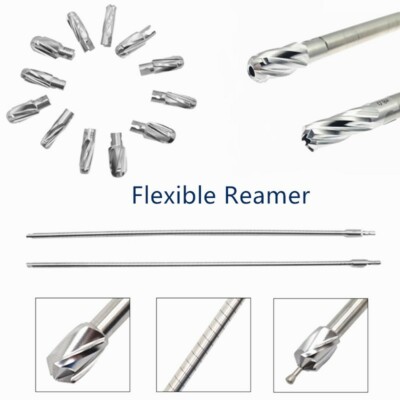
The Cannulated Reamer (Over-the-Wire): A Cornerstone of Modern Orthopedic Surgery
Comprehensive Introduction & Overview
In the intricate world of orthopedic surgery, precision and patient safety are paramount. Among the myriad of specialized instruments, the cannulated reamer, particularly the "over-the-wire" variant, stands out as a critical tool for preparing bone canals with unparalleled accuracy. This guide aims to demystify this essential instrument, providing a comprehensive understanding for patients and healthcare enthusiasts alike.
A cannulated reamer is a surgical device characterized by its hollow shaft, which allows it to be advanced over a pre-inserted guide wire. This "over-the-wire" mechanism is revolutionary, enabling surgeons to precisely enlarge or shape bone canals, primarily in long bones like the femur or tibia, without losing the established anatomical alignment. Its primary applications include preparing the medullary canal for intramedullary nails in fracture fixation, reaming the acetabulum for total hip arthroplasty, and preparing recipient sites for bone grafts.
The significance of the cannulated reamer lies in its ability to minimize surgical invasiveness while maximizing accuracy. By following a guide wire, the reamer ensures that the bone preparation remains perfectly centered and aligned, reducing the risk of cortical perforation, malalignment, and other complications. This translates directly into improved patient outcomes, including better implant stability, faster recovery times, and reduced post-operative pain. This instrument embodies the blend of engineering precision and surgical artistry, making complex procedures safer and more effective for patients worldwide.
Deep-dive into Technical Specifications / Mechanisms
Understanding the mechanics and design of the cannulated reamer reveals why it is so indispensable in orthopedic surgery.
Design and Components
The cannulated reamer system typically comprises several key components:
- Reamer Head: This is the working end of the instrument, featuring sharp cutting flutes or abrasive surfaces designed to remove bone tissue. Reamer heads come in various diameters, allowing for sequential reaming to gradually enlarge the canal. Some heads are designed for specific tasks, such as acetabular reaming (hemispherical) or intramedullary reaming (cylindrical).
- Cannulated Shaft: The central feature, a hollow shaft that allows the reamer head to slide over a guide wire. This cannulation is crucial for maintaining alignment.
- Connecting Mechanism: The proximal end of the shaft connects to a power drill (e.g., via an AO/Synthes connection) or a hand reamer handle, providing the rotational force necessary for bone removal.
- Guide Wire: A thin, flexible, yet rigid wire inserted into the bone canal first to establish the desired path. The reamer then follows this wire. Guide wires can be plain-tipped or ball-tipped to prevent penetration through the bone cortex.
Materials Engineering
The materials used in cannulated reamers are chosen for their strength, sharpness retention, biocompatibility, and resistance to corrosion and wear.
| Material Type | Properties | Application/Benefit |
|---|---|---|
| High-Grade Stainless Steel | Excellent hardness, corrosion resistance, cost-effective. | Most common for reamer heads and shafts. |
| Titanium Alloys | High strength-to-weight ratio, superior biocompatibility, fatigue resistance. | Used for specialized reamers or components requiring higher strength. |
| Ceramic Coatings | Enhanced hardness, reduced friction, improved wear resistance. | Applied to cutting surfaces to prolong sharpness and lifespan. |
| Diamond Grit | Extremely hard, abrasive surface. | Used for specific reaming tasks, especially in dense bone or for precise shaping (e.g., acetabular reamers). |
Mechanism of Action: The "Over-the-Wire" Principle
The core innovation of the cannulated reamer lies in its "over-the-wire" mechanism:
- Guide Wire Insertion: A guide wire is meticulously inserted into the bone, traversing the fracture site or desired canal path. Its position is confirmed using fluoroscopy (real-time X-ray imaging) to ensure perfect alignment and prevent cortical breach.
- Sequential Reaming: The smallest diameter cannulated reamer head is then slid over the guide wire. As the surgeon activates the power drill, the reamer rotates and is advanced, gradually widening the bone canal.
- Gradual Enlargement: Successively larger reamer heads are used, each following the path created by the previous one and guided by the central wire. This sequential approach minimizes stress on the bone and prevents rapid, uncontrolled bone removal.
- Bone Debris Removal: As bone is reamed, debris is generated. Adequate irrigation (e.g., with saline solution) and aspiration are crucial to clear the surgical site, prevent thermal necrosis (localized bone death due to heat), and allow for clear visualization.
Biomechanics and Physiological Impact
The biomechanical principles underlying cannulated reaming are critical for optimal patient outcomes:
- Controlled Bone Removal: The sequential reaming process allows for precise control over the canal diameter, ensuring a snug fit for the subsequent implant (e.g., intramedullary nail).
- Maintaining Anatomical Alignment: The guide wire acts as a central axis, ensuring that the reamed canal is perfectly aligned with the anatomical axis of the bone. This is vital for restoring limb length and rotation.
- Minimizing Thermal Necrosis: Reaming generates heat. Using sharp reamers, appropriate rotational speed, and copious irrigation dissipates heat, preventing damage to surrounding bone tissue, which could impair healing.
- Enhancing Implant Stability: A well-prepared canal provides optimal contact between the implant and the bone, leading to primary stability and promoting secondary bone ingrowth.
Extensive Clinical Indications & Usage
The versatility of the cannulated reamer makes it indispensable across a broad spectrum of orthopedic procedures.
Primary Indications
- Intramedullary Nailing for Fracture Fixation:
- Femur Fractures: Diaphyseal (shaft) fractures of the femur are commonly treated with intramedullary nails. Reaming prepares the canal to accept a nail of appropriate diameter, providing strong internal fixation.
- Tibia Fractures: Similar to the femur, tibial shaft fractures benefit from reamed intramedullary nailing, especially in comminuted or unstable fractures.
- Humerus Fractures: While less common, certain humeral shaft fractures can also be treated with reamed intramedullary nails.
- Total Hip Arthroplasty (THA):
- Acetabular Reaming: During hip replacement surgery, the acetabulum (socket of the hip joint) needs to be precisely shaped to accept the artificial cup component. Hemispherical cannulated reamers are used over a central guide pin to create a perfectly spherical and appropriately sized cavity.
- Bone Grafting Procedures:
- Recipient Site Preparation: When autografts or allografts are used to fill bone defects or promote fusion, cannulated reamers can prepare a precisely sized and shaped recipient bed, optimizing graft integration.
- Tumor Resection and Reconstruction:
- In cases of bone tumor removal, reamers can be used to prepare the remaining bone ends for reconstructive implants or cement fixation.
Surgical Workflow and Best Practices
A typical surgical sequence involving a cannulated reamer:
- Pre-operative Planning: Detailed imaging (X-rays, CT scans) helps the surgeon determine the appropriate reamer sizes, guide wire trajectory, and implant dimensions.
- Patient Positioning and Incision: The patient is positioned, and a surgical incision is made to access the bone.
- Guide Wire Insertion: Under fluoroscopic guidance, a guide wire is carefully inserted into the medullary canal or acetabulum. Its position is meticulously checked to ensure it follows the correct anatomical axis and does not perforate the cortex.
- Reaming: Starting with the smallest diameter, cannulated reamers are advanced over the guide wire. The reaming is performed incrementally, typically increasing by 0.5 mm to 1 mm with each subsequent reamer.
- Controlled Speed: Reaming should be performed at a controlled, moderate speed to prevent excessive heat generation.
- Intermittent Advance: The reamer is advanced and withdrawn intermittently to clear debris and allow for irrigation.
- Copious Irrigation: Saline irrigation is continuously used to cool the bone and flush out bone debris.
- Assessment: After reaming to the desired diameter, the canal or cavity is inspected for adequate preparation and absence of debris.
- Implant Insertion: The chosen implant (e.g., intramedullary nail, acetabular cup) is then inserted into the precisely reamed cavity.
Advantages and Patient Outcome Improvements
The use of cannulated reamers significantly enhances surgical outcomes:
- Precision and Accuracy: The guide wire mechanism ensures highly accurate bone preparation, critical for optimal implant fit and alignment.
- Reduced Risk of Complications:
- Cortical Perforation: The guide wire acts as a safeguard, significantly reducing the risk of the reamer breaching the bone cortex.
- Malalignment: Precise reaming along the anatomical axis minimizes the chance of limb malalignment.
- Thermal Necrosis: Controlled reaming with irrigation reduces the risk of bone damage from heat.
- Minimally Invasive Potential: While not always a truly "minimally invasive" procedure itself, the precision offered by over-the-wire reaming can contribute to smaller incisions and less soft tissue disruption compared to open reaming techniques.
- Improved Implant Stability: A perfectly prepared bone bed allows for maximum contact and fixation of the implant, leading to better primary stability and long-term success.
- Enhanced Patient Recovery: Better implant stability and reduced complications contribute to:
- Reduced Post-operative Pain: Stable fixation and less soft tissue trauma.
- Faster Mobilization: Patients can often bear weight sooner.
- Lower Revision Rates: Due to durable implant fixation.
- Better Functional Outcomes: Restoration of anatomical alignment and stable fixation leads to improved limb function.
Risks, Side Effects, or Contraindications
While highly beneficial, the use of cannulated reamers is not without potential risks, and certain patient conditions may contraindicate their use.
Potential Risks and Side Effects
- Thermal Necrosis: Excessive heat generation during reaming, often due to dull reamers, high speed, or inadequate irrigation, can lead to localized bone death. This can impair bone healing and increase infection risk.
- Cortical Perforation: Despite the guide wire, aggressive or uncontrolled reaming, especially in osteoporotic bone or complex anatomy, can still lead to the reamer breaching the bone cortex.
- Guide Wire Complications: The guide wire itself can bend, break, or migrate during insertion or reaming, necessitating removal and re-insertion, prolonging surgery.
- Fat Embolism: Reaming the medullary canal can force medullary fat into the bloodstream, potentially leading to a fat embolism syndrome, a serious and life-threatening complication, though rare.
- Infection: As with any surgical procedure, there is a risk of infection at the surgical site.
- Hemorrhage: Reaming can cause bleeding, though typically controlled.
- Instrument Breakage: Though rare with proper handling, reamer heads or shafts can break, requiring retrieval.
Contraindications
- Severe Osteoporosis: Extremely brittle bone may not tolerate reaming well, increasing the risk of iatrogenic fracture or cortical perforation. Non-reamed nailing techniques might be preferred.
- Active Infection: Reaming through an actively infected site can spread the infection.
- Extremely Narrow or Sclerotic Canals: Canals that are too narrow or filled with dense, sclerotic bone (e.g., after previous trauma or infection) may make safe reaming difficult or impossible.
- Certain Anatomical Anomalies: Highly unusual bone shapes or deformities might preclude safe use of standard reaming techniques.
- Patient-Specific Factors: Overall patient health, coagulopathies, or other systemic conditions might influence the surgeon's choice of technique.
Expert Tips from Dr. Mohammed Hutaif
As an orthopedic specialist, I emphasize the following critical points regarding the use of cannulated reamers to ensure optimal patient safety and surgical success:
- Meticulous Guide Wire Placement is Paramount: The guide wire is the foundation of precise reaming. Its accurate insertion, confirmed by multiple fluoroscopic views, dictates the success of the entire procedure. Any deviation can lead to malalignment or perforation.
- Embrace the "Slow and Steady" Approach to Reaming: Resist the urge to rush. Ream sequentially, increasing diameters gradually (e.g., 0.5 mm increments). This minimizes stress on the bone, reduces heat generation, and allows for controlled bone removal.
- Prioritize Copious Irrigation and Aspiration: Heat is the enemy of bone viability. Constant irrigation with chilled saline is essential to dissipate heat. Simultaneously, aspiration helps clear bone debris, improving visibility and preventing potential fat embolism.
- Sharpness Matters: Inspect Your Instruments: A dull reamer generates more heat and requires more force, increasing risks. Always ensure reamer heads are sharp and free from damage before use. Proper maintenance and sterilization protocols are key to instrument longevity and performance.
- Pre-operative Planning is Non-Negotiable: Thoroughly review patient imaging. Understand the fracture pattern, bone quality, and canal morphology. This allows for selection of the correct guide wire, reamer sizes, and anticipated implant dimensions, preventing surprises in the operating room.
- Understand Your Limits and Alternatives: While reamed nailing is often superior, there are situations (e.g., severe osteoporosis, extremely narrow canals) where unreamed techniques or other fixation methods might be safer. Always prioritize patient safety over adherence to a single technique.
- Continuous Education: Orthopedic surgery is constantly evolving. Staying updated on the latest reaming techniques, instrument advancements, and best practices ensures the highest standard of care for our patients.
A Massive FAQ Section
Here are frequently asked questions about the cannulated reamer (over-the-wire) system, designed to provide comprehensive answers for patients and interested individuals.
Q1: What exactly is a cannulated reamer, and what does "over-the-wire" mean?
A1: A cannulated reamer is a specialized surgical instrument used in orthopedics, characterized by its hollow center (cannulation). "Over-the-wire" refers to its primary operating mechanism: it slides over a pre-inserted guide wire. This guide wire acts like a rail, ensuring the reamer follows a precise, pre-determined path within the bone, making the procedure highly accurate and controlled.
Q2: Why is the "over-the-wire" feature so important in surgery?
A2: The "over-the-wire" feature is crucial because it allows the surgeon to maintain perfect alignment and trajectory within the bone. Once the guide wire is accurately placed (often confirmed with X-rays), the reamer can enlarge the bone canal along that exact path without deviation. This significantly reduces the risk of perforating the bone cortex (outer layer) and ensures the implant will fit perfectly, leading to better surgical outcomes and fewer complications.
Q3: What types of orthopedic surgeries commonly use a cannulated reamer?
A3: Cannulated reamers are most commonly used in:
* Intramedullary Nailing: For repairing fractures of long bones like the femur (thigh bone) and tibia (shin bone), where a metal rod (nail) is inserted into the bone's central cavity.
* Total Hip Arthroplasty (Hip Replacement): To precisely shape the acetabulum (hip socket) to fit the artificial hip cup.
* Bone Grafting Procedures: To prepare the recipient site for bone grafts, ensuring a snug fit for optimal healing.
Q4: How does using a cannulated reamer improve patient outcomes?
A4: By enabling highly precise bone preparation, cannulated reamers contribute to several patient benefits:
* Better Implant Stability: A perfectly sized and shaped bone cavity means the implant fits securely, leading to stronger initial fixation.
* Reduced Complications: Lower risk of bone perforation, malalignment, and thermal damage to bone.
* Faster Recovery: Stable implants and less surgical trauma can lead to reduced post-operative pain and quicker return to mobility.
* Longer-lasting Implants: Optimal implant fit can contribute to the longevity of joint replacements and fracture fixation devices.
Q5: Are there any risks or side effects associated with the use of this instrument?
A5: While very safe in experienced hands, potential risks include:
* Thermal Necrosis: Localized bone death if the reaming generates too much heat (prevented by sharp reamers, slow speed, and irrigation).
* Cortical Perforation: The reamer accidentally breaking through the bone's outer layer (reduced by guide wire and careful technique).
* Fat Embolism: Rare but serious complication where fat from the bone marrow enters the bloodstream.
* Guide Wire Complications: The guide wire bending or breaking.
* Infection: As with any surgery.
These risks are minimized by meticulous surgical technique, careful planning, and proper instrument handling.
Q6: How are cannulated reamers maintained and sterilized?
A6: Cannulated reamers, like all surgical instruments, undergo rigorous maintenance and sterilization protocols to ensure patient safety. After each use, they are thoroughly cleaned to remove all tissue and debris. They are then subjected to high-level sterilization processes, typically autoclaving (steam sterilization), which uses high-pressure steam at elevated temperatures to kill all microorganisms. Regular inspection for sharpness, damage, and wear is also crucial.
Q7: Can cannulated reamers be used in all patients, for example, those with osteoporosis?
A7: The decision to use a cannulated reamer depends on the individual patient's bone quality and the specific clinical situation. While generally safe, in patients with severe osteoporosis (very brittle bones), the risk of iatrogenic fracture or cortical perforation during reaming might be higher. In such cases, surgeons may opt for alternative techniques, such as unreamed nailing, where the implant is inserted without prior canal enlargement, or choose a smaller implant.
Q8: What is the typical material used for these instruments, and why?
A8: Cannulated reamers are typically made from high-grade stainless steel, and sometimes titanium alloys or with ceramic/diamond coatings. These materials are chosen for their:
* Strength and Hardness: To effectively cut bone without deforming.
* Corrosion Resistance: To withstand repeated sterilization and exposure to bodily fluids.
* Biocompatibility: To minimize adverse reactions in the surgical field.
* Durability: To ensure a long lifespan and consistent performance.
Q9: How do surgeons choose the correct size of the reamer?
A9: Surgeons determine the correct reamer size through a combination of:
* Pre-operative Imaging: X-rays and CT scans provide detailed measurements of the bone canal and fracture characteristics.
* Intra-operative Fluoroscopy: Real-time X-ray imaging during surgery helps visualize the canal and guide wire, allowing for precise measurement and confirmation.
* Sequential Reaming: Surgeons start with smaller reamers and gradually increase the size in small increments (e.g., 0.5 mm) until the desired canal diameter is achieved, or until a specific "cortical chatter" or "bone contact" is felt, indicating adequate reaming.
Q10: What advancements are being made in cannulated reamer technology?
A10: Advancements are continuous and focus on improving safety, efficiency, and patient outcomes:
* Improved Cutting Geometries: Designs that enhance cutting efficiency, reduce heat generation, and minimize bone impaction.
* Advanced Materials and Coatings: Development of harder, more durable materials and anti-friction coatings to extend instrument life and performance.
* Integrated Irrigation Systems: Reamers with built-in channels for more efficient irrigation directly at the cutting site.
* Single-Use Options: Disposable reamers to eliminate sterilization concerns and ensure consistent sharpness.
* Navigation and Robotics Integration: Future systems may integrate with surgical navigation or robotic platforms for even greater precision and automation.
Q11: Does using a reamer cause more post-operative pain compared to other methods?
A11: On the contrary, precisely preparing the bone canal with a cannulated reamer can often lead to less post-operative pain in the long run. The accurate fit of the implant reduces micromotion and instability, which are common sources of pain. While the reaming process itself is part of the surgical trauma, the overall benefits of stable fixation typically outweigh this, leading to better pain control and quicker functional recovery.
Q12: Are cannulated reamers reusable or single-use?
A12: The majority of cannulated reamers in orthopedic surgery are designed to be reusable. They are manufactured from durable medical-grade materials to withstand repeated sterilization cycles (typically autoclaving) and maintain their sharpness and integrity. However, some specialized reamer heads or specific components, particularly those with very fine cutting edges or complex designs, may be offered as single-use disposable items to guarantee consistent performance and eliminate the need for reprocessing. The choice between reusable and single-use often depends on the manufacturer, specific surgical demand, and hospital protocols.
Disclaimer: This information is for educational purposes only and is not medical advice. Always consult with a qualified healthcare professional for any medical concerns or before making any decisions related to your health or treatment.