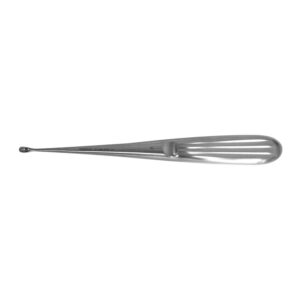
The Bruns Bone Curette: A Deep Dive into Precision Orthopedic Surgery
Welcome to this comprehensive guide on the Bruns Bone Curette, a fundamental instrument in the armamentarium of orthopedic surgeons. Designed for precision and versatility, this specialized tool plays a critical role in numerous bone-related procedures, helping to ensure optimal patient outcomes. This guide aims to demystify the Bruns Bone Curette, explaining its design, applications, and the rigorous protocols surrounding its use, all while maintaining an authoritative yet easy-to-understand tone for patients.
1. Comprehensive Introduction & Overview
The Bruns Bone Curette is a handheld surgical instrument specifically engineered for the controlled scraping, scooping, or removal of bone tissue, cartilage, or other soft tissues from bony surfaces. Its name is synonymous with precision and efficacy in orthopedic and related surgical fields. What sets the Bruns Curette apart is its unique design, featuring a cup-shaped working end available in a wide range of sizes, typically from 1mm to 10mm, and offered with both straight and angled shafts. This variety allows surgeons to meticulously access and address pathologies in diverse anatomical locations, from superficial bone surfaces to deep, intricate joint spaces.
In orthopedic surgery, the ability to precisely remove diseased, damaged, or unwanted tissue while preserving healthy structures is paramount. The Bruns Bone Curette excels in this regard, offering surgeons the tactile feedback and control necessary for delicate tasks. Its application contributes significantly to reducing pain, restoring function, and preventing the recurrence of certain conditions.
Key Features of the Bruns Bone Curette:
* Versatile Sizing: Available in cup sizes ranging from 1mm to 10mm, allowing for tailored use based on the size and location of the target tissue.
* Shaft Configurations: Offered in both straight and angled designs, providing optimal access to various anatomical sites.
* Precision Control: Engineered for controlled, delicate tissue removal, minimizing collateral damage.
* Durable Construction: Typically made from high-grade, medical-quality stainless steel for longevity and repeated sterilization.
This guide serves purely as educational content for patient information and should not be considered medical advice. Always consult with a qualified healthcare professional for any medical concerns.
2. Deep-Dive into Technical Specifications / Mechanisms
Understanding the technical aspects of the Bruns Bone Curette reveals why it is such an indispensable tool in orthopedic surgery.
Design and Materials
The design of the Bruns Bone Curette is a testament to functional engineering in surgical instrumentation.
- Materials: The instrument is predominantly crafted from high-quality, surgical-grade stainless steel. This material is chosen for its exceptional properties:
- Corrosion Resistance: Withstands repeated sterilization cycles without degradation.
- Biocompatibility: Safe for use within the human body, minimizing adverse reactions.
- Durability: Ensures the instrument maintains its sharpness and structural integrity over time.
- Ease of Cleaning: Facilitates thorough decontamination.
- Handle: The handle is ergonomically designed to provide a secure, comfortable grip for the surgeon. This ergonomic design reduces hand fatigue during lengthy procedures and enhances the surgeon's control over the instrument.
- Shaft: The shaft connects the handle to the working end. Bruns Curettes come with two primary shaft configurations:
- Straight Shaft: Ideal for direct access to superficial or easily reachable areas.
- Angled Shaft: Crucial for navigating around anatomical obstructions and reaching deep, recessed areas, such as within joint spaces or complex bone structures. The angle can vary, providing different degrees of offset to suit specific surgical approaches.
- Working End (Cup): This is the most critical part of the curette. It features a sharp, cup-shaped tip with precisely honed edges.
- Size Variety (1mm-10mm): The range of cup sizes is a defining feature. A 1mm cup allows for extremely delicate and precise work, such as cleaning small osteophytes or obtaining minute biopsy samples. A 10mm cup, conversely, can rapidly debride larger areas of diseased bone. This spectrum of sizes ensures that surgeons have the right tool for every specific task, from micro-debridement to more extensive tissue removal.
- Sharpness: The sharpness of the cup's edges is vital for efficient and clean tissue removal, minimizing trauma to surrounding healthy tissue.
Biomechanics
The biomechanics of the Bruns Bone Curette relate to how it interacts with bone and tissue under controlled force.
- Controlled Force Application: The design allows the surgeon to apply force precisely and predictably. The ergonomic handle and rigid shaft transmit the surgeon's movements directly to the working end, enabling fine control over the scraping action.
- Minimizing Trauma: The sharp, defined edges of the cup allow for clean excision or scraping of targeted tissue without tearing or crushing adjacent healthy bone or soft tissue. This precision is crucial for preserving structural integrity and promoting faster healing.
- Efficient Removal: The cup shape is optimized for scooping and containing the removed tissue, preventing fragments from scattering within the surgical field. This efficiency not only speeds up the procedure but also reduces the risk of retained tissue that could lead to complications.
- Impact of Cup Size: Smaller cups (e.g., 1mm-3mm) are used for very fine debridement, accessing tight spaces, or sampling. Larger cups (e.g., 8mm-10mm) are employed for bulkier tissue removal, such as debriding large bone cysts or necrotic bone segments. The choice directly influences the volume of tissue removed per stroke and the precision of the procedure.
3. Extensive Clinical Indications & Usage
The Bruns Bone Curette is a cornerstone instrument in a wide array of orthopedic and related surgical procedures. Its versatility and precision make it indispensable for managing various bone and joint conditions.
Common Clinical Indications for Bruns Bone Curette Use
| Indication Category | Specific Applications | Purpose of Curette Use |
|---|---|---|
| Bone Tumor Management | Benign bone tumor removal (e.g., osteochondroma, enchondroma, non-ossifying fibroma) | To meticulously scrape out tumor tissue from the bone cavity, ensuring complete removal to prevent recurrence while preserving surrounding healthy bone. |
| Bone Cyst Treatment | Unicameral Bone Cysts (UBCs), Aneurysmal Bone Cysts (ABCs) | To debride the inner lining of the cyst, remove fluid and fibrous tissue, and prepare the cavity for bone graft placement (if needed). |
| Infection Control | Osteomyelitis (bone infection) | To debride necrotic (dead) and infected bone tissue, creating a clean environment for antibiotic treatment and bone healing. This is a critical step in managing chronic bone infections. |
| Joint Debridement | Arthroscopy (knee, shoulder, hip, ankle), removal of loose bodies, osteophytes | To precisely remove loose fragments of cartilage or bone, inflamed synovial tissue, or bone spurs (osteophytes) that cause pain and restrict joint movement, often performed through minimally invasive techniques. |
| Spinal Surgery | Disc material removal, facet joint debridement, laminectomy | To remove herniated disc material that compresses nerves, debride arthritic facet joints, or carefully remove small bone fragments during spinal decompression procedures, aiming to relieve nerve pressure and pain. |
| Trauma Surgery | Fracture site preparation, removal of necrotic bone in non-unions | To clean fracture surfaces, remove debris, or debride non-union sites to promote bone healing. |
| Podiatry & Hand Surgery | Small bone procedures, joint fusion preparation, toe/finger joint debridement | For delicate work on smaller bones, preparing bone surfaces for fusion (arthrodesis), or removing small pathological tissues in the hands and feet. |
| Biopsy Procedures | Bone biopsies | To obtain small, representative samples of bone tissue for pathological examination, aiding in the diagnosis of bone tumors, infections, or metabolic bone diseases. |
Usage Instructions (Simplified for Patients)
While the actual use of a Bruns Bone Curette is performed by highly trained surgeons, understanding the general principles can provide insight into the procedure.
- Pre-operative Planning: Before surgery, the surgeon carefully reviews imaging studies (X-rays, MRI, CT scans) to determine the exact location, size, and nature of the pathology. This guides the selection of the appropriate Bruns Curette size (1mm-10mm) and shaft angle (straight/angled) for optimal access and removal.
- Access and Visualization: The surgical site is accessed, and adequate visualization is ensured. This might involve an open incision or, increasingly, minimally invasive techniques using an endoscope or fluoroscopy (real-time X-ray imaging).
- Controlled Scraping/Scooping: The surgeon gently introduces the curette and, using precise, controlled motions, scrapes or scoops the targeted tissue. The ergonomic design provides tactile feedback, allowing the surgeon to differentiate between diseased and healthy bone.
- Tissue Removal: The removed tissue is collected for pathological analysis if required.
- Post-procedure Assessment: The surgical site is inspected to ensure complete removal of the pathology and preservation of surrounding healthy structures. The cavity may then be filled with bone graft material or left to heal naturally, depending on the procedure.
Patient Outcome Improvements
The precise application of the Bruns Bone Curette directly contributes to several significant patient benefits:
- Reduced Tissue Damage: Its sharp edges and controlled action allow for the removal of only the targeted tissue, minimizing trauma to adjacent healthy bone and soft tissues. This can lead to less post-operative pain and swelling.
- Faster Recovery: Less tissue disruption generally translates to quicker healing times and a faster return to normal activities.
- Improved Functional Outcomes: By effectively removing sources of pain or mechanical obstruction (e.g., loose bodies, osteophytes), the curette helps restore joint mobility and overall function.
- Lower Recurrence Rates: For conditions like bone cysts or benign tumors, meticulous curettage ensures thorough removal of the pathological lining or tissue, significantly reducing the chance of the condition returning.
- Enhanced Diagnostic Accuracy: When used for biopsy, the ability to obtain precise tissue samples leads to more accurate diagnoses, guiding effective treatment plans.
4. Risks, Side Effects, or Contraindications
While the Bruns Bone Curette is a safe and effective instrument in skilled hands, like any surgical tool, its use carries potential risks and contraindications. Patients should discuss these thoroughly with their surgeon.
Potential Risks and Side Effects
- Damage to Healthy Tissue: If not used with extreme care and precision, there is a risk of inadvertently damaging adjacent healthy bone, cartilage, nerves, or blood vessels. This risk is minimized by experienced surgeons, proper visualization, and appropriate instrument selection.
- Incomplete Removal of Pathology: In some cases, especially with diffuse or aggressive lesions, it might be challenging to achieve complete removal of the diseased tissue. This could lead to recurrence of the condition (e.g., bone tumor, cyst).
- Infection: As with any surgical procedure involving an incision, there is a risk of post-operative infection, despite strict sterilization protocols.
- Bleeding: Surgical procedures inherently carry a risk of bleeding, which is usually controlled during the operation.
- Fracture: In areas where the bone is already weakened by disease (e.g., large cysts, tumors) or is inherently fragile, aggressive curettage could potentially lead to an iatrogenic (surgery-induced) fracture.
- Nerve or Vascular Injury: While rare, especially with careful surgical technique and anatomical knowledge, injury to nearby nerves or blood vessels can occur, leading to numbness, weakness, or circulatory problems.
Contraindications (Relative)
There are few absolute contraindications to the use of a Bruns Bone Curette itself, but certain patient conditions or surgical scenarios might make its use less ideal or require extreme caution.
- Extremely Brittle or Osteoporotic Bone: In cases of severe osteoporosis or extremely fragile bone, the mechanical forces of curettage might increase the risk of fracture. Alternative techniques or gentler approaches may be preferred.
- Poor Visualization: If the surgical field cannot be adequately visualized due to anatomical constraints, excessive bleeding, or technical limitations, the risk of inadvertent damage to vital structures increases.
- Proximity to Vital Structures: In areas where major nerves, blood vessels, or critical organs are in extremely close proximity to the target tissue and cannot be adequately protected, the surgeon may opt for alternative methods or extreme caution.
- Diffuse or Highly Aggressive Malignancies: For highly aggressive or diffuse malignant tumors, extensive curettage might not be the primary treatment. More radical resection or systemic therapies might be indicated.
5. Expert Tips from Dr. Mohammed Hutaif
As an orthopedic specialist, I emphasize the critical importance of precision, experience, and patient-centered care when utilizing instruments like the Bruns Bone Curette.
"The Bruns Bone Curette is far more than just a scraping tool; it is an extension of the surgeon's hands, allowing for meticulous control and delicate tissue manipulation. My philosophy centers on leveraging its capabilities to achieve the best possible outcomes for my patients while prioritizing their safety and long-term well-being.
Here are some key principles I adhere to:
- Precision is Paramount: Every movement with the curette must be deliberate and precise. The goal is to remove only the diseased or unwanted tissue, leaving healthy structures undisturbed. This requires an in-depth understanding of anatomy and the pathology being addressed.
- The Right Tool for the Job: With its array of sizes and shaft angles, selecting the correct Bruns Curette for each specific task is crucial. A 1mm curette is invaluable for fine debridement in tight joint spaces, while a larger one is more efficient for evacuating a substantial bone cyst. This thoughtful selection optimizes efficacy and minimizes invasiveness.
- Enhanced Visualization: Modern surgical techniques often incorporate advanced imaging, such as fluoroscopy or endoscopy, to provide real-time visualization. This guidance is indispensable, especially in complex anatomical regions, ensuring the curette is precisely where it needs to be and avoiding critical structures.
- Gentle but Effective Technique: While the instrument is designed to remove tissue, the technique must always be gentle yet effective. Aggressive or uncontrolled movements can lead to unwanted tissue damage. It's about 'shaving' or 'scooping' meticulously, not gouging.
- Holistic Patient Care: Beyond the technical aspects of surgery, comprehensive patient care involves thorough pre-operative planning, clear communication of risks and benefits, and diligent post-operative management. The Bruns Curette is a tool within a larger treatment strategy aimed at restoring quality of life."
6. Massive FAQ Section
Here are some frequently asked questions about the Bruns Bone Curette, designed to provide patients with clear and comprehensive answers.
Q1: What exactly is a Bruns Bone Curette?
A1: The Bruns Bone Curette is a specialized surgical instrument used by orthopedic surgeons to precisely scrape, scoop, or remove bone tissue, cartilage, or other soft tissues. It features a distinct cup-shaped tip available in various sizes (1mm to 10mm) and comes with either a straight or angled shaft to allow access to different parts of the body.
Q2: Why are there so many different sizes and shapes (straight/angled)?
A2: The variety in sizes and shapes is crucial for surgical precision. Smaller cup sizes (e.g., 1mm-3mm) are used for very delicate work, accessing tight spaces, or removing tiny fragments. Larger sizes (e.g., 8mm-10mm) are for more extensive tissue removal. Straight shafts are for direct access, while angled shafts allow surgeons to reach deep or obstructed areas without needing larger incisions, enhancing minimally invasive approaches.
Q3: Will I feel pain when the Bruns Bone Curette is used during surgery?
A3: No, you will not feel any pain during the procedure itself. All surgeries involving a Bruns Bone Curette are performed under anesthesia (either general or regional, depending on the procedure and patient), ensuring you are completely comfortable and unaware during the operation. Post-operative pain will be managed with appropriate pain medication.
Q4: What types of medical conditions are treated using a Bruns Bone Curette?
A4: The Bruns Bone Curette is used to treat a wide range of conditions, including:
* Removing benign bone tumors and cysts.
* Debriding infected bone in cases of osteomyelitis.
* Cleaning out joint spaces by removing loose bodies or bone spurs (osteophytes) in conditions like arthritis.
* Assisting in spinal surgeries to remove disc material or debride facet joints.
* Preparing fracture sites for healing.
* Obtaining bone biopsies for diagnostic purposes.
Q5: How does the use of this instrument improve patient outcomes?
A5: Its precision allows surgeons to remove only the diseased or unwanted tissue, minimizing damage to healthy surrounding structures. This often leads to:
* Less post-operative pain and swelling.
* Faster recovery times.
* Improved restoration of joint function and mobility.
* Lower rates of recurrence for conditions like cysts or benign tumors due to thorough removal.
* More accurate diagnoses when used for biopsy.
Q6: Is the Bruns Bone Curette used in minimally invasive surgery?
A6: Yes, absolutely. The availability of angled shafts and smaller cup sizes makes the Bruns Bone Curette an excellent tool for minimally invasive procedures, especially in arthroscopy (joint surgery). It allows surgeons to perform precise debridement or tissue removal through small incisions, leading to less scarring, reduced pain, and quicker recovery for the patient.
Q7: How is the instrument kept safe and sterile for patients?
A7: Patient safety is paramount. After each use, the Bruns Bone Curette undergoes a rigorous multi-step sterilization protocol:
1. Cleaning: Immediate manual and/or ultrasonic cleaning to remove all biological debris.
2. Inspection: Thorough inspection for any damage, wear, or dullness.
3. Sterilization: Typically, instruments are sterilized using high-temperature steam sterilization (autoclaving), which kills all bacteria, viruses, and spores.
4. Packaging & Storage: Instruments are then carefully packaged in sterile pouches and stored in a controlled environment until needed for surgery.
These strict protocols ensure that every instrument used is completely sterile and safe.
Q8: Can a Bruns Bone Curette be used to take a biopsy?
A8: Yes, it is frequently used for bone biopsies. The smaller cup sizes are particularly useful for obtaining small, representative samples of bone tissue or the lining of a bone lesion. These samples are then sent to a pathologist for microscopic examination to help diagnose conditions like infections, tumors, or metabolic bone diseases.
Q9: What happens if not all the diseased bone or tissue is removed?
A9: If some diseased bone or tissue remains, there is a risk of the condition recurring. For example, if a bone cyst is not thoroughly debrided, it may refill. If a benign tumor is not completely removed, it might grow back. Surgeons strive for complete removal, often using imaging guidance and meticulous technique to ensure this. In some cases, additional treatments (e.g., bone grafting, medication) may be used to further reduce recurrence risk.
Q10: How long is the recovery period after a procedure involving a Bruns Bone Curette?
A10: The recovery period varies significantly depending on the specific condition treated, the location and extent of the surgery, and the individual patient's overall health. Simple procedures might have a recovery of a few weeks, while more complex bone tumor removals or joint reconstructions could require several months of rehabilitation. Your surgeon will provide a personalized recovery plan and timeline.
Q11: Is the Bruns Bone Curette a new technology?
A11: The basic concept of a bone curette is quite old, dating back centuries. However, the Bruns Bone Curette, as a specific design, has evolved with modern metallurgy and surgical understanding. While not a "new technology" in the sense of a robotic arm, its design and materials are continuously refined, and its application has advanced significantly with the advent of minimally invasive techniques and advanced imaging, making it more precise and effective than ever before.
Q12: Are there alternatives to using a Bruns Bone Curette?
A12: Depending on the specific surgical task, alternatives might exist. For instance, high-speed burrs can be used for bone shaping or removal, and specialized reamers or osteotomes might be employed for larger bone resections. However, for precise scraping, scooping, and careful debridement in confined spaces, especially where tactile feedback is crucial, the Bruns Bone Curette remains a preferred and often irreplaceable tool due to its unique design and controlled action. The choice of instrument is always tailored by the surgeon to the specific needs of the patient and the procedure.