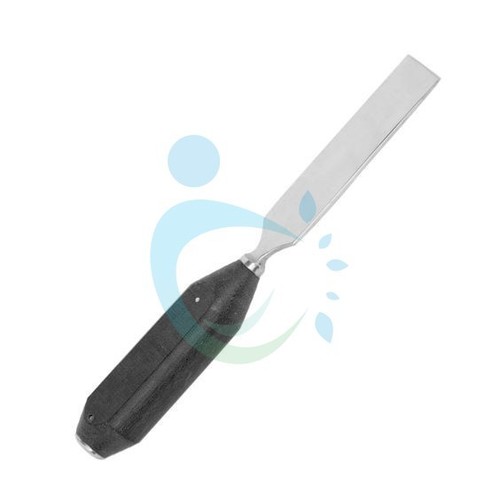
Understanding the Bone Tamp: A Foundation in Orthopedic Surgery
In the intricate world of orthopedic surgery, precision and stability are paramount. Among the myriad of specialized instruments, the bone tamp stands out as a fundamental tool, playing a critical role in procedures involving bone grafting and reconstruction. While it may seem like a simple instrument, its design, application, and meticulous use are vital for achieving optimal patient outcomes. This comprehensive guide will delve into every aspect of the bone tamp, designed to inform and educate patients about this essential orthopedic device.
What is a Bone Tamp?
A bone tamp is a specialized surgical instrument used by orthopedic surgeons to compact, condense, or "tamp" bone graft material into a desired location within the skeletal system. Essentially, it's a tool with a specific head shape (often flat, rounded, or serrated) attached to a handle, designed to deliver controlled force to bone or bone graft material. Its primary purpose is to create a dense, stable environment that promotes bone healing and fusion, especially in areas where bone voids exist or where additional structural support is needed.
Why is the Bone Tamp Crucial in Orthopedics?
The importance of the bone tamp stems from the fundamental principles of bone healing. For a bone graft to successfully integrate with existing bone (a process called osteointegration) and promote new bone growth (osteogenesis), it requires a stable, compacted bed. The bone tamp facilitates this by:
- Optimizing Graft Density: Compacting bone graft material increases its density, which enhances mechanical stability and provides a richer scaffold for cellular infiltration and vascularization.
- Creating a Stable Environment: A well-tamped graft is less likely to migrate or shift, which is crucial for successful fusion, particularly in weight-bearing areas.
- Promoting Biological Healing: By bringing graft particles into close contact with host bone and each other, the tamp maximizes the surface area for biological exchange, accelerating the healing process.
Deep Dive into Bone Tamp Design, Materials, and Biomechanics
The effectiveness of a bone tamp is a direct result of its thoughtful design, the materials it's crafted from, and its application based on sound biomechanical principles.
Anatomical Considerations in Design
Bone tamps are not one-size-fits-all instruments. Their design varies significantly to accommodate the diverse anatomical structures and surgical approaches encountered in orthopedics.
- Shapes and Angles: Tamps come in various shaft configurations:
- Straight: For direct access to superficial bone defects.
- Curved/Angled: Essential for reaching deep, recessed, or anatomically challenging areas, such as the posterior spine or around joint capsules, minimizing interference with surrounding tissues.
- Tip Designs: The working end of the tamp is crucial for its function:
- Flat: Ideal for broad, even compaction of graft material over larger surfaces.
- Rounded/Ball-ended: Used for contouring bone or compacting graft into concave surfaces.
- Serrated/Fenestrated: May offer better grip on graft material or help create micro-fractures in host bone to stimulate bleeding and healing.
- Square/Rectangular: For precise impaction into geometrically defined spaces, like intervertebral cages.
- Handle Ergonomics: The handle is designed for surgeon comfort, control, and to allow for precise force application, minimizing hand fatigue during lengthy procedures. They often feature textured grips.
Advanced Materials Science
The choice of material for a bone tamp is critical for its durability, biocompatibility, and sterilization capabilities.
- Stainless Steel: This is the most common material due to its:
- Durability: Highly resistant to wear and tear from repeated use.
- Corrosion Resistance: Withstands rigorous cleaning and sterilization processes.
- Cost-effectiveness: A widely available and proven material.
- Titanium: Used for specific applications, titanium offers:
- Lightweight: Reduces surgeon fatigue.
- Biocompatibility: Excellent tissue compatibility.
- Non-magnetic: Suitable for use in MRI environments, though tamps are typically removed before imaging.
- PEEK (Polyether Ether Ketone): A high-performance thermoplastic, PEEK is occasionally used for specialized tamps, primarily for its:
- Radiolucency: Does not show up on X-rays, which can be advantageous when assessing graft integration without instrument artifact.
- Biocompatibility: Good tissue response.
All materials must be medical-grade to ensure patient safety and long-term instrument integrity.
Biomechanical Principles of Bone Impaction
The act of tamping bone graft is a biomechanically driven process aimed at creating an optimal environment for bone healing.
- Controlled Force Distribution: The surgeon applies precise, controlled force to the tamp. This force is distributed through the instrument's tip to the bone graft, compacting it without causing excessive pressure that could damage surrounding host bone or vital structures. The goal is to achieve maximal graft density with minimal trauma.
- Optimizing Graft Density: Compaction increases the bulk density of the graft material. This reduces the interstitial spaces, bringing osteogenic cells and osteoconductive factors into closer proximity, accelerating the healing cascade. A denser graft also offers better initial mechanical stability.
- Enhancing Load-Bearing Capacity: In areas like the spine or weight-bearing joints, a well-compacted graft contributes to the immediate mechanical stability of the surgical site. This can be crucial for enabling earlier mobilization and potentially faster rehabilitation, preparing the graft site to withstand physiological loads.
Extensive Clinical Indications and Surgical Applications
The bone tamp is indispensable across a broad spectrum of orthopedic procedures, facilitating successful outcomes in various complex scenarios.
Bone Grafting Procedures
- Spinal Fusion Surgeries:
- Lumbar Interbody Fusion (e.g., PLIF, TLIF, ALIF): Tamps are used to meticulously pack bone graft material into intervertebral cages or directly into the disc space after disc removal. This creates a solid bony bridge between vertebrae, relieving pressure on nerves and stabilizing the spine.
- Cervical Fusion: Similarly, in the neck region, tamps ensure dense packing of graft material to achieve cervical stability.
- Sacroiliac Joint Fusion: Used to compact graft within the SI joint for stabilization.
- Fracture Repair and Reconstruction:
- Tibial Plateau Fractures: After reducing the fractured fragments, bone voids beneath the articular surface are filled with bone graft, which is then tamped to restore the anatomical contour and provide subchondral support.
- Calcaneal Fractures: Complex heel bone fractures often require grafting and impaction to restore calcaneal shape and function.
- Proximal Humeral Fractures: In cases with significant bone loss, grafting and tamping help reconstruct the humeral head.
- Joint Arthroplasty Revision: When replacing failed hip or knee implants, bone defects often need to be augmented with bone graft. Tamps are crucial for compacting this graft to create a stable foundation for the new prosthesis.
- Oncological Resections: Following the removal of bone tumors, large defects may be filled with bone graft, requiring precise impaction to achieve structural integrity.
- Dental and Maxillofacial Surgery:
- Sinus Lifts: Tamps are used to carefully elevate the sinus membrane and compact bone graft material into the sinus floor to prepare for dental implants.
- Ridge Augmentation: Building up deficient jawbone ridges for implant placement.
Specific Surgical Techniques and Fitting/Usage Instructions
The proper use of a bone tamp is a learned skill, requiring precision and an understanding of bone mechanics.
- Preparation and Assessment:
- The surgeon first assesses the bone defect or space requiring graft.
- The appropriate size, shape, and angle of the bone tamp are selected based on the surgical site's anatomy and the type of graft material (e.g., autograft, allograft, synthetic).
- Graft Placement: Bone graft material is carefully placed into the defect or space. This can be in small increments or as a larger bulk, depending on the procedure.
- Impaction Technique:
- Gradual, Controlled Force: The surgeon applies gentle, yet firm, tapping motions using a surgical mallet (impactor) to the handle of the bone tamp. The force is always controlled and directed to avoid damaging surrounding tissues or over-impacting the bone.
- Layered Approach: Often, graft material is placed and tamped in layers. This allows for optimal compaction and ensures that the entire defect is filled densely and evenly, minimizing voids.
- Even Distribution: The tamp is moved systematically across the graft site to ensure uniform compaction.
- Visualization: Throughout the process, the surgeon relies on direct visualization or fluoroscopy (real-time X-ray imaging) to monitor the graft placement and impaction, ensuring correct positioning and density.
- Adjunctive Tools: While manual tamps are most common, some specialized procedures might use powered tamps for certain applications, though the principle of controlled impaction remains the same.
Maintenance, Sterilization Protocols, and Ensuring Patient Safety
The integrity of surgical instruments, especially bone tamps, is non-negotiable for patient safety and optimal surgical outcomes. Strict adherence to maintenance and sterilization protocols is paramount.
Pre-Operative Checks
Before each procedure, the surgical team meticulously inspects every bone tamp for:
* Cleanliness: Absence of any visible debris, biological material, or residue.
* Damage: No bends, cracks, chips, or signs of wear that could compromise its function or sterility.
* Sharpness/Integrity of Tip: Ensuring the working end is intact and suitable for its intended purpose.
Sterilization Procedures
Sterilization is the process of eliminating all forms of microbial life, including bacteria, viruses, fungi, and spores. For reusable surgical instruments like bone tamps, this is a multi-step, critical process.
- Pre-Cleaning/Point-of-Use Cleaning: Immediately after use, gross contaminants (blood, tissue) are removed from the tamp using water and enzymatic solutions to prevent drying and adherence.
- Manual and Automated Cleaning:
- Manual Scrubbing: Instruments are thoroughly scrubbed with brushes and detergent.
- Ultrasonic Cleaning: Instruments are placed in an ultrasonic cleaner, which uses high-frequency sound waves to create cavitation bubbles that dislodge microscopic debris from hard-to-reach areas.
- Rinsing: Instruments are rinsed thoroughly with purified water to remove all cleaning solutions.
- Inspection: A detailed visual inspection ensures all instruments are perfectly clean.
- Packaging: Clean instruments are carefully packaged in sterilization pouches or wraps that allow the sterilant to penetrate but maintain sterility after processing.
- Sterilization Method:
- Steam Sterilization (Autoclaving): This is the gold standard for most heat-stable surgical instruments, including bone tamps. High-pressure saturated steam at specific temperatures (e.g., 121°C or 132°C) for a defined duration effectively kills microorganisms.
- Ethylene Oxide (EtO) Sterilization: Used for heat-sensitive instruments, though less common for metal tamps. It requires specialized equipment and aeration time.
- Storage: Sterile instruments are stored in a dry, clean, and protected environment until needed.
Post-Operative Care of Instruments
Immediate post-operative care is crucial. Instruments should be cleaned as soon as possible to prevent biological materials from drying and hardening, making subsequent sterilization more challenging.
Impact on Patient Outcome Improvements
Adherence to these protocols directly translates to superior patient outcomes:
- Reduced Infection Risk: Meticulous sterilization is the primary defense against surgical site infections, a serious complication.
- Enhanced Graft Integration: A perfectly functioning tamp, free from damage, allows for precise impaction, leading to better graft density and integration.
- Improved Long-Term Stability: The stability achieved through proper tamping contributes to the long-term success of fusion or reconstruction, reducing the need for revision surgeries.
- Faster Recovery and Rehabilitation: A stable, well-integrated graft promotes quicker healing, potentially allowing for earlier mobilization and a smoother recovery process for the patient.
Potential Risks, Side Effects, and Contraindications
While the bone tamp is a beneficial tool, its use is not without potential risks, and certain patient conditions may contraindicate its application.
Intraoperative Risks
- Over-impaction: Applying excessive force can lead to:
- Bone Fracture: Especially in osteoporotic or brittle bone.
- Damage to Surrounding Structures: Nerves, blood vessels, or adjacent soft tissues can be injured by uncontrolled force or instrument slippage.
- Compromised Bone Integrity: Weakening of the host bone.
- Under-impaction: Insufficient compaction can result in:
- Graft Instability/Migration: The graft may shift, leading to non-union or failure of the reconstruction.
- Non-union: The bone fails to heal or fuse properly.
- Suboptimal Graft Integration: Poor contact between graft and host bone.
- Instrument Failure: Though rare with proper inspection and use, a faulty or damaged tamp could break during a procedure, requiring retrieval and potentially prolonging surgery.
Postoperative Complications
- Infection: While proper sterilization minimizes this risk, any surgical procedure carries a small inherent risk of infection.
- Graft Resorption/Failure: If the graft does not integrate properly due to inadequate impaction or other biological factors, it may resorb or fail, leading to pain or loss of function.
- Pain/Discomfort: As with any bone surgery, patients will experience some level of post-operative pain and discomfort at the surgical site.
Contraindications
Certain conditions may make the use of a bone tamp less advisable or require extreme caution:
- Severe Osteoporosis: The bone is significantly weakened, making it highly susceptible to fracture with even minimal impaction force. Alternative techniques or gentler methods may be preferred.
- Active Infection at the Surgical Site: Introducing a bone graft into an infected area can exacerbate the infection and lead to severe complications. The infection must be treated first.
- Extremely Small or Irregular Defects: In very confined or unusually shaped spaces, achieving precise and safe impaction with a standard tamp can be challenging, increasing the risk of collateral damage.
- Compromised Soft Tissue Envelope: In areas with poor soft tissue coverage or compromised vascularity, aggressive manipulation with a tamp could further jeopardize tissue viability.
Expert Tips from Dr. Mohammed Hutaif
"The bone tamp, while seemingly simple, is a sophisticated instrument in the hands of an experienced surgeon. Its masterful application is critical for establishing a robust biological foundation for bone healing and long-term stability."
"Assess Bone Quality Diligently: Before any impaction, a thorough assessment of the patient's bone quality is paramount. This dictates the force and technique used, particularly in osteoporotic patients, where a delicate touch is crucial to prevent iatrogenic fractures."
"Embrace the Layered Impaction Technique: For optimal graft density and integration, I consistently advocate for a layered approach. Place small, manageable amounts of graft and tamp them incrementally. This method minimizes voids and maximizes the contact points between graft particles and host bone, fostering superior osteointegration."
"Precision Over Power: It's not about how hard you hit, but how precisely and consistently you apply force. Each tap should be controlled, deliberate, and guided by anatomical landmarks and intraoperative imaging, ensuring the graft is compacted effectively without compromising surrounding structures."
"Sterilization is Non-Negotiable: Our commitment to patient safety begins long before the incision. Ensuring every bone tamp is meticulously cleaned and sterilized according to the highest standards is a fundamental principle that directly impacts infection prevention and surgical success."
"Understand the Biomechanics: A deep understanding of bone biomechanics — how bone reacts to stress and strain, and the biological cascade of healing — informs every decision when using a bone tamp. We are not just filling a void; we are engineering a healing environment."
"Instrument Selection Matters: Having a diverse range of bone tamps in various sizes, shapes, and angles allows us to tailor our approach to the unique anatomy of each patient and the specific requirements of the surgical site. The right tool for the right job is always key."
Frequently Asked Questions (FAQ) about Bone Tamps
Q1: What is a bone tamp primarily used for in surgery?
A1: A bone tamp is primarily used in orthopedic and maxillofacial surgery to compact or "tamp" bone graft material into bone defects or spaces. This process increases the density of the graft, provides mechanical stability, and creates an optimal environment for new bone growth and fusion.
Q2: Is the bone tamp a reusable instrument?
A2: Yes, bone tamps are typically reusable surgical instruments made from durable medical-grade materials like stainless steel or titanium. They undergo rigorous cleaning, disinfection, and sterilization processes after each use to ensure they are safe and sterile for subsequent procedures.
Q3: How does the bone tamp help bone heal?
A3: By compacting bone graft material, the bone tamp achieves several things that aid healing:
* It increases the density of the graft, providing a stronger scaffold.
* It brings graft particles into closer contact with each other and the host bone, maximizing surface area for cellular activity and vascularization.
* It stabilizes the graft, preventing migration and creating a stable environment crucial for successful fusion and osteointegration.
Q4: What materials are bone tamps typically made from?
A4: Bone tamps are commonly made from high-grade stainless steel due to its durability, corrosion resistance, and ease of sterilization. Some specialized tamps may be made from titanium for its lightweight properties and biocompatibility, or occasionally from radiolucent materials like PEEK.
Q5: Are there different types of bone tamps?
A5: Yes, bone tamps come in various designs to suit different surgical needs. They can have straight, curved, or angled shafts to access different anatomical locations. Their tips also vary, including flat, rounded, square, or serrated designs, each optimized for specific impaction tasks and bone contours.
Q6: Is using a bone tamp painful for the patient?
A6: The use of a bone tamp occurs during surgery while the patient is under general anesthesia or regional anesthesia, so the patient does not feel any pain during the procedure. Post-operatively, patients will experience pain and discomfort related to the surgical incision and bone work, which is managed with appropriate pain medication.
Q7: How do surgeons choose the correct bone tamp for a procedure?
A7: Surgeons choose the correct bone tamp based on several factors:
* Anatomy of the surgical site: To ensure proper access and fit within the defect.
* Size and shape of the bone defect: To effectively fill and compact the graft.
* Type of bone graft material: Some tamps are better suited for specific graft consistencies.
* Specific surgical technique: The requirements of the procedure itself.
Q8: What are the risks associated with bone tamp use?
A8: Potential risks include over-impaction, which can lead to bone fracture or damage to surrounding nerves and blood vessels, and under-impaction, which can result in graft instability or non-union. Instrument failure, though rare, is also a potential risk.
Q9: How is a bone tamp kept sterile?
A9: Bone tamps are kept sterile through a rigorous multi-step process. After use, they are pre-cleaned, then thoroughly scrubbed and often put through an ultrasonic cleaner. They are then inspected, packaged, and sterilized, typically using high-pressure steam (autoclaving), which kills all microorganisms.
Q10: Can bone tamps be used in all bone surgeries?
A10: While widely used in many bone grafting and reconstructive surgeries, bone tamps are not suitable for every procedure. For instance, in cases of severe osteoporosis, the bone may be too fragile to withstand impaction. They are specifically used where bone graft compaction is necessary for stability and healing.
Q11: Does the bone tamp stay in the body after surgery?
A11: No, the bone tamp is a surgical instrument used by the surgeon during the procedure and is removed from the patient's body before the incision is closed. It does not remain implanted.
Q12: How does a bone tamp contribute to long-term surgical success?
A12: By ensuring optimal compaction and stability of the bone graft, the bone tamp significantly contributes to long-term surgical success. A well-integrated and stable graft leads to stronger bone fusion, reduces the risk of implant loosening or graft failure, and ultimately supports the patient's recovery and functional improvement over many years.