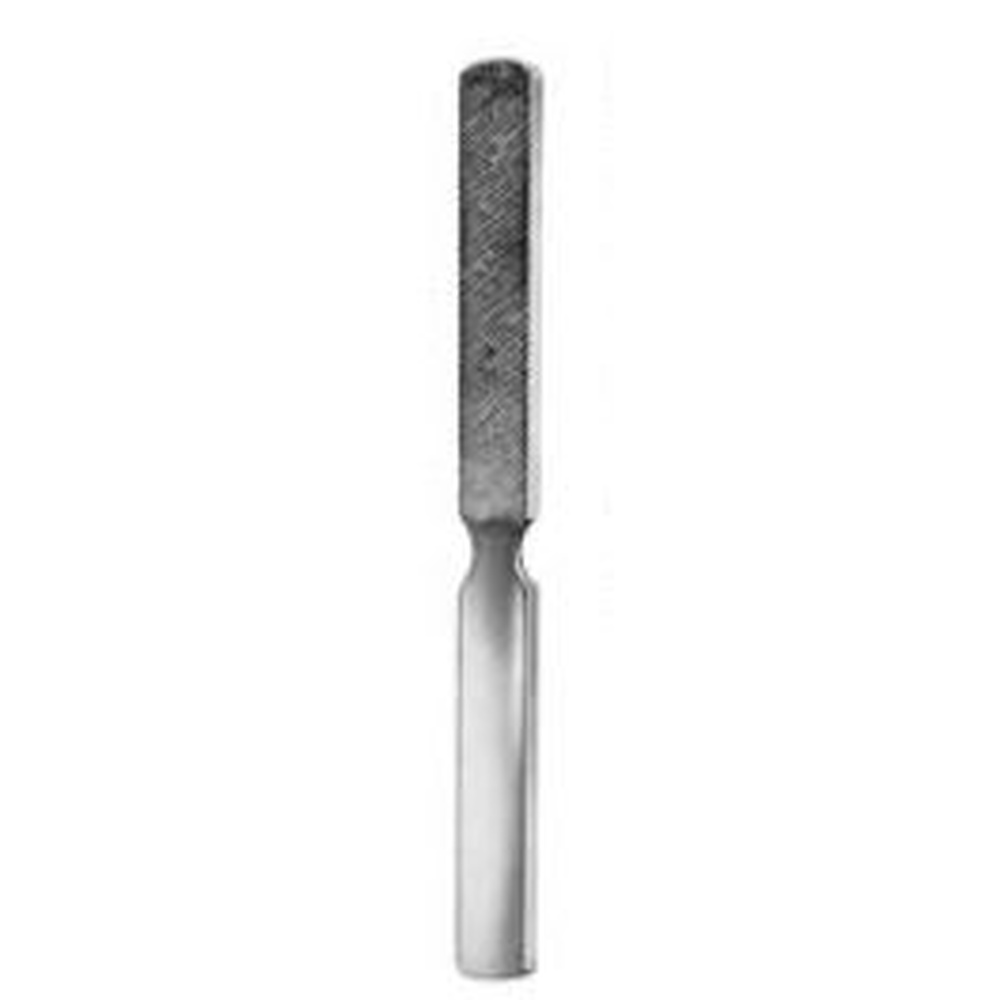
The Bone Rasp and File: Precision Instruments for Orthopedic Bone Shaping
Comprehensive Introduction & Overview
In the intricate world of orthopedic surgery, precision is paramount. Every millimetre counts when preparing bone for implant placement, correcting deformities, or achieving optimal anatomical alignment. Among the essential tools in a surgeon's arsenal, the bone rasp and bone file stand out as indispensable instruments for controlled bone shaping, contouring, and finishing. These specialized hand tools allow surgeons to meticulously sculpt bone surfaces, ensuring the perfect fit for prostheses, smoothing rough edges, and preparing sites for fusion or fixation.
A bone rasp is typically characterized by its aggressive, teeth-like surface designed for more substantial bone removal and contouring, while a bone file features a finer abrasive surface for delicate smoothing and finishing touches. Together, they enable orthopedic specialists to achieve unparalleled accuracy, contributing significantly to the success and longevity of surgical outcomes. This comprehensive guide will delve into the design, applications, maintenance, biomechanical implications, and patient benefits associated with these vital orthopedic instruments.
Deep-Dive into Technical Specifications & Mechanisms
The efficacy of a bone rasp or file lies in its meticulous design and the advanced materials used in its construction. Understanding these technical aspects is crucial for appreciating their role in modern orthopedics.
Design and Geometry
Bone rasps and files come in a vast array of shapes and sizes, each tailored for specific anatomical regions and surgical tasks.
- Shapes and Profiles:
- Flat: For broad, flat surfaces like tibial plateaus or iliac crests.
- Half-Round/Curved: Ideal for concave or convex surfaces, such as femoral condyles or acetabular rims.
- Round/Cylindrical: For small, confined areas or creating circular channels.
- Angled/Offset: Designed to access difficult-to-reach areas, especially in deep surgical fields.
- S-shaped or Bayonet: For specific anatomical contours or working around obstructions.
- Teeth Patterns and Aggressiveness:
- Coarse: For initial bulk bone removal, often found on rasps for femoral canal preparation.
- Medium: Balanced for efficient removal and a smoother finish.
- Fine: Primarily found on bone files for delicate smoothing, removing small osteophytes, or achieving a polished surface.
- Unidirectional: Teeth are oriented in one direction, requiring strokes in that specific direction for effective cutting.
- Bidirectional (Cross-cut): Teeth are designed to cut in multiple directions, offering versatility and faster removal.
- Diamond-coated: Extremely fine abrasive particles for ultimate precision and very hard bone.
- Handle Design:
- Ergonomic: Designed for comfortable, secure grip, reducing hand fatigue during prolonged use.
- Cannulated: Some rasps feature a central lumen, allowing them to be used over a guide wire for precise alignment.
- Quick-Connect: Many modern rasps integrate with universal quick-connect handles for interchangeability.
- Tip Design:
- Blunt: To prevent inadvertent soft tissue damage.
- Pointed: For initial penetration or precise shaping in tight spaces.
Materials
The longevity, sharpness, and biocompatibility of bone rasps and files are directly linked to their material composition.
- High-Grade Stainless Steel: The most common material, typically medical-grade 420 or 440A stainless steel. These alloys offer:
- Excellent corrosion resistance.
- High hardness for maintaining a sharp edge.
- Biocompatibility.
- Ability to withstand repeated sterilization cycles.
- Titanium: Used for specific applications, particularly when lighter weight or non-magnetic properties are desired. Titanium instruments are often more expensive but offer superior strength-to-weight ratio.
- Specialized Coatings:
- Ceramic Coatings: Enhance hardness and wear resistance, prolonging instrument life.
- Diamond-Like Carbon (DLC): Provides an extremely hard, smooth, and low-friction surface, ideal for very fine filing and reducing heat generation.
Mechanism of Action
The fundamental mechanism involves the mechanical abrasion of bone tissue. Unlike power tools that use rotating burrs or osteotomes that cut with impact, rasps and files remove bone in a controlled, shaving-like manner. This allows for:
- Precise Material Removal: Surgeons can feel the bone resistance, enabling highly controlled and gradual removal.
- Tactile Feedback: The surgeon's hand can discern the texture and density of the bone, crucial for avoiding over-resection or perforation.
- Reduced Heat Generation: Manual rasping generates significantly less heat compared to high-speed burrs, minimizing the risk of thermal necrosis to surrounding bone cells.
Common Types of Rasps/Files
| Type of Rasp/File | Primary Application | Key Features |
|---|---|---|
| Femoral Canal Rasps | Total Hip Arthroplasty (THA) | Progressively larger sizes, tapered, often curved, aggressive teeth. |
| Acetabular Rasps | THA, Acetabular reconstruction | Curved, fine teeth, used to prepare the acetabulum for cup insertion. |
| Cement Rasps | Revision Arthroplasty (cement removal) | Long, slender, often with serrated edges to grip and remove bone cement. |
| Bone Files (Fine) | Smoothing, osteophyte removal, delicate shaping | Finer teeth, less aggressive, used for finishing. |
| Micro-Rasps | Small joint surgery (hand/foot), spinal decompression | Very small, delicate tips, precise for confined spaces. |
| Spinal Rasps/Curettes | Spinal fusion, decompression | Specific angles and curves to access vertebral bodies and facets. |
Extensive Clinical Indications & Usage
Bone rasps and files are integral to a multitude of orthopedic procedures, ensuring optimal bone preparation for various implants and anatomical restorations.
Orthopedic Surgical Applications
- Total Hip Arthroplasty (THA):
- Femoral Preparation: A series of progressively larger rasps (broaches) are used to shape the femoral canal to precisely match the stem of the femoral prosthesis, ensuring optimal press-fit and primary stability.
- Acetabular Preparation: Rasps are used to contour the acetabular rim and floor, removing osteophytes and creating a smooth, hemispherical surface for the acetabular component.
- Total Knee Arthroplasty (TKA):
- Tibial Plateau & Femoral Condyle Shaping: Used to refine bony cuts, remove remaining cartilage, or smooth surfaces for the tibial and femoral components.
- Patellar Preparation: For resurfacing the patella, rasps help create a smooth, even surface for the patellar button.
- Spinal Surgery:
- Decompression: Removing small osteophytes or bone spurs impinging on neural structures.
- Facetectomy: Shaping the facet joints during spinal fusion procedures.
- Fusion Site Preparation: Roughening bony surfaces to promote arthrodesis.
- Trauma Surgery:
- Fracture Reduction: Smoothing sharp fracture edges to prevent soft tissue irritation or facilitate plate application.
- Fragment Shaping: Contouring bone fragments to achieve better reduction and fit for internal fixation.
- Foot & Ankle Surgery:
- Bunionectomies & Osteotomies: Shaping and smoothing resected bone to prevent recurrence or improve cosmetic outcome.
- Joint Fusions (Arthrodesis): Preparing joint surfaces by removing cartilage and roughening subchondral bone to promote fusion.
- Hand & Wrist Surgery:
- Small Bone Shaping: For arthroplasties or fusions of small joints.
- Osteophyte Removal: Delicate removal of bone spurs in confined spaces.
- Shoulder Surgery:
- Glenoid Preparation: Shaping the glenoid for total shoulder arthroplasty components.
- Rotator Cuff Repair: Smoothing acromial undersurface in acromioplasty.
- Oncological Orthopedics:
- Tumor Resection Margins: Fine-tuning bone resection margins after tumor removal.
- Reconstruction: Shaping bone grafts or host bone for reconstruction.
- Pediatric Orthopedics:
- Corrective Osteotomies: Precise shaping of bone to correct congenital deformities.
Fitting/Usage Instructions
Proper technique is paramount to maximize the effectiveness of bone rasps and files and minimize complications.
- Pre-operative Planning:
- Review patient imaging (X-rays, CT scans) to understand bone morphology, density, and potential challenges.
- Select appropriate rasp/file sizes and shapes based on the surgical plan and implant dimensions.
- Intra-operative Technique:
- Secure Grip: Hold the instrument firmly and comfortably, allowing for precise control.
- Controlled Strokes: Use smooth, deliberate strokes. Avoid jerky or excessively forceful movements.
- Directionality: For unidirectional rasps, ensure strokes are in the cutting direction. Bidirectional rasps allow for more versatile motion.
- Gradual Bone Removal: Begin with coarser rasps for bulk removal, then progress to finer rasps or files for refinement.
- Frequent Inspection: Regularly inspect the bone surface to assess progress and ensure accurate shaping. Use trial implants frequently to check fit.
- Irrigation: Continuously irrigate the surgical site with saline to clear bone debris, reduce friction, and dissipate heat, preventing thermal necrosis.
- Tactile Feedback: Rely on the tactile sensation to gauge bone density and the amount of bone being removed. This is a key advantage over power tools.
- Avoid Over-resection: Always err on the side of caution; it's easier to remove more bone than to compensate for over-resection.
- Protect Soft Tissues: Use retractors and careful technique to protect adjacent neurovascular structures and soft tissues.
Maintenance & Sterilization Protocols
The longevity, safety, and efficacy of bone rasps and files depend heavily on strict maintenance and sterilization protocols.
Immediate Post-Use Care
- Rinsing: Immediately after use, rinse instruments under running water to remove gross contaminants like blood and tissue.
- Pre-soaking: If not immediately processed, instruments should be pre-soaked in an enzymatic solution to prevent blood and tissue from drying and adhering, which makes cleaning more difficult.
Cleaning
Thorough cleaning is the most critical step, as sterilization cannot be achieved on instruments with residual organic matter.
- Manual Cleaning:
- Use specialized brushes (nylon bristles) to meticulously scrub the teeth of rasps and files.
- Utilize enzymatic detergents designed for surgical instruments to break down organic material.
- Pay close attention to crevices and serrations where debris can accumulate.
- Rinse thoroughly after scrubbing.
- Ultrasonic Cleaning:
- After manual cleaning, instruments are often placed in an ultrasonic cleaner, which uses high-frequency sound waves to create cavitation bubbles that dislodge microscopic debris.
- Ensure instruments are fully submerged and not overcrowded.
- Automated Washer-Disinfectors:
- Many facilities use automated washer-disinfectors that combine washing, rinsing, and thermal disinfection cycles.
- Follow manufacturer's loading instructions to ensure proper water impingement on all surfaces.
- Inspection: After cleaning, each instrument must be thoroughly inspected under magnification for any remaining debris, damage (e.g., bent tips, dull teeth, corrosion), or wear. Damaged instruments should be repaired or discarded.
Sterilization
Steam sterilization (autoclaving) is the most common and effective method for bone rasps and files.
- Packaging:
- Instruments are typically placed in sterile wraps, pouches, or rigid sterilization containers (trays).
- Ensure proper organization within trays to prevent damage to delicate tips or teeth during handling and sterilization.
- Use appropriate chemical indicators to verify sterilization parameters.
- Steam Sterilization Parameters:
- Gravity Displacement: 121°C (250°F) for 30 minutes.
- Pre-vacuum: 132°C (270°F) for 4 minutes.
- Follow the instrument and sterilizer manufacturer's validated instructions.
- Flash Sterilization: While possible, flash sterilization (unwrapped, immediate use) should be limited to emergency situations due to increased risk of contamination during transport.
- Chemical Sterilization: Less common for these instruments, typically reserved for heat-sensitive items.
Storage
- Sterilized instruments must be stored in a dry, clean, and dust-free environment, protected from physical damage and environmental contaminants.
- Maintain proper inventory management to ensure instruments are readily available when needed.
Longevity and Replacement
- The abrasive nature of bone rasping leads to gradual wear and dulling of the teeth.
- Dull instruments become less efficient, increasing surgical time, requiring more force, and potentially leading to suboptimal bone preparation.
- Regular inspection for sharpness, pitting, and corrosion is essential.
- Rasps and files should be replaced when their cutting efficacy is noticeably diminished or if any structural damage is observed. The exact lifespan varies based on material, usage frequency, and bone density encountered.
Biomechanics & Patient Outcome Improvements
The precise bone preparation afforded by rasps and files has profound biomechanical implications that directly translate into improved patient outcomes.
Biomechanical Principles
- Optimized Implant Fit: The primary biomechanical advantage is the ability to create a bone bed that precisely matches the geometry of an orthopedic implant. This "press-fit" or "line-to-line" fit is critical for:
- Primary Stability: Immediate mechanical interlocking between the implant and bone, essential for early weight-bearing and preventing micromotion.
- Load Transfer: Even distribution of stress across the bone-implant interface, minimizing stress concentrations that can lead to bone resorption or implant loosening.
- Preservation of Bone Stock: Controlled bone removal minimizes the loss of healthy cancellous and cortical bone, which is vital for long-term implant stability and potential future revision surgeries.
- Reduced Stress Shielding: A well-fitting implant ensures that physiological stresses are still transmitted through the bone, preventing stress shielding where the implant bears too much load, leading to bone atrophy.
- Improved Articulation: For joint surfaces, smoothing and contouring ensure optimal articulation, reducing friction and wear on prosthetic components.
Patient Outcome Improvements
The biomechanical benefits directly contribute to a range of positive patient outcomes:
- Reduced Surgical Time: Efficient and precise bone preparation can shorten the overall operative time, reducing risks associated with anesthesia and exposure.
- Lowered Risk of Complications:
- Aseptic Loosening: Optimal implant fit is a major factor in preventing aseptic loosening, a common cause of implant failure requiring revision surgery.
- Periprosthetic Fracture: Precise preparation reduces stress risers in the bone, lowering the risk of intraoperative or postoperative fractures.
- Infection: Shorter surgical times and less tissue trauma may indirectly contribute to a lower infection risk.
- Enhanced Pain Relief: Stable, well-integrated implants lead to better pain control and quicker resolution of discomfort post-surgery.
- Improved Functional Recovery: Patients experience better range of motion, strength, and overall functional restoration, enabling a faster return to daily activities and a higher quality of life.
- Increased Implant Longevity: By optimizing primary stability and load transfer, bone rasps and files contribute significantly to the long-term survival of orthopedic implants, reducing the need for costly and complex revision surgeries.
- Faster Healing and Osseointegration: A smoothly prepared bone surface with minimal thermal damage promotes better blood supply and cellular activity, facilitating faster bone healing and osseointegration (direct bone-to-implant bonding).
Risks, Side Effects, or Contraindications
While invaluable, the use of bone rasps and files is not without potential risks and specific contraindications. Surgeons must exercise meticulous care and judgment.
Potential Risks and Side Effects
- Perforation:
- Cortical Perforation: Accidental breach of the bone's outer cortex, especially in narrow canals (e.g., femoral canal) or in areas of thin bone. This can compromise implant stability or lead to fracture.
- Joint Perforation: Inadvertent entry into an adjacent joint space.
- Intraoperative Fracture: Excessive force, poor technique, or fragile bone can lead to an intraoperative fracture, complicating the procedure and requiring additional fixation.
- Thermal Necrosis: Although less common than with high-speed burrs, prolonged or aggressive rasping without adequate irrigation can generate localized heat, potentially causing thermal damage to bone cells and impeding healing.
- Neurovascular Injury: If not adequately protected, adjacent nerves and blood vessels can be damaged by the sharp edges or aggressive action of the rasp.
- Incomplete Bone Removal: Insufficient preparation can lead to a suboptimal implant fit, resulting in micromotion, aseptic loosening, and early implant failure.
- Over-resection: Removing too much bone can compromise the structural integrity of the remaining bone, leading to instability or increased fracture risk.
- Instrument Breakage: Although rare with high-quality instruments, fatigued or misused rasps can break, leaving fragments in the surgical field.
- Soft Tissue Impingement: Rough bone edges left after inadequate filing can irritate surrounding soft tissues, leading to pain or inflammation.
Contraindications (Relative)
- Severe Osteopenia/Osteoporosis: In extremely fragile bone, manual rasping may cause excessive trauma or fracture. In such cases, alternative methods or extremely gentle technique is required, often with cement fixation.
- Active Infection: Introducing or spreading infection is a contraindication for any elective orthopedic procedure, including those using rasps.
- Specific Anatomical Constraints: In extremely tight or complex anatomical areas, the size and shape of a rasp might be impractical, necessitating other instruments like micro-burrs or specialized osteotomes.
- Bone Tumors with Compromised Bone Integrity: While rasps can be used for tumor margin refinement, their use on pathologically weakened bone requires extreme caution to avoid iatrogenic fracture.
Massive FAQ Section
1. What is the primary function of a bone rasp/file?
The primary function of a bone rasp or file is to precisely shape, contour, and smooth bone surfaces in orthopedic surgery. This is crucial for preparing bone for implant placement, correcting deformities, or achieving optimal anatomical alignment.
2. How do bone rasps differ from bone reamers or osteotomes?
Bone rasps remove bone through an abrasive, shaving action, offering fine control and tactile feedback. Bone reamers are rotary cutting instruments used for creating precise, often cylindrical or hemispherical, cavities (e.g., in hip or knee replacement). Osteotomes are chisel-like instruments used with a mallet for cutting or splitting bone. Each has distinct applications and mechanisms of action.
3. What materials are bone rasps typically made from?
Bone rasps are predominantly made from high-grade medical stainless steel (e.g., 420 or 440A) due to its hardness, corrosion resistance, and biocompatibility. Some specialized rasps may be made from titanium or feature advanced coatings like ceramic or diamond-like carbon for enhanced performance and longevity.
4. Can bone rasps be reused, and how are they sterilized?
Yes, bone rasps are designed as reusable surgical instruments. They undergo a rigorous process of immediate post-use rinsing, manual cleaning, ultrasonic cleaning, and inspection before being sterilized. The standard sterilization method is steam sterilization (autoclaving) at specific temperature and pressure parameters.
5. What are the common types of bone rasps used in hip replacement surgery?
In total hip arthroplasty (THA), the most common types are femoral canal rasps (broaches), which are progressively larger instruments used to shape the femoral canal for the stem, and acetabular rasps, which contour the acetabulum for the cup component.
6. How does the design of a rasp's teeth affect its function?
The design of a rasp's teeth determines its aggressiveness and the finish it provides. Coarse teeth are for bulk removal, fine teeth for smoothing. Unidirectional teeth cut in one direction, while bidirectional (cross-cut) teeth allow cutting in multiple directions, offering versatility.
7. What are the biomechanical advantages of using a bone rasp for implant preparation?
Bone rasps allow for precise bone removal, leading to an optimized "press-fit" or "line-to-line" interface between the bone and implant. This ensures primary stability, even load transfer, reduces stress shielding, and promotes long-term implant survival, all critical biomechanical factors.
8. What precautions should a surgeon take when using a bone rasp?
Surgeons must use a secure, controlled grip, apply gradual force, and frequently irrigate the surgical site to clear debris and dissipate heat. Constant inspection of the bone surface and protection of surrounding soft tissues are also critical to prevent complications like perforation or neurovascular injury.
9. How often should bone rasps be replaced?
The replacement frequency depends on the instrument's material, frequency of use, and signs of wear. Rasps should be regularly inspected for dullness of teeth, pitting, corrosion, or any structural damage. A dull rasp becomes inefficient and can increase surgical time and risks, necessitating replacement.
10. Are bone files used for the same purpose as rasps?
Bone files are similar to rasps but typically feature much finer abrasive surfaces. While rasps are used for more aggressive bone shaping and removal, bone files are employed for delicate smoothing, removing small osteophytes, and achieving a refined, polished bone surface as a finishing step.
11. Can bone rasps be used in minimally invasive surgery?
Yes, specially designed longer, thinner, and often angled bone rasps are available for minimally invasive surgical approaches. These instruments allow surgeons to work through smaller incisions while maintaining the precision and control necessary for bone preparation.
12. What role do bone rasps play in patient recovery?
By ensuring precise bone preparation and optimal implant fit, bone rasps contribute to reduced surgical time, lower complication rates (like aseptic loosening or fracture), enhanced pain relief, and improved functional recovery. This ultimately leads to a faster return to activity and better long-term quality of life for the patient.