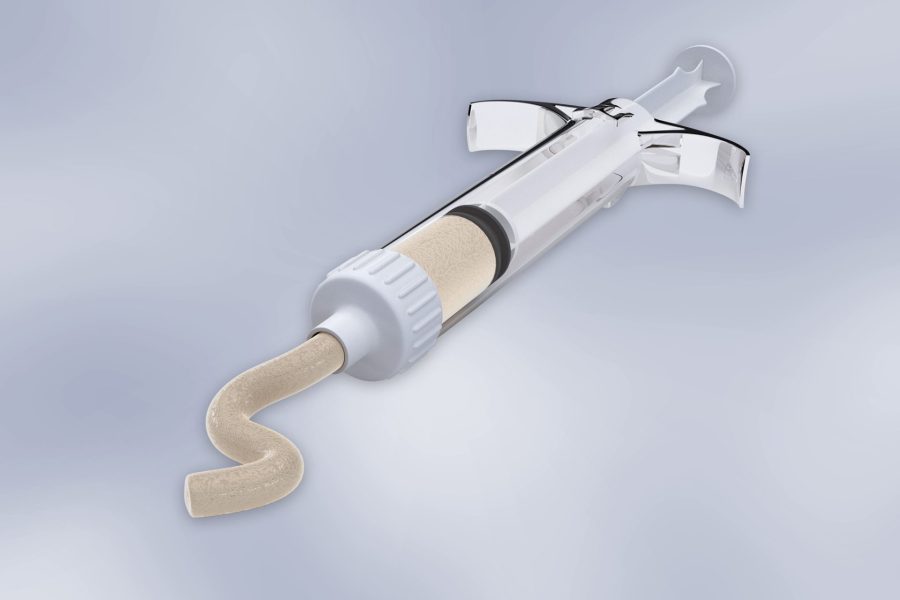
Comprehensive Introduction & Overview: The Power of BMP-7 (OP-1) Putty in Orthopedics
In the realm of orthopedic surgery, achieving reliable bone healing and fusion remains a critical challenge, especially in complex cases involving non-unions, critical-size defects, or patients with compromised healing potential. Bone Morphogenetic Protein-7 (BMP-7), also known as Osteogenic Protein-1 (OP-1), represents a significant advancement in osteobiologics. BMP-7 (OP-1) Putty is a highly specialized medical device designed to stimulate new bone growth by harnessing the body's natural regenerative processes.
This advanced orthopedic instrument is a recombinant human protein formulated within a biocompatible carrier, typically a Type I collagen putty. Its primary function is to induce osteoinduction, meaning it actively signals the body's own cells to differentiate into bone-forming cells (osteoblasts) and initiate a robust healing cascade. This guide provides an exhaustive exploration of BMP-7 (OP-1) Putty, detailing its design, mechanisms, clinical applications, handling, patient outcomes, and safety profile, serving as an authoritative resource for medical professionals and patients alike.
Deep-Dive into Technical Specifications & Mechanisms of Action
Design & Materials
BMP-7 (OP-1) Putty is meticulously engineered to deliver its potent osteoinductive payload effectively.
- Active Pharmaceutical Ingredient (API): The core component is Recombinant Human Bone Morphogenetic Protein-7 (rhBMP-7). This protein is produced through genetic engineering, making it identical to the natural BMP-7 found in the human body. BMP-7 belongs to the transforming growth factor-beta (TGF-β) superfamily and plays a crucial role in bone and cartilage development and repair.
- Carrier System: The rhBMP-7 is homogeneously dispersed within a biocompatible, resorbable carrier matrix. The most common carrier for the "putty" formulation is bovine Type I collagen.
- Collagen Putty Advantages:
- Biocompatibility: Type I collagen is a natural component of bone, providing an excellent scaffold.
- Moldability: The putty consistency allows surgeons to easily mold and conform the material to irregular bone defects and fusion sites, ensuring intimate contact with host bone.
- Localized Delivery: It provides a scaffold that holds the BMP-7 at the target site, allowing for sustained, localized release and concentration of the growth factor.
- Resorbability: The collagen carrier gradually degrades and is resorbed by the body as new bone forms, leaving no permanent foreign material.
- Collagen Putty Advantages:
- Sterilization: The final product is supplied sterile, typically through gamma irradiation, ensuring patient safety and preventing surgical site infections.
- Packaging: BMP-7 (OP-1) Putty usually comes in a ready-to-use kit, often with a sterile mixing tray and spatula, designed for immediate intraoperative preparation.
Biomechanics & Osteoinductive Mechanism
The biomechanical efficacy of BMP-7 (OP-1) Putty is rooted in its powerful osteoinductive properties, which mimic and amplify the body's natural bone healing processes.
- Osteoinduction: This is the hallmark mechanism of BMP-7. Unlike osteoconductive materials (which merely provide a scaffold for bone growth) or osteogenic materials (which contain live bone-forming cells), osteoinductive agents actively recruit undifferentiated mesenchymal stem cells (MSCs) from the surrounding tissues.
- Cellular Cascade:
- Chemotaxis & Recruitment: BMP-7 attracts MSCs to the application site.
- Differentiation: Upon exposure to BMP-7, these MSCs differentiate into chondroblasts (cartilage-forming cells) and then into osteoblasts (bone-forming cells). This process mirrors endochondral ossification, a primary mechanism of fracture healing.
- Angiogenesis: BMP-7 also promotes the formation of new blood vessels (angiogenesis), which is essential for delivering nutrients and oxygen to the nascent bone tissue and removing waste products.
- Extracellular Matrix Formation: The newly differentiated osteoblasts begin to synthesize and secrete an extracellular matrix, primarily composed of collagen and other proteins.
- Mineralization: This matrix then undergoes mineralization, leading to the formation of woven bone, which is subsequently remodeled into mature lamellar bone.
- Enhanced Healing: By actively initiating and accelerating this complex biological cascade, BMP-7 (OP-1) Putty significantly enhances the potential for robust bone formation, bridging gaps, and achieving solid fusions, particularly in situations where natural healing is compromised.
Extensive Clinical Indications & Usage
BMP-7 (OP-1) Putty is a versatile tool in the orthopedic surgeon's armamentarium, indicated for a range of challenging bone healing scenarios. Its application requires meticulous surgical technique and adherence to specific instructions.
General Principles of Application
- Aseptic Technique: As with all surgical implants, strict aseptic technique is paramount during handling and application to prevent contamination.
- Preparation: The putty is typically supplied in a lyophilized (freeze-dried) form or as two components to be mixed immediately prior to use with sterile water or saline, forming a cohesive, moldable mass. The exact preparation steps are detailed in the product's instructions for use (IFU).
- Placement: The prepared putty is carefully placed into the bone defect or fusion site, ensuring intimate contact with viable host bone. This contact is crucial for cellular recruitment and integration.
- Single-Use: BMP-7 (OP-1) Putty is a single-use device and any unused portion must be discarded.
Specific Orthopedic Applications
1. Spinal Fusion
BMP-7 (OP-1) Putty is frequently utilized to enhance fusion rates in various spinal procedures, especially in patients at high risk for pseudarthrosis (failure of fusion).
- Lumbar Spine:
- Posterolateral Gutter Fusion: Applied to the transverse processes to facilitate intertransverse fusion.
- Interbody Fusion (e.g., PLIF, TLIF, ALIF): Can be used as an adjunct within interbody cages or around the cage to promote robust arthrodesis.
- Cervical Spine:
- Posterior Cervical Fusion: Used to enhance fusion between laminae and lateral masses.
- Anterior Cervical Discectomy and Fusion (ACDF): Can be used in conjunction with cages and plates.
- Thoracic Spine: Less common but can be applied in specific thoracic fusion indications.
- Revision Spinal Surgery: Particularly beneficial in cases of failed previous fusions (pseudarthrosis).
2. Long Bone Non-Unions & Critical-Size Defects
BMP-7 (OP-1) Putty is a powerful option for treating established non-unions, defined as fractures that have failed to heal after a reasonable period (typically 6-9 months) despite appropriate treatment.
- Indications:
- Tibial Non-Unions: Highly effective in challenging tibial shaft non-unions, often associated with significant soft tissue damage or infection history.
- Femoral Non-Unions: Used for femoral shaft or distal femur non-unions.
- Humeral Non-Unions: Especially in the diaphysis or supracondylar region.
- Critical-Size Defects: Used to bridge bone gaps that are too large to heal spontaneously or with conventional grafting techniques.
- Surgical Technique: After debridement of the non-union site and creation of a healthy vascular bed, the putty is packed into the defect and around the fracture ends, often in conjunction with stable internal fixation (plates, rods, external fixators).
3. Trauma & Reconstruction
- Open Fractures with Bone Loss: In cases of severe trauma resulting in segmental bone loss, BMP-7 can be used to promote bone regeneration and bridge defects.
- Delayed Unions: When a fracture is healing slowly, BMP-7 can accelerate the process.
- Malunions: In some cases, after osteotomy to correct a malunion, BMP-7 can aid in achieving a solid fusion.
4. Foot & Ankle Surgery
- Arthrodesis Procedures: Enhances fusion rates in ankle, subtalar, midfoot, and forefoot arthrodesis for conditions like arthritis or deformities.
- Correction of Deformities: Used when significant bone grafting is required to correct complex foot and ankle deformities.
5. Revision Arthroplasty
- Periprosthetic Bone Loss: Can be used to address bone defects around failed joint replacements, aiding in the ingrowth of new bone for revision components.
- Augmentation of Fixation: May be used to enhance bone integration with uncemented components.
Fitting & Usage Instructions (Detailed)
- Pre-operative Planning: Identify the precise location and size of the defect or fusion site. Ensure all necessary instruments and the BMP-7 (OP-1) Putty kit are available.
- Surgical Site Preparation: Debride the surgical site thoroughly. Remove fibrous tissue, sclerotic bone, and any avascular tissue to expose healthy, bleeding bone surfaces. This creates a receptive environment for osteoinduction.
- Putty Preparation:
- Open the sterile packaging using aseptic technique.
- If supplied as a two-component system, transfer the lyophilized BMP-7 and carrier into the sterile mixing tray.
- Reconstitute with the specified amount of sterile water for injection or saline, as per IFU.
- Mix thoroughly with the sterile spatula until a uniform, pliable putty consistency is achieved. This usually takes a few minutes. The putty should be cohesive and moldable, not crumbly or too wet.
- Application:
- Using the spatula or gloved fingers, carefully mold the putty to the contours of the bone defect or fusion bed.
- Crucial Step: Ensure direct, intimate contact between the BMP-7 (OP-1) Putty and the recipient host bone. This maximizes the exposure of mesenchymal stem cells to the BMP-7.
- Avoid excessive compression that could disperse the protein or compromise the carrier's integrity.
- In spinal fusions, apply the putty to decorticated transverse processes or within and around interbody cages.
- In non-unions, pack the putty into the defect and around the fracture ends.
- Fixation: The application of BMP-7 (OP-1) Putty is always an adjunct to stable internal or external fixation, providing a stable mechanical environment for biological healing. The putty itself does not provide mechanical stability.
- Wound Closure: Standard surgical closure techniques are employed after the putty is in place and fixation is secure.
Maintenance/Sterilization Protocols (Pre-Use)
BMP-7 (OP-1) Putty is a terminally sterilized, single-use product. Therefore, "maintenance" refers primarily to proper storage and handling prior to use.
- Sterility: The product is supplied sterile and non-pyrogenic. The integrity of the sterile barrier packaging must be maintained until the point of use.
- Storage: Store the product at controlled room temperature, as specified by the manufacturer (typically 2-25°C or 36-77°F). Protect from direct sunlight and excessive humidity.
- Inspection: Before opening, visually inspect the packaging for any signs of damage, punctures, or compromise to the sterile barrier. Do not use if the packaging is damaged or expired.
- Single-Use Only: Once the sterile barrier is opened, the entire contents should be used or discarded. Do not re-sterilize or reuse any portion of the device.
- Traceability: Follow institutional protocols for tracking and documentation of implant usage.
Patient Outcome Improvements & Clinical Efficacy
The clinical application of BMP-7 (OP-1) Putty has demonstrated significant improvements in patient outcomes, particularly in complex orthopedic cases.
- Accelerated Bone Healing: By actively stimulating osteoinduction, BMP-7 can significantly reduce the time required for complete bone healing and fusion, leading to faster recovery times.
- Higher Fusion Rates: Numerous clinical studies have shown that BMP-7 (OP-1) Putty achieves superior or comparable fusion rates to autograft, especially in challenging non-unions and spinal fusions, even in high-risk patient populations (e.g., smokers, diabetics, revision surgery).
- Reduced Need for Autograft: A major advantage is the potential to reduce or eliminate the need for autologous bone graft harvesting. This mitigates donor site morbidity, which can include pain, infection, hematoma, nerve injury, and prolonged recovery at the harvest site.
- Improved Functional Outcomes: Faster and more reliable bone healing translates directly to improved patient function, reduced pain, and quicker return to daily activities and work.
- Cost-Effectiveness: While the initial cost of BMP-7 may be higher than autograft, the reduction in complications, re-operations, and overall recovery time can lead to a more cost-effective treatment pathway in the long run.
- Evidence-Based Efficacy: Clinical trials and long-term follow-up studies have consistently supported the efficacy and safety of BMP-7 (OP-1) Putty in approved indications.
Risks, Side Effects, & Contraindications
While BMP-7 (OP-1) Putty offers substantial benefits, it is crucial to understand its potential risks, side effects, and contraindications.
Potential Risks & Side Effects
- Ectopic Bone Formation: While rare, BMP-7 can potentially induce bone formation in unintended locations if the material migrates. This risk is minimized by careful surgical placement and containment.
- Inflammatory Response: A localized inflammatory reaction may occur at the surgical site, similar to any foreign body implantation.
- Nerve Impingement: In spinal applications, excessive bone growth or inflammatory swelling could theoretically lead to nerve root compression. Careful application and monitoring are essential.
- Seroma Formation: Fluid collection at the surgical site is a general surgical risk that can sometimes be associated with osteobiologics.
- Immunological Reactions: Although the rhBMP-7 is human-identical, the bovine collagen carrier could theoretically elicit an immune response in very rare cases of hypersensitivity.
- Infection: As with any surgical procedure, there is a risk of surgical site infection.
- Swelling: Post-operative swelling can occur, particularly in the immediate recovery phase.
- Pain: Surgical site pain is expected post-operatively and managed with standard pain protocols.
Contraindications
BMP-7 (OP-1) Putty should not be used in patients with the following conditions:
- Skeletal Immaturity: Not indicated for use in pediatric patients (skeletally immature individuals) due to potential effects on growth plates.
- Pregnancy & Lactation: Safety in pregnant or lactating women has not been established.
- Active Infection: Should not be used in the presence of an active infection at the surgical site, as this can severely compromise healing and lead to complications.
- Hypersensitivity: Known hypersensitivity or allergy to recombinant human BMP-7, bovine collagen, or any other components of the device.
- Active Malignancy: Patients with active or recent history of malignancy, particularly those involving bone, as BMPs are growth factors and their effect on tumor progression is not fully understood.
- Metabolic Bone Diseases: Certain uncontrolled metabolic bone diseases (e.g., severe osteomalacia) may affect healing.
- Compromised Vascularity: In areas with severely compromised blood supply, the efficacy of BMP-7 may be reduced.
- Severe Renal Impairment: Patients with severe chronic renal failure may have altered BMP metabolism.
Surgeons must carefully evaluate each patient's medical history and current condition to determine the appropriateness of BMP-7 (OP-1) Putty.
Frequently Asked Questions (FAQ)
What is BMP-7 (OP-1) Putty?
BMP-7 (OP-1) Putty is a medical device containing recombinant human Bone Morphogenetic Protein-7. It's formulated as a moldable putty with a collagen carrier, designed to stimulate bone growth and fusion in challenging orthopedic cases.
How does BMP-7 differ from BMP-2?
Both BMP-7 (OP-1) and BMP-2 are powerful osteoinductive proteins. While they belong to the same family and share similar functions, they have distinct molecular structures and may exhibit subtle differences in their signaling pathways or preferred applications. Both are approved for specific orthopedic uses.
Is it safe to use?
Yes, BMP-7 (OP-1) Putty has undergone extensive clinical testing and is approved by regulatory bodies for specific indications. While generally safe, like any medical implant, it carries potential risks and side effects, which your surgeon will discuss with you.
What are the main benefits for patients?
Patients can experience accelerated bone healing, higher fusion rates, especially in complex situations, and potentially avoid the need for autograft harvesting, which reduces donor site pain and complications. This often leads to faster recovery and improved functional outcomes.
Does it eliminate the need for autograft?
In many cases, BMP-7 (OP-1) Putty can significantly reduce or eliminate the need for harvesting autologous bone graft, which is bone taken from the patient's own body. This is a major advantage as it avoids the pain and potential complications associated with a second surgical site.
How long does it take for bone to heal with BMP-7?
While BMP-7 accelerates the natural bone healing process, the exact timeline varies depending on the patient's overall health, the specific indication, and the size of the defect. Healing typically occurs over several months, with initial bone formation evident within weeks.
Can it be used in all bone defects?
No, BMP-7 (OP-1) Putty is specifically indicated for certain types of bone defects and non-unions, as well as spinal fusions. It is not a universal solution for all bone healing challenges, and its use is guided by clinical evidence and regulatory approvals.
What is the carrier material?
The most common carrier material for BMP-7 (OP-1) Putty is bovine Type I collagen. This natural protein provides a biocompatible scaffold that helps deliver and retain the BMP-7 at the surgical site, and it is gradually resorbed by the body.
Are there any long-term side effects?
Long-term studies have generally shown good safety profiles for BMP-7 (OP-1) Putty. The most significant potential long-term risk is ectopic bone formation, though this is rare and usually localized. Your surgeon will monitor your recovery for any concerns.
Who is a candidate for BMP-7 (OP-1) Putty?
Candidates typically include patients undergoing spinal fusion, those with long bone non-unions, critical-size bone defects, or other complex bone healing challenges, especially if they have risk factors for poor healing or wish to avoid autograft harvesting. Your orthopedic surgeon will determine if it's appropriate for your specific condition.
How is BMP-7 (OP-1) Putty prepared and applied during surgery?
The putty is prepared in the operating room just prior to use. It typically involves mixing the active protein component with a sterile solution to form a moldable putty. The surgeon then meticulously applies this putty directly to the bone defect or fusion site, ensuring good contact with healthy host bone, often in conjunction with stable internal fixation.
Is it approved worldwide?
BMP-7 (OP-1) Putty has received regulatory approvals in various countries globally, including the United States and within the European Union, for specific orthopedic indications. However, specific product names, indications, and regulatory statuses can vary by region.