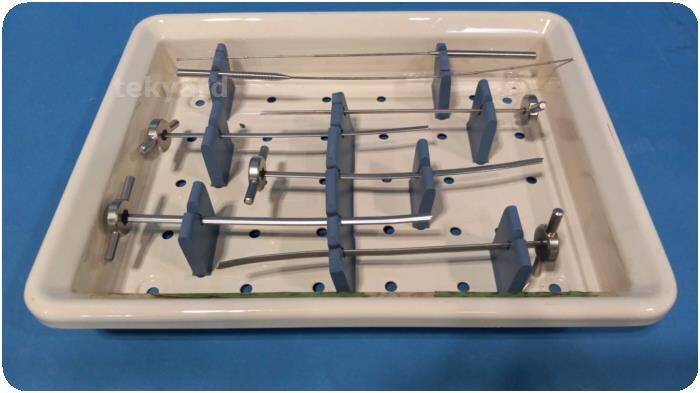
The Bioabsorbable Meniscus Dart/Arrow: Revolutionizing Meniscal Repair
The meniscus, a crucial C-shaped cartilage in the knee, plays a vital role in load distribution, shock absorption, and joint stability. Tears to this structure are common, particularly in athletes and active individuals, often leading to pain, swelling, and mechanical symptoms. Historically, meniscal tears were frequently treated with meniscectomy (removal of the torn part), but growing evidence highlights the long-term benefits of preserving meniscal tissue. This shift has propelled the development of innovative repair techniques and devices, among which the bioabsorbable meniscus dart or arrow stands out as a sophisticated solution.
This comprehensive guide, tailored for orthopedic specialists, sports medicine practitioners, and informed patients, delves into the intricacies of bioabsorbable meniscus darts. We will explore their advanced design, the science behind their materials, detailed surgical applications, biomechanical advantages, and their profound impact on patient outcomes.
Deep-dive into Technical Specifications and Mechanisms
The efficacy of a bioabsorbable meniscus dart lies in its ingenious design and the advanced polymer science behind its materials. These devices are engineered to provide robust, temporary fixation while facilitating the natural healing process of the meniscus.
Design and Materials
Bioabsorbable meniscus darts are precisely engineered for secure fixation and gradual integration into the healing tissue.
-
Dart/Arrow Design:
- Shape: Typically features a tapered, arrow-like or dart-like body with a sharp tip for easy penetration of meniscal tissue.
- Fixation Features: Many designs incorporate barbs, threads, or anchor-like features along the shaft to prevent pull-out and ensure secure engagement with the meniscal tissue and the joint capsule. These features are crucial for resisting shear and tensile forces during the initial healing phase.
- Sizes: Available in various lengths (e.g., 8mm to 16mm) and diameters to accommodate different tear sizes, locations, and patient anatomies.
- Delivery System: Each dart is typically pre-loaded into a sterile, single-use delivery system (inserter) comprising a handle, shaft, and a plunger mechanism, allowing for precise, controlled placement under arthroscopic visualization.
-
Advanced Materials:
- Polymers: The vast majority of bioabsorbable darts are made from biocompatible, biodegradable polymers. Common materials include:
- Poly-L-lactic Acid (PLLA): Known for its high mechanical strength and long absorption profile (typically 12-24 months).
- Poly-L-lactide-co-D,L-lactide (PLDLA): Offers a more tailored degradation rate compared to pure PLLA, often designed for intermediate absorption times.
- Polycaprolactone (PCL): A slower degrading polymer, sometimes used in blends for enhanced flexibility or specific degradation profiles.
- Poly(glycolide-co-L-lactide) (PGLA): A co-polymer that can be tailored for various absorption rates.
- Biodegradation Process: These polymers undergo hydrolysis in the body, breaking down into harmless monomers (e.g., lactic acid) that are then metabolized and excreted as carbon dioxide and water. The rate of absorption is critical; it must be slow enough to maintain mechanical stability throughout the meniscal healing process but fast enough to avoid long-term foreign body presence.
- Biocompatibility: The chosen materials are rigorously tested to ensure they are non-toxic, non-carcinogenic, and do not elicit adverse immune responses.
- Polymers: The vast majority of bioabsorbable darts are made from biocompatible, biodegradable polymers. Common materials include:
Biomechanics and Mechanism of Action
The biomechanical performance of bioabsorbable darts is paramount to successful meniscal repair.
- Initial Fixation Strength: Upon insertion, the dart provides immediate mechanical stability to the torn meniscal fragments. The barbs or threads engage with the meniscal tissue, holding the tear edges in apposition. This initial stability is critical for preventing displacement during early post-operative rehabilitation.
- Load Sharing and Tissue Integration: As the meniscus begins to heal, the dart gradually transfers load to the regenerating tissue. The polymer's degradation profile is designed to coincide with the biological healing cascade, ensuring that adequate mechanical support is present during the critical phases of collagen formation and maturation.
- Healing Promotion: By holding the torn edges together, the dart facilitates the formation of a fibrin clot, which serves as a scaffold for cellular infiltration and vascularization, essential for meniscal healing, especially in the peripheral (red-red and red-white) zones.
- Stress Shielding Prevention: Unlike permanent metallic implants, bioabsorbable darts prevent long-term stress shielding, where the implant carries too much load, potentially hindering the natural strengthening of the healing tissue.
- Comparison to Sutures: While traditional sutures remain a cornerstone of meniscal repair, darts offer advantages in certain situations. They can provide more rigid fixation in specific tear patterns (e.g., vertical longitudinal tears), potentially reducing the number of fixation points needed and simplifying the arthroscopic technique by eliminating the need for knot tying. Studies have shown comparable or superior pull-out strength in certain configurations.
| Feature | Bioabsorbable Meniscus Dart/Arrow | Traditional Meniscal Suture |
|---|---|---|
| Fixation Method | Rigid, barbed/threaded anchor | Flexible suture loop/knot |
| Implant Removal | None (bioabsorbed over time) | None (permanent implant) |
| Surgical Skill | Less demanding for precise knot tying | Requires advanced arthroscopic knot-tying skills |
| Biocompatibility | Biodegradable polymers, minimal long-term foreign body | Non-absorbable polymers (e.g., polyester), permanent body |
| Healing Support | Mechanical scaffold, gradual load transfer | Mechanical apposition |
| Hardware Issues | Rarely synovitis from degradation products | Knot impingement (rare) |
Extensive Clinical Indications & Usage
The appropriate application of bioabsorbable meniscus darts is critical for optimizing patient outcomes. Understanding the specific indications, contraindications, and meticulous surgical technique is paramount.
Indications for Use
Bioabsorbable meniscus darts are primarily indicated for the repair of specific types of meniscal tears in a stable knee environment.
- Vertical Longitudinal Tears: Often referred to as "bucket-handle" tears, these are ideal candidates due to the dart's ability to provide strong apposition of the torn edges.
- Peripheral Tears (Red-Red Zone, Red-White Zone): Tears located in the vascularized periphery of the meniscus have a high healing potential and benefit greatly from stable fixation.
- Radial Tears (Selected Cases): While more challenging, certain stable radial tears, particularly those extending into the vascularized zone, can be repaired with darts, often in conjunction with other techniques.
- Meniscal Root Avulsions (Adjunctive Fixation): Darts can be used as an adjunct to primary root repair techniques (e.g., suture pull-through) to enhance stability.
- Tears Greater Than 1 cm in Length: Longer tears often require multiple fixation points, where darts can provide efficient and robust repair.
- Stable Tears: Tears that can be anatomically reduced and held in place without excessive tension.
- Acute Tears: Generally, acute tears have a higher healing potential than chronic, degenerative tears.
- Concomitant Ligamentous Stability: The knee must be stable, or any associated ligamentous laxity (e.g., ACL rupture) must be addressed concurrently.
Contraindications
Certain conditions preclude the use of bioabsorbable meniscus darts, as the likelihood of successful repair is low or the risks outweigh the benefits.
- Degenerative Tears (White-White Zone): Tears in the avascular inner two-thirds of the meniscus, often associated with degenerative changes, have poor healing potential.
- Complex, Comminuted Tears: Tears with multiple fragments or significant tissue loss that cannot be anatomically reduced or stably repaired.
- Significant Meniscal Tissue Loss: Insufficient meniscal tissue to allow for stable fixation.
- Active Infection: Any active infection in the knee joint or surrounding tissues.
- Severe Osteoarthritis: Patients with advanced knee osteoarthritis may not benefit from meniscal repair, as their symptoms may stem from cartilage degeneration rather than the meniscal tear.
- Unstable Knee: Unaddressed significant ligamentous laxity (e.g., chronic ACL deficiency) that would place excessive stress on the meniscal repair.
- Allergy to Implant Materials: Although rare, a known allergy to PLLA or other polymer components.
- Chronic Tears with Poor Tissue Quality: Tears that have been present for an extended period, leading to frayed, degenerative tissue that cannot hold sutures or darts effectively.
Detailed Surgical Application (Fitting/Usage Instructions)
The successful deployment of a bioabsorbable meniscus dart relies on meticulous arthroscopic technique.
-
Pre-operative Planning:
- Patient Selection: Thorough history, physical examination, and imaging (MRI) to confirm tear type, location, and assess overall knee status.
- Tear Characterization: Precise identification of the tear pattern and extent to determine the number and placement of darts.
-
Surgical Technique (Arthroscopic):
- Patient Positioning: Supine position with a tourniquet applied, allowing for knee flexion and extension.
- Portal Placement: Standard anteromedial and anterolateral portals are typically used. Additional accessory portals may be required for optimal visualization and dart insertion angle.
- Diagnostic Arthroscopy: A thorough inspection of the entire knee joint to confirm the diagnosis, rule out other pathologies, and assess chondral surfaces.
- Tear Preparation:
- Debridement: The torn edges of the meniscus are gently debrided with a shaver or rasp to create fresh, bleeding surfaces, promoting a robust healing response.
- Trephination/Abrasion: In some cases, the capsular attachment or surrounding synovium may be abraded or lightly trephined to enhance vascular access to the tear site.
- Meniscal Reduction: The torn meniscal fragment is carefully reduced (repositioned) into its anatomical position using an arthroscopic probe or grasping forceps. This is a critical step to ensure proper healing alignment.
- Dart Delivery System Usage:
- The bioabsorbable dart, pre-loaded in its sterile delivery system, is introduced through an accessory portal or a cannulated portal.
- The tip of the delivery system is positioned precisely at the desired insertion point on the peripheral aspect of the meniscal tear.
- Placement Angle and Depth: The dart is typically inserted perpendicular or slightly oblique to the tear line, ensuring it passes through both torn fragments and engages securely with the meniscal rim and the joint capsule. The depth of insertion is controlled by the delivery system and confirmed visually.
- Deployment: The plunger is advanced, deploying the dart into the meniscal tissue. A distinct "click" or tactile feedback often confirms proper engagement.
- Multiple Darts: For longer tears, multiple darts are placed, typically spaced 3-5 mm apart, to achieve uniform compression and stability along the tear line.
- Confirmation of Stability: After dart placement, the repair is gently probed to ensure stable fixation and anatomical reduction of the torn meniscus. The knee is put through a range of motion to check for impingement or dislodgement.
-
Post-operative Care & Rehabilitation:
- Weight-Bearing Restrictions: Typically, non-weight bearing or partial weight-bearing with crutches for 4-6 weeks to protect the repair during the initial healing phase.
- Range of Motion (ROM) Limitations: Deep flexion and rotational movements are often restricted for a period to prevent excessive stress on the repair. A knee brace may be used.
- Physical Therapy Protocol: A structured, progressive rehabilitation program is essential, focusing on:
- Early pain and swelling management.
- Gradual restoration of range of motion.
- Progressive strengthening of quadriceps, hamstrings, and calf muscles.
- Proprioceptive and balance training.
- Sport-specific drills for athletes.
- Return to Sport Criteria: Varies but typically involves achieving full pain-free ROM, symmetrical strength, good proprioception, and clearance from the surgeon, often 4-6 months post-surgery.
Maintenance/Sterilization Protocols (for reusable instruments)
Bioabsorbable meniscus darts themselves are single-use, sterile-packed devices. However, the associated delivery systems (inserters) may be reusable in some cases, requiring strict maintenance and sterilization protocols.
- Cleaning:
- Immediate Post-use: Gross debris should be removed immediately after use with a damp cloth.
- Manual Cleaning: Thorough manual cleaning with an enzymatic detergent, using brushes to reach all crevices.
- Ultrasonic Cleaning: An ultrasonic bath can be used to dislodge microscopic debris from intricate parts.
- Disinfection: If not immediately sterilized, high-level disinfection may be required.
- Sterilization:
- Autoclaving (Steam Sterilization): This is the most common method. Follow manufacturer's instructions precisely regarding temperature, pressure, and exposure time.
- Other Methods: Depending on the material, other sterilization methods like ethylene oxide (EtO) may be specified.
- Inspection: Before and after each use, the reusable inserter must be meticulously inspected for:
- Damage: Cracks, bends, burrs, or signs of wear.
- Functionality: Ensure the plunger mechanism operates smoothly and the dart release is reliable.
- Cleanliness: Absence of any residual biological material.
- Traceability and Expiry: Maintain records for reusable instruments, including cleaning, sterilization cycles, and any repairs. Single-use sterile darts must be checked for expiry dates before use.
Risks, Side Effects, or Contraindications
While bioabsorbable meniscus darts offer significant advantages, it is crucial to understand the potential risks and complications associated with any surgical intervention.
Potential Risks and Complications
- Failure of Repair (Re-tear): Despite optimal technique, the meniscus may fail to heal, leading to persistent symptoms or a re-tear, potentially requiring further surgery (e.g., partial meniscectomy).
- Nerve or Vascular Injury: Although rare, insertion of the dart can potentially injure adjacent neurovascular structures, particularly the saphenous nerve or popliteal vessels, if not placed carefully.
- Joint Stiffness (Arthrofibrosis): Post-operative inflammation or inadequate rehabilitation can lead to scar tissue formation and restricted knee motion.
- Infection: As with any surgical procedure, there is a risk of superficial or deep joint infection.
- Pain at the Implant Site: Patients may occasionally experience localized pain or discomfort at the site of dart insertion, which usually resolves as the dart absorbs.
- Synovitis or Foreign Body Reaction: Rarely, the degradation products of the bioabsorbable polymer can cause a mild inflammatory reaction (synovitis) or a foreign body granuloma, though modern materials are highly biocompatible.
- Chondral Injury: Improper dart placement or over-penetration can potentially damage the articular cartilage.
- Dart Migration: While extremely rare with proper technique, a dart could theoretically migrate if not securely engaged, though this is less common with barbed designs.
- Surgical Site Complications: General surgical risks such as hematoma, swelling, or wound healing issues.
- Deep Vein Thrombosis (DVT) / Pulmonary Embolism (PE): Risks associated with lower extremity surgery and immobilization.
Frequently Asked Questions (FAQ)
Q1: What is a bioabsorbable meniscus dart/arrow?
A bioabsorbable meniscus dart is a small, arrow-shaped medical implant made from biocompatible polymers (like PLLA) designed to temporarily hold torn meniscal tissue together during the healing process. It gradually dissolves in the body over time.
Q2: How does it differ from traditional meniscal sutures?
Traditional sutures are permanent threads used to stitch the meniscus. Bioabsorbable darts provide more rigid initial fixation and dissolve over time, eliminating the need for permanent hardware and potentially simplifying the arthroscopic repair technique by avoiding complex knot tying.
Q3: Is the dart removed after surgery?
No, the dart is designed to be fully absorbed by the body over several months (typically 12-24 months), breaking down into harmless substances like water and carbon dioxide, which are naturally eliminated. There is no need for a second surgery to remove it.
Q4: How long does it take for the dart to dissolve?
The absorption time varies depending on the specific polymer material used, but most bioabsorbable meniscus darts are fully absorbed within 12 to 24 months. The dart provides mechanical support during the critical initial healing phase, gradually transferring load to the healing tissue.
Q5: What are the main advantages of using a bioabsorbable dart for meniscus repair?
Key advantages include:
* No permanent hardware left in the knee.
* Reduced risk of hardware-related complications (e.g., impingement).
* Potentially stronger initial fixation in certain tear types.
* Facilitates biological healing by providing a stable environment.
* Minimally invasive arthroscopic application.
Q6: Who is a good candidate for this type of meniscus repair?
Good candidates typically have acute, repairable tears in the vascularized (red-red or red-white) zones of the meniscus, such as vertical longitudinal tears or peripheral tears. Patients with good overall knee stability and a commitment to post-operative rehabilitation are ideal.
Q7: What is the typical recovery time after a meniscus repair with a dart?
Recovery involves a structured rehabilitation program. Patients typically use crutches with weight-bearing restrictions for 4-6 weeks. Return to light activities usually occurs around 3-4 months, with a gradual return to sports or demanding activities often taking 4-6 months or longer, depending on the individual and tear severity.
Q8: Are there any long-term side effects of having a bioabsorbable dart in my knee?
Long-term side effects are rare. The materials are highly biocompatible. Rarely, some individuals may experience a mild, temporary inflammatory reaction (synovitis) during the absorption process. The primary long-term concern is the success of the repair itself, rather than the dart.
Q9: Can I feel the dart in my knee while it's dissolving?
Most patients do not feel the dart in their knee. It is very small and placed within the meniscal tissue. Any sensation of discomfort is usually related to the healing process itself rather than the physical presence of the dissolving dart.
Q10: What is the success rate of meniscus repair using bioabsorbable darts?
Success rates for meniscal repair with bioabsorbable darts are generally comparable to traditional suture techniques, often ranging from 70-90%, depending on factors like tear type, location, patient age, and adherence to rehabilitation protocols.
Q11: What makes these darts "bioabsorbable"?
They are made from medical-grade polymers like PLLA that are designed to safely break down in the body through a process called hydrolysis. This means they react with water in the body, gradually fragmenting into smaller, harmless molecules that are then naturally metabolized and excreted.
Q12: Can I return to sports after a meniscus repair with a bioabsorbable dart?
Yes, the goal of meniscus repair is to allow a safe return to sports and activities. However, it requires a disciplined rehabilitation program and clearance from your surgeon, typically after 4-6 months, once strength, stability, and range of motion have been fully restored, and the meniscus has had sufficient time to heal.