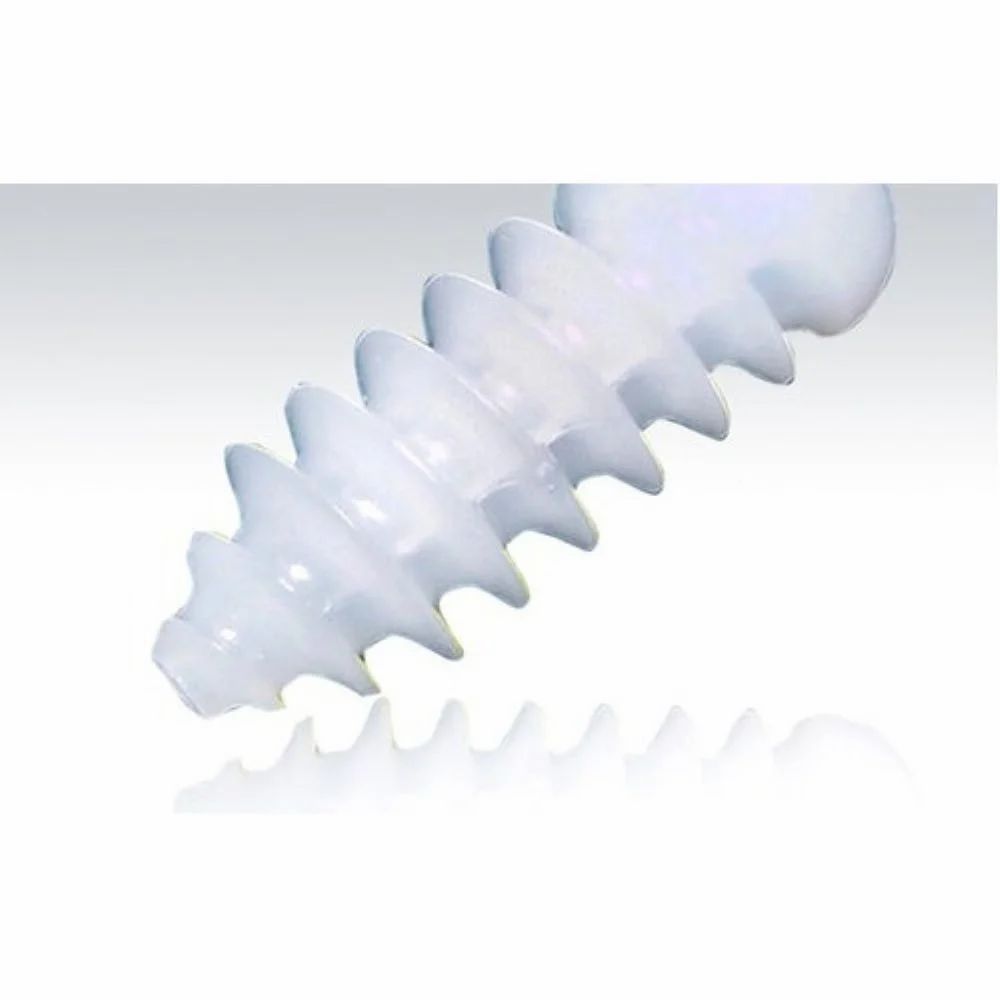
Bioabsorbable Interference Screws: An Expert Orthopedic Guide
Comprehensive Introduction & Overview
In the dynamic field of orthopedic surgery, the quest for optimal patient outcomes continuously drives innovation in implant technology. Among the most significant advancements are bioabsorbable interference screws. These sophisticated medical devices represent a paradigm shift from traditional metallic implants, offering a temporary yet robust solution for soft tissue-to-bone fixation, particularly in ligament and tendon reconstruction procedures.
Bioabsorbable interference screws are specifically engineered to provide strong initial mechanical fixation for grafts within bone tunnels. Unlike their metallic counterparts, which remain permanently in the body and may necessitate removal due to complications or patient preference, bioabsorbable screws are designed to gradually degrade and be absorbed by the body over time. This process allows for a natural biological integration, progressively transferring load to the healing tissue and ultimately facilitating the restoration of native bone architecture in the implant site. This guide will delve into the intricate details of their design, materials, extensive clinical applications, biomechanical advantages, and the profound impact they have on patient recovery and long-term joint stability.
Deep-dive into Technical Specifications & Mechanisms
Design and Materials of Bioabsorbable Interference Screws
The efficacy and safety of bioabsorbable interference screws are fundamentally rooted in their sophisticated design and the advanced biomaterials from which they are constructed. These materials are carefully selected for their biocompatibility, predictable degradation profiles, and mechanical properties.
Key Materials:
- Poly-L-lactic Acid (PLLA): A semi-crystalline polymer widely used due to its high initial strength, slow degradation rate (typically 12-24 months for significant mass loss, complete absorption over several years), and excellent biocompatibility. Its degradation products are lactic acid, which is metabolized into CO2 and water.
- Poly-DL-lactic Acid (PDLLA) or Poly-L-lactide-co-D-lactide (PLDLA): Amorphous copolymers that offer faster degradation rates than PLLA, often preferred when quicker absorption is desired, typically within 6-12 months.
- Polycaprolactone (PCL): A semi-crystalline polymer with a very slow degradation rate, sometimes used in blends or for specific applications where prolonged support is needed.
- Polyglycolic Acid (PGA): One of the earliest bioabsorbable polymers, known for its rapid degradation (typically within a few months), but its mechanical properties degrade quickly, and it can cause a transient inflammatory response. Often used in sutures or as a component in copolymers.
- Composite Materials: Many modern screws incorporate osteoconductive fillers to enhance bone ingrowth and reduce osteolysis. Common additives include:
- Tricalcium Phosphate (TCP): A ceramic material that provides a scaffold for bone formation, promoting faster and more robust bone integration.
- Hydroxyapatite (HA): A naturally occurring mineral form of calcium apatite, similar to the mineral component of bone, which enhances osteoconductivity.
- These composites (e.g., PLLA-TCP, PLLA-HA) aim to combine the mechanical strength of polymers with the osteoconductive properties of ceramics.
Screw Design Features:
- Thread Patterns: Optimized for maximum purchase in cancellous bone, minimizing graft damage. Designs vary from fully threaded to partially threaded, with specific pitches and depths.
- Cannulation: Many screws are cannulated, allowing them to be inserted over a guide wire, which enhances precision and reduces the risk of malpositioning.
- Head Design: Often headless or with a low-profile head to prevent soft tissue irritation. Some designs feature a recessed head for flush seating.
- Self-Tapping vs. Non-Self-Tapping: Self-tapping designs eliminate the need for pre-tapping, simplifying insertion, while non-self-tapping screws require a pilot hole and subsequent tapping.
- Sizes: Available in a wide range of diameters (typically 4.5mm to 12mm) and lengths (typically 15mm to 35mm) to accommodate various anatomical sites and graft sizes.
Biomechanics and Degradation Mechanisms
The biomechanical performance of bioabsorbable screws is a critical aspect of their success. They are designed to provide initial mechanical stability, gradually transfer stress to the healing graft, and ultimately resorb.
Biomechanical Principles:
- Initial Fixation Strength: Bioabsorbable screws provide fixation strength comparable to metallic screws in the immediate post-operative period, crucial for protecting the graft during early healing.
- Load Sharing: As the screw gradually degrades, it progressively transfers mechanical load to the healing tendon-bone interface. This "load sharing" encourages mechanotransduction, stimulating bone remodeling and graft maturation, preventing stress shielding often associated with permanent, stiffer metallic implants.
- Osteoconduction: Especially with composite screws, the degradation products and porous structure can act as a scaffold, promoting the ingrowth of new bone tissue into the former implant site.
- Degradation by Hydrolysis: The primary mechanism of degradation for polylactic acid-based materials is hydrolysis. Water molecules penetrate the polymer matrix, breaking ester bonds and reducing molecular weight. This process leads to a loss of mechanical strength, followed by mass loss and eventual absorption.
- Absorption and Metabolism: The breakdown products (e.g., lactic acid) are natural metabolites, safely processed by the body through the Krebs cycle and excreted as carbon dioxide and water. The complete absorption timeframe varies significantly by material, size, and patient metabolism, ranging from months to several years.
Maintenance/Sterilization Protocols
Bioabsorbable interference screws are supplied as sterile, single-use devices. Therefore, traditional "maintenance" by the end-user is not applicable.
Key Protocols:
- Sterilization: Implants are typically sterilized by gamma irradiation or ethylene oxide (EtO) during manufacturing and supplied in hermetically sealed, multi-layer sterile packaging.
- Storage: Store in a cool, dry place, away from direct sunlight, and within the specified temperature and humidity ranges indicated by the manufacturer to maintain package integrity and material stability.
- Handling:
- Inspect packaging for any damage or breach before opening. Do not use if the sterile barrier is compromised.
- Handle the implant carefully using sterile gloves and instruments to avoid scratching or damaging the threads, which could compromise fixation or lead to particulate generation.
- Use the implant immediately after opening the sterile package.
- Disposal: Unused or contaminated implants and packaging should be disposed of according to hospital protocols for medical waste.
Extensive Clinical Indications & Usage
Bioabsorbable interference screws have become a cornerstone in various orthopedic reconstructive procedures, offering a reliable means of graft fixation.
Detailed Surgical/Clinical Applications
1. Anterior Cruciate Ligament (ACL) Reconstruction:
- Femoral Tunnel Fixation: Widely used to secure hamstring autografts (semitendinosus, gracilis), quadriceps tendon grafts, or allografts within the femoral bone tunnel. The screw is inserted alongside the graft, providing interference fit.
- Tibial Tunnel Fixation: Similarly, used to fix the graft in the tibial tunnel. This method is highly effective for both bone-patellar tendon-bone (BTB) grafts and soft tissue grafts, providing robust primary stability.
- Technique Variations: Applicable in both single-bundle and double-bundle ACL reconstruction techniques.
2. Posterior Cruciate Ligament (PCL) Reconstruction:
- Similar to ACL reconstruction, these screws are employed for graft fixation in both femoral and tibial tunnels for PCL reconstruction, often requiring larger or longer screws due to the greater forces involved.
3. Medial Patellofemoral Ligament (MPFL) Reconstruction:
- Used to secure the reconstructed MPFL graft (often gracilis autograft) to the medial femoral epicondyle, restoring patellar stability.
4. Distal Biceps Tendon Repair:
- Interference screws can be used in the radial tuberosity to secure the repaired distal biceps tendon, providing strong fixation and promoting tendon-to-bone healing.
5. Ulnar Collateral Ligament (UCL) Reconstruction (Tommy John Surgery):
- In the elbow, interference screws are used to fix the graft (often palmaris longus or gracilis autograft) into bone tunnels created in the ulna and humerus, restoring stability to the elbow joint.
6. Foot and Ankle Ligament Reconstruction:
- Lateral Ankle Ligament Reconstruction: For chronic ankle instability, bioabsorbable screws can be used to fix tendon grafts (e.g., peroneus brevis) to the fibula and talus/calcaneus, mimicking the ATFL and CFL.
- Lisfranc Joint Fixation: In some cases, for ligamentous injuries or fusions.
7. Other Tendon Reinsertions:
- While less common for direct rotator cuff repair (where suture anchors are primary), interference screws may find niche applications in other tendon reinsertions where a bone tunnel and graft can be utilized.
Fitting/Usage Instructions (General Principles)
The precise technique for inserting bioabsorbable interference screws varies based on the specific anatomical site, surgical approach, and graft type. However, general principles apply:
1. Pre-operative Planning:
- Patient Assessment: Evaluate bone quality, patient activity level, and graft choice.
- Implant Selection: Choose the appropriate screw diameter and length based on tunnel size, graft diameter, and manufacturer recommendations. The screw diameter is typically 1-2mm larger than the tunnel diameter to achieve optimal interference fit.
2. Intra-operative Technique:
- Graft Preparation: Prepare the graft (e.g., hamstring, BTB) to the appropriate length and diameter.
- Tunnel Reaming: Create bone tunnels using reamers of the specified diameter and depth. Ensure tunnels are smooth and free of debris.
- Graft Passage: Carefully pass the graft through the bone tunnels.
- Graft Tensioning: Apply appropriate tension to the graft. This is a critical step, especially in ligament reconstruction, to restore physiological joint kinematics.
- Screw Insertion:
- Guide Wire Placement (for cannulated screws): Insert a guide wire into the bone tunnel, adjacent to the graft, ensuring it is parallel to the graft and well-seated.
- Screw Driver Selection: Attach the appropriate driver to the screw.
- Controlled Insertion: Insert the screw slowly and deliberately, typically with a slight oscillating motion, to avoid damaging the graft or fracturing the bone tunnel. The screw should be advanced until it is flush with the cortical bone surface or slightly recessed.
- Avoid Overtightening: Overtightening can lead to graft strangulation, tunnel expansion, or screw breakage. Feel for the point of firm resistance.
- Confirmation: Visually confirm proper screw placement and adequate graft fixation.
3. Post-operative Care and Rehabilitation:
- Standard Protocols: Follow established rehabilitation protocols for the specific procedure. These often involve early controlled motion, protected weight-bearing, and progressive strengthening.
- Monitoring: Monitor for signs of infection, excessive inflammation, or loss of fixation. The bioabsorbable nature of the screw does not alter immediate post-operative care significantly compared to metallic implants, but long-term monitoring for potential degradation-related issues is important.
Risks, Side Effects, or Contraindications
While bioabsorbable interference screws offer numerous advantages, it is crucial for both surgeons and patients to be aware of potential risks, side effects, and contraindications.
Potential Risks and Side Effects
Intra-operative Complications:
- Graft Damage: During screw insertion, aggressive technique or malpositioning can damage the graft, potentially compromising its integrity and leading to fixation failure.
- Tunnel Widening/Fracture: Excessive force or incorrect sizing can lead to fracture of the bone tunnel walls, especially in osteopenic bone, or iatrogenic tunnel widening.
- Screw Breakage: Although rare with proper technique, the screw material can fracture, particularly if overtightened or inserted into a tunnel that is too small.
- Malposition: Incorrect placement of the screw can lead to suboptimal fixation or impingement on surrounding structures.
Post-operative Complications:
- Inflammatory Reactions/Synovitis: As the bioabsorbable material degrades, it releases acidic byproducts (e.g., lactic acid). In some patients, this can trigger a transient sterile inflammatory response, leading to synovitis, joint effusion, pain, or crepitus. While usually self-limiting, severe cases may require intervention.
- Sterile Abscess/Cyst Formation: In rare instances, degradation products can accumulate, forming a localized sterile abscess or cyst-like lesion within the bone tunnel. These are typically asymptomatic but can be seen on imaging.
- Tunnel Enlargement (Osteolysis): While the goal is bone ingrowth, some patients may experience excessive tunnel enlargement or osteolysis around the degrading screw, which can be attributed to inflammatory response, mechanical factors, or material characteristics. This can potentially affect revision surgery if needed.
- Loss of Fixation: Despite initial stability, early or late loss of fixation can occur due to inadequate initial insertion, graft slippage, or premature degradation of the screw.
- Infection: As with any surgical implant, there is a risk of deep or superficial surgical site infection.
- Allergic Reactions: Although rare due to the highly biocompatible nature of the materials, isolated cases of allergic-type reactions to polymer components have been reported.
- Neurovascular Injury: While not specific to the screw itself, any orthopedic surgery carries a risk of damage to nearby nerves or blood vessels.
Contraindications
Certain patient conditions or circumstances may preclude the use of bioabsorbable interference screws:
- Active Infection: The presence of an active infection in or around the surgical site is an absolute contraindication, as it significantly increases the risk of implant-related infection and failure.
- Severe Osteopenia/Osteoporosis: Patients with poor bone quality may not provide adequate purchase for the screw, leading to compromised fixation and increased risk of tunnel fracture or pull-out.
- Known Allergy to Implant Materials: Although rare, if a patient has a documented allergy or hypersensitivity to any component of the screw, it should not be used.
- Insufficient Bone Stock: In cases where there is inadequate bone stock to accommodate the screw and graft, alternative fixation methods must be considered.
- Skeletal Immaturity: In skeletally immature patients, the use of interference screws crossing growth plates can potentially lead to growth disturbances. Careful consideration and alternative techniques (e.g., physeal-sparing) are often preferred.
- Metabolic Bone Disease: Patients with severe metabolic bone diseases that impair bone healing or remodeling may not be ideal candidates.
Massive FAQ Section
1. What are bioabsorbable interference screws?
Bioabsorbable interference screws are orthopedic implants made from biocompatible polymers (like PLLA, PLDLA, or composites) designed to provide temporary fixation for tendon or ligament grafts within bone tunnels. They gradually degrade and are absorbed by the body over time, eliminating the need for removal.
2. How do bioabsorbable interference screws work?
They provide mechanical fixation by creating an "interference fit" between the graft and the bone tunnel wall. As the material slowly degrades through hydrolysis, it is replaced by new bone tissue, promoting biological healing and integration of the graft into the bone.
3. What are these screws made of?
They are primarily made from various polymers such as Poly-L-lactic acid (PLLA), Poly-DL-lactic acid (PDLLA), or copolymers like PLDLA. Many modern designs also incorporate osteoconductive ceramic materials like tricalcium phosphate (TCP) or hydroxyapatite (HA) to enhance bone ingrowth.
4. How long does it take for bioabsorbable screws to fully absorb?
The absorption time varies significantly depending on the specific polymer used, the screw's size, and individual patient metabolism. Generally, significant strength loss occurs within 6-24 months, with complete mass absorption taking anywhere from 1 to 5 years.
5. Do bioabsorbable screws need to be removed?
No, one of their primary advantages is that they do not require a second surgery for removal, unlike many metallic implants. They are designed to be absorbed by the body.
6. Are bioabsorbable screws safe?
Yes, they are considered safe and have a long track record of clinical success. The materials used are biocompatible and their degradation products (e.g., lactic acid) are naturally metabolized by the body. However, as with any surgical implant, there are potential risks and side effects, which your surgeon will discuss.
7. What are the advantages of bioabsorbable screws over metal screws?
Key advantages include:
* No need for removal surgery.
* Prevention of stress shielding, allowing for more natural load transfer to the healing graft.
* Reduced risk of hardware-related complications (e.g., cold sensitivity, palpability).
* Facilitation of future imaging (less artifact on MRI/CT) and revision surgery, as there is no permanent hardware to contend with.
* Potential for enhanced bone ingrowth, especially with osteoconductive composites.
8. What are the potential complications associated with these screws?
Potential complications can include graft damage during insertion, tunnel widening, screw breakage, inflammatory reactions (synovitis, effusions) due to degradation products, sterile abscess/cyst formation, and, rarely, loss of fixation or infection.
9. Can bioabsorbable screws be seen on X-rays or MRI?
Most pure polymer bioabsorbable screws are radiolucent (transparent to X-rays) and may not be visible on standard X-rays. However, some designs incorporate radiopaque markers to allow for visualization. They typically cause minimal artifact on MRI compared to metallic implants, allowing for better post-operative assessment of soft tissues.
10. How does rehabilitation differ when bioabsorbable screws are used?
Rehabilitation protocols generally do not differ significantly based on the type of interference screw (bioabsorbable vs. metallic). The rehabilitation plan is dictated by the specific surgical procedure, the graft type, and the surgeon's preferences, focusing on protecting the healing graft while restoring range of motion and strength.
11. What happens to the material after it's absorbed by the body?
The polymer materials degrade into harmless byproducts, primarily lactic acid and glycolic acid. These acidic monomers are then safely metabolized by the body, entering the Krebs cycle and eventually being excreted as carbon dioxide and water. In the case of composite screws, the ceramic components (like TCP or HA) are integrated into the newly formed bone.
12. Are there any restrictions on activity after surgery with these screws?
While the screws provide excellent initial fixation, full biological integration and graft maturation take many months. Patients are typically advised to follow a structured rehabilitation program with gradual progression of activities. High-impact sports or activities involving pivoting and cutting are generally restricted for 9-12 months post-surgery, regardless of the screw type, to allow for complete graft healing and remodeling.