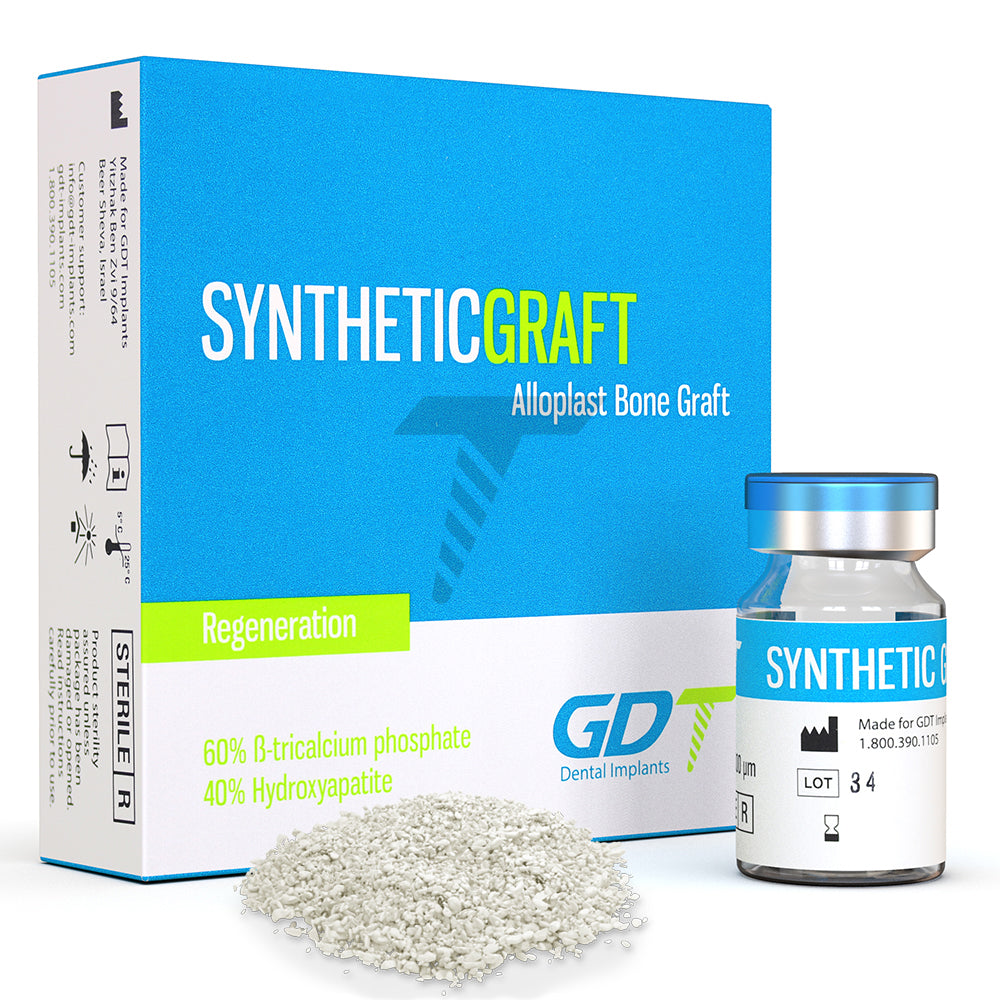
Beta-Tricalcium Phosphate (B-TCP) Synthetic Bone Graft (Granules, 1-2mm / 2-4mm): An Expert Orthopedic Guide
Comprehensive Introduction & Overview
As an orthopedic specialist, understanding the nuances of bone graft materials is paramount to achieving successful patient outcomes. Beta-Tricalcium Phosphate (B-TCP) synthetic bone graft, specifically in its granular form (1-2mm and 2-4mm), represents a cornerstone in modern orthopedic and spine surgery. B-TCP is a synthetic, osteoconductive, and biocompatible ceramic material designed to provide a scaffold for new bone formation. It is a highly purified form of calcium phosphate, chemically similar to the mineral component of natural bone, making it an excellent choice for filling bone voids and promoting osseointegration.
Unlike autografts (patient's own bone) or allografts (donated human bone), B-TCP eliminates the risks associated with donor site morbidity, disease transmission, and immune rejection. Its synthetic nature ensures a consistent product supply and uniform quality, offering a predictable biological response. The granular form facilitates easy handling and precise placement within various bone defect geometries. The availability of different granule sizes (1-2mm for smaller defects and intricate spaces, 2-4mm for larger voids requiring greater volume) allows for tailored application based on surgical needs. This guide delves deeply into the scientific principles, clinical applications, and practical considerations of B-TCP synthetic bone grafts, offering a definitive resource for medical professionals.
Deep-dive into Technical Specifications & Mechanisms
Design and Materials
Beta-Tricalcium Phosphate (B-TCP) is a ceramic biomaterial with a specific chemical formula: Ca₃(PO₄)₂. It belongs to the family of calcium phosphate ceramics, renowned for their excellent biocompatibility and osteoconductivity.
- Chemical Composition: Primarily calcium and phosphate ions, essential building blocks of natural bone. The beta phase refers to its specific crystalline structure, which dictates its physical and biological properties, including its resorption rate.
- Pore Structure: The efficacy of B-TCP as a bone graft scaffold is heavily reliant on its porous architecture.
- Macroporosity: Larger pores (typically >100 µm) are crucial for vascularization, allowing blood vessels to penetrate the graft, and for the ingrowth of osteogenic cells and new bone tissue. These pores facilitate a robust biological response.
- Microporosity: Smaller pores (typically <10 µm) provide increased surface area for cell adhesion, nutrient exchange, and the release of calcium and phosphate ions, which further stimulate osteoblastic activity.
- Granule Morphology: The granules are typically irregular or spherical, providing an optimal surface for cell attachment and interdigitation with surrounding bone. The chosen sizes (1-2mm and 2-4mm) are optimized for packing density and allowing sufficient space for bone ingrowth.
- Biodegradability and Resorption: B-TCP is designed to be bioresorbable. It gradually degrades in vivo through cellular activity (osteoclasts) and chemical dissolution, releasing calcium and phosphate ions. This resorption process is coupled with new bone formation, leading to a complete replacement of the graft material with healthy, vascularized host bone over time. The resorption rate is slower than that of pure calcium sulfate but faster than hydroxyapatite, striking an ideal balance for bone regeneration.
Biomechanics and Mechanism of Action
The biological and mechanical interactions of B-TCP with host tissue are critical to its success.
- Osteoconduction: B-TCP acts as a three-dimensional scaffold, providing a framework along which osteoblasts (bone-forming cells) can migrate, attach, proliferate, and differentiate to deposit new bone matrix. The interconnected pore network guides bone ingrowth from the surrounding host bone.
- Bioactivity: As B-TCP resorbs, it releases calcium and phosphate ions locally. These ions are known to stimulate osteoblastic activity, enhance cell signaling pathways involved in bone formation, and potentially promote the differentiation of mesenchymal stem cells into osteoblasts.
- Gradual Resorption & Bone Remodeling: The synchronized resorption of B-TCP and subsequent replacement by new bone ensures that the mechanical integrity of the site is maintained. As new bone matures, it undergoes remodeling, adapting to physiological loads. The specific resorption profile of B-TCP allows for sufficient time for new bone to form before the scaffold completely disappears.
- Mechanical Properties: While B-TCP granules provide initial structural support, they are not intended for primary load-bearing applications without stable internal or external fixation. Their primary role is to fill voids and provide an osteoconductive environment. When mixed with blood or bone marrow aspirate, the granules can be molded and packed into defects, offering a degree of initial stability within the defect itself.
Maintenance & Sterilization Protocols
B-TCP synthetic bone grafts are supplied sterile and are intended for single-use.
- Sterilization: Typically achieved through gamma irradiation, a highly effective method that ensures product sterility without compromising the material's integrity or biological properties.
- Storage: Products should be stored in their original, unopened packaging in a dry environment at room temperature, away from direct sunlight.
- Handling: Aseptic technique must be maintained throughout the handling and implantation process to prevent contamination and potential surgical site infection. The packaging should be inspected for any damage prior to use; if compromised, the product should be discarded.
Extensive Clinical Indications & Usage
B-TCP synthetic bone graft granules are highly versatile and indicated for a broad range of orthopedic and spinal procedures where bone void filling or augmentation is required.
General Indications
- Filling bone defects resulting from trauma, tumor resection, or degenerative conditions.
- Augmentation of autograft or allograft in spinal fusion procedures.
- Treatment of non-unions or delayed unions.
- Addressing metaphyseal defects in long bones.
Detailed Surgical Applications
Spinal Fusion Surgery
- Posterolateral Gutter Fusion: B-TCP granules are often mixed with local autograft or demineralized bone matrix (DBM) and packed into the posterolateral gutters to promote intertransverse process fusion. The 2-4mm granules are often preferred here for bulk.
- Interbody Fusion (PLIF, TLIF, ALIF): While not typically used as a standalone load-bearing material in interbody cages, B-TCP can be mixed with autograft or bone marrow aspirate (BMA) to fill the cage, enhancing the osteoconductive environment and promoting fusion. The 1-2mm granules are suitable for filling the smaller spaces within cages.
- Vertebral Body Augmentation: In cases of vertebral compression fractures, B-TCP can be used as a filler material in conjunction with cement or other fixation methods.
Trauma & Fracture Repair
- Metaphyseal Defects: Following reduction of fractures, particularly in the tibia plateau, distal femur, proximal humerus, or calcaneus, B-TCP can be used to fill voids and support subchondral bone, aiding in articular surface restoration and stability. The 2-4mm granules provide good structural packing.
- Comminuted Fractures: In areas where bone loss is significant, B-TCP can act as a space maintainer and scaffold, facilitating the healing process after stable fixation.
Orthopedic Oncology
- Post-Tumor Resection Voids: After benign or low-grade malignant tumor resection (e.g., giant cell tumor, enchondroma), large bone defects often remain. B-TCP granules can be packed into these voids to encourage new bone formation and restore structural integrity.
Foot & Ankle Surgery
- Arthrodesis (Fusion): Used in fusions of the ankle, hindfoot, or midfoot joints (e.g., subtalar fusion, talonavicular fusion) to enhance fusion rates by providing an osteoconductive scaffold.
- Calcaneal Fractures: Filling defects following reduction of comminuted calcaneal fractures.
- Bunionectomies with Osteotomy: Filling the osteotomy gap to promote healing and stability.
Hand & Wrist Surgery
- Scaphoid Non-unions: Used in conjunction with screw fixation to bridge the non-union site and promote healing.
- Carpal Fusions: As an adjunct to promote fusion in various carpal arthrodesis procedures.
Fitting/Usage Instructions
The proper preparation and application of B-TCP granules are crucial for optimal outcomes.
- Preparation of Surgical Site: Ensure the bone defect is thoroughly debrided, free of necrotic tissue, and has viable bleeding bone margins to maximize contact with osteogenic cells.
- Hydration: B-TCP granules must be hydrated before implantation.
- Preferred Method: Mix with autologous blood, bone marrow aspirate (BMA), or platelet-rich plasma (PRP). This introduces vital growth factors and cells directly into the graft material, enhancing its osteoinductive potential.
- Alternative: Sterile saline can be used, but it offers no biological enhancement.
- Mixing Ratio: Typically, a 1:1 or 2:1 ratio of graft material to liquid is used, allowing the granules to become cohesive and moldable without being overly saturated.
- Application Technique:
- Packing: Carefully pack the hydrated granules into the bone defect, ensuring intimate contact with the host bone walls. Avoid over-compaction, which can compromise the porosity needed for vascularization.
- Containment: Ensure the graft material is adequately contained within the defect. If the defect is open, consider using a resorbable membrane or mesh to prevent granule migration.
- Granule Size Selection:
- 1-2mm Granules: Ideal for smaller, intricate defects, irregular spaces, and for mixing with other graft materials in confined areas (e.g., interbody cages). They offer a larger surface area-to-volume ratio, potentially faster initial resorption.
- 2-4mm Granules: Suited for larger bone voids, providing more bulk and structural support. They offer better packing density for substantial defects.
- Stable Fixation: As B-TCP is not load-bearing, it is imperative to achieve stable internal or external fixation of the surgical site to protect the graft and allow undisturbed bone ingrowth. Micromotion can hinder healing and lead to non-union.
Patient Outcome Improvements
The use of B-TCP synthetic bone graft granules offers several significant advantages that contribute to improved patient outcomes:
- Elimination of Donor Site Morbidity: A primary benefit is avoiding the pain, potential nerve damage, infection, and fracture risk associated with harvesting autograft from sites like the iliac crest. This often translates to less postoperative pain and a faster recovery.
- Reduced Risk of Disease Transmission: As a synthetic material, B-TCP carries no risk of transmitting infectious diseases, a concern with allografts.
- Predictable Bone Regeneration: The consistent composition and porous architecture of B-TCP provide a reliable scaffold for osteoconduction, leading to more predictable and reproducible bone healing compared to some variable biological grafts.
- Consistent Supply and Quality: Unlike biological grafts, B-TCP is readily available in consistent quality and quantity, simplifying surgical planning and inventory management.
- Enhanced Fusion Rates: When used appropriately, especially as an extender or enhancer with autograft or BMA, B-TCP can contribute to robust fusion rates in spinal and orthopedic procedures.
- Biocompatibility: Its close chemical resemblance to natural bone ensures excellent tissue integration and minimal inflammatory response.
- Long-term Functional Outcomes: By promoting effective bone healing and fusion, B-TCP contributes to the long-term stability and functional recovery of the affected skeletal segment, ultimately improving patients' quality of life.
Risks, Side Effects, or Contraindications
While B-TCP is a safe and effective material, like all surgical interventions, its use carries potential risks and contraindications that must be considered.
Risks
- Infection: As with any implant, there is a risk of surgical site infection, which can necessitate graft removal and prolonged antibiotic treatment. Strict aseptic technique is paramount.
- Non-union or Pseudoarthrosis: Despite its osteoconductive properties, bone healing may fail if the surgical site is unstable, if there is insufficient vascularity, or if patient factors (e.g., smoking, diabetes, malnutrition) impede healing.
- Granule Migration: If the graft is not adequately contained within the defect, individual granules may migrate, potentially causing soft tissue irritation or impeding healing.
- Delayed Healing: While designed for optimal resorption and bone ingrowth, individual patient healing rates can vary, leading to slower than anticipated bone formation.
- Foreign Body Reaction: Although rare due to its biocompatibility, a localized inflammatory response to the material can occur.
- Seroma Formation: Fluid collection around the graft site, especially in larger defects, can occur, potentially requiring aspiration.
Side Effects
- Transient Local Inflammation: A mild, temporary inflammatory response is part of the natural healing process around any implanted material.
- Pain and Swelling: Expected postoperative symptoms that are generally managed with standard pain protocols.
Contraindications
- Active Infection: The presence of active infection at the surgical site is an absolute contraindication, as it significantly increases the risk of graft failure and exacerbates the infection.
- Severely Compromised Vascularity: In areas with poor blood supply, the osteoconductive scaffold may not receive adequate cellular and nutrient support for successful bone ingrowth and healing.
- Metabolic Bone Diseases: Patients with severe, uncontrolled metabolic bone diseases (e.g., severe osteoporosis, osteomalacia) may have impaired bone healing capabilities, making the success of any bone graft less predictable. Careful patient selection and management of underlying conditions are crucial.
- Unstable Fractures Requiring Immediate Load-Bearing: B-TCP is not a primary load-bearing material. Its use in unstable fractures without adequate supplemental fixation is contraindicated, as it cannot provide immediate mechanical stability.
- Known Hypersensitivity: While extremely rare due to its synthetic and inert nature, a known hypersensitivity to calcium phosphate ceramics would be a contraindication.
- Immature Skeletal System: In pediatric patients, the use of synthetic grafts needs careful consideration regarding growth plates and long-term implications, although it is used in specific pediatric indications.
Massive FAQ Section
Q1: What is Beta-Tricalcium Phosphate (B-TCP) synthetic bone graft?
A1: B-TCP is a synthetic, biocompatible, and osteoconductive ceramic material made of calcium and phosphate. It's designed to act as a scaffold for new bone growth, gradually resorbing and being replaced by the body's natural bone over time.
Q2: How does B-TCP work to heal bone defects?
A2: B-TCP works through osteoconduction, providing a porous framework that guides bone-forming cells (osteoblasts) and blood vessels to grow into the defect. As it slowly dissolves, it releases calcium and phosphate ions that further stimulate bone regeneration, eventually being fully replaced by new host bone.
Q3: Is B-TCP synthetic bone graft safe for use in surgery?
A3: Yes, B-TCP is considered very safe. It is biocompatible, meaning it's well-tolerated by the body, and its synthetic nature eliminates risks of disease transmission or immune rejection associated with human-derived grafts.
Q4: What are the main advantages of B-TCP over other bone graft options like autograft or allograft?
A4: Key advantages include eliminating donor site morbidity (pain/complications from harvesting a patient's own bone), no risk of disease transmission (unlike allograft), consistent product quality and supply, and a predictable biological response.
Q5: What are the different granule sizes (1-2mm / 2-4mm) used for?
A5: The 1-2mm granules are typically used for smaller, intricate defects, filling crevices, or mixing within interbody cages. The 2-4mm granules are preferred for larger bone voids, providing more bulk and structural packing for substantial defects.
Q6: Can B-TCP be mixed with other materials, such as blood or bone marrow aspirate?
A6: Yes, it is highly recommended to hydrate B-TCP granules with autologous blood, bone marrow aspirate (BMA), or platelet-rich plasma (PRP). This introduces vital cells and growth factors, enhancing the osteoinductive potential and improving overall healing.
Q7: How long does it take for B-TCP to resorb and be replaced by new bone?
A7: The resorption rate varies depending on the specific product, surgical site, and individual patient factors, but B-TCP typically resorbs over several months to a year, or even longer in some cases, as new bone gradually replaces the scaffold.
Q8: What types of orthopedic surgeries commonly use B-TCP?
A8: B-TCP is widely used in spinal fusion (posterolateral, interbody), trauma surgery (filling metaphyseal defects), orthopedic oncology (post-tumor resection voids), and foot, ankle, hand, and wrist surgeries for arthrodesis or fracture repair.
Q9: Are there any significant side effects or risks associated with B-TCP use?
A9: While generally well-tolerated, potential risks include infection, non-union if healing conditions are not optimal, granule migration if not contained, or a transient local inflammatory response. Serious complications are rare.
Q10: How does B-TCP contribute to improved patient outcomes?
A10: B-TCP improves outcomes by reducing donor site pain, eliminating disease transmission risks, promoting predictable and robust bone regeneration, leading to higher fusion rates, and ultimately enhancing long-term functional recovery and quality of life for patients.
Q11: Is B-TCP a load-bearing material?
A11: No, B-TCP granules are primarily an osteoconductive scaffold and are not designed to be load-bearing. Stable internal or external fixation is essential to protect the graft site and allow undisturbed bone ingrowth, especially in weight-bearing areas.
Q12: Does B-TCP require specific storage conditions?
A12: B-TCP synthetic bone grafts are supplied sterile and typically require storage in their original, unopened packaging in a dry environment at room temperature, away from direct sunlight. Always refer to the manufacturer's instructions for specific storage guidelines.