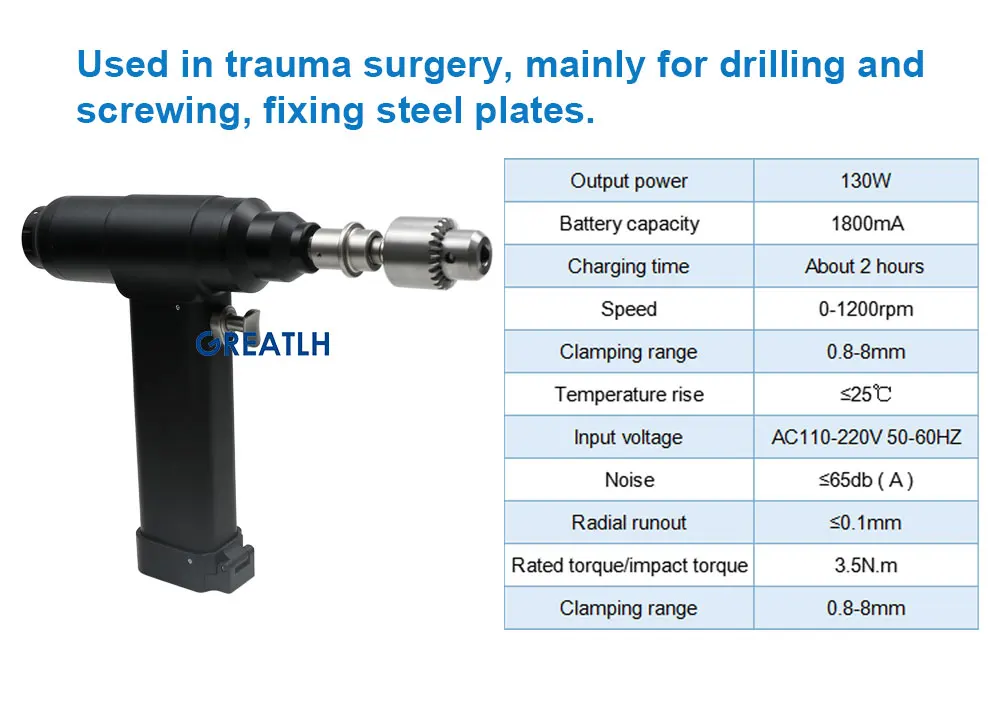
The Pinnacle of Precision: Battery-Powered Orthopedic Drill/Saw Systems (High Torque, Modular)
Orthopedic surgery has undergone a transformative evolution, driven by continuous innovation in surgical instrumentation. At the forefront of this advancement are sophisticated battery-powered orthopedic drill/saw systems. These high-torque, modular devices represent a significant leap forward, empowering surgeons with unparalleled precision, efficiency, and control during complex bone procedures. For patients, this translates directly into safer surgeries, better outcomes, and often, faster recoveries.
This comprehensive guide delves into the intricate world of these cutting-edge instruments, explaining their design, diverse applications, meticulous maintenance, and the profound impact they have on modern orthopedic care.
Deep Dive into Technical Specifications and Mechanisms
The efficacy of a surgical tool lies in its design and the engineering principles behind it. Battery-powered orthopedic drill/saw systems are a testament to advanced biomechanical engineering and material science.
Design and Materials: Engineered for Excellence
- Ergonomics: These systems are meticulously designed with the surgeon's comfort and control in mind. They are typically lightweight, balanced, and feature ergonomic grips to minimize fatigue during lengthy procedures. This intuitive design enhances maneuverability and precision, crucial for intricate bone work.
- Medical-Grade Materials:
- High-Performance Alloys: Components such as the drill chucks, saw blades, and critical internal mechanisms are crafted from medical-grade stainless steel or titanium alloys. These materials offer exceptional strength, durability, and superior corrosion resistance, vital for resisting the harsh environment of sterilization and repeated surgical use.
- Advanced Polymers: The outer casings often utilize high-performance, autoclavable polymers. These materials are chosen for their light weight, impact resistance, and ability to withstand high-temperature steam sterilization without degradation.
- Sealed Design: A hallmark of modern orthopedic instruments is their fully sealed construction. This critical feature prevents the ingress of bodily fluids, bone fragments, and other contaminants into the internal mechanisms. This not only protects the delicate electronics and motor but is paramount for effective sterilization and preventing cross-contamination.
Power Source: The Lithium-Ion Advantage
- High-Capacity Lithium-Ion Batteries: The heart of these wireless systems are advanced lithium-ion battery packs. These batteries provide:
- Long-Lasting Power: Sufficient charge for extended surgical procedures.
- Consistent Output: Stable power delivery ensures consistent performance without degradation throughout the battery's charge cycle.
- Rapid Charging: Quick turnaround times between surgeries.
- Wireless Freedom: Eliminates cumbersome cords, enhancing mobility and reducing trip hazards in the sterile field.
High Torque: The Power Behind Precision
- Understanding Torque: Torque is the rotational force applied by the motor. In orthopedic terms, high torque means the drill or saw can maintain its speed and cutting efficiency even when encountering dense bone.
- Benefits in Surgery:
- Effortless Bone Cutting: Allows for smooth, controlled cuts through cortical bone without stalling or excessive pressure from the surgeon.
- Reduced Thermal Necrosis: A sharp blade combined with high torque minimizes friction and heat generation at the bone-tool interface, reducing the risk of thermal damage to bone tissue.
- Minimized Vibration: A powerful motor can drive the cutting instrument more smoothly, reducing vibration transmitted to the surgeon's hand and to the bone, thereby enhancing precision.
Modular System: Versatility in One Platform
- Interchangeable Attachments: The "modular" aspect is a game-changer. A single power handle can accommodate a wide array of attachments, including:
- Various drill bits (cannulated, solid, different diameters)
- Reamers (for preparing bone cavities)
- Oscillating saws (for precise linear cuts, e.g., osteotomies)
- Reciprocating saws (for longitudinal cuts)
- Wire/pin drivers
- Burrs (for fine contouring and shaping)
- Quick-Connect Mechanisms: These attachments typically feature intuitive, secure quick-connect/disconnect mechanisms, allowing surgeons to switch tools rapidly and efficiently during a procedure without needing multiple power sources.
- Advantages:
- Cost-Effectiveness: Reduces the need for multiple single-purpose instruments.
- Sterilization Efficiency: Fewer complex power units to process.
- Streamlined Workflow: Simplifies instrument tray setup and reduces clutter in the operating room.
Precision and Control Features
- Variable Speed Triggers: Most systems feature a progressive trigger that allows for fine control over the rotational speed or oscillation rate, enabling the surgeon to match the speed precisely to the surgical task and bone density.
- Safety Lockouts: Integrated safety mechanisms prevent accidental activation, ensuring the instrument only operates when intentionally engaged.
Extensive Clinical Indications and Usage
The versatility and precision of these battery-powered systems make them indispensable across a broad spectrum of orthopedic and related surgical disciplines.
Key Surgical Applications:
- Joint Replacement Surgery (Arthroplasty):
- Knee Replacement: Precise bone cuts (femoral, tibial, patellar) are critical for accurate implant alignment and long-term success.
- Hip Replacement: Reaming of the acetabulum and preparation of the femoral canal.
- Shoulder Replacement: Shaping the humeral head and glenoid cavity.
- Trauma Surgery:
- Fracture Fixation: Drilling pilot holes for screws and wires, reaming intramedullary canals, and osteotomies for fracture reduction and realignment.
- Debridement: Removing damaged or infected bone tissue.
- Spinal Surgery:
- Laminectomy/Decompression: Careful removal of bone to relieve pressure on nerves.
- Pedicle Screw Placement: Precision drilling for spinal stabilization hardware.
- Fusion Procedures: Preparing bone surfaces for fusion.
- Sports Medicine:
- ACL Reconstruction: Drilling tunnels in the femur and tibia for graft placement.
- Arthroscopic Procedures: While larger, these systems can facilitate bone work in conjunction with arthroscopy.
- Foot and Ankle Surgery:
- Osteotomies: Corrective bone cuts for deformities like bunions or hammertoes.
- Fusion Procedures: Preparing joint surfaces for fusion.
- Craniomaxillofacial Surgery: While primarily orthopedic, these systems can be adapted for bone work in facial reconstruction, jaw surgery, and cranial procedures requiring precise bone removal or shaping.
Patient Outcome Improvements:
The advanced capabilities of these instruments directly translate into tangible benefits for patients:
- Enhanced Precision: Leads to more accurate implant placement, better joint alignment, and improved biomechanical function post-surgery.
- Reduced Surgical Time: Efficient cutting and drilling capabilities can shorten the duration of surgery, potentially reducing anesthesia exposure and risk.
- Minimized Tissue Trauma: Cleaner, smoother bone cuts with less heat generation contribute to reduced post-operative pain, swelling, and faster healing.
- Lower Infection Risk: The sealed design and robust sterilization protocols significantly reduce the risk of surgical site infections.
- Improved Long-Term Results: Accurate component placement in joint replacements, for example, is directly linked to implant longevity and patient satisfaction.
Risks, Side Effects, or Contraindications
While battery-powered orthopedic drill/saw systems are highly advanced and safe tools, it's crucial to understand that they are part of a complex surgical procedure. Risks are generally associated with the surgery itself rather than the instrument, but certain considerations are important.
- General Surgical Risks: All surgical procedures carry inherent risks, including:
- Infection at the surgical site.
- Bleeding and hematoma formation.
- Nerve or vascular damage.
- Anesthesia-related complications.
- Deep vein thrombosis (DVT) or pulmonary embolism (PE).
- Device-Specific Considerations (Minimized by modern design):
- Thermal Necrosis: While high torque and sharp blades minimize this, any bone-cutting instrument can generate heat. Surgeons are trained to use irrigation and intermittent cutting techniques to prevent thermal damage to bone cells, which could impede healing.
- Vibration: Modern systems are designed to minimize vibration, but excessive vibration could theoretically affect precision or contribute to surgeon fatigue.
- Instrument Malfunction: Extremely rare due to rigorous quality control and maintenance, but any mechanical device can theoretically fail. Hospitals have backup protocols in place.
- User Error: The primary risk associated with any surgical tool is its improper use. This is mitigated by extensive surgeon training, experience, and adherence to surgical protocols.
- Contraindications: There are no specific contraindications for the use of the device itself other than general surgical contraindications for the patient (e.g., severe uncontrolled infection at the surgical site, severe coagulopathy, or medical instability precluding surgery). The decision to use such an instrument is part of the overall surgical plan determined by the orthopedic surgeon based on the patient's specific condition.
Expert Tips from Dr. Mohammed Hutaif
"In my practice, the battery-powered orthopedic drill/saw system is more than just a tool; it's an extension of my surgical expertise. Its capabilities have fundamentally enhanced the precision and safety of the procedures I perform. Here are some key insights from a surgeon's perspective:
- Precision is Paramount: The ability to make incredibly accurate cuts and drill holes is not just about technique; it's about the instrument's capability. High torque prevents 'chatter' and allows for smoother, cleaner bone interfaces, which are critical for optimal implant fit and long-term stability in joint replacements.
- Modularity for Efficiency: The modular nature of these systems dramatically streamlines the surgical workflow. Instead of having multiple bulky instruments, I can quickly switch between drilling, reaming, and sawing functions with a single power handle. This reduces instrument clutter, shortens setup times, and allows for a more focused surgical field.
- Patient Safety Through Sterilization: As a surgeon, I cannot overstate the importance of rigorous sterilization. These systems are designed to be fully autoclavable, ensuring every component that enters the sterile field is free from pathogens. This commitment to sterility is a non-negotiable aspect of patient safety.
- Biomechanics and Healing: By minimizing thermal damage and creating clean osteotomies, these tools respect the natural biomechanics of bone healing. Less tissue trauma means less inflammation, less post-operative pain, and potentially a faster return to function for the patient.
- Continuous Innovation: The evolution of battery technology and motor design means these instruments are becoming even lighter, more powerful, and more reliable. Staying abreast of these advancements ensures we are always offering our patients the best possible care.
- Surgeon Skill Remains Key: While the technology is incredible, it's vital to remember that the instrument is only as good as the surgeon wielding it. Extensive training, experience, and a deep understanding of surgical anatomy are always the foundation of successful outcomes."
Massive FAQ Section
Q1: What exactly is a battery-powered orthopedic drill/saw system?
A1: It's a state-of-the-art surgical instrument used by orthopedic surgeons to precisely cut, drill, or shape bone during various procedures. Unlike older, corded models, it's powered by a high-capacity, rechargeable battery, offering wireless freedom and consistent power. The "high torque" means it can cut through dense bone efficiently, and "modular" means it can accept various interchangeable attachments (like different saw blades or drill bits) using a single power source.
Q2: Why is "high torque" important in orthopedic surgery?
A2: High torque refers to the rotational force of the drill or saw. In orthopedic surgery, it's crucial because it allows the instrument to cut through dense bone smoothly and efficiently without stalling. This results in cleaner, more precise cuts, less heat generation (reducing the risk of bone damage), and minimizes vibration, all contributing to better surgical outcomes and patient safety.
Q3: What does "modular" mean in the context of these surgical systems?
A3: "Modular" signifies that the main power handle can be fitted with a variety of interchangeable attachments. Instead of needing separate devices for drilling, sawing, reaming, or burring, a surgeon can quickly attach different heads to the same battery-powered handpiece. This enhances versatility, reduces the number of instruments on the sterile tray, and streamlines the surgical process.
Q4: How do these advanced systems improve patient outcomes?
A4: They improve outcomes in several ways:
* Increased Precision: Leads to more accurate bone cuts and implant placement, crucial for joint replacements and fracture repair.
* Reduced Surgical Time: Efficient operation can shorten the time a patient is under anesthesia.
* Less Tissue Trauma: Cleaner cuts and reduced heat generation contribute to less post-operative pain, swelling, and faster healing.
* Lower Infection Risk: Advanced sealed designs and robust sterilization protocols enhance safety.
* Improved Long-Term Results: Accurate surgical execution with these tools often translates to better functional outcomes and implant longevity.
Q5: Is it safe? How is this equipment sterilized?
A5: Yes, these systems are designed with patient safety as a paramount concern. They are made from medical-grade, autoclavable materials and feature fully sealed designs to prevent contamination. After each use, every component that enters the sterile field undergoes a rigorous sterilization process, typically using high-temperature steam autoclaving, which effectively kills bacteria, viruses, and other pathogens, ensuring a sterile instrument for every patient.
Q6: What types of surgeries commonly use this advanced equipment?
A6: These systems are widely used across almost all orthopedic subspecialties, including:
* Joint Replacement Surgery: For precise bone preparation in knee, hip, and shoulder replacements.
* Trauma Surgery: For fracture fixation, drilling, and bone realignment.
* Spinal Surgery: For bone removal (laminectomy) and preparing for spinal fusion.
* Sports Medicine: For procedures like ACL reconstruction (drilling tunnels).
* Foot and Ankle Surgery: For corrective osteotomies and fusions.
Q7: How do battery-powered systems compare to older, wired orthopedic drills/saws?
A7: Battery-powered systems offer several advantages over older wired models:
* Wireless Freedom: Eliminates cumbersome cords, improving surgeon mobility and reducing hazards in the operating room.
* Consistent Power: Modern batteries provide stable power output without fluctuations.
* Enhanced Ergonomics: Often lighter and better balanced due to advancements in battery technology and motor design.
* Reduced Clutter: Contributes to a more organized and efficient sterile field.
Q8: Does the use of this system make surgery faster?
A8: While surgical speed is not the primary goal, the efficiency and precision offered by these systems can contribute to shorter surgical times. The ability to make quick, clean cuts and rapidly switch between different modular attachments reduces delays, allowing the surgical team to focus more effectively on the procedure itself.
Q9: Can this system be used for very delicate or minimally invasive procedures?
A9: Yes, the precision and control offered by these systems, particularly with variable speed triggers and fine burr attachments, make them suitable for delicate procedures. Their compact, ergonomic design can also facilitate use in minimally invasive approaches where space is limited, allowing surgeons to work through smaller incisions with greater accuracy.
Q10: What materials are these instruments typically made from?
A10: The critical components, such as saw blades, drill bits, and internal mechanisms, are typically made from high-grade medical stainless steel or titanium alloys for strength, durability, and corrosion resistance. The outer casings and handles often use advanced, autoclavable polymers that are lightweight, impact-resistant, and can withstand repeated high-temperature sterilization cycles.
Q11: How does the surgeon control the speed and power of the instrument?
A11: Most modern battery-powered systems feature a progressive or variable-speed trigger. This allows the surgeon to precisely control the speed of rotation or oscillation, from very slow for delicate work to high speed for rapid bone removal. This fine control is essential for adapting to different bone densities and surgical tasks.
Q12: What are the benefits of the ergonomic design for both the surgeon and the patient?
A12: For the surgeon, the ergonomic design (lightweight, balanced, comfortable grip) reduces fatigue and enhances control, allowing for greater precision during long procedures. For the patient, this translates directly to safer surgery, more accurate bone work, and ultimately, better functional outcomes and a smoother recovery due to the surgeon's enhanced ability to perform the procedure optimally.
Disclaimer: This content is for informational purposes only and is not medical advice. Always consult with a qualified healthcare professional for any health concerns or before making any decisions related to your health or treatment.