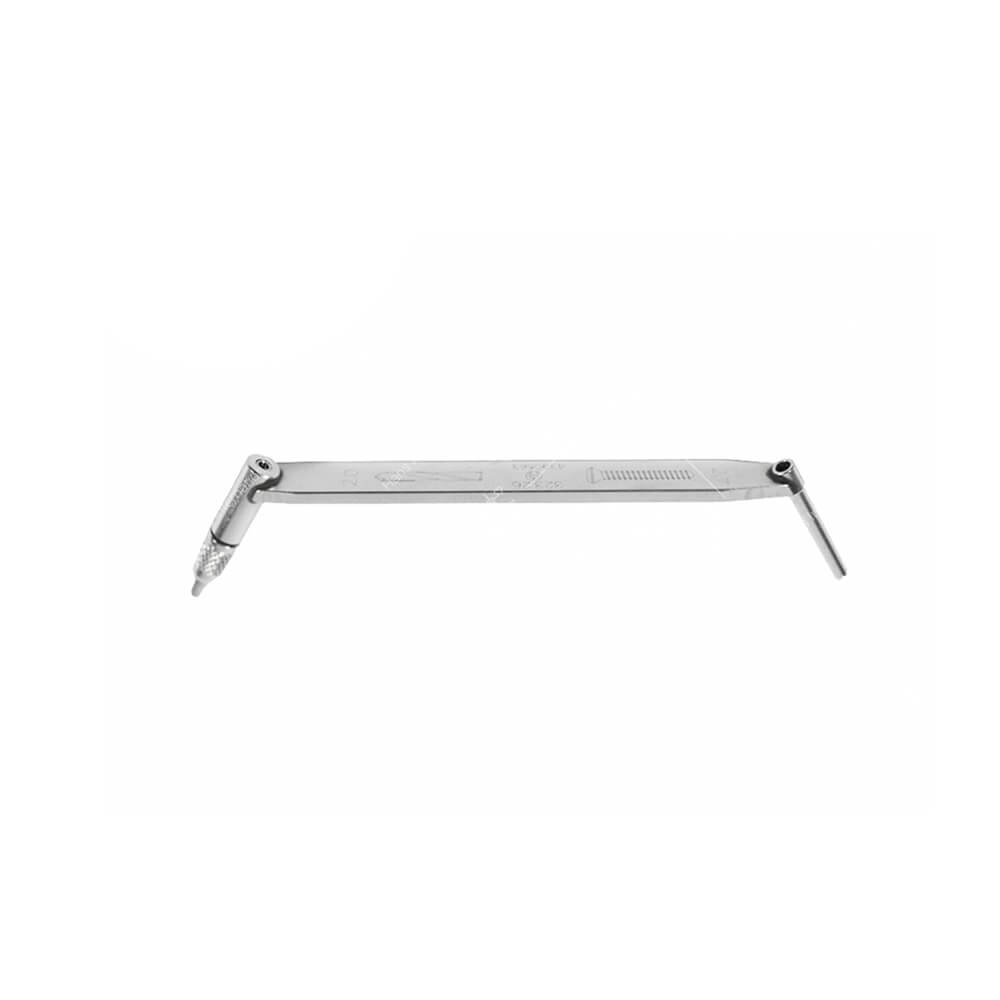
The Adjustable Tibial/Femoral Drill Guide: A Cornerstone of Precision Orthopedic Surgery
Comprehensive Introduction & Overview
In the intricate world of orthopedic surgery, precision is not merely a goal; it is an absolute necessity. Every millimeter, every degree of angle, can significantly impact a patient's long-term recovery and quality of life. Among the specialized instruments that empower surgeons to achieve this unparalleled accuracy, the Adjustable Tibial/Femoral Drill Guide stands out as a critical tool, particularly in complex ligament reconstructions, such as Anterior Cruciate Ligament (ACL) repair.
This advanced surgical instrument is engineered to guide the surgeon in creating precisely located and angled bone tunnels in the tibia (shin bone) and femur (thigh bone). These tunnels are essential pathways through which new grafts are passed to reconstruct damaged ligaments, ensuring optimal placement and tension for the restored joint. Unlike fixed-angle guides, the adjustable nature of this device allows for customization to individual patient anatomy and surgical requirements, making it an indispensable asset for achieving biomechanically sound reconstructions and significantly improving patient outcomes. This guide will delve deep into its design, applications, biomechanical implications, and the profound benefits it offers in modern orthopedic practice.
Deep-dive into Technical Specifications / Mechanisms
The Adjustable Tibial/Femoral Drill Guide is a marvel of biomechanical engineering, designed for robust performance and meticulous accuracy.
Design and Materials
The construction of these guides prioritizes durability, biocompatibility, and ergonomic handling.
* High-Grade Materials:
* Stainless Steel (e.g., 17-4 PH, 316L): Chosen for its exceptional strength, corrosion resistance, and ability to withstand repeated sterilization cycles. It forms the core structural components.
* Aerospace-Grade Aluminum Alloys: Often used for lighter-weight, non-load-bearing components where rigidity and reduced instrument weight are beneficial. Anodized for enhanced surface hardness and corrosion resistance.
* Biocompatible Polymers (e.g., PEEK): Used for specific inserts or handles, offering electrical insulation, reduced weight, and improved tactile feel for the surgeon.
* Ergonomics: Designed for comfortable and secure grip, reducing surgeon fatigue during lengthy procedures.
* Modularity: Many systems feature modular components, allowing for interchangeability and customization to various surgical approaches and patient anatomies.
* Adjustability Features:
* Angle Adjustment: Allows the surgeon to precisely control the drilling angle relative to the bone surface, crucial for avoiding graft impingement and optimizing graft isometry.
* Depth Adjustment/Offset: Enables precise control over the depth of the drill hole and the offset from the articular surface, preventing posterior wall blow-out or tunnel widening.
* Aiming Mechanisms: Integrated aiming arms or pointers guide the drill wire to the exact anatomical location.
* Scale Markings: Clear, laser-etched markings for accurate measurement of depth, angle, and offset, ensuring reproducible results.
Mechanism of Action
The guide's mechanism revolves around providing a stable, precise conduit for the drill wire or reamer.
1. Placement: The surgeon positions the guide on the bone surface (tibial plateau or femoral condyle) using anatomical landmarks and fluoroscopic guidance.
2. Adjustment: Using adjustment knobs or levers, the surgeon fine-tunes the desired angle, depth, and offset based on pre-operative planning and intraoperative assessment.
3. Securing: Once the optimal position is achieved, the guide is locked into place, often with pins or clamps, ensuring no movement during drilling.
4. Guidance: A cannulated sleeve within the guide directs the drill wire or reamer precisely to the target location, creating a bone tunnel with predetermined dimensions and orientation.
5. Verification: The guide often allows for visual or fluoroscopic verification of the tunnel's trajectory before final reaming.
Biomechanics and Patient Outcome Improvements
The meticulous precision offered by this drill guide directly translates into superior biomechanical outcomes:
* Optimized Graft Placement: Accurate tunnel placement minimizes graft impingement (where the graft rubs against bone, causing wear) and maximizes graft isometry (maintaining consistent tension throughout the range of motion). This is crucial for long-term graft survival and knee stability.
* Reduced Tunnel Widening: Precise drilling reduces micromotion of the graft within the tunnel, which is a significant factor in post-operative tunnel widening and potential graft failure.
* Restored Knee Kinematics: By replicating the native ligament's anatomical insertion points, the guide helps restore the knee's natural motion and stability, preventing abnormal laxity or stiffness.
* Enhanced Healing Environment: A well-placed graft with appropriate tension promotes better biological integration into the bone tunnels.
* Improved Long-Term Function: Patients benefit from a more stable knee, reduced pain, faster return to activity, and a lower risk of re-injury or progression to osteoarthritis.
Extensive Clinical Indications & Usage
The Adjustable Tibial/Femoral Drill Guide is a versatile instrument with primary applications in ligament reconstruction, but its utility extends to other areas requiring precise bone tunnel creation.
Primary Clinical Applications
- Anterior Cruciate Ligament (ACL) Reconstruction: This is the most common and critical application.
- Femoral Tunnel Creation: Essential for creating the femoral tunnel, whether using transtibial, anteromedial portal, or outside-in techniques. The guide allows for precise placement on the femoral footprint, crucial for rotational stability.
- Tibial Tunnel Creation: Guides the creation of the tibial tunnel, ensuring it emerges at the correct anatomical location on the tibia, avoiding impingement with the intercondylar notch.
- Single-Bundle vs. Double-Bundle ACL Reconstruction: Its adjustability is particularly vital in double-bundle techniques, where two separate tunnels are created to replicate the native ACL's anteromedial and posterolateral bundles more closely.
- Posterior Cruciate Ligament (PCL) Reconstruction: Similar to ACL, precise tunnel placement for PCL grafts is paramount for restoring posterior stability.
- Multi-Ligament Knee Reconstructions: In cases of complex knee injuries involving multiple ligaments (e.g., ACL, PCL, MCL, LCL), the guide is indispensable for creating multiple, accurately placed tunnels.
Other Clinical Applications
- Medial Collateral Ligament (MCL) and Lateral Collateral Ligament (LCL) Repair/Reconstruction: While less common than ACL/PCL, these guides can be adapted for precise drilling in complex MCL/LCL procedures where anatomical reconstruction is desired.
- Fracture Fixation: In certain complex fracture patterns requiring precise screw placement or guide wire insertion into specific bone segments, these guides can offer an advantage.
- Osteotomy Procedures: For corrective osteotomies where precise bone cuts and subsequent fixation require specific drill hole placement.
General Fitting and Usage Instructions (Patient Perspective)
Patients should understand that while they won't be directly involved in fitting, the meticulous process ensures their best outcome.
- Pre-operative Planning: Before surgery, the surgeon utilizes advanced imaging (MRI, CT scans) and specialized software to plan the optimal tunnel placement, angle, and depth, considering the patient's unique anatomy.
- Intraoperative Setup: In the operating room, after proper sterile draping and incision, the surgeon accesses the joint. The adjustable drill guide is then brought into the sterile field.
- Anatomical Landmark Identification: The surgeon identifies critical anatomical landmarks within the knee joint, often using arthroscopy (a small camera) for visualization.
- Guide Positioning: The guide's foot is carefully positioned against the bone at the planned entry point.
- Parameter Adjustment: The surgeon then adjusts the guide's angle, depth, and offset settings according to the pre-operative plan and real-time arthroscopic views, ensuring the drill trajectory is perfect.
- Secure Fixation: Once the optimal position is confirmed, the guide is securely fixed to the bone, preventing any deviation during drilling.
- Drilling: A guide wire is then advanced through the guide's sleeve, followed by a cannulated drill or reamer to create the bone tunnel.
- Verification: The surgeon verifies the tunnel's position and trajectory, often with an arthroscopic probe or fluoroscopy, before proceeding with graft passage and fixation.
- Removal: The guide is carefully removed, and the surgical procedure continues.
Maintenance and Sterilization Protocols (Overview for Patients)
While not directly handled by patients, understanding that these instruments are meticulously cared for provides confidence.
* Cleaning: After each use, instruments undergo thorough manual and automated cleaning processes to remove all biological debris.
* Inspection: Instruments are meticulously inspected for any signs of wear, damage, or corrosion that could compromise their function or sterility.
* Sterilization: The primary method for sterilizing these heat-tolerant instruments is steam sterilization (autoclaving) at high temperatures and pressures, effectively killing all microorganisms. Other methods like low-temperature sterilization (e.g., hydrogen peroxide gas plasma) may be used for heat-sensitive components, though less common for drill guides.
* Packaging and Storage: Sterile instruments are carefully packaged in sterilization wraps or containers and stored in a controlled environment until needed for surgery. These rigorous protocols are critical to prevent surgical site infections.
Risks, Side Effects, or Contraindications
While the Adjustable Tibial/Femoral Drill Guide is designed to enhance safety and precision, like any surgical instrument, its use carries inherent risks, and certain situations may contraindicate its specific application.
Potential Risks Associated with Drill Guide Usage
The risks are primarily related to the surgical procedure itself and potential misuse or malfunction of the instrument.
* Malpositioning of Tunnels: Despite the guide's precision, human error in setting parameters or anatomical variability can lead to tunnels being drilled in suboptimal locations. This can result in:
* Graft Impingement: The graft rubbing against the bone, leading to wear, pain, and eventual failure.
* Graft Laxity/Instability: If tunnels are too far from the anatomical insertion, the graft may be too loose, failing to restore stability.
* Graft Over-tensioning/Stiffness: If tunnels are too close, the graft may be too tight, leading to restricted motion and pain.
* Iatrogenic Fracture: Although rare, aggressive drilling or improper technique, especially in osteoporotic bone, could lead to microfractures or larger bone fractures.
* Neurovascular Injury: The drilling process, if not carefully executed, carries a minimal risk of damaging adjacent nerves or blood vessels, though this is usually mitigated by careful anatomical dissection and visualization.
* Instrument Breakage: Extremely rare with high-quality instruments, but components could potentially break if subjected to excessive force or if there is a manufacturing defect. This could necessitate removal of fragments.
* Infection: As with any invasive procedure, there is a risk of surgical site infection, though rigorous sterilization protocols significantly minimize this.
* Tunnel Widening: While precise drilling aims to reduce this, biological factors and micromotion can still contribute to some degree of tunnel widening post-operatively.
Side Effects (Indirect)
- Prolonged Operative Time: While increasing precision, the initial setup and verification with an adjustable guide might add a small amount of time to the overall procedure compared to a simpler, fixed guide, though the long-term benefits typically outweigh this.
Contraindications
There are very few absolute contraindications directly related to the drill guide itself, as it is an instrument. However, its application would be contraindicated in situations where the overall surgical procedure is deemed unsafe or inappropriate for the patient.
* Active Infection: Any active infection in or around the knee joint would contraindicate elective surgery, including ligament reconstruction, until resolved.
* Severe Comorbidities: Patients with severe systemic health issues that make them high-risk for general anesthesia or surgery may be deemed unsuitable candidates.
* Extremely Compromised Bone Quality: In cases of severe osteoporosis or highly friable bone, special considerations and alternative fixation methods might be necessary, though the guide itself is still used for tunnel creation.
* Anatomical Abnormalities: Extreme deformities or prior surgical alterations that make standard anatomical landmark identification impossible or risky might require highly customized approaches or alternative tools.
It is crucial for patients to have an open discussion with their surgeon about all potential risks and benefits before undergoing any surgical procedure.
Expert Tips from Dr. Mohammed Hutaif
As an orthopedic specialist dedicated to achieving the best possible outcomes for my patients, I emphasize several key principles when utilizing advanced instruments like the Adjustable Tibial/Femoral Drill Guide:
- Personalized Pre-operative Planning is Paramount: Every patient's anatomy is unique. I rely heavily on high-resolution MRI and CT scans to meticulously plan the optimal tunnel placement, angle, and depth. This digital blueprint guides my intraoperative decisions and ensures a truly personalized reconstruction.
- Visualization and Verification are Non-Negotiable: With arthroscopy, I maintain continuous visual confirmation of anatomical landmarks and the guide's position. I often use fluoroscopy (real-time X-ray) to verify the guide wire trajectory before reaming, leaving no room for doubt.
- Understanding Biomechanics is Key: It's not just about creating a hole; it's about recreating the natural biomechanics of the knee. The adjustable guide allows me to precisely place grafts to optimize isometry, minimize impingement, and restore the knee's rotational stability – factors critical for long-term joint health and athletic function.
- Attention to Detail Prevents Complications: The adjustable nature of this guide allows for minute adjustments. I take the time to fine-tune these settings, ensuring that the tunnels are perfectly aligned, which significantly reduces the risk of post-operative tunnel widening, graft failure, or recurrent instability.
- Continuous Training and Experience: While the instrument is sophisticated, the surgeon's skill and experience in using it are paramount. I continually engage in advanced training and stay updated with the latest surgical techniques to maximize the benefits of such precision tools for my patients.
- Patient Education Empowers Recovery: I believe an informed patient is an empowered patient. Understanding the precision involved in their surgery helps them appreciate the importance of post-operative rehabilitation and adherence to protocols, which are just as crucial as the surgery itself for a successful recovery.
By combining cutting-edge technology with meticulous surgical technique and a patient-centered approach, we can achieve exceptional results and help patients return to their active lives with confidence.
Massive FAQ Section
Q1: What is an Adjustable Tibial/Femoral Drill Guide primarily used for?
A1: Its primary use is in orthopedic surgery, specifically for ligament reconstructions, most commonly the Anterior Cruciate Ligament (ACL) and Posterior Cruciate Ligament (PCL) in the knee. It helps the surgeon create precisely angled and located bone tunnels in the tibia (shin bone) and femur (thigh bone) through which new ligament grafts are passed and secured.
Q2: How does this drill guide improve the accuracy of knee surgery?
A2: The adjustable features of the guide allow the surgeon to customize the angle, depth, and offset of the bone tunnels to match the patient's unique anatomy and the specific requirements of the reconstructed ligament. This level of precision ensures that the new graft is placed in the most anatomically correct position, optimizing its function, reducing impingement, and enhancing long-term stability of the knee joint.
Q3: Is the Adjustable Tibial/Femoral Drill Guide used in all knee surgeries?
A3: No, it is not used in all knee surgeries. It is specifically designed for procedures requiring precise bone tunnel creation, predominantly ligament reconstructions (like ACL, PCL, and multi-ligament repairs). For other knee surgeries, such as meniscectomy or cartilage repair, different specialized instruments are used.
Q4: What materials are these surgical instruments typically made from?
A4: These guides are manufactured from high-grade, biocompatible materials known for their strength, durability, and corrosion resistance. Common materials include medical-grade stainless steel alloys (e.g., 17-4 PH, 316L), aerospace-grade aluminum alloys, and specialized biocompatible polymers like PEEK for certain components or handles. These materials ensure the instruments can withstand rigorous use and repeated sterilization.
Q5: How does precise tunnel placement affect the long-term outcome for a patient after ACL reconstruction?
A5: Precise tunnel placement is critical for several reasons:
* Optimized Graft Function: Ensures the new graft functions like the original ligament, providing stability throughout the knee's range of motion.
* Reduced Impingement: Prevents the graft from rubbing against bone, which can cause wear, pain, and eventual graft failure.
* Minimizing Tunnel Widening: Accurate drilling reduces micromotion of the graft within the tunnel, a factor in post-operative tunnel widening.
* Faster, Stronger Recovery: Contributes to better knee stability, reduced pain, and a more predictable return to activities, ultimately leading to a more successful and durable outcome.
Q6: Does the drill guide remain inside the body after surgery?
A6: No, the Adjustable Tibial/Femoral Drill Guide is a temporary surgical instrument used during the operation. Once the bone tunnels are precisely created, the guide is removed from the patient's body. Only the new ligament graft and any necessary fixation devices (like screws or buttons) remain.
Q7: How are these specialized instruments maintained and sterilized?
A7: Maintenance and sterilization protocols are extremely rigorous to ensure patient safety. After each use, instruments are thoroughly cleaned to remove all biological debris. They are then meticulously inspected for any damage. The primary method of sterilization is steam sterilization (autoclaving) at high temperatures and pressures, which effectively kills all microorganisms. They are then carefully packaged and stored in a sterile environment until needed for the next surgery.
Q8: Can this drill guide be used for surgeries on other joints besides the knee?
A8: While primarily designed and optimized for knee ligament reconstructions, the underlying principle of creating precise bone tunnels is applicable to other areas. Some surgeons might adapt or use similar adjustable guides for specific procedures in the shoulder (e.g., rotator cuff repair involving bone tunnels) or ankle, where precise anatomical tunnel placement is also crucial. However, dedicated instruments often exist for those specific joints.
Q9: What's the main difference between an adjustable drill guide and a fixed-angle drill guide?
A9: The main difference lies in their flexibility. A fixed-angle drill guide creates tunnels at a predetermined, non-changeable angle and depth. While simpler, it offers less adaptability to individual patient anatomy. An adjustable drill guide, on the other hand, allows the surgeon to precisely customize the angle, depth, and offset of the tunnels intraoperatively. This adjustability is crucial for matching the unique biomechanics of each patient's knee, leading to more anatomically accurate and stable reconstructions.
Q10: How does Dr. Mohammed Hutaif ensure the highest precision when using this tool?
A10: Dr. Hutaif employs a multi-faceted approach to guarantee optimal precision:
1. Advanced Pre-operative Imaging & Planning: Utilizing high-resolution MRI and CT scans to create a detailed surgical plan tailored to each patient's unique anatomy.
2. Intraoperative Visualization: Employing arthroscopy for direct, real-time visualization of anatomical landmarks and the guide's position.
3. Fluoroscopic Verification: Using real-time X-ray imaging to confirm the exact trajectory and depth of the guide wire before reaming.
4. Meticulous Adjustment: Taking the necessary time to fine-tune the guide's settings (angle, depth, offset) to achieve the planned optimal position.
5. Extensive Experience: Relying on years of specialized experience and continuous training in advanced orthopedic surgical techniques. This comprehensive approach ensures the highest level of accuracy and the best possible outcomes for his patients.
Q11: What are the patient benefits of having a surgeon use an adjustable drill guide?
A11: Patients benefit significantly from a surgeon using an adjustable drill guide through:
* Improved Surgical Outcomes: Higher likelihood of a successful ligament reconstruction with stable, functional results.
* Reduced Risk of Complications: Lower incidence of graft impingement, tunnel widening, and re-injury due to anatomically superior graft placement.
* Faster Rehabilitation: A more stable knee often translates to a smoother and potentially quicker recovery process.
* Enhanced Long-Term Joint Health: By restoring natural knee kinematics, the risk of developing early osteoarthritis or chronic pain is minimized.
* Greater Confidence: Patients can have increased confidence in their knee's stability and ability to return to activities, including sports.
Q12: Are there any specific challenges or considerations when using an adjustable drill guide?
A12: While offering significant advantages, using an adjustable drill guide requires:
* Steeper Learning Curve: Surgeons need specialized training and experience to master its various adjustments and ensure optimal use.
* Increased Operative Time (potentially): The meticulous process of adjustment and verification might add a small amount of time to the surgery compared to simpler fixed guides, though this is a worthwhile investment for precision.
* Cost: These advanced instruments are typically more expensive than fixed guides, which can influence hospital inventory decisions.
* Maintenance Complexity: Their intricate design requires thorough cleaning and inspection protocols to ensure longevity and sterility.
However, for experienced surgeons, these considerations are well-managed, and the benefits for patient outcomes are overwhelmingly positive.