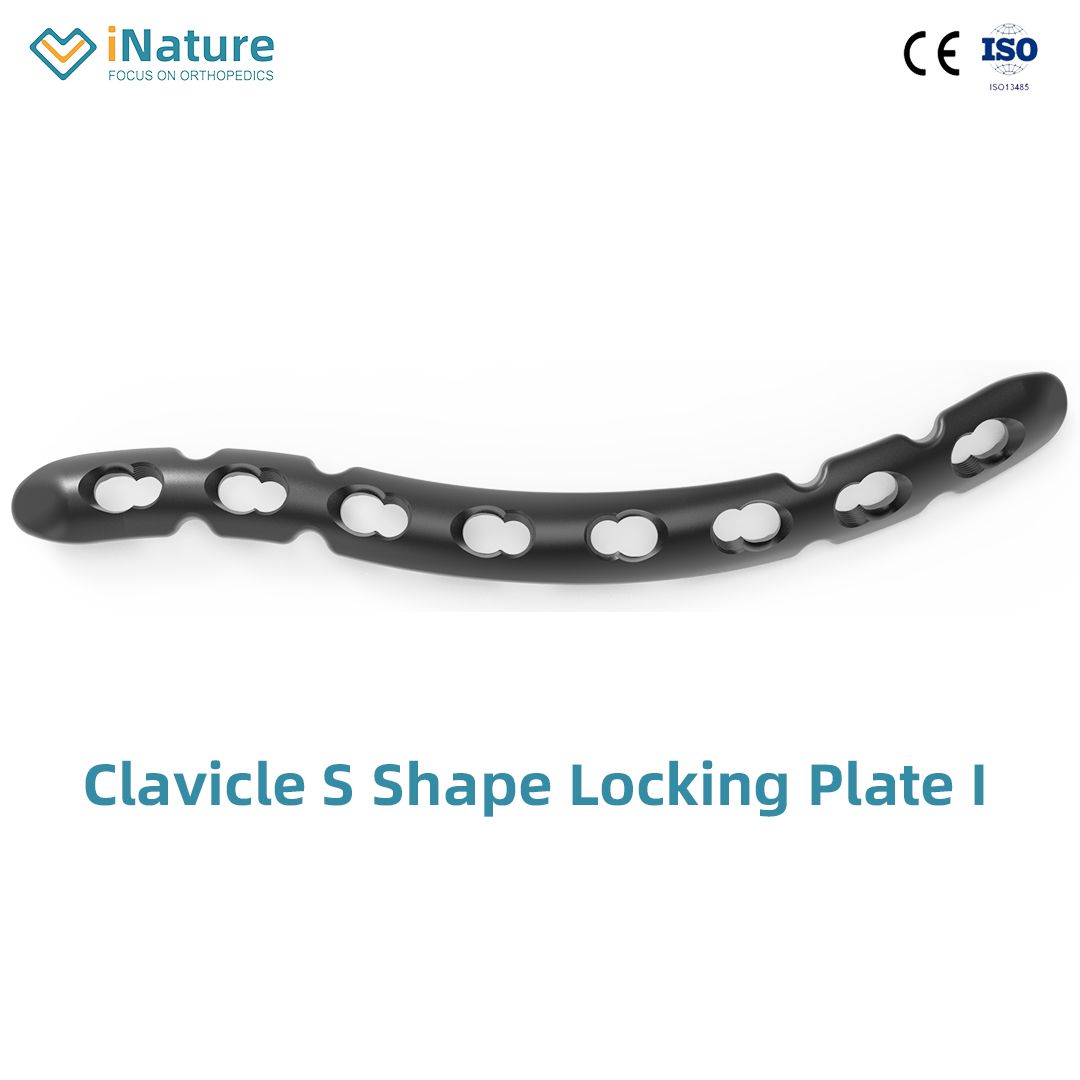
The Acromioclavicular (AC) Hook Plate: An Orthopedic Specialist's Guide
Comprehensive Introduction & Overview
The acromioclavicular (AC) joint, a critical articulation connecting the clavicle (collarbone) to the acromion (part of the shoulder blade), is frequently subjected to trauma, particularly in athletes and individuals involved in high-impact activities. Injuries to this joint, ranging from mild sprains to severe dislocations (separations), can lead to significant pain, instability, and functional impairment of the shoulder. For more severe cases, surgical intervention is often necessary to restore anatomical alignment and stability.
Among the various surgical techniques and implants available, the Acromioclavicular (AC) Hook Plate stands as a robust and widely utilized solution for stabilizing complex AC joint injuries. This specialized orthopedic implant provides rigid fixation, facilitating the healing of damaged ligaments and promoting favorable patient outcomes. This comprehensive guide delves into every aspect of the AC Hook Plate, from its intricate design and biomechanical principles to its detailed surgical applications, maintenance, and impact on patient recovery.
Deep-dive into Technical Specifications / Mechanisms
Design and Materials
The AC Hook Plate is meticulously engineered to address the unique anatomical and biomechanical challenges of the AC joint. Its design typically comprises two main components: a flat plate segment and a curved hook segment.
- Plate Body: This section of the implant is designed to rest on the superior surface of the clavicle. It is typically pre-contoured to match the natural curvature of the clavicle, ensuring a low-profile fit that minimizes soft tissue irritation. The plate features multiple screw holes, which can be either non-locking or, more commonly in modern designs, locking screw holes. Locking screws provide angular stability, creating a fixed-angle construct that enhances stability, particularly in osteoporotic bone or comminuted fractures. The number and spacing of these holes vary between manufacturers and plate lengths, allowing for customization based on the specific injury and patient anatomy.
- Hook Component: The distinguishing feature of this implant, the hook, is designed to pass underneath the acromion. The hook's specific shape, depth, and angle are critical. It acts as a fulcrum, stabilizing the clavicle relative to the acromion by preventing superior displacement of the clavicle. The hook's underside is often smooth to minimize impingement on the rotator cuff tendons or the subacromial bursa. The precise depth of the hook is crucial; too shallow, and it may not provide adequate stability; too deep, and it risks over-compression or impingement.
Materials:
The vast majority of modern AC Hook Plates are manufactured from titanium or titanium alloys. These materials are favored for several reasons:
- Biocompatibility: Titanium is highly biocompatible, meaning it is well-tolerated by the human body, reducing the risk of adverse reactions or rejection.
- Strength-to-Weight Ratio: Titanium offers an excellent strength-to-weight ratio, providing robust fixation without excessive bulk.
- Corrosion Resistance: It exhibits superior resistance to corrosion within the physiological environment.
- MRI Compatibility: Titanium is non-ferromagnetic, allowing patients to undergo Magnetic Resonance Imaging (MRI) scans without significant artifact or safety concerns, which is critical for post-operative assessment.
- Elastic Modulus: While titanium's elastic modulus is higher than bone, it is closer than that of stainless steel, which can help in reducing stress shielding effects on the healing bone.
Less commonly, stainless steel was used historically, but titanium has largely superseded it due to its superior properties.
Biomechanics of the AC Hook Plate
The AC Hook Plate functions on principles of mechanical reduction and stabilization, working to restore the anatomical relationship of the AC joint.
- Mechanism of Action: The plate is fixed to the clavicle, while the hook component engages the inferior aspect of the acromion. This construct effectively "hooks" the clavicle down, countering the superior displacement that characterizes AC joint separations. It provides a stable platform for the healing of the torn coracoclavicular (CC) and acromioclavicular (AC) ligaments.
- Load Sharing and Stability: By rigidly connecting the clavicle to the acromion, the hook plate significantly reduces the load on the healing ligaments. It resists superior, posterior, and anterior translation of the clavicle relative to the acromion, thereby providing multi-planar stability. This mechanical stability is paramount for early mobilization and preventing loss of reduction.
- Comparison to Other Fixation Methods:
- K-wires: Offer less rigid fixation, prone to migration, and require prolonged immobilization.
- Coracoclavicular (CC) Screws: Primarily address superior clavicle displacement but can restrict some rotation and may fail due to fatigue. They do not directly stabilize the AC joint itself.
- Suture Button Systems (e.g., Dog Bone, TightRope): Offer more dynamic fixation, allowing some motion, and are often preferred for CC ligament reconstruction. They typically involve less hardware prominence but may not provide the same initial rigid stability as a hook plate, especially in very unstable injuries.
- Role in Ligament Healing: The rigid fixation provided by the AC Hook Plate creates an optimal environment for the primary repair or natural healing of the torn AC and CC ligaments. By maintaining the reduced position, it prevents excessive strain on the healing tissues, allowing them to regenerate and regain their tensile strength. The plate acts as an internal splint, holding the bones in place until biological healing is sufficient.
Extensive Clinical Indications & Usage
Clinical Indications
The AC Hook Plate is indicated for a range of acute and chronic AC joint pathologies where stable fixation is required.
- Acute AC Joint Dislocations:
- Rockwood Type III: While often managed non-operatively, surgical intervention with a hook plate may be considered in high-demand patients or those with persistent symptoms.
- Rockwood Type IV: Posterior displacement of the clavicle through the trapezius muscle. Requires surgical reduction and stabilization.
- Rockwood Type V: Severe superior displacement of the clavicle, often with significant soft tissue stripping. A strong indication for hook plate fixation.
- Rockwood Type VI: Inferior displacement of the clavicle under the coracoid. A rare but severe injury requiring surgical management.
- Chronic AC Joint Instability: Patients who have failed conservative treatment for chronic AC joint pain and instability, often resulting from previously unaddressed or inadequately treated injuries.
- Distal Clavicle Fractures with AC Joint Involvement: Fractures of the distal clavicle that extend into or compromise the AC joint stability may benefit from hook plate fixation to stabilize both the fracture and the joint.
- Post-operative Stabilization: Following direct repair or reconstruction of the AC and/or CC ligaments, a hook plate can provide temporary additional stability to protect the repair during the initial healing phase.
Detailed Surgical Application (Fitting/Usage Instructions)
The successful implantation of an AC Hook Plate requires meticulous surgical technique.
- Pre-operative Planning:
- Imaging: Standard AP, Zanca, and axillary lateral radiographs are essential to assess the degree of displacement and rule out associated fractures. CT scans may be used for complex cases to better delineate bony anatomy and displacement.
- Patient Positioning: The patient is typically placed in a beach chair or supine position, with the affected shoulder elevated and draped to allow full access to the shoulder and upper arm.
- Surgical Approach:
- A superior approach directly over the AC joint and distal clavicle is common. An incision is made parallel to the clavicle, extending over the AC joint.
- Careful dissection through skin and subcutaneous tissue, preserving the deltoid and trapezius muscle attachments as much as possible.
- Reduction of AC Joint:
- The dislocated AC joint is manually reduced. This often requires significant traction on the arm and direct downward pressure on the clavicle.
- Temporary fixation with K-wires or a reduction clamp may be used to maintain the reduction while the plate is applied.
- Plate Placement:
- The appropriate size and length of the AC Hook Plate are selected.
- The plate is positioned on the superior aspect of the clavicle, ensuring the hook component is correctly oriented to pass underneath the acromion.
- The hook is carefully inserted beneath the acromion. It is critical to ensure the hook is not impinging on the rotator cuff or subacromial bursa. Intraoperative fluoroscopy can be used to confirm proper placement.
- Screw Insertion:
- Once the plate is optimally positioned and the joint reduced, the plate is secured to the clavicle using cortical or locking screws.
- At least three bicortical screws are typically used in the clavicle for stable fixation.
- The drilling and screw insertion process must be performed carefully to avoid neurovascular structures.
- Soft Tissue Management:
- Whenever possible, the torn AC and CC ligaments should be directly repaired or augmented with sutures to enhance long-term stability and promote biological healing.
- Wound Closure:
- After irrigation, the wound is closed in layers, paying attention to reapproximating the deltoid and trapezius fascia to minimize dead space and support the repair.
Maintenance and Sterilization Protocols
The AC Hook Plate itself is a single-use, sterile implant. Therefore, "maintenance" refers primarily to its handling and storage, while "sterilization protocols" apply to the associated surgical instruments.
- Implant Handling (Pre-implantation):
- Verification of Integrity: Before opening, the sterile packaging must be inspected for any signs of damage, tears, or compromise. Do not use if packaging is compromised.
- Sterility Assurance: Confirm the sterility indicators on the packaging are correct and the expiry date has not passed.
- Aseptic Technique: The implant must be handled strictly within the sterile field by scrubbed personnel using aseptic technique to prevent contamination.
- Storage: Implants should be stored in a clean, dry environment at room temperature, away from direct sunlight, and according to manufacturer guidelines.
- Associated Surgical Instruments (Reusable):
- The instruments used to implant the AC Hook Plate (e.g., drills, screwdrivers, reduction clamps, plate holders) are typically reusable.
- Cleaning: Immediately after use, instruments should be pre-cleaned to remove gross contaminants, then thoroughly cleaned using enzymatic detergents and ultrasonic cleaners according to hospital protocols and manufacturer instructions.
- Inspection: Instruments must be inspected for damage, wear, or corrosion before sterilization.
- Sterilization: The primary method for sterilizing reusable surgical instruments is steam sterilization (autoclaving). Specific parameters (temperature, pressure, exposure time) must be strictly adhered to, as validated by the instrument manufacturer and hospital policies. Other methods like low-temperature sterilization may be used for heat-sensitive instruments, though less common for metallic orthopedic tools.
- Packaging: Instruments are packaged in sterile wraps or containers designed to maintain sterility until the point of use.
Patient Outcome Improvements & Considerations
The use of an AC Hook Plate is associated with several significant patient outcome improvements:
- Pain Reduction: By stabilizing the fractured or dislocated AC joint, the plate significantly reduces movement-related pain, allowing for a more comfortable recovery.
- Restoration of Shoulder Function and Stability: The primary goal is to restore the anatomical alignment and stability of the AC joint, which is crucial for normal shoulder mechanics and function.
- Improved Range of Motion (ROM): Stable fixation allows for earlier, controlled rehabilitation, leading to a quicker recovery of shoulder ROM compared to prolonged immobilization.
- Faster Return to Activities: Patients can often return to activities of daily living, work, and even sports (after hardware removal and full rehabilitation) more quickly due to the robust stabilization.
- Potential for Hardware Removal: While providing excellent initial stability, the AC Hook Plate is generally considered a temporary implant. It is typically removed 3 to 6 months post-operatively, once ligamentous healing is deemed sufficient. This prevents long-term hardware-related irritation, impingement, or potential fatigue failure.
- Factors Influencing Outcomes:
- Patient Compliance: Adherence to post-operative rehabilitation protocols is paramount.
- Surgical Technique: Meticulous surgical execution, including proper plate sizing, placement, and screw insertion, directly impacts success.
- Severity of Injury: More severe injuries (e.g., Rockwood Type V/VI) inherently carry a higher risk of complications and may require longer recovery.
- Pre-existing Conditions: Factors like osteoporosis, diabetes, or smoking can negatively impact healing and outcomes.
Risks, Side Effects, or Contraindications
While highly effective, the use of an AC Hook Plate is not without potential risks and contraindications.
Risks & Side Effects
- Infection: As with any surgical procedure, there is a risk of superficial or deep surgical site infection, which may require antibiotics or further surgery.
- Neurovascular Injury: Damage to nerves (e.g., supraclavicular nerves causing numbness) or blood vessels during surgical dissection or screw placement.
- Hardware Prominence/Irritation: This is the most common reason for hardware removal. The plate and hook can be palpable under the skin, especially in thinner individuals, leading to discomfort, bursitis, or impingement, particularly with arm elevation or direct pressure.
- Loss of Reduction/Re-dislocation: Despite rigid fixation, re-dislocation or failure to maintain reduction can occur due to inadequate fixation, premature return to activity, or severe trauma.
- Fracture: Iatrogenic fracture of the clavicle or acromion during plate insertion or screw placement, or stress fracture around the implant post-operatively.
- Non-union/Mal-union: Failure of the ligaments to heal (non-union) or heal in an improper position (mal-union).
- Stiffness: Post-operative shoulder stiffness, requiring physical therapy or, rarely, manipulation under anesthesia.
- Allergic Reaction: While rare with titanium, an allergic reaction to the implant material is possible.
- Migration of Hardware: Though uncommon with properly secured hook plates, screws can loosen or the plate can shift.
Contraindications
- Active Infection: Any active infection in the surgical area or systemic infection is a contraindication, as it significantly increases the risk of implant infection.
- Poor Bone Quality (Severe Osteoporosis): Extremely osteoporotic bone may not provide adequate purchase for screws, leading to fixation failure.
- Severe Soft Tissue Compromise: Compromised skin or soft tissue integrity over the operative site may increase infection risk or impair wound healing.
- Pre-existing Conditions that Preclude Surgery: Uncontrolled systemic diseases (e.g., severe cardiac disease, uncontrolled diabetes) that make the patient an unacceptable surgical risk.
- Patient Non-compliance: Patients unwilling or unable to follow post-operative instructions, including activity restrictions and rehabilitation protocols, may be poor candidates.
- Immature Skeleton: In skeletally immature patients, the growth plates could be affected; alternative fixation methods or delaying surgery might be considered.
Frequently Asked Questions (FAQ)
1. What is an AC Hook Plate used for?
An AC Hook Plate is primarily used to surgically stabilize severe dislocations or separations of the acromioclavicular (AC) joint in the shoulder, often classified as Rockwood Type III, IV, V, or VI injuries. It also aids in treating certain distal clavicle fractures that compromise AC joint stability.
2. How long does an AC Hook Plate stay in?
The AC Hook Plate is generally considered a temporary implant. It typically remains in place for 3 to 6 months, allowing sufficient time for the torn ligaments to heal. After this period, it is usually removed in a second, smaller surgical procedure.
3. Is AC Hook Plate removal necessary?
In most cases, yes. While providing crucial initial stability, the AC Hook Plate can cause irritation, pain, or impingement under the skin or on surrounding soft tissues (like the rotator cuff) if left in permanently. Removal is typically recommended once healing is complete.
4. What are the benefits of using an AC Hook Plate?
Key benefits include providing rigid, multi-planar stability to the AC joint, enabling early rehabilitation, reducing pain, restoring shoulder function, and facilitating a faster return to daily activities and sports compared to non-surgical management for severe injuries.
5. What are the risks associated with an AC Hook Plate?
Common risks include hardware prominence/irritation (the most frequent reason for removal), infection, neurovascular injury, loss of reduction, fracture of the clavicle or acromion, and post-operative stiffness.
6. How long is the recovery after AC Hook Plate surgery?
Initial recovery involves immobilization for a few weeks, followed by a structured physical therapy program. Patients typically regain significant function within 3-4 months. Full recovery, including return to strenuous activities or sports, often occurs after hardware removal, around 6-9 months post-initial surgery.
7. Can I undergo an MRI with an AC Hook Plate?
Yes, most modern AC Hook Plates are made from titanium or titanium alloys, which are non-ferromagnetic and generally considered safe for MRI scans. However, it's always important to inform your medical team about your implant before any imaging procedure.
8. What types of AC joint injuries require a Hook Plate?
The AC Hook Plate is typically reserved for more severe AC joint separations, specifically Rockwood Type III (in active individuals or with persistent symptoms), Type IV, Type V, and Type VI injuries, where significant displacement and instability are present.
9. How does the Hook Plate compare to other AC fixation methods?
The AC Hook Plate provides very rigid, direct stabilization of the AC joint, making it excellent for initial reduction and protection of healing ligaments. Other methods like CC screws or suture button systems focus more on the coracoclavicular ligaments and may offer more dynamic fixation or less hardware prominence, but might not provide the same initial rigid stability for direct AC joint reduction.
10. What materials are AC Hook Plates made from?
AC Hook Plates are predominantly made from titanium or titanium alloys. These materials are chosen for their excellent biocompatibility, high strength-to-weight ratio, corrosion resistance, and MRI compatibility.
11. Will I feel the plate under my skin?
It is common to be able to feel the AC Hook Plate under the skin, especially in individuals with less subcutaneous tissue. While often just a sensation, it can sometimes cause discomfort or irritation, which is a primary reason for its eventual removal.
12. When can I return to sports after AC Hook Plate surgery?
Return to sports is highly individualized and depends on the sport, the severity of the original injury, and the progress of rehabilitation. Typically, patients can consider returning to non-contact sports after hardware removal (around 3-6 months post-op) and contact sports or overhead activities after full strength and range of motion are regained, which can be 6-9 months or more after the initial surgery. Close consultation with your surgeon and physical therapist is essential.