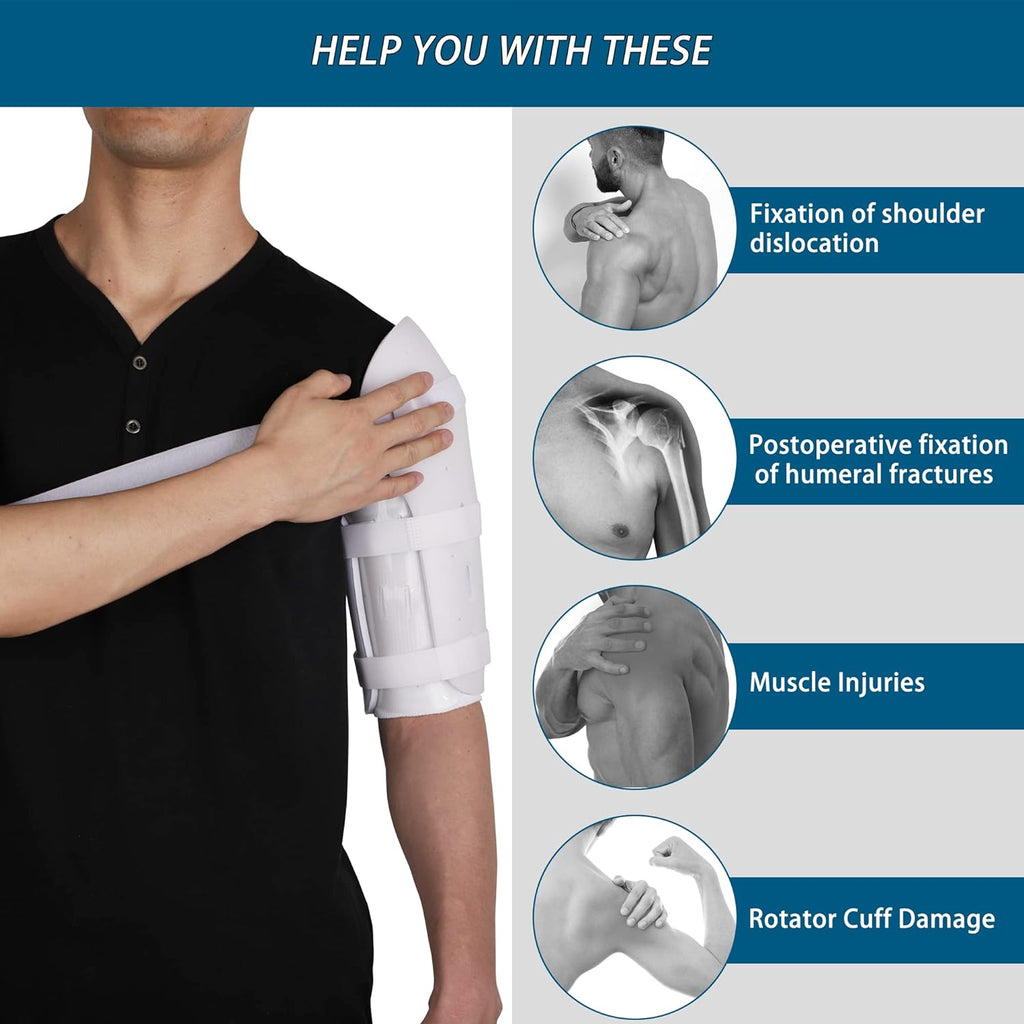
The Sarmiento Brace: A Comprehensive Guide to Humeral Fracture Management
Fractures of the humerus, the long bone of the upper arm, are common injuries that can significantly impact daily life. While surgical intervention is sometimes necessary, many humeral shaft fractures can be effectively managed non-surgically using an orthopedic device known as the Sarmiento Brace. This comprehensive guide, authored by orthopedic specialists, delves into every aspect of the Sarmiento Brace, from its innovative design and biomechanical principles to its clinical applications, patient care protocols, and the remarkable patient outcomes it helps achieve.
1. Introduction & Overview: Understanding the Sarmiento Brace
The Sarmiento Brace, also known as a functional bracing system for humeral fractures, represents a significant advancement in non-operative fracture management. Developed by Dr. Augusto Sarmiento in the 1970s, it revolutionized the treatment of long bone fractures by emphasizing functional rehabilitation and early mobilization, rather than rigid immobilization.
Unlike traditional casts that completely restrict movement, the Sarmiento Brace is designed to apply a total contact, circumferential compression around the fractured humerus. This unique approach provides stability to the fracture fragments while allowing controlled motion at the adjacent shoulder and elbow joints. This functional bracing principle has proven highly effective in promoting bone healing, reducing complications like joint stiffness, and accelerating a patient's return to function.
Key Principles of the Sarmiento Brace:
- Total Contact: The brace intimately conforms to the limb, distributing pressure evenly.
- Hydrostatic Compression: The snug fit creates a contained environment, generating hydrostatic pressure that stabilizes fracture fragments.
- Early Mobilization: Allows for controlled movement of adjacent joints, preventing stiffness and promoting circulation.
- Axial Loading: Facilitates micro-motion at the fracture site, which is crucial for stimulating callus formation and bone union.
2. Deep-Dive into Technical Specifications & Mechanisms
The effectiveness of the Sarmiento Brace lies in its ingenious design and the biomechanical principles it harnesses.
2.1. Design & Materials
The Sarmiento Brace is typically a custom-molded or semi-custom off-the-shelf orthosis, meticulously designed to fit the patient's arm.
-
Materials:
- Thermoplastic: Most commonly constructed from lightweight, rigid thermoplastics such as polypropylene or polyethylene. These materials are heat-moldable, allowing for precise contouring to the limb.
- Padding: Soft, breathable foam padding lines the interior of the brace to enhance comfort, prevent skin irritation, and absorb perspiration.
- Stockinette: A cotton stockinette is often worn directly against the skin beneath the brace to provide an additional layer of comfort and hygiene.
- Straps & Fasteners: Adjustable Velcro straps or buckle systems secure the brace, allowing for incremental adjustments as swelling subsides and ensuring a consistent, snug fit.
- Shoulder Cap/Deltoid Pad (Optional): Some designs incorporate a superior extension or deltoid pad to provide additional support and prevent distal migration of the brace, especially for more proximal fractures.
- Fenestrations: Small holes or cut-outs may be incorporated into the design to improve breathability and reduce heat buildup, particularly in warmer climates.
-
Core Design Features:
- Total Contact Shell: The brace forms a rigid, cylindrical shell around the humerus, extending from just below the shoulder to just above the elbow.
- Proximal and Distal Flares: The ends of the brace are often flared to provide purchase on the soft tissues, preventing migration.
- Circumferential Compression: The brace applies even pressure around the entire circumference of the arm.
2.2. Biomechanics of Healing
The Sarmiento Brace employs several sophisticated biomechanical principles to facilitate optimal fracture healing and patient recovery.
- Hydrostatic Compression: The total contact fit of the brace creates a contained fluid environment within the soft tissues surrounding the bone. This hydrostatic pressure acts as an external pneumatic splint, effectively stabilizing the fracture fragments and preventing excessive angulation or rotation. This continuous, mild compression is crucial for maintaining alignment.
- Axial Loading & Micromotion: Unlike rigid casts that completely immobilize a limb, the Sarmiento Brace allows for controlled, limited motion at the fracture site through the adjacent shoulder and elbow joints. This controlled micromotion, or axial loading, is biologically advantageous. It stimulates osteogenesis (bone formation) and accelerates callus formation, which is essential for bridging the fracture gap. Excessive motion is detrimental, but controlled micromotion is osteogenic.
- Prevention of Rotational Displacement: The rigid, cylindrical nature of the brace effectively resists rotational forces, which are a common cause of non-union or malunion in humeral fractures.
- Enhanced Blood Flow: By allowing early, controlled joint movement, the brace promotes better circulation to the injured limb compared to traditional casts, which can restrict blood flow and lead to muscle atrophy and joint stiffness.
- Gravity-Assisted Reduction: For some fracture patterns, especially those with varus angulation (bowing inwards), the weight of the arm and the design of the brace can help maintain or even improve fracture alignment through gravity.
Table 1: Biomechanical Advantages of the Sarmiento Brace
| Principle | Mechanism | Benefit for Healing |
|---|---|---|
| Hydrostatic Pressure | Total contact fit creates internal pressure within soft tissues. | Stabilizes fragments, prevents excessive angulation. |
| Controlled Micromotion | Allows limited movement at fracture site via adjacent joints. | Stimulates callus formation, accelerates osteogenesis. |
| Rotational Stability | Rigid, circumferential shell resists twisting forces. | Prevents rotational malunion, enhances union rates. |
| Early Mobilization | Permits movement of shoulder and elbow. | Reduces joint stiffness, prevents muscle atrophy. |
| Gravity-Assisted | Weight of arm and brace design can aid in maintaining alignment. | Contributes to optimal reduction for certain fractures. |
3. Extensive Clinical Indications & Usage
The Sarmiento Brace is a cornerstone in the non-operative management of various humeral shaft fractures.
3.1. Clinical Applications & Indications
The brace is primarily indicated for stable, closed diaphyseal (mid-shaft) humeral fractures.
-
Suitable Fracture Types:
- Spiral Fractures: Often stable due to their inherent interdigitation.
- Transverse Fractures: Can be well-managed if reasonably stable.
- Oblique Fractures: Similar to spiral fractures, often respond well.
- Comminuted Fractures (Stable): For fractures with multiple fragments but good overall alignment and stability.
- Segmental Fractures: If the segments are well-aligned.
- Pathological Fractures: In cases where surgical fixation is contraindicated due to underlying disease (e.g., metastatic bone disease), and stability can be achieved.
-
Patient Profile Considerations:
- Elderly Patients: Often preferred due to reduced surgical risks and faster functional recovery.
- Patients with Comorbidities: Those with medical conditions that make surgery high-risk (e.g., severe cardiac or pulmonary disease, uncontrolled diabetes).
- Patient Preference: When non-operative management is a viable option, some patients prefer to avoid surgery.
-
Comparison to Surgical Options: While surgical options like Open Reduction Internal Fixation (ORIF) with plates and screws or Intramedullary Nailing are essential for unstable or complex fractures, the Sarmiento Brace offers a less invasive alternative with comparable union rates and often superior functional outcomes for appropriately selected cases. It avoids surgical risks such as infection, nerve damage, and hardware failure.
3.2. Fitting & Usage Instructions
Proper fitting and consistent usage are paramount for the success of the Sarmiento Brace.
-
Initial Application:
- Performed by an orthopedic surgeon, orthotist, or trained medical professional.
- The arm is typically placed in a stockinette.
- The brace is molded or adjusted to ensure a total contact fit, extending from the axilla (armpit) to just above the elbow joint, allowing full elbow flexion and extension.
- Straps are tightened snugly but not excessively, ensuring the brace does not slip or rotate.
- The "two-finger rule" is often applied: you should be able to comfortably slide two fingers under the brace at the top and bottom edges, but no more.
- Initial X-rays are usually taken after application to confirm fracture alignment within the brace.
-
Patient Education:
- Wearing Schedule: The brace must be worn continuously, 24 hours a day, 7 days a week, initially. It should only be removed for hygiene or specific exercises as instructed by the physician.
- Adjustments: Patients are taught how to adjust the Velcro straps as swelling subsides to maintain a snug fit. Loose straps can lead to fracture displacement.
- Early Mobilization: Instructions for gentle, active, and passive range-of-motion exercises for the shoulder (pendulum exercises) and elbow are given, often starting within the first week. This is critical to prevent stiffness.
- Weight-Bearing Restrictions: The injured arm should not bear weight or lift heavy objects until cleared by the physician.
- Duration: The brace is typically worn for 8-12 weeks, or until radiographic evidence of fracture union is observed.
3.3. Maintenance & Sterilization Protocols
Maintaining the brace and proper skin hygiene are crucial to prevent complications.
-
Daily Cleaning:
- Brace: The exterior and interior of the brace can be wiped down daily with a damp cloth using mild soap and water, or an antiseptic wipe. Ensure all soap residue is removed.
- Skin: The skin under the brace should be inspected daily for redness, irritation, or sores. It should be washed gently with mild soap and water and thoroughly dried.
- Stockinette: The cotton stockinette should be changed daily and washed with regular laundry detergent. Always have spare stockinettes available.
-
Drying: Ensure both the brace and the skin are completely dry before reapplying the brace. Moisture can lead to skin breakdown and infection. A hairdryer on a cool setting can be used to aid drying.
-
Inspection:
- Regularly inspect the brace for cracks, damage, or wear to the straps and buckles. Report any issues to your orthopedic team.
- Check for any areas where the brace might be rubbing or causing excessive pressure.
-
Professional Adjustments: Regular follow-up appointments with the orthopedic surgeon are essential. During these visits, the fit of the brace will be assessed, adjustments made if necessary, and X-rays taken to monitor fracture healing.
Table 2: Daily Care Checklist for Sarmiento Brace
| Task | Frequency | Notes |
|---|---|---|
| Remove brace (if instructed) | Daily | Only for hygiene/exercises. Never for extended periods. |
| Inspect skin under brace | Daily | Look for redness, blisters, sores. |
| Wash skin with mild soap & water | Daily | Gently clean, do not scrub vigorously. |
| Thoroughly dry skin | Daily | Use a towel or cool hairdryer. Prevent moisture buildup. |
| Change & wash stockinette | Daily | Always use a clean, dry stockinette. |
| Wipe brace interior/exterior | Daily | Mild soap & water or antiseptic wipe. Dry completely. |
| Check straps/buckles for wear | Weekly | Ensure secure fastening. Adjust as swelling changes. |
| Monitor fracture alignment (X-rays) | Per doctor's schedule | Confirms healing progression and brace effectiveness. |
4. Risks, Side Effects, or Contraindications
While highly effective, the Sarmiento Brace is not without potential risks or contraindications.
4.1. Potential Risks & Side Effects
- Skin Irritation & Pressure Sores: The most common complication. Improper fit, moisture, or inadequate hygiene can lead to redness, blisters, or even skin breakdown, especially over bony prominences.
- Nerve Compression: Although rare with proper fitting, prolonged pressure can occasionally affect superficial nerves, most notably the radial nerve, leading to numbness, tingling, or weakness in the hand or wrist.
- Non-Union or Delayed Union: While the brace aims to promote healing, some fractures may still fail to unite or take longer than expected. This can be due to severe fracture displacement, poor blood supply, or patient non-compliance.
- Joint Stiffness: Despite early mobilization, some patients may experience residual stiffness in the shoulder or elbow, requiring dedicated physiotherapy.
- Swelling: Persistent swelling in the hand and fingers can occur, often managed with elevation and specific exercises.
- Discomfort & Sleep Disturbances: The brace can be bulky and uncomfortable, especially during sleep.
- Muscle Atrophy: Despite efforts for early mobility, some degree of muscle wasting can occur due to reduced activity.
- Re-displacement: If the brace becomes loose or is not worn consistently, the fracture fragments can displace, potentially requiring re-reduction or surgical intervention.
4.2. Contraindications
The Sarmiento Brace is not suitable for all humeral fractures.
- Open Fractures: Where the bone breaks through the skin, increasing the risk of infection.
- Severe Neurovascular Compromise: If there is significant damage to nerves or blood vessels requiring immediate surgical intervention.
- Highly Unstable or Severely Comminuted Fractures: Fractures with extensive fragmentation or instability that cannot be adequately controlled by external compression.
- Significant Soft Tissue Injury: Extensive damage to the surrounding muscles and skin that would prevent proper brace application or healing.
- Pathological Fractures due to Metastatic Disease (Unstable): While some pathological fractures can be braced, highly unstable ones or those with impending pathological fracture of the humeral head may require surgical stabilization.
- Proximal or Distal Humeral Fractures: Fractures involving the humeral head (shoulder joint) or the distal humerus (elbow joint) typically require different management strategies, often surgical, due to the critical joint involvement.
- Patient Non-Compliance: The success of the brace heavily relies on the patient's adherence to wearing instructions and exercise protocols. Non-compliant patients are at high risk of complications.
- Morbid Obesity: In some cases, extreme obesity can make proper brace fitting and effective compression challenging.
5. Massive FAQ Section
Here are answers to frequently asked questions about the Sarmiento Brace:
Q1: How long will I need to wear the Sarmiento Brace?
A1: The typical duration for wearing the Sarmiento Brace is between 8 to 12 weeks, though this can vary depending on the specific fracture type, your healing rate, and your doctor's assessment. X-rays will be taken periodically to monitor bone healing, and your doctor will advise when it's safe to discontinue brace use.
Q2: Can I shower or bathe with the Sarmiento Brace on?
A2: Generally, no. The brace should be kept dry. Water can get trapped inside, leading to skin irritation, maceration, and potential infection. You will need to carefully remove the brace (if instructed by your doctor) for quick showers, ensuring your arm is thoroughly cleaned and dried before reapplying the brace. Alternatively, you can use a plastic bag or specialized waterproof cover to protect the brace during bathing, though this is less ideal for skin hygiene.
Q3: What should I do if my skin under the brace becomes irritated, red, or develops a sore?
A3: This is a common concern. First, ensure you are cleaning and drying your skin thoroughly daily. Check for any areas where the brace might be rubbing. If irritation persists or worsens, or if you develop a blister or sore, contact your orthopedic team immediately. Do not attempt to pad the brace with additional materials yourself, as this can alter the fit and compromise fracture stability. Your doctor or orthotist may need to adjust the brace.
Q4: Is it normal to feel discomfort or pain while wearing the brace?
A4: Some level of discomfort, especially in the initial days, is normal as you adjust to the brace. You may also feel some aching at the fracture site. Over-the-counter pain relievers or those prescribed by your doctor can help manage this. However, severe or increasing pain, numbness, tingling, or weakness in your hand or fingers is not normal and requires immediate medical attention, as it could indicate nerve compression or fracture displacement.
Q5: What exercises can I do while wearing the Sarmiento Brace?
A5: Your doctor or physical therapist will provide specific exercises. These typically include gentle pendulum exercises for the shoulder (leaning forward and letting your arm hang and swing gently), and active range of motion exercises for the elbow, wrist, and hand. These exercises are crucial to prevent joint stiffness and maintain muscle strength. It is vital to perform only the exercises instructed and avoid any movements that cause sharp pain.
Q6: Can I sleep with the Sarmiento Brace on?
A6: Yes, the brace must be worn 24/7, including while sleeping, until your doctor advises otherwise. You may find it more comfortable to sleep in a semi-reclined position or with pillows supporting your arm to reduce discomfort and swelling. Experiment with different positions to find what works best for you.
Q7: How do I know if the brace is too tight or too loose?
A7: A properly fitted brace should feel snug and supportive but not painfully tight. You should be able to comfortably slide two fingers under the top and bottom edges of the brace, but no more. If it feels too tight and causes excessive pain, numbness, or swelling, loosen the straps slightly and contact your doctor. If it feels too loose, or you notice it slipping or rotating, tighten the straps. A loose brace compromises fracture stability.
Q8: When can I return to normal activities, including driving?
A8: Returning to normal activities is a gradual process that depends on your fracture healing and functional recovery. You will likely be restricted from strenuous activities, heavy lifting, and contact sports for several months. Driving is generally not permitted while wearing the brace, as it can impair your ability to safely operate a vehicle and react quickly. Your doctor will provide clearance for driving and other activities based on your progress.
Q9: What are the signs of a complication, and when should I seek immediate medical attention?
A9: Seek immediate medical attention if you experience:
* Sudden, severe, or worsening pain.
* New or worsening numbness, tingling, or weakness in your hand or fingers.
* Significant swelling in your hand or fingers that doesn't improve with elevation.
* Fever or chills (signs of infection).
* Increasing redness, warmth, or pus around the brace or fracture site.
* The brace becomes severely damaged or breaks.
* You hear or feel a "pop" or shift in your arm.
Q10: Will I need physical therapy after the brace is removed?
A10: Most patients benefit significantly from formal physical therapy after the Sarmiento Brace is removed. While the brace allows for some early motion, a structured rehabilitation program is often necessary to fully restore range of motion, strength, and function to the shoulder, elbow, and wrist. Your orthopedic surgeon will guide you on the necessity and timing of physical therapy.
Q11: Can the brace be adjusted as my arm changes size due to swelling reduction?
A11: Yes, the adjustable Velcro straps are designed precisely for this purpose. As initial swelling subsides, you will need to periodically tighten the straps to maintain the snug, total contact fit essential for fracture stability. Your orthopedic team will also make professional adjustments during your follow-up appointments.
Q12: Is it normal for my hand to swell while wearing the brace?
A12: Mild swelling in the hand and fingers can be common, especially in the early stages. This is often due to gravity and reduced muscle pump action. To help reduce swelling, elevate your hand above your heart whenever possible (e.g., resting it on pillows) and perform gentle finger and wrist exercises as instructed by your doctor. If swelling is severe or accompanied by other symptoms, contact your doctor.
The Sarmiento Brace remains a testament to innovative orthopedic care, offering a highly effective, non-surgical pathway to healing for countless patients with humeral fractures. Adherence to medical advice, diligent care, and consistent follow-up are key to optimizing its benefits and achieving a successful recovery.