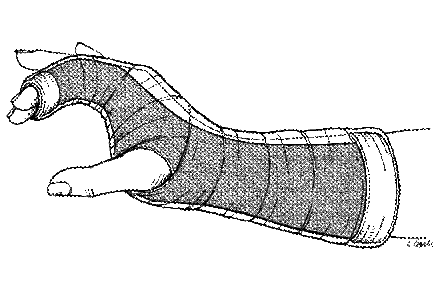
The Radial Gutter Splint: An Expert Orthopedic Guide
Comprehensive Introduction & Overview
The radial gutter splint is a fundamental orthopedic immobilization device, meticulously designed to provide support and restrict movement primarily to the radial (thumb side) aspect of the hand and wrist. As an essential non-invasive tool in managing various musculoskeletal injuries, it plays a critical role in facilitating healing, reducing pain, and preventing further damage. This comprehensive guide delves into every facet of the radial gutter splint, from its intricate design and biomechanical principles to its extensive clinical applications, fitting protocols, and patient care instructions, aiming to serve as an authoritative resource for both healthcare professionals and patients.
At its core, the radial gutter splint immobilizes the wrist, the second (index) metacarpal, and the third (middle) metacarpal, along with their associated phalanges. This targeted immobilization is crucial for injuries affecting these specific structures, ensuring optimal conditions for recovery. Unlike a full cast, a splint is typically non-circumferential, allowing for adjustability and accommodating swelling, which is particularly beneficial in the acute phase of an injury. Its application is a common procedure in emergency rooms, orthopedic clinics, and post-operative settings worldwide.
The evolution of splinting materials, from traditional plaster of Paris to modern thermoplastics, has significantly enhanced the efficacy, comfort, and durability of devices like the radial gutter splint. These advancements underscore a commitment to improving patient outcomes through innovative orthopedic solutions.
Deep-Dive into Technical Specifications & Mechanisms
Design and Materials
The design of a radial gutter splint is carefully conceived to conform to the anatomy of the radial side of the forearm, wrist, and hand, providing rigid support while minimizing discomfort.
Key Design Features:
- Forearm Component: Extends approximately two-thirds up the forearm to provide leverage and stable anchorage.
- Wrist Component: Immobilizes the wrist in a functional position, typically slight extension.
- Metacarpal Component: Supports the second and third metacarpals, preventing rotation and angulation.
- Finger Component: Extends to the tips of the index and middle fingers, often including the proximal and middle phalanges, with the MCP joints positioned in flexion.
- Thenar Eminence Clearance: Crucially, the splint must leave the thumb (first ray) free to allow for functional pinch and grip, differentiating it from a thumb spica splint.
- Non-circumferential: Typically open on the ulnar side to allow for swelling and easy removal/inspection.
Common Materials Used:
| Material Type | Characteristics | Advantages | Disadvantages |
|---|---|---|---|
| Thermoplastics | Heat-moldable plastic sheets (low-temp or high-temp) | Lightweight, custom-moldable, reusable (for same patient), radiolucent, easy to clean, durable | Can be expensive, requires heat source for molding, less breathable than plaster |
| Plaster of Paris | Gypsum-based material, hardens when mixed with water | Inexpensive, readily available, molds well to contours, breathable | Heavy, brittle, not waterproof, requires careful drying, can be messy |
| Fiberglass | Fiberglass fabric impregnated with resin | Strong, lightweight, waterproof (when fully cured), durable, radiolucent | More rigid, less forgiving to mold than plaster, can be irritating to skin during application |
| Padding Materials | Stockinette, cotton padding, felt | Protects skin, absorbs moisture, enhances comfort | Can become compressed, harbor bacteria if not changed/cleaned |
| Fasteners | Velcro straps, cohesive bandages, elastic wraps | Secure splint, allow for adjustability | Can loosen, cause pressure if too tight, require regular adjustment |
Biomechanics and Mechanisms of Action
The effectiveness of the radial gutter splint hinges on sound biomechanical principles, primarily the three-point pressure system and precise joint positioning.
Biomechanical Principles:
- Immobilization: By creating rigid external support, the splint prevents unwanted motion at the wrist, second and third metacarpals, and associated phalanges. This minimizes stress on healing tissues.
- Anatomical Alignment: The splint is molded to hold the injured structures in their optimal anatomical position for healing.
- Wrist: Typically positioned in 10-20 degrees of extension to maintain functional alignment and reduce tension on wrist flexors/extensors.
- Metacarpophalangeal (MCP) Joints: Crucially, these joints are often positioned in 70-90 degrees of flexion. This "intrinsic plus" position helps prevent collateral ligament shortening, which can lead to post-immobilization stiffness and loss of grip strength.
- Interphalangeal (IP) Joints: Maintained in slight flexion, often near neutral, to allow for some mobility and prevent hyperextension deformities.
- Protection: Acts as an external shield, protecting the injured area from accidental bumps or movements that could disrupt the healing process.
Mechanisms of Action:
- Pain Reduction: By eliminating movement and providing support, the splint significantly reduces pain associated with fractures, sprains, and post-operative sites.
- Edema Control: While not a primary mechanism, proper positioning and elevation of the limb within the splint can aid in reducing swelling.
- Facilitation of Healing: Stable immobilization promotes callus formation in fractures and allows soft tissues (ligaments, tendons) to repair without disruption, leading to faster and more robust healing.
- Prevention of Deformity: Maintains correct alignment, preventing malunion or angulation of fractures and contractures of soft tissues.
Extensive Clinical Indications & Usage
The radial gutter splint is indicated for a range of injuries and conditions affecting the radial side of the hand and wrist.
Primary Clinical Indications:
| Injury/Condition | Specifics | Rationale for Radial Gutter Splint |
|---|---|---|
| 2nd & 3rd Metacarpal Fractures | Shaft, neck, or base fractures (non-displaced or minimally displaced) | Immobilizes the fractured bone, maintains alignment, prevents rotation and angulation. |
| Index & Middle Finger Phalangeal Fractures | Proximal or middle phalangeal fractures | Supports the fractured phalanx, prevents displacement, promotes stable healing. |
| Ligamentous Injuries | Sprains or tears of collateral ligaments of index/middle MCP/IP joints | Restricts movement to allow ligamentous healing, reduces stress on injured structures. |
| Post-Operative Immobilization | Following surgical repair of fractures, tendons, or ligaments on radial side | Protects surgical site, maintains repaired structures in optimal position during initial healing. |
| Extensor Tendon Repairs | Repairs involving extensor tendons of the index and middle fingers | Prevents active flexion that could disrupt tendon repair, maintains wrist in extension. |
| Acute Inflammatory Conditions | Tenosynovitis or severe sprains requiring rest | Provides temporary immobilization to reduce inflammation and pain. |
Detailed Usage: Fitting & Application Instructions
The proper application of a radial gutter splint is paramount for its effectiveness and patient comfort.
Steps for Application (Thermoplastic Splint Example):
- Patient Assessment: Confirm diagnosis, assess skin integrity, neurovascular status, and obtain informed consent.
- Material Preparation:
- Select appropriate size thermoplastic sheet (e.g., 1/8" or 3/32" thickness).
- Prepare padding: Apply stockinette extending beyond the splint area (e.g., 2-3 layers), followed by cotton padding or felt over bony prominences.
- Heat the thermoplastic in a water bath (160-170°F / 70-77°C) until pliable.
- Patient Positioning: Position the patient comfortably, typically seated, with the arm supported and the hand in the desired functional position.
- Molding:
- Carefully remove the thermoplastic from the water and pat dry.
- Place the warm, pliable material on the radial side of the forearm, wrist, and hand.
- Key Molding Points:
- Forearm: Extend 2/3 up the forearm, ensuring it doesn't impinge on the elbow or restrict pronation/supination.
- Wrist: Mold into 10-20 degrees of extension.
- MCP Joints: Position the index and middle MCP joints in 70-90 degrees of flexion. Ensure the splint cradles the metacarpal heads without causing pressure.
- IP Joints: Position in slight flexion.
- Thenar Eminence: Ensure the splint is trimmed or molded to allow full thumb mobility. The splint should not extend past the palmar crease to allow for full MCP flexion.
- Ulnar Side: The splint should end just before the ulnar border of the hand, leaving the ring and little fingers free.
- Apply gentle, even pressure to conform the material to the contours of the limb, avoiding excessive tightness or localized pressure points.
- Hold the position until the thermoplastic cools and hardens.
- Trimming & Finishing:
- Once hardened, carefully trim any sharp edges or excess material.
- Smooth edges to prevent skin irritation.
- Apply additional padding as needed.
- Securing the Splint:
- Use Velcro straps (typically 2-3) to secure the splint. One strap around the forearm, one around the wrist, and one across the metacarpal heads.
- Ensure straps are snug but not overly tight, allowing for two fingers to slip underneath.
- Post-Application Checks:
- Neurovascular Assessment: Check capillary refill, sensation, and motor function of the fingers (especially the thumb, ring, and little fingers which are not immobilized).
- Comfort & Fit: Ask the patient about any pain, numbness, tingling, or tightness.
- Patient Education: Provide clear instructions.
Patient Instructions for Use
- Wearing Schedule: Wear the splint as prescribed by your doctor (e.g., continuously, or only during certain activities).
- Activity Restrictions: Avoid activities that could stress the injured area. Do not lift heavy objects or participate in sports.
- Warning Signs: Immediately report any of the following to your healthcare provider:
- Increased pain, numbness, or tingling in the fingers.
- Excessive swelling or discoloration (blue/pale) of the fingers.
- Inability to move the un-splinted fingers.
- New blistering or skin irritation under the splint.
- The splint feels too tight or too loose.
- Cracks or damage to the splint.
- Hygiene: Keep the splint clean and dry. Avoid getting plaster or fiberglass splints wet. Thermoplastic splints can be wiped clean (see Maintenance).
- Elevation: Keep the hand elevated, especially in the first few days, to reduce swelling.
Risks, Side Effects, or Contraindications
While generally safe and effective, the radial gutter splint is not without potential risks or contraindications.
Risks and Side Effects:
- Pressure Sores/Skin Breakdown: Occurs if the splint is too tight, improperly molded, or if padding is inadequate, especially over bony prominences (e.g., radial styloid, metacarpal heads).
- Nerve Compression: Improper molding or excessive tightness can compress superficial nerves (e.g., superficial radial nerve), leading to numbness, tingling, or pain.
- Joint Stiffness/Contractures: Prolonged immobilization, particularly with MCP joints not in proper flexion, can lead to shortening of collateral ligaments and subsequent loss of range of motion.
- Edema: If the splint is too tight distally or the limb is not elevated, swelling can worsen.
- Allergic Reactions: Rare, but some patients may react to splinting materials or adhesives.
- Inadequate Immobilization: If the splint is too loose, improperly applied, or damaged, it may fail to provide sufficient support, leading to delayed healing or malunion.
- Muscle Atrophy: Disuse of immobilized muscles can lead to temporary weakening.
Contraindications:
- Open Wounds/Active Infections: While not an absolute contraindication, direct application over an open wound or active infection requires careful consideration, wound management, and often necessitates frequent splint changes or alternative fixation.
- Severe Swelling: In the acute phase of severe swelling, a splint might need to be applied loosely or an alternative method used until swelling subsides, to prevent compartment syndrome.
- Unstable Fractures: Fractures that are highly unstable, significantly displaced, or comminuted may require surgical intervention (e.g., ORIF) rather than splinting alone.
- Patient Non-Compliance: If a patient is unwilling or unable to follow instructions for splint care, alternative immobilization or closer monitoring may be necessary.
- Fractures Requiring Different Immobilization: Injuries like a Boxer's fracture (4th/5th metacarpals) require an ulnar gutter splint, while thumb injuries require a thumb spica.
Maintenance & Sterilization Protocols
Proper maintenance of a radial gutter splint is crucial for hygiene, durability, and preventing complications.
Patient Home Care:
- Keep it Dry: Plaster and fiberglass splints must be kept absolutely dry. If they get wet, they can lose their rigidity and cause skin irritation. Thermoplastic splints are water-resistant but the padding underneath is not.
- Cleaning:
- Thermoplastic Splints: The rigid outer shell can be wiped clean with a damp cloth and mild soap. Ensure it is thoroughly dry before reapplying.
- Padding: If removable, the stockinette or soft padding can often be hand-washed and air-dried. If non-removable or plaster/fiberglass, daily inspection for dirt or moisture is critical.
- Inspection: Regularly inspect the splint for cracks, soft spots, or areas of wear that could compromise its integrity. Check for signs of skin irritation or pressure points.
- Avoid Alterations: Do not attempt to modify, cut, or adjust the splint yourself. This can compromise its effectiveness or create new pressure points.
- Avoid Heat: Do not expose thermoplastic splints to direct heat (e.g., hot car, hair dryer) as this can soften the material and alter its shape.
Clinical Maintenance & Sterilization:
- Single-Patient Use: Most radial gutter splints, especially custom-molded ones, are designed for single-patient use. The materials themselves (plaster, fiberglass, thermoplastic) are not typically sterilized for re-use across multiple patients.
- Hygiene During Application: Clinical settings focus on aseptic technique during application, ensuring clean materials and hands.
- Storage of Materials: Splinting materials should be stored in a cool, dry place away from direct sunlight to maintain their integrity and shelf life.
- Reusable Components: In rare cases where components like certain straps might be reused (e.g., for educational models), they would undergo appropriate disinfection protocols. However, for patient care, disposable straps are standard.
Patient Outcome Improvements
The judicious application of a radial gutter splint significantly contributes to improved patient outcomes across several domains.
- Accelerated and Enhanced Healing: By providing stable immobilization, the splint creates an optimal environment for bone union and soft tissue repair, often leading to faster and more robust healing compared to uncontrolled movement.
- Reduced Pain and Discomfort: Immobilization dramatically lessens pain by preventing movement at the injury site, improving patient comfort during the recovery phase.
- Improved Functional Recovery: Proper alignment and protection facilitate healing in a functional position, minimizing the risk of long-term stiffness, deformity, and loss of range of motion, thereby leading to better overall hand and wrist function post-immobilization.
- Prevention of Secondary Injuries: The splint acts as a protective barrier, safeguarding the injured area from further trauma or accidental re-injury.
- Reduced Need for More Invasive Procedures: In many cases, effective splinting can prevent the need for surgical intervention for certain non-displaced or minimally displaced fractures and soft tissue injuries.
- Psychological Comfort: Patients often feel more secure and confident in their recovery knowing their injury is adequately protected and supported.
Massive FAQ Section
Q1: What is a radial gutter splint used for?
A1: A radial gutter splint is primarily used to immobilize and support injuries to the radial (thumb side) aspect of the hand and wrist. This includes fractures of the second (index) and third (middle) metacarpals and their associated fingers, as well as certain ligamentous injuries and post-operative immobilization in that region.
Q2: How long do I need to wear a radial gutter splint?
A2: The duration of wear varies greatly depending on the specific injury, its severity, and your individual healing progress. It can range from a few weeks for minor soft tissue injuries to 4-6 weeks or more for fractures. Your orthopedic specialist will provide a specific timeline and monitor your healing.
Q3: Can I get my radial gutter splint wet?
A3: Generally, no. Plaster and fiberglass splints lose their rigidity when wet and can cause skin irritation or infection. While thermoplastic splints themselves are waterproof, the padding underneath is not. It's best to keep all splints dry. If it's absolutely necessary to shower, your doctor might recommend a waterproof cover, but direct water exposure should be avoided.
Q4: How do I clean my splint?
A4: For thermoplastic splints, you can gently wipe the outer surface with a damp cloth and mild soap, then thoroughly dry it. If the padding is removable, it might be washable according to specific instructions. For plaster or fiberglass splints, cleaning is generally limited to wiping the exposed skin around the splint. Do not immerse any splint in water unless specifically instructed and provided with a waterproof liner.
Q5: What are the signs my splint is too tight?
A5: Signs that your splint is too tight include increased pain, numbness, tingling, a burning sensation, swelling, discoloration (bluish or pale) of the fingers, or inability to move the un-splinted fingers. If you experience any of these symptoms, contact your healthcare provider immediately.
Q6: Can I drive with a radial gutter splint?
A6: Driving with a radial gutter splint is generally not recommended and may be illegal in some jurisdictions. The splint can significantly restrict your range of motion, grip strength, and reaction time, making it unsafe to operate a vehicle. Always consult your doctor for specific advice regarding driving.
Q7: What's the difference between a radial gutter and an ulnar gutter splint?
A7: The primary difference is the area of the hand they immobilize. A radial gutter splint supports the radial side (index and middle fingers, and their metacarpals), leaving the thumb and ulnar fingers free. An ulnar gutter splint, conversely, supports the ulnar side (ring and little fingers, and their metacarpals), leaving the thumb, index, and middle fingers free.
Q8: Is it normal to have some pain while wearing the splint?
A8: Some residual pain, especially in the initial days after an injury, is normal. However, the splint should generally reduce pain. If you experience increased pain, sharp pain, or pain that doesn't subside with rest and elevation, it could indicate a problem with the splint or the injury, and you should contact your doctor.
Q9: When can I start physical therapy or occupational therapy?
A9: The timing for starting physical or occupational therapy is determined by your orthopedic specialist based on your injury and healing progress. It typically begins once adequate healing has occurred and the splint is either removed or worn only for specific activities. Early, controlled motion is often critical for restoring function.
Q10: What materials are radial gutter splints made from?
A10: Radial gutter splints are commonly made from thermoplastic materials (which are heated and molded), plaster of Paris, or fiberglass. These materials provide rigid support, while soft padding materials like stockinette, cotton, or felt are used underneath for comfort and skin protection.
Q11: Can I adjust my splint myself?
A11: No, you should never attempt to adjust, modify, or remove your splint without consulting your healthcare provider. Improper adjustments can compromise the splint's effectiveness, lead to inadequate healing, or create new pressure points and complications.
Q12: What if I develop a rash or itching under my splint?
A12: A rash or persistent itching could indicate skin irritation, an allergic reaction to the materials, or a fungal infection due to moisture. Do not scratch under the splint with objects. Contact your doctor or orthopedic clinic for an assessment. They may need to remove the splint, inspect the skin, and potentially provide medication or a new splint.