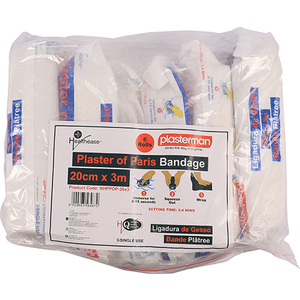
The Enduring Legacy of Plaster of Paris (POP) Rolls in Orthopedics: A Comprehensive Guide
Plaster of Paris (POP) rolls have been a cornerstone of orthopedic practice for over a century, providing essential immobilization, support, and corrective capabilities for a wide range of musculoskeletal injuries and conditions. Despite advancements in synthetic casting materials, POP remains an indispensable tool due to its excellent moldability, cost-effectiveness, and proven clinical efficacy. This exhaustive guide delves into every aspect of Plaster of Paris rolls, from their fundamental design and material science to their intricate clinical applications, biomechanical principles, and critical patient care considerations.
1. Comprehensive Introduction & Overview
Plaster of Paris, chemically known as calcium sulfate hemihydrate, forms the active component of POP rolls. When mixed with water, it undergoes an exothermic chemical reaction, transforming into a rigid, durable cast. These rolls, typically composed of a fine gypsum powder impregnated into a crinoline gauze fabric, are designed for external application to stabilize fractures, correct deformities, and provide supportive immobilization.
Historical Context:
The widespread use of Plaster of Paris in medicine dates back to the mid-19th century, with significant contributions from Dutch military surgeon Antonius Mathijsen, who refined the technique of applying plaster bandages. His innovations revolutionized fracture management, offering a superior alternative to cumbersome splints and traction methods of the era. The principles established then continue to guide modern orthopedic casting practices, underscoring the material's timeless utility.
Primary Purposes of POP Rolls:
* Immobilization: Preventing movement at a fracture site or injured joint to facilitate healing.
* Support: Providing external stability to weakened or healing structures.
* Correction: Gradually or acutely correcting musculoskeletal deformities, particularly in pediatric orthopedics.
* Pain Reduction: By immobilizing an injured area, pain is significantly reduced, improving patient comfort.
2. Deep-Dive into Technical Specifications & Mechanisms
Understanding the technical aspects of POP rolls is crucial for their effective and safe application.
2.1. Design and Materials
POP rolls are fundamentally simple yet ingeniously designed.
- Gypsum (Calcium Sulfate Hemihydrate - CaSO₄·½H₂O): This is the active ingredient, a white mineral obtained from gypsum rock. When calcined (heated), it loses 75% of its water content to become the hemihydrate form.
- Crinoline Gauze: A loosely woven cotton fabric that serves as the carrier for the gypsum powder. Its open weave allows for rapid water absorption and plaster impregnation, while providing tensile strength to the cast.
- Setting Accelerators/Retarders: Some formulations may include additives to control the setting time, offering 'fast-setting' or 'slow-setting' options for different clinical scenarios.
The Setting Reaction:
When POP comes into contact with water, a rehydration process occurs:
CaSO₄·½H₂O (Plaster) + 1½H₂O (Water) → CaSO₄·2H₂O (Gypsum/Dihydrate) + Heat
This reaction is exothermic, meaning it releases heat. Clinicians must be aware of this heat generation, especially when applying casts to sensitive skin or in cases of significant swelling, to prevent thermal injury. The cast typically reaches maximum strength after 24-72 hours, depending on the thickness and environmental conditions.
Available Forms:
POP rolls come in various widths (e.g., 2-inch, 3-inch, 4-inch, 6-inch) and lengths to accommodate different body parts and patient sizes. Pre-cut plaster splints are also available for specific applications.
2.2. Biomechanics of POP Immobilization
The effectiveness of POP casts lies in their ability to apply biomechanical principles to stabilize and protect injured tissues.
- Rigid Immobilization: Once set, the cast creates a rigid external shell that prevents movement at the fracture site or joint. This rigidity is paramount for bone healing (via secondary bone formation) and soft tissue repair.
- Three-Point Fixation Principle: This fundamental orthopedic principle involves applying pressure at three distinct points to stabilize a segment. Two points of pressure are applied on one side of the fracture, and a counter-pressure point is applied on the opposite side, effectively neutralizing deforming forces. POP's moldability allows for precise application of these pressure points.
- Load Distribution: A well-molded cast distributes external forces evenly across the limb, preventing concentrated pressure points that could lead to skin breakdown or nerve compression.
- Preventing Deforming Forces: POP casts counteract angular, rotational, and translational forces that could displace a reduced fracture or hinder healing.
- Muscle Relaxation: Immobilization reduces muscle spasm and associated pain, contributing to patient comfort and better healing conditions.
3. Extensive Clinical Indications & Usage
Plaster of Paris rolls are versatile and employed in a multitude of orthopedic settings.
3.1. Detailed Surgical Applications
- Post-Operative Immobilization: Following open reduction and internal fixation (ORIF) of fractures, arthroplasties (joint replacements), tendon repairs (e.g., Achilles tendon), or ligament reconstructions, a POP cast or splint provides crucial external support during the initial healing phase. This protects the surgical repair and minimizes stress on healing tissues.
- Temporary Splinting: In cases of severe trauma, a POP splint can be applied in the operating room to stabilize a limb temporarily before definitive fixation, or to protect a limb during transfer and recovery.
- Corrective Procedures: After osteotomies (bone cuts to correct alignment), POP casts are often used to maintain the corrected position during bone fusion.
3.2. Extensive Clinical Indications (Non-Surgical)
- Fracture Management:
- Closed Reduction and Immobilization: For stable, non-displaced, or minimally displaced fractures that can be manually reduced without surgery (e.g., Colles' fracture of the distal radius, certain ankle fractures, metacarpal fractures).
- Initial Stabilization: For unstable fractures awaiting surgical intervention, a well-applied POP splint or cast can provide temporary stability, reduce pain, and prevent further injury.
- Stress Fractures: Immobilization can facilitate healing of stress fractures in the foot or tibia.
- Sprains and Strains:
- Severe Ligamentous Injuries: High-grade ankle sprains or knee ligament injuries may benefit from a period of immobilization in a POP cast to allow for healing and prevent re-injury.
- Deformity Correction:
- Serial Casting for Clubfoot (Ponseti Method): This is a classic example where POP casts are serially applied and changed weekly to gradually correct the complex deformity of congenital clubfoot in infants, achieving remarkable success rates.
- Other Pediatric Deformities: Used for conditions like metatarsus adductus or certain genu varum/valgum deformities.
- Joint Immobilization:
- Post-Dislocation Reduction: After reduction of a dislocated joint (e.g., shoulder, elbow), a POP cast or splint can prevent re-dislocation during the initial healing phase.
- Inflammatory Conditions: To rest an inflamed or painful joint (e.g., severe arthritis flare-ups, septic arthritis after drainage).
- Diabetic Foot Management: For charcot neuroarthropathy or severe foot ulcers, total contact casts (TCC) made from POP can offload pressure and promote healing.
3.3. Fitting & Usage Instructions
The correct application of a POP cast is a skill requiring precision and anatomical knowledge.
Preparation:
1. Patient Assessment & Education: Assess skin integrity, neurovascular status, and explain the procedure to the patient.
2. Skin Protection: Apply a stockinette or tubular bandage directly to the skin, extending beyond the intended cast length.
3. Padding: Apply generous layers of cotton wool or synthetic padding over bony prominences (malleoli, epicondyles, olecranon, fibular head) and along the entire limb. Padding should be smooth and wrinkle-free.
4. Water Temperature: Use lukewarm water (20-25°C or 68-77°F). Colder water slows setting; warmer water accelerates it and increases the exothermic reaction.
Application Technique:
1. Dipping: Immerse the POP roll completely in water until bubbles cease, indicating full saturation.
2. Squeezing: Gently squeeze excess water from the roll, ensuring it's damp but not dripping.
3. Wrapping:
* Apply the plaster smoothly and evenly, starting distally and working proximally.
* Overlap each turn by approximately one-half to two-thirds the width of the roll.
* Avoid excessive tension, which can constrict the limb.
* Mold the plaster to the anatomical contours of the limb while it is still pliable, paying attention to functional positions and the three-point fixation principle.
* Ensure edges are smooth and trimmed to prevent pressure points.
* Typically, 2-4 layers are sufficient for a splint, while 6-10 layers may be needed for a full cast, depending on the required strength.
4. Neurovascular Check: Immediately after application and periodically thereafter, assess capillary refill, sensation, motor function, and pulse to ensure no neurovascular compromise.
Drying and Curing:
* The cast will feel firm within minutes but takes 24-72 hours to achieve full strength.
* Advise the patient to avoid weight-bearing or applying pressure to the wet cast.
* Elevate the limb to reduce swelling.
* Ensure good air circulation around the cast to facilitate drying. Avoid covering the cast or using external heat sources, which can lead to burns or delayed drying.
4. Maintenance & Sterilization Protocols
Proper care of POP casts is essential for optimal healing and patient safety.
4.1. Patient Care & Monitoring
- Keep Dry: POP casts lose strength and integrity when wet. Advise patients to keep the cast dry using waterproof covers during bathing.
- No Insertion: Instruct patients not to insert objects into the cast to scratch an itch, as this can damage the skin and lead to infection.
- Monitor for Complications: Patients must be educated on signs of potential problems:
- Increased pain, especially if unrelieved by elevation and analgesia.
- Numbness, tingling, or weakness in the fingers/toes.
- Swelling, discoloration (blueness or pallor) of the digits.
- Foul odor or discharge from the cast.
- Cracks or softening of the cast.
- Elevation & Ice: Encourage elevation of the casted limb (above heart level) and application of ice packs (over the cast, not directly on skin) to reduce swelling.
4.2. Clinical Maintenance & Removal
- Regular Cast Checks: Healthcare providers should regularly assess the cast's integrity, fit, and the underlying limb's neurovascular status.
- Cast Changes: Casts may need to be changed due to swelling reduction, cast damage, or for serial correction of deformities.
- Removal: POP casts are removed using an oscillating cast saw. This tool vibrates rather than rotates, minimizing the risk of cutting the skin, though friction can cause heat. A cast spreader is then used to open the cast. Skin care after cast removal is crucial, as the skin may be dry, flaky, or sensitive.
4.3. Sterilization & Storage of POP Rolls
- POP rolls are typically supplied as clean, non-sterile devices. For applications requiring sterility (e.g., directly over an open wound in theatre), specific sterile packaging options may be available or an outer dressing applied.
- Storage: Rolls should be stored in a cool, dry environment, protected from moisture and humidity, to prevent premature setting.
5. Risks, Side Effects, or Contraindications
While highly beneficial, POP casting carries potential risks and contraindications that require careful consideration.
5.1. Risks & Complications
- Compartment Syndrome: This is the most severe complication, occurring when increased pressure within a confined fascial compartment compromises blood flow, leading to tissue ischemia and potential permanent damage. Early signs include severe pain disproportionate to the injury, pain on passive stretch, paresthesia, pallor, and pulselessness. Immediate cast bivalving and removal are critical.
- Pressure Sores/Ulcers: Result from prolonged pressure over bony prominences or poorly padded areas.
- Nerve Compression: Can occur if the cast is too tight or applies pressure directly over superficial nerves (e.g., common peroneal nerve at the fibular head).
- Vascular Compromise: Casts that are too tight can impede arterial inflow or venous outflow, leading to ischemia or severe swelling.
- Skin Irritation/Dermatitis: Due to moisture retention, friction, or allergic reactions to cast materials (rare).
- Cast Saw Burns: During cast removal, friction from the oscillating saw blade can cause superficial burns if not handled carefully.
- Joint Stiffness/Arthrofibrosis: Prolonged immobilization can lead to joint stiffness and muscle atrophy, necessitating physiotherapy after cast removal.
- Delayed Union/Non-Union: While casts promote healing, poor reduction or inadequate immobilization can still lead to healing complications.
- Allergic Reactions: Rare, but can occur to plaster components or padding materials.
5.2. Contraindications
- Absolute Contraindications:
- Acute Compartment Syndrome: A cast must never be applied or maintained on a limb with active or suspected compartment syndrome.
- Severe Open Wounds or Active Infection: Unless specifically designed for wound care (e.g., windowed casts), a full cast can conceal and exacerbate infection.
- Relative Contraindications:
- Significant Swelling: In the immediate post-injury phase, severe swelling can increase the risk of compartment syndrome. A splint (which allows for expansion) is often preferred initially, with conversion to a full cast once swelling subsides.
- Unstable Fractures Requiring Surgical Fixation: While temporary stabilization is acceptable, definitive treatment for highly unstable fractures is often surgical.
- Patients Unable to Communicate Symptoms: Infants, unconscious patients, or those with cognitive impairments require extra vigilance due to their inability to report symptoms of complications.
- Certain Skin Conditions: Fragile skin, severe dermatitis, or pre-existing ulcers may preclude cast application or require specialized techniques.
6. Massive FAQ Section
Q1: What is Plaster of Paris (POP) made of?
A1: Plaster of Paris is primarily made from gypsum (calcium sulfate hemihydrate), a fine white powder, impregnated into a crinoline gauze fabric. When mixed with water, it rehydrates and hardens into a rigid cast.
Q2: How does POP work to immobilize a limb?
A2: When wet, POP is highly moldable. As it dries and hardens, it forms a rigid, custom-fitted shell around the injured limb. This shell prevents movement at the fracture site or joint, holding the bones in alignment and allowing them to heal effectively. It leverages principles like three-point fixation to counteract deforming forces.
Q3: What's the difference between POP and fiberglass casts?
A3:
| Feature | Plaster of Paris (POP) | Fiberglass Casts |
| :------------------ | :--------------------------------------------------------- | :--------------------------------------------------------- |
| Material | Gypsum (calcium sulfate hemihydrate) on cotton gauze | Fiberglass fabric impregnated with polyurethane resin |
| Weight | Heavier | Lighter |
| Water Resistance| Not water-resistant; loses strength when wet | Water-resistant (some types); can get wet without damage |
| Moldability | Excellent, conforms very well to anatomical contours | Good, but less forgiving than POP for intricate molding |
| Drying Time | 24-72 hours for full strength | Dries and achieves full strength much faster (minutes to hours) |
| Durability | Can be brittle, prone to cracking | Very durable, stronger per unit thickness |
| Cost | Generally less expensive | Generally more expensive |
| Radiolucency | Radiopaque (shows up on X-rays, can obscure bone detail) | Radiolucent (allows for clearer X-ray imaging) |
Q4: How long does a POP cast take to dry completely?
A4: While a POP cast will feel firm within 10-15 minutes after application, it takes approximately 24 to 72 hours (1 to 3 days) to achieve its full strength and completely dry. It's crucial to avoid putting any weight or pressure on the cast during this drying period.
Q5: Can I get my POP cast wet?
A5: No, you should never get a Plaster of Paris cast wet. Water will weaken the plaster, causing it to soften, crumble, and lose its ability to support and immobilize the injured limb. This can lead to re-injury or improper healing. Always protect your cast with a waterproof cover when bathing or in wet conditions.
Q6: What should I do if my cast feels too tight or causes pain?
A6: If your cast feels too tight, causes increasing pain, numbness, tingling, swelling, or changes in the color of your fingers/toes, you must contact your doctor or go to an emergency room immediately. These could be signs of serious complications like compartment syndrome or nerve compression. Do NOT try to adjust the cast yourself.
Q7: How do I keep my skin healthy under a POP cast?
A7: Keeping the skin healthy under a cast is challenging. Do not insert anything into the cast to scratch an itch, as this can break the skin and lead to infection. Keep the cast dry. If you experience persistent itching, odor, or skin irritation, contact your healthcare provider. They may recommend cast removal and skin assessment.
Q8: Is it normal for a POP cast to feel warm after application?
A8: Yes, it is completely normal for a POP cast to feel warm or even hot during the first 10-20 minutes after application. This warmth is due to the exothermic chemical reaction that occurs as the plaster sets and hardens. This heat usually dissipates quickly. If the heat is excessive or causes burning pain, report it immediately.
Q9: Can POP casts be used for children?
A9: Absolutely. POP casts are very commonly used in pediatric orthopedics due to their excellent moldability, which is vital for achieving precise reductions and corrections in growing limbs. They are especially crucial in serial casting for conditions like clubfoot (Ponseti method).
Q10: How is a POP cast removed?
A10: A POP cast is removed by a trained healthcare professional using an oscillating cast saw. This specialized saw vibrates rapidly back and forth, rather than rotating like a traditional saw, which cuts through the rigid plaster but typically does not cut the underlying skin. A cast spreader is then used to gently open the cast.
Q11: What are the signs of a serious problem with my cast?
A11: You should seek immediate medical attention if you experience any of the following:
* Severe or increasing pain, especially if it's not relieved by elevation or pain medication.
* Numbness, tingling, or "pins and needles" sensation in your fingers or toes.
* Inability to move your fingers or toes.
* Swelling, blueness, or excessive paleness of the fingers or toes.
* A foul odor or discharge coming from the cast.
* A crack or soft spot develops in the cast, compromising its integrity.
* Persistent burning sensation under the cast.
Q12: Can I adjust my cast myself?
A12: No, you should never attempt to adjust, cut, or modify your cast yourself. This can compromise the cast's ability to support your injury, potentially leading to further damage, re-injury, or improper healing. Always consult your healthcare provider if you have concerns about your cast.