The Oval-8 Finger Splint: A Comprehensive Orthopedic Guide to PIP and DIP Joint Management
The human hand is a marvel of intricate mechanics, with each finger joint playing a crucial role in our daily lives. When these joints are compromised by injury, disease, or deformity, the impact on function and quality of life can be profound. For decades, orthopedic specialists and hand therapists have sought effective, non-invasive solutions to stabilize, protect, and correct finger joint pathologies. Among the most innovative and widely utilized tools in this arsenal is the Oval-8 Finger Splint.
This exhaustive guide, penned by an expert Medical SEO Copywriter and Orthopedic Specialist, delves deep into the "Oval-8 Finger Splint (PIP/DIP)", providing a massive, authoritative resource for clinicians, patients, and healthcare providers alike. We will explore its ingenious design, biomechanical principles, extensive clinical applications, fitting protocols, maintenance, and the significant improvements it brings to patient outcomes.
1. Comprehensive Introduction & Overview
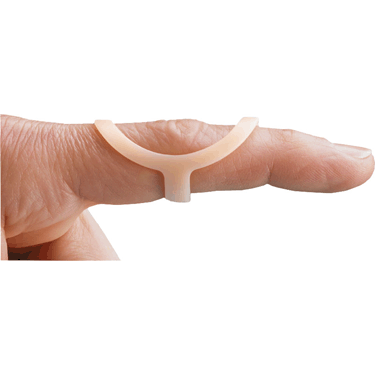
The Oval-8 Finger Splint is a small, lightweight, and highly versatile orthopedic device designed to provide support, stability, and corrective alignment for the Proximal Interphalangeal (PIP) and Distal Interphalangeal (DIP) joints of the fingers and thumb. Its distinctive figure-eight or oval shape, coupled with its open design, allows for comfortable, continuous wear while maintaining hand function.
Unlike bulky traditional splints, the Oval-8 offers a sleek profile that minimizes interference with daily activities, promotes patient compliance, and allows for superior hygiene. It operates on a three-point pressure system, effectively stabilizing joints, preventing hyperextension or hyperflexion, and correcting various deformities. Its simplicity belies its profound therapeutic impact, making it a cornerstone in the conservative management and post-surgical rehabilitation of numerous finger conditions.
Key Features at a Glance:
- Non-invasive: A conservative treatment option.
- Low Profile: Minimal bulk, enhancing comfort and function.
- Versatile: Can be worn on PIP or DIP joints, and in different orientations for varied effects.
- Hygienic: Open design allows for skin breathability and easy cleaning.
- Durable: Made from high-quality, medical-grade plastic.
- Effective: Proven efficacy in stabilizing and correcting finger deformities.
2. Deep-Dive into Technical Specifications & Mechanisms
The efficacy of the Oval-8 Finger Splint stems from its meticulously engineered design and material composition. Understanding these technical aspects is crucial for optimizing its application and appreciating its biomechanical advantages.
2.1. Design and Materials
The Oval-8 splint is crafted from a high-temperature, medical-grade plastic, typically polypropylene. This material is chosen for several critical properties:
- Durability: Resists breakage and deformation, even with continuous wear.
- Lightweight: Minimizes added weight to the finger, enhancing comfort.
- Non-corrosive: Impervious to water and common cleaning agents.
- Hypoallergenic: Generally well-tolerated by patients, reducing skin irritation risks.
- Smooth Finish: Prevents snagging on clothing or skin irritation.
- Radiolucent: Does not interfere with X-ray imaging, allowing for continued diagnostic monitoring.
The splint's unique "oval" or "figure-eight" shape is central to its functionality. It features two interconnected rings, designed to encircle the finger, with a narrow bridge connecting them. This design allows for a precise three-point pressure system.
2.2. Biomechanics of the Three-Point Pressure System
The core principle behind the Oval-8's effectiveness is its three-point pressure system. When applied correctly, the splint exerts pressure at three distinct points around the affected joint to achieve a desired outcome:
- Proximal Point: Pressure applied by one ring of the splint on the bone proximal to the joint.
- Distal Point: Pressure applied by the other ring of the splint on the bone distal to the joint.
- Central Point: Counter-pressure exerted by the connecting bridge of the splint, typically over the dorsal or volar aspect of the joint.
This system works to:
- Stabilize: By resisting unwanted motion, it provides stability to unstable joints.
- Prevent Hyperextension: When the central bridge is positioned dorsally, it blocks hyperextension of the PIP or DIP joint.
- Prevent Hyperflexion: When the central bridge is positioned volarly, it can block hyperflexion, though this is a less common application.
- Correct Deformity: The sustained gentle pressure can help to gradually correct certain flexible deformities.
2.3. Sizing and Fit
The Oval-8 splint is available in a wide range of sizes (typically from 2 to 15, often in half sizes), ensuring a precise, custom-like fit without the need for molding. Proper sizing is paramount for both efficacy and patient comfort.
- Measurement: Sizing is typically determined by measuring the circumference of the affected joint using a specialized sizing guide or a flexible measuring tape.
- Comfort and Function: A correctly sized splint should fit snugly but not restrict circulation or cause discomfort. It should allow for full range of motion in the adjacent joint (e.g., MCP joint if worn on PIP) and maintain functional grip.
- Adjustability: Each Oval-8 splint features a slight "angle" or "flare" which, when reversed, can provide a slightly tighter or looser fit within the same size, offering minor adjustability for swelling fluctuations or different finger shapes.
3. Extensive Clinical Indications & Usage
The versatility of the Oval-8 Finger Splint makes it an invaluable tool across a broad spectrum of orthopedic conditions affecting the PIP and DIP joints. It is utilized in both conservative management and as an adjunct to surgical interventions.
3.1. Common Non-Surgical Clinical Applications
- Mallet Finger (Baseball Finger): This common injury results from a ruptured or stretched extensor tendon at the DIP joint, leading to an inability to actively extend the fingertip. The Oval-8 is applied with the dorsal bridge preventing DIP flexion, allowing the tendon to heal in an extended position.
- Application: Worn continuously for 6-8 weeks, then progressively weaned.
- Boutonniere Deformity: Characterized by PIP joint flexion and DIP joint hyperextension, often due to injury to the central slip of the extensor tendon. The Oval-8 is worn to extend the PIP joint, preventing further flexion and allowing the central slip to heal.
- Application: Worn with the dorsal bridge extending the PIP joint.
- Swan Neck Deformity: The opposite of Boutonniere, presenting with PIP joint hyperextension and DIP joint flexion. The Oval-8 is applied to block PIP hyperextension, with the dorsal bridge positioned over the PIP joint.
- Application: Worn to prevent PIP hyperextension, allowing the DIP joint to extend.
- Trigger Finger (Stenosing Tenosynovitis): Inflammation of the tendon sheath can cause a finger to catch or lock. An Oval-8 can be used to block PIP flexion, resting the inflamed tendon and preventing the "triggering" action.
- Application: Worn with the volar bridge blocking PIP flexion.
- Arthritis (Osteoarthritis & Rheumatoid Arthritis):
- Osteoarthritis (OA): Provides stability and reduces pain in enlarged or unstable arthritic joints (Heberden's and Bouchard's nodes) by limiting excessive movement.
- Rheumatoid Arthritis (RA): Can help prevent or correct early deformities, such as swan neck or boutonniere, and stabilize hypermobile joints.
- Application: Worn to provide support, reduce pain, and prevent deformity progression.
- Hypermobility: For individuals with excessively flexible finger joints, the Oval-8 can provide gentle stability, reducing pain and preventing injury during functional tasks.
- Ligament Injuries: After sprains or tears of collateral ligaments at the PIP or DIP joints, the splint can provide protective stability during the healing phase.
- Fractures (Post-Reduction/Immobilization): Following reduction of stable, non-displaced fractures, an Oval-8 can offer protection and support during early mobilization phases, or as a lightweight alternative to bulkier splints.
3.2. Post-Surgical Applications
The Oval-8 splint serves as an excellent post-operative device for protection and controlled mobilization after various hand surgeries:
- Tendon Repair: After extensor tendon repairs, it can protect the repair site while allowing controlled passive or active range of motion as prescribed.
- Joint Fusion (Arthrodesis): Can provide temporary support and protection following fusion procedures.
- Fracture Fixation: Used after internal fixation (e.g., K-wires) to provide external protection and stability.
- Capsulorrhaphy: Following surgical tightening of joint capsules to address instability.
3.3. Fitting and Usage Instructions
Correct fitting is paramount for the Oval-8's effectiveness and patient comfort.
- Sizing: Use a specialized Oval-8 sizing gauge or a flexible measuring tape to determine the circumference of the affected joint (PIP or DIP). Select the size that fits snugly without pinching or restricting circulation.
- Orientation: The splint has two ends, one slightly larger than the other, and often a subtle angle.
- To block hyperextension (e.g., Swan Neck, PIP/DIP stability): Place the splint with the central bridge over the dorsal aspect of the joint. The smaller ring typically goes over the joint, and the larger ring proximal to it.
- To block flexion (e.g., Mallet Finger, Trigger Finger): Place the splint with the central bridge over the volar aspect of the joint, preventing the joint from bending. For Mallet finger, the splint is often worn with the bridge dorsally to maintain extension. For Trigger Finger, the bridge is volarly to block flexion.
- Testing Fit:
- Comfort: The splint should not cause pain, numbness, or tingling.
- Circulation: Check capillary refill; the finger should not appear dusky or pale.
- Stability: The splint should effectively limit the unwanted motion (hyperextension or flexion) while allowing full range of motion in adjacent joints.
- Patient Education: Instruct the patient on:
- How to properly apply and remove the splint.
- The specific goal of the splint (e.g., "to keep your fingertip straight").
- Wearing schedule (continuous vs. intermittent).
- Signs of improper fit (pain, swelling, skin irritation).
- Cleaning instructions.
4. Risks, Side Effects, or Contraindications
While generally safe and well-tolerated, the Oval-8 Finger Splint is not without potential risks or contraindications. Careful assessment and patient monitoring are essential.
4.1. Risks and Side Effects
- Skin Irritation/Pressure Sores: Improper sizing (too tight) or prolonged wear without hygiene can lead to redness, skin breakdown, or pressure sores, especially in patients with fragile skin or neuropathy.
- Edema (Swelling): A splint that is too tight can impede lymphatic and venous return, leading to increased swelling in the finger.
- Vascular Compromise: Although rare, an excessively tight splint could compromise arterial blood flow, leading to pallor, coldness, or numbness.
- Discomfort/Pain: If the splint is ill-fitting or applied incorrectly, it can cause localized pain or discomfort.
- Ineffectiveness: If the splint is too loose or incorrectly oriented, it may not achieve its therapeutic goal.
4.2. Contraindications
- Acute Open Wounds or Infections: The splint should not be applied directly over compromised skin or active infections, as it can exacerbate the condition or hinder healing.
- Severe Swelling: In cases of acute, significant swelling, a rigid splint may not be appropriate until swelling has subsided, to avoid circulatory compromise.
- Unstable Fractures Requiring Rigid Immobilization: For highly unstable or displaced fractures, a more robust and complete immobilization method (e.g., casting, custom orthosis) may be necessary.
- Allergy to Polypropylene: While rare, patients with known allergies to the material should not use the splint.
- Severe Vascular Insufficiency: Patients with severe peripheral vascular disease may be at higher risk for circulatory compromise.
- Uncooperative Patients: Patients unable to follow instructions for wear and care may not be suitable candidates.
5. Maintenance and Sterilization Protocols
Maintaining the hygiene and integrity of the Oval-8 Finger Splint is straightforward, contributing to its longevity and preventing skin issues.
5.1. Cleaning
- Routine Cleaning: The splint should be cleaned regularly, ideally daily or as needed, with mild soap and water.
- Method: Wash with liquid hand soap or dish soap under warm running water. Gently scrub with a soft brush (e.g., a toothbrush) if needed to remove debris or skin oils.
- Rinsing: Rinse thoroughly to remove all soap residue.
- Drying: Pat dry with a clean cloth or allow to air dry completely before reapplication.
- Avoid Harsh Chemicals: Do not use abrasive cleaners, strong solvents, or harsh chemicals, as these can degrade the plastic or irritate the skin.
5.2. Sterilization
For clinical settings or specific patient needs, the Oval-8 splints can be sterilized.
- Autoclaving: The medical-grade polypropylene material is designed to withstand high temperatures and can be autoclaved. Follow standard medical sterilization protocols (e.g., steam sterilization) as per manufacturer guidelines and institutional policies.
- Disinfection: For non-sterile applications, the splint can be disinfected using common medical-grade disinfectants, ensuring thorough rinsing afterward.
5.3. Storage
Store Oval-8 splints in a clean, dry place, away from direct sunlight or extreme temperatures, to prevent material degradation over time.
6. Patient Outcome Improvements
The judicious application of the Oval-8 Finger Splint translates into significant improvements in patient outcomes, impacting both physical function and overall quality of life.
- Pain Reduction: By stabilizing unstable or inflamed joints, the splint reduces painful movements and allows for tissue healing.
- Improved Joint Stability: Prevents unwanted hyperextension or hyperflexion, protecting ligaments and joint capsules.
- Prevention of Deformity Progression: For conditions like arthritis or early Boutonniere/Swan Neck deformities, continuous wear can halt or slow the progression of undesirable joint changes.
- Correction of Flexible Deformities: Gentle, sustained pressure can help to gradually correct flexible deformities, especially in early stages.
- Enhanced Functional Independence: Its low-profile design allows patients to perform many daily activities (e.g., typing, writing, gripping objects) with the splint on, promoting greater independence compared to bulkier immobilization methods.
- Increased Patient Compliance: Comfort, aesthetics, and minimal interference with daily life lead to higher rates of patient adherence to wearing schedules.
- Faster Rehabilitation: In post-surgical or post-injury scenarios, the controlled support offered by the Oval-8 can facilitate earlier, safer mobilization and progression through rehabilitation protocols.
- Reduced Need for Surgery: For many conditions, conservative management with an Oval-8 splint can effectively manage symptoms and prevent the need for surgical intervention.
- Improved Quality of Life: By alleviating pain and improving function, the splint contributes significantly to a patient's overall well-being and ability to participate in desired activities.
7. Massive FAQ Section
Here are frequently asked questions about the Oval-8 Finger Splint, providing quick answers to common concerns.
Q1: How do I know what size Oval-8 Finger Splint I need?
A1: Proper sizing is crucial. You should measure the circumference of your affected PIP or DIP joint using a flexible measuring tape or a specialized Oval-8 sizing guide. It's often best to consult with a hand therapist or medical professional for an accurate fitting to ensure optimal comfort and effectiveness.
Q2: Can I wear my Oval-8 splint in the shower or while washing my hands?
A2: Yes, absolutely. Oval-8 splints are made from medical-grade plastic that is waterproof. You can wear them in the shower, while washing your hands, or even swimming. This makes them very hygienic and convenient for daily use.
Q3: How long do I need to wear the Oval-8 splint?
A3: The duration of wear depends entirely on your specific condition and your doctor's or therapist's recommendations. For conditions like mallet finger, continuous wear for 6-8 weeks is often required. For arthritis or hypermobility, it might be worn intermittently or during specific activities. Always follow your healthcare provider's instructions.
Q4: Can the Oval-8 splint treat all finger conditions?
A4: While incredibly versatile, the Oval-8 splint is not a universal solution. It is most effective for conditions primarily affecting the PIP and DIP joints that require stabilization, prevention of hyperextension/flexion, or gentle correction of flexible deformities. It is not suitable for complex fractures requiring rigid immobilization, open wounds, or severe swelling.
Q5: What should I do if my Oval-8 splint causes pain or discomfort?
A5: If your splint causes pain, numbness, tingling, or increased swelling, it may be too tight, incorrectly sized, or improperly applied. Remove the splint immediately and consult your healthcare provider or hand therapist. Do not try to force it or alter the splint yourself.
Q6: How do I clean my Oval-8 finger splint?
A6: Clean your splint regularly with mild soap and warm water. You can use a soft brush to gently scrub it if needed. Rinse thoroughly and pat dry or air dry completely before reapplying. Avoid harsh chemicals or abrasive cleaners.
Q7: Can I wear the Oval-8 splint on any finger?
A7: Yes, the Oval-8 splint can be worn on any finger (index, middle, ring, little) or even the thumb (if the joint dimensions match the available sizes) for PIP or DIP joint conditions, provided the sizing is appropriate.
Q8: What is the difference between wearing the splint "dorsally" versus "volarly"?
A8: The orientation of the splint determines its effect.
* Dorsal Application: Placing the central bridge over the back (dorsal side) of the joint helps to prevent hyperextension (e.g., for swan neck deformity or general stability).
* Volar Application: Placing the central bridge over the palm side (volar side) of the joint helps to block flexion (e.g., for trigger finger or mallet finger, though mallet finger is often treated with dorsal extension block). Your therapist will guide you on the correct orientation.
Q9: Where can I purchase an Oval-8 Finger Splint?
A9: Oval-8 splints are typically available through medical supply stores, pharmacies, and online retailers specializing in orthopedic or rehabilitation products. They are often recommended and sized by hand therapists or orthopedic specialists, who may also dispense them.
Q10: Is the Oval-8 splint covered by insurance?
A10: Coverage for orthopedic devices like the Oval-8 splint varies widely depending on your insurance plan and medical necessity. It is best to check with your insurance provider directly and discuss coverage options with your prescribing physician or therapist.
Q11: Can children use Oval-8 splints?
A11: Yes, children can use Oval-8 splints for appropriate conditions, provided a correct size can be obtained. Pediatric hand specialists often utilize them for congenital deformities or injuries, though careful monitoring for fit and skin integrity is especially important in growing children.
Q12: How do I know if my Oval-8 splint is working?
A12: You should notice a reduction in pain, improved joint stability, or a gradual correction of the deformity, depending on the condition being treated. Your healthcare provider will assess your progress through clinical examination and possibly imaging. If you don't feel any improvement or experience worsening symptoms, contact your provider.