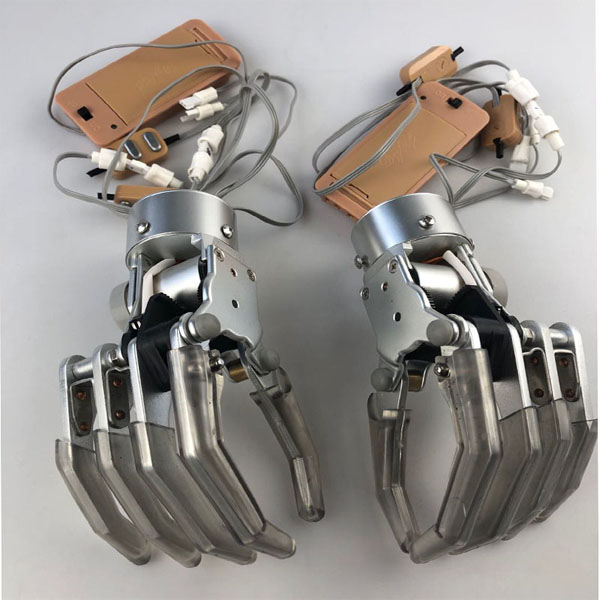
Myoelectric Prosthetic Hand: Reclaiming Dexterity and Life
As an expert in orthopedic assistive devices and a dedicated medical SEO copywriter, we understand the profound impact of limb loss and the transformative potential of advanced prosthetic solutions. Among these, the myoelectric prosthetic hand stands as a beacon of innovation, offering unparalleled functionality and a renewed sense of independence for individuals with upper limb differences. This comprehensive guide delves into every facet of myoelectric prosthetics, from their intricate design to their life-changing clinical applications and maintenance protocols.
1. Comprehensive Introduction & Overview
A myoelectric prosthetic hand is an externally powered, highly sophisticated artificial limb designed to replace a missing hand or arm segment. Unlike traditional body-powered prosthetics that rely on cable systems and body movements, myoelectric devices harness the body's own electrical signals generated by residual muscles. These faint electrical impulses, known as electromyographic (EMG) signals, are detected by sensors within the prosthetic socket and then translated into controlled movements of the prosthetic hand.
This technology represents a significant leap forward in prosthetic design, aiming to restore not just the aesthetic appearance but, more importantly, the intricate functional capabilities of a natural hand. For individuals who have experienced upper limb amputation due to trauma, disease, or congenital conditions, a myoelectric hand offers the potential to perform daily tasks with greater ease, confidence, and a more intuitive connection to their prosthesis. It's a testament to biomedical engineering's ability to integrate human biology with advanced robotics, paving the way for enhanced quality of life and reintegration into various aspects of personal and professional life.
2. Deep-Dive into Technical Specifications & Mechanisms
The marvel of a myoelectric prosthetic hand lies in its intricate blend of advanced materials, sophisticated electronics, and biomechanical principles.
2.1. Design and Materials
Myoelectric hands are engineered for optimal strength, durability, and a lightweight profile. Key components and materials include:
- Socket: The critical interface between the residual limb and the prosthesis.
- Materials: Custom-fabricated from lightweight, high-strength composites such as carbon fiber, fiberglass, and specialized thermoplastics (e.g., acrylics, polypropylene).
- Liner: Often features medical-grade silicone or gel materials for comfort, cushioning, and skin protection, ensuring a snug and secure fit.
- Wrist Unit: Connects the terminal device (hand) to the forearm section.
- Types: Can be fixed, flexible, or rotating (manual or powered) to allow for pronation and supination, mimicking natural wrist movements.
- Materials: High-grade aluminum, titanium, or reinforced plastics for durability and strength.
- Terminal Device (Hand): The functional component that performs gripping and manipulation.
- Materials: Often constructed from robust, lightweight plastics (e.g., ABS, nylon), reinforced with metal components (steel, titanium) for critical load-bearing areas and finger joints. Aesthetic covers are typically made from silicone or PVC for a natural look and feel.
- Multi-articulating Fingers: Many advanced hands feature individually powered and articulating fingers, allowing for a wide range of grip patterns beyond simple open/close.
2.2. Biomechanics and Mechanisms of Action
The core principle of myoelectric control is the translation of biological signals into mechanical motion.
- Electromyographic (EMG) Sensors:
- Placement: Small, non-invasive electrodes are embedded within the prosthetic socket, making direct contact with the skin over specific residual muscles.
- Function: These sensors detect the minute electrical potentials (EMG signals) generated when a muscle contracts. For example, contracting the forearm flexor muscles might signal "hand close," while contracting the extensors might signal "hand open."
- Control System and Microprocessors:
- Signal Processing: The raw EMG signals are incredibly weak and noisy. A sophisticated onboard microprocessor filters, amplifies, and interprets these signals in real-time.
- Algorithms: Advanced algorithms differentiate between various muscle contraction patterns and intensities, allowing for proportional control (i.e., a stronger contraction results in a faster or stronger grip).
- Pattern Recognition: Cutting-edge systems use machine learning to recognize complex patterns of muscle activity, enabling more intuitive control over multiple degrees of freedom and various grip patterns.
- Motors and Actuators:
- Miniaturization: High-torque, low-profile DC motors are strategically placed within the hand and wrist unit.
- Precision: These motors drive gears and linkages, converting electrical commands into precise mechanical movements of the fingers, thumb, and wrist.
- Power Source:
- Batteries: High-capacity, rechargeable lithium-ion batteries are typically integrated into the forearm section, providing power for the sensors, control system, and motors. Battery life varies depending on usage intensity.
- Feedback Mechanisms (Advanced):
- While true sensory feedback (feeling texture or temperature) is still largely experimental, some advanced systems incorporate haptic feedback (vibrations) or proprioceptive feedback (sensors that indicate joint position or grip force) to provide the user with a better sense of the prosthesis's interaction with objects.
Table 1: Myoelectric System Components & Function
| Component | Primary Function | Key Materials/Technology |
|---|---|---|
| Socket | Interface, sensor housing, structural support | Carbon fiber, thermoplastics, silicone liners |
| EMG Sensors | Detect muscle electrical activity | Silver-chloride electrodes, conductive gels |
| Control System | Process signals, translate to commands | Microprocessors, proprietary algorithms |
| Motors/Actuators | Generate mechanical movement | Miniature DC motors, gear trains |
| Power Source | Supply electrical energy | Rechargeable Lithium-ion batteries |
| Terminal Device | Perform grip and manipulation | High-strength plastics, metals, silicone |
| Wrist Unit | Connects hand to forearm, provides rotation/flexion | Aluminum, titanium, reinforced plastics |
3. Extensive Clinical Indications & Usage
The application of myoelectric prosthetic hands is a highly individualized process, guided by thorough clinical assessment and a commitment to rehabilitation.
3.1. Clinical Indications
Candidates for myoelectric prosthetic hands typically present with:
- Upper Limb Amputation: Most commonly transradial (below-elbow) or transhumeral (above-elbow) amputations.
- Congenital Limb Differences: Individuals born without a fully formed hand or forearm.
- Sufficient Residual Muscle Activity: The presence of viable, controllable muscles in the residual limb that can generate distinct EMG signals. This is paramount for effective control.
- Intact Skin Integrity: The residual limb must have healthy skin, free from open wounds, severe scarring, or chronic dermatological conditions that could impede socket fit or sensor function.
- Cognitive and Motivational Capacity: The ability to understand complex instructions, commit to intensive training, and possess a strong desire to regain function.
- Overall Health: General physical health that allows for prosthetic use and rehabilitation activities.
3.2. Detailed Clinical Application & Fitting Process
The journey to a functional myoelectric prosthetic hand involves several critical stages:
-
Initial Assessment and Evaluation:
- Medical History: Review of amputation cause, surgical reports, and any co-morbidities.
- Residual Limb Assessment: Examination of limb length, shape, skin condition, range of motion, and presence of neuromas.
- Muscle Testing (EMG): A prosthetist and/or therapist will identify and test target muscles to assess their strength, isolation, and ability to generate clear EMG signals. This helps determine optimal sensor placement.
- Goal Setting: Collaborative discussion with the patient to establish realistic functional goals.
-
Prescription and Component Selection:
- Based on the assessment, the clinical team (prosthetist, physician, occupational therapist) will prescribe the most appropriate myoelectric system, considering:
- Level of amputation.
- Patient's lifestyle and functional needs (e.g., light duty vs. heavy-duty use).
- Specific hand features (e.g., grip patterns, wrist rotation).
- Battery life requirements.
- Budget and insurance coverage.
- Based on the assessment, the clinical team (prosthetist, physician, occupational therapist) will prescribe the most appropriate myoelectric system, considering:
-
Socket Design and Fabrication:
- Casting/Scanning: A precise mold or 3D scan of the residual limb is taken to create a custom socket. This is the most crucial step for comfort, stability, and effective signal transmission.
- Diagnostic Socket (Test Socket): An initial transparent socket is often fabricated to allow for visual inspection of pressure points and fit adjustments before the definitive socket is made. Sensors are temporarily placed to confirm signal acquisition.
- Definitive Socket: Once the fit is optimized, the final socket is fabricated using durable, lightweight materials, incorporating permanent sensor ports.
-
Sensor Placement and Programming:
- The EMG sensors are strategically placed within the socket over the identified target muscles.
- The control system is programmed and calibrated to the individual's unique muscle signals, mapping specific contractions to desired prosthetic movements.
-
Prosthetic Training and Rehabilitation:
- This is an intensive and vital phase, primarily led by an occupational therapist.
- Basic Control: Learning to isolate muscle contractions to achieve simple open/close movements of the hand.
- Advanced Control: Progressing to proportional control (varying grip strength/speed), activating different grip patterns (e.g., pinch, cylindrical, hook), and wrist movements.
- Bilateral Integration: For unilateral amputees, training focuses on integrating the prosthetic hand with the natural hand for bimanual tasks.
- Activities of Daily Living (ADLs): Practicing tasks like eating, dressing, hygiene, writing, and using tools.
- Vocational/Recreational Training: Tailored training to help patients return to work or hobbies.
- Problem-Solving: Learning to troubleshoot minor issues and adapt to various environmental demands.
3.3. Patient Outcome Improvements
The successful integration of a myoelectric prosthetic hand can dramatically improve a patient's quality of life:
- Restored Functional Independence: Enabling patients to perform ADLs, self-care, and household tasks autonomously.
- Enhanced Bilateral Task Performance: Significantly improving the ability to perform tasks requiring two hands, which were previously challenging or impossible.
- Improved Self-Esteem and Body Image: A more natural-looking and functional prosthesis can boost confidence and reduce feelings of self-consciousness.
- Return to Work and Hobbies: Facilitating participation in vocational activities, sports, and recreational pursuits.
- Reduced Phantom Limb Pain/Sensation: For some individuals, active use of a prosthesis can help alleviate phantom limb phenomena by providing a functional "feedback loop" to the brain.
- Psychological Well-being: Reduced anxiety and depression, fostering a more positive outlook on life.
4. Risks, Side Effects, or Contraindications
While highly beneficial, myoelectric prosthetics are not without potential challenges.
4.1. Risks and Side Effects
- Skin Irritation and Breakdown: Poor socket fit, excessive perspiration, or inadequate hygiene can lead to redness, chafing, blisters, or pressure sores on the residual limb.
- Discomfort and Pain: Improper socket design or nerve impingement can cause localized pain or discomfort.
- Muscle Fatigue: The sustained muscle contractions required for control can lead to fatigue, especially during the initial training phase or prolonged use.
- Learning Curve and Frustration: Mastering myoelectric control requires significant effort, patience, and commitment. Initial difficulties can be disheartening.
- Phantom Limb Pain/Sensation: While sometimes reduced, phantom sensations can persist or even be exacerbated in some users.
- Equipment Malfunction: Like any electronic device, components can fail, requiring repair or replacement.
- Weight: Although increasingly lighter, myoelectric hands can still be heavier than body-powered or passive prostheses, potentially causing shoulder or back strain over time.
- Cost and Insurance Coverage: The high cost of advanced myoelectric systems can be a significant barrier, and insurance coverage varies widely.
4.2. Contraindications
- Insufficient Residual Muscle Activity: The absence of viable, controllable muscles to generate clear EMG signals is a primary contraindication.
- Severe Cognitive Impairment: Conditions that significantly impair learning, comprehension, or the ability to commit to rehabilitation.
- Uncontrolled Skin Conditions: Active infections, severe dermatitis, or unhealed wounds on the residual limb.
- Unrealistic Patient Expectations: Patients with expectations that cannot be met by the technology or their individual capabilities may experience dissatisfaction.
- Poor Adherence to Rehabilitation: Lack of commitment to the training and follow-up regimen will hinder successful prosthetic use.
- Severe Joint Contractures: Limited range of motion in the residual limb or adjacent joints can impede socket fit and prosthetic function.
5. Frequently Asked Questions (FAQ)
Q1: What exactly is a myoelectric prosthetic hand?
A myoelectric prosthetic hand is an advanced artificial limb that uses electrical signals generated by your remaining muscles (electromyographic or EMG signals) to control its movements. Sensors in the prosthetic socket detect these signals, which are then translated into commands to open, close, or rotate the prosthetic hand and wrist.
Q2: How does a myoelectric hand actually work?
When you try to flex or extend your residual muscles, they produce tiny electrical impulses. These impulses are picked up by electrodes on your skin inside the prosthetic socket. A microcomputer within the prosthesis interprets these signals and sends commands to small motors in the hand, causing it to move in a desired way, such as gripping an object.
Q3: Who is a good candidate for a myoelectric prosthetic hand?
Good candidates typically have sufficient residual muscle activity in their limb to generate clear control signals, healthy skin on the residual limb, and the cognitive ability and motivation to undergo extensive training. They are often individuals with transradial (below-elbow) or transhumeral (above-elbow) amputations, or congenital limb differences.
Q4: How long does it take to learn to use a myoelectric hand effectively?
The learning curve varies greatly among individuals, but it typically involves several weeks to months of intensive occupational therapy and practice. Initial training focuses on basic control, progressing to more complex grip patterns and integration into daily activities. Consistent practice is key to mastering its use.
Q5: Is a myoelectric prosthetic hand comfortable to wear?
Comfort is paramount and largely depends on the custom-fitted socket. A well-designed socket will distribute pressure evenly and minimize discomfort. Modern sockets often incorporate soft liners (e.g., silicone) to enhance comfort and protect the skin. Any persistent discomfort should be immediately reported to your prosthetist.
Q6: Can I feel with a myoelectric prosthetic hand?
Traditional myoelectric hands do not provide direct sensory feedback (e.g., feeling texture, temperature, or pressure). However, advanced research is exploring haptic feedback (vibrations) and direct nerve stimulation to provide a more intuitive sense of touch and proprioception (awareness of the hand's position). For now, users rely on visual cues and auditory feedback from the motors.
Q7: How much does a myoelectric prosthetic hand cost, and is it covered by insurance?
Myoelectric prosthetic hands are highly advanced devices and can be quite expensive, ranging from tens of thousands to over a hundred thousand dollars, depending on complexity and features. Insurance coverage varies widely. Many insurance providers, including Medicare and Medicaid, may cover a significant portion if deemed medically necessary, but it's crucial to verify your specific policy details and work closely with your prosthetist's office for pre-authorization.
Q8: What are the main advantages of a myoelectric hand over a body-powered prosthesis?
Myoelectric hands offer more intuitive control, a wider range of grip patterns, and often a more natural appearance. They can reduce strain on the shoulders and back compared to body-powered systems that rely on harness and cable movements. They also allow for fine motor control and proportional grip strength.
Q9: How do I maintain my myoelectric prosthetic hand?
Daily maintenance includes wiping down the hand and socket with a damp cloth and mild soap, ensuring the battery is charged, and inspecting your residual limb for any skin irritation. The silicone liner should be cleaned daily. Regular professional check-ups with your prosthetist (typically every 6-12 months) are essential for adjustments, repairs, and preventative maintenance. Avoid exposing the prosthesis to extreme temperatures, water (unless specifically designed as waterproof), or heavy impacts.
Q10: Can I swim or shower with my myoelectric hand?
Most standard myoelectric prosthetic hands are NOT waterproof and should not be submerged in water or exposed to heavy rain/showering. Water can damage the electronic components. However, specialized waterproof or water-resistant prosthetic covers and specific aquatic prostheses are available for those who wish to participate in water activities. Always consult your prosthetist.
Q11: What happens if my residual limb changes size over time?
It's common for residual limbs to change in size due to weight fluctuations, muscle atrophy, or swelling. If your socket fit becomes loose or too tight, it can cause discomfort, skin issues, and affect control. Your prosthetist can make adjustments, add or remove prosthetic socks, or in some cases, a new socket may need to be fabricated to ensure optimal fit and function.
Q12: What advancements are on the horizon for myoelectric prosthetics?
The field is rapidly evolving. Future advancements include more intuitive control through targeted muscle reinnervation (TMR) surgery, direct skeletal attachment (osseointegration), advanced haptic feedback systems for a sense of touch, improved dexterity with more degrees of freedom, and AI-powered control systems that adapt to the user's intentions more seamlessly.