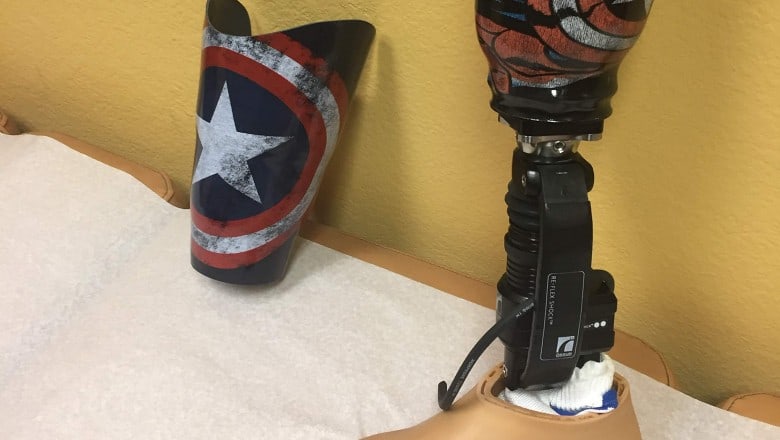
The Microprocessor Knee: Revolutionizing Amputee Mobility (e.g., C-Leg)
Comprehensive Introduction & Overview
The loss of a limb, particularly above the knee, presents significant challenges to mobility, balance, and quality of life. For decades, transfemoral amputees relied on conventional mechanical prosthetic knees, which offered limited functionality and often resulted in an unnatural gait, increased energy expenditure, and a higher risk of falls. The advent of the Microprocessor Knee (MPK), exemplified by groundbreaking devices like the Ottobock C-Leg, has fundamentally transformed prosthetic limb technology, offering unparalleled stability, adaptability, and a more natural walking experience.
A Microprocessor Knee is an advanced prosthetic knee joint that utilizes sophisticated sensors, a powerful onboard computer (microprocessor), and hydraulic or pneumatic damping systems to continuously monitor and adapt its function in real-time. Unlike passive mechanical knees, which provide fixed resistance, MPKs dynamically adjust resistance throughout the gait cycle, mimicking the intricate control of a biological knee. This intelligent response allows users to walk more safely and efficiently on varied terrains, navigate stairs and ramps with greater confidence, and significantly reduce their risk of stumbles and falls. This comprehensive guide will delve into the intricacies of MPKs, exploring their design, clinical applications, biomechanical advantages, maintenance, and profound impact on patient outcomes.
Deep-dive into Technical Specifications / Mechanisms
Microprocessor knees are marvels of engineering, integrating cutting-edge materials and sophisticated electronics to deliver superior performance.
Design and Materials
The robust yet lightweight construction of MPKs is critical for both durability and user comfort.
- Frame and Structural Components:
- Materials: High-strength aluminum alloys, aviation-grade titanium, and advanced carbon fiber composites are commonly used. These materials provide exceptional strength-to-weight ratios, ensuring the device can withstand significant loads while remaining manageable for the user.
- Purpose: To house the internal mechanisms, provide attachment points for the prosthetic socket and foot, and bear the full weight and forces exerted during ambulation.
- Damping System:
- Hydraulic or Pneumatic Cylinders: These systems control the resistance to knee flexion and extension. Hydraulic systems, prevalent in many MPKs (like the C-Leg), use fluid to provide smooth, proportional control. Pneumatic systems use air for damping.
- Purpose: To dynamically adjust resistance based on real-time sensor data, ensuring controlled movement through both stance and swing phases.
- Sensors: MPKs are equipped with an array of highly sensitive sensors that continuously gather data about the user's movement and environment.
- Knee Angle Sensors: Measure the exact position of the knee joint.
- Accelerometers: Detect linear acceleration and changes in speed.
- Gyroscopes: Measure angular velocity and orientation, providing information about rotational movements.
- Load Cells (Force Sensors): Integrated into the pylon or joint, these measure the weight-bearing forces applied to the prosthesis, indicating when the foot is on the ground.
- Purpose: To provide the microprocessor with continuous, precise data about the user's gait, speed, and interaction with the ground.
- Microprocessor Unit (MPU): This is the "brain" of the MPK.
- Components: A compact, powerful computer chip with dedicated algorithms.
- Function: It rapidly processes data from all sensors, interprets the user's intentions, and sends commands to the damping system, adjusting resistance hundreds of times per second.
- Battery:
- Type: Typically rechargeable lithium-ion batteries.
- Life: Varies by model and usage, often providing 16-24 hours of operation on a single charge.
- Charging: Requires daily or nightly charging, similar to a smartphone.
- Connectivity:
- Bluetooth/Wireless: Allows prosthetists to connect wirelessly to the MPK for programming, adjustments, and diagnostics using specialized software (e.g., C-Soft for Ottobock C-Leg). Some models also offer patient-facing apps for mode selection.
Mechanisms of Action
The sophisticated interplay of these components allows MPKs to mimic the complex functions of a biological knee.
- Real-time Gait Analysis: The MPK's sensors continuously monitor the position, velocity, and forces acting on the prosthetic limb. This data is fed into the microprocessor, which analyzes it to determine the current phase of the gait cycle (e.g., heel strike, midstance, toe-off, swing) and predict upcoming movements.
- Dynamic Stance Control: This is a cornerstone feature. During the stance phase (when the foot is on the ground), the microprocessor maintains appropriate hydraulic resistance to prevent uncontrolled knee flexion (buckling).
- It differentiates between various activities like standing, walking on level ground, descending slopes, or taking a step down.
- The resistance automatically adjusts to provide optimal stability, allowing the user to trust their prosthesis and place weight on it confidently. This is crucial for safety and preventing falls.
- Controlled Swing Phase: As the leg swings forward, the microprocessor adjusts the hydraulic resistance to ensure smooth, natural knee flexion and extension.
- It adapts to different walking speeds, allowing for a more symmetrical and energy-efficient gait, whether strolling slowly or walking quickly.
- This dynamic control prevents the "pistoning" or "terminal impact" often seen with mechanical knees.
- Stumble Recovery: A critical safety feature. If the sensors detect an unexpected event, such as a stumble or trip, the microprocessor can rapidly increase hydraulic resistance to lock the knee or provide strong support, allowing the user to regain balance and prevent a fall.
- Intuitive Stair and Ramp Navigation: MPKs excel in these challenging environments.
- Ramp Descent: The knee provides controlled resistance, allowing the user to walk down ramps with a natural, alternating step pattern, rather than having to use a "hand-over-hand" or "vaulting" technique.
- Stair Descent: Similar to ramps, the MPK allows for a controlled, step-over-step descent, significantly improving safety and efficiency compared to mechanical knees.
- Activity Modes: Many MPKs offer customizable modes for specific activities.
- Lock Mode: The knee can be locked for prolonged standing or specific tasks.
- Cycling Mode: Reduced resistance for cycling.
- Running Mode: Optimized for higher impact activities (available on some advanced models).
Extensive Clinical Indications & Usage
Microprocessor knees represent a significant advancement for a wide range of transfemoral amputees.
Clinical Indications
- Transfemoral Amputation: Primarily designed for individuals with amputations above the knee.
- Activity Levels (K-Levels): Most suitable for individuals classified as K2, K3, and K4 ambulators.
- K2 (Limited Community Ambulator): Can benefit from enhanced stability and reduced fall risk.
- K3 (Community Ambulator): The ideal candidate, seeking to navigate varied environments, engage in vocational, therapeutic, or exercise activities.
- K4 (High-Activity Ambulator): Can benefit from advanced features for higher impact activities and sports (though specific sports prostheses might be preferred for competitive use).
- Desire for Enhanced Safety and Stability: Patients who prioritize fall prevention and confidence in walking.
- Motivation for Increased Independence: Individuals aiming to participate more fully in daily life and reduce reliance on assistive devices.
- Cognitive Ability: Sufficient cognitive function to understand and adapt to the device's operation, and to follow training instructions.
- Residual Limb Health: A healthy, well-healed residual limb capable of tolerating a prosthetic socket.
- Overall Health: General physical health that allows for prosthetic use and rehabilitation.
Clinical Applications
The process of acquiring and learning to use an MPK is multidisciplinary and highly individualized.
- Comprehensive Patient Assessment:
- Orthopedic Surgeon/Physiatrist: Evaluates residual limb health, overall physical condition, and identifies any comorbidities.
- Prosthetist: Assesses residual limb shape, volume, skin integrity, and discusses patient goals, activity levels, and lifestyle.
- Physical Therapist: Evaluates strength, balance, range of motion, and current mobility level, setting realistic rehabilitation goals.
- Prescription and Device Selection: Based on the assessment, the clinical team recommends the most appropriate MPK model, considering factors such as:
- Patient's weight and activity level.
- Specific features desired (e.g., water resistance, advanced activity modes).
- Insurance coverage and financial considerations.
- Prosthetic Fitting: This is a crucial step for optimal function and comfort.
- Socket Design: A custom-fabricated socket is paramount. It must fit precisely to ensure comfort, control, and efficient transfer of forces. Various socket designs exist (e.g., quadrilateral, ischial containment, sub-ischial) tailored to individual anatomy.
- Bench Alignment: Initial static alignment of the knee and foot component.
- Dynamic Alignment: Fine-tuning the alignment while the patient walks, optimizing gait symmetry and stability.
- Programming and Customization:
- The prosthetist uses specialized software (e.g., C-Soft for Ottobock C-Leg) to connect to the MPK and program its settings.
- Adjustments are made to parameters like swing phase resistance, stumble recovery sensitivity, and activity modes, tailoring the knee's response to the individual's unique gait pattern and preferences.
- Rehabilitation and Gait Training:
- Initial Familiarization: Learning to don/doff the prosthesis, understanding battery charging.
- Weight Bearing and Balance: Practicing standing, shifting weight, and balance exercises.
- Gait Training: Intensive training with a physical therapist focuses on:
- Developing a symmetrical and efficient gait pattern.
- Learning to trust the knee's dynamic stance control.
- Practicing walking on varied surfaces (grass, carpet, uneven ground).
- Mastering stair and ramp ascent/descent.
- Implementing stumble recovery techniques.
- Utilizing different activity modes.
- Home Exercise Program: Patients are given exercises to continue strengthening and improving their balance.
Patient Outcome Improvements
The adoption of MPKs has led to significant, measurable improvements in the lives of transfemoral amputees.
- Enhanced Safety and Reduced Fall Risk:
- The most significant benefit. Dynamic stance control and stumble recovery systems drastically reduce the likelihood of falls, a major concern for amputees.
- Data: Studies consistently show a reduction in fall frequency and an increase in perceived safety with MPKs compared to mechanical knees.
- Improved Mobility and Functional Independence:
- More natural and efficient gait pattern, reducing compensatory movements.
- Ability to confidently navigate challenging environments (uneven terrain, slopes, stairs) that were previously difficult or impossible.
- Increased walking speed and distance.
- Reduced Energy Expenditure:
- The adaptive nature of MPKs means the user expends less energy to control the knee, leading to reduced fatigue and greater endurance.
- This allows for longer periods of activity and participation in more strenuous tasks.
- Increased Confidence and Quality of Life:
- Greater trust in the prosthesis translates to increased self-confidence, reduced anxiety, and a willingness to engage in social and recreational activities.
- Improved body image and integration of the prosthesis into daily life.
- Reduced Compensatory Movements and Musculoskeletal Strain:
- A more symmetrical gait reduces strain on the sound limb, spine, and upper body, potentially mitigating long-term orthopedic issues.
- Closer to Physiological Gait:
- MPKs allow for a gait pattern that more closely resembles that of an intact limb, enhancing both function and cosmetic appearance.
Risks, Side Effects, or Contraindications
While highly beneficial, MPKs are not without considerations.
Risks
- Battery Dependence: The device relies on a charged battery. If the battery dies, the knee typically reverts to a locked or stiffened state, which can be inconvenient or potentially unsafe in certain situations. Regular charging is essential.
- Mechanical or Electronic Failure: Although rare due to robust design, any complex electronic device can malfunction. This could lead to unexpected knee behavior, requiring immediate attention from a prosthetist.
- Environmental Limitations: Most MPKs have limited water resistance (IP ratings vary). Submersion in water (e.g., swimming, showering without specific waterproof covers) or exposure to excessive dust/sand can damage the electronics.
- Cost: MPKs represent a significant financial investment, often costing tens of thousands of dollars. While insurance coverage is improving, out-of-pocket expenses can be substantial.
- Weight: MPKs are generally heavier than passive mechanical knees, which can be a consideration for some users, though the functional benefits often outweigh this.
- Initial Learning Curve: While MPKs make walking easier, there is an initial period of adaptation and training that can be challenging for some.
Side Effects (Indirectly Related to MPK Use)
- Socket-Related Issues: Skin irritation, blistering, or discomfort from the prosthetic socket are common challenges for all amputees, regardless of knee type, and require careful management by the prosthetist.
- Muscle Fatigue: During the initial adaptation phase, new muscle groups may be engaged or existing ones worked differently, leading to temporary fatigue.
- Phantom Limb Pain/Sensation: This is a common phenomenon among amputees and is not directly caused by the MPK, but can impact overall comfort and prosthetic use.
Contraindications
- Severe Cognitive Impairment: Patients who lack the cognitive ability to understand the device's function, follow instructions, or safely operate the prosthesis in various environments may not be suitable candidates.
- Unstable or Compromised Residual Limb: Open wounds, active infections, or severely unstable residual limb tissues may prevent proper socket fit and prosthetic use.
- Unrealistic Patient Expectations: Patients must have a realistic understanding of what an MPK can and cannot do. It enhances mobility but does not fully replicate a biological limb.
- Inability to Manage Charging: Patients who cannot reliably charge the device or understand battery management may face safety risks.
- Weight Limitations: MPKs have specific weight limits. Patients exceeding these limits would be contraindicated.
- Severe Balance Impairment (Unrelated to Amputation): If severe balance issues stem from neurological conditions or vestibular dysfunction that cannot be mitigated, an MPK might not fully address the underlying safety concerns.
Maintenance and Sterilization Protocols
Proper care and maintenance are essential to ensure the longevity, optimal performance, and safety of a microprocessor knee.
Daily Care (User Responsibility)
- Charging: Charge the battery daily, typically overnight, as recommended by the manufacturer. Most MPKs come with an indicator for battery level.
- Cleaning: Wipe down the exterior of the knee joint with a damp cloth to remove dirt, sweat, and debris. A mild soap solution can be used if needed, followed by wiping with clean water and drying thoroughly. Avoid harsh chemicals or abrasive cleaners.
- Inspection: Visually inspect the knee for any signs of damage, loose screws, unusual noises, or changes in function. Report any concerns to your prosthetist immediately.
- Environmental Awareness:
- Avoid prolonged exposure to water unless the specific model is rated for immersion (e.g., Ottobock X3 is waterproof, C-Leg is water-resistant to splashes).
- Protect the device from extreme temperatures, excessive dust, or sand.
Routine Maintenance (Prosthetist Responsibility)
- Scheduled Check-ups: Regular appointments with your prosthetist (typically every 6-12 months, or as recommended) are crucial.
- Software Updates: Prosthetists will connect to the MPK to check for and install any manufacturer software updates, which can improve performance, add features, or address bugs.
- Component Inspection: The prosthetist will meticulously inspect all mechanical components, including:
- Bearings and bushings for wear.
- Hydraulic/pneumatic system for leaks or performance degradation.
- Fasteners for tightness.
- Structural integrity of the frame.
- Lubrication: Internal moving parts may require specialized lubrication to ensure smooth operation.
- Socket Adjustments: The prosthetist will also assess the fit of the prosthetic socket and make any necessary adjustments due to changes in residual limb volume or comfort.
- Preventative Replacement: Certain wear-and-tear components may be replaced preventatively to avoid future breakdowns.
Sterilization Protocols
It is important to clarify that microprocessor knees, as external prosthetic devices, do not undergo "sterilization" in the medical sense (i.e., eliminating all microbial life) like surgical instruments. Instead, the focus is on cleaning and hygiene.
- Cleaning: As mentioned, routine cleaning with mild soap and water is sufficient for hygiene.
- Disinfection (if needed): In a clinical setting, if a device needs to be cleaned more thoroughly between patients for trial purposes (though this is rare for personalized MPKs), low-level disinfectants compatible with the device materials might be used, followed by thorough rinsing and drying. However, for a patient's personal device, standard cleaning is adequate.
Massive FAQ Section
Q1: What is a Microprocessor Knee (MPK)?
A1: A Microprocessor Knee is an advanced prosthetic knee joint that uses a computer (microprocessor), sensors, and a hydraulic or pneumatic damping system to continuously monitor and adapt to your movements in real-time. It provides dynamic stability and control, mimicking the function of a biological knee.
Q2: How does an MPK like the C-Leg work?
A2: An MPK works by using sensors (accelerometers, gyroscopes, knee angle sensors) to gather data about your gait, speed, and interaction with the ground. This data is processed by a microprocessor, which then instantly adjusts the resistance of the hydraulic or pneumatic cylinder. This allows for dynamic stability during stance (preventing buckling) and smooth control during the swing phase, adapting to different walking speeds and terrains.
Q3: Who is a candidate for an MPK?
A3: MPKs are primarily for transfemoral (above-knee) amputees who are K2, K3, or K4 ambulators. Candidates should have good overall health, sufficient cognitive ability to understand the device, a healthy residual limb, and a desire for enhanced safety, stability, and functional independence.
Q4: What are the main benefits of an MPK over a conventional prosthetic knee?
A4: MPKs offer significant benefits, including dramatically reduced fall risk, improved stability on uneven terrain, stairs, and ramps, a more natural and energy-efficient gait, increased walking speed and distance, and greater overall confidence and quality of life.
Q5: How long does the battery last, and how do I charge it?
A5: The battery life typically ranges from 16 to 24 hours on a single charge, depending on the model and usage. It is usually recommended to charge the MPK daily, often overnight, using a dedicated charger provided by the manufacturer.
Q6: Can I swim or shower with my MPK?
A6: Most MPKs are water-resistant to splashes but are not designed for full immersion. Some advanced models, like the Ottobock X3, are fully waterproof and suitable for swimming and showering. Always check the specific IP (Ingress Protection) rating for your model and consult with your prosthetist.
Q7: Is the MPK covered by insurance?
A7: Coverage for MPKs varies widely by insurance provider, policy, and country. Many major insurance companies, including Medicare and private insurers, do cover MPKs if deemed medically necessary. However, prior authorization is almost always required, and there may be significant out-of-pocket costs. Your prosthetist's office can assist with the insurance pre-approval process.
Q8: How much training is required to use an MPK?
A8: While MPKs are designed to be intuitive, significant rehabilitation and gait training with a physical therapist and prosthetist are crucial. This training helps you adapt to the device, learn to trust its capabilities, master walking on various terrains, and understand how to use its different features. The duration varies but typically involves several weeks to months of intensive therapy.
Q9: What maintenance does an MPK require?
A9: Daily maintenance by the user includes charging the battery, wiping down the exterior, and inspecting for any damage. Routine professional maintenance by a prosthetist, typically every 6-12 months, involves software updates, inspection of mechanical components, lubrication, and any necessary adjustments or repairs.
Q10: Can I participate in sports with an MPK?
A10: Many MPKs allow for participation in a wide range of daily activities and moderate exercise. Some advanced models may have specific modes for activities like cycling or light jogging. For high-impact sports or competitive athletics, specialized sports prostheses are often recommended, which are designed for extreme forces and specific movements.
Q11: What if my MPK malfunctions?
A11: If you suspect your MPK is malfunctioning (e.g., unusual noises, unexpected behavior, error codes), contact your prosthetist immediately. Most devices have built-in safety mechanisms and may revert to a locked or stiffened state in case of a critical error. Do not attempt to repair it yourself.
Q12: How does an MPK improve balance and reduce falls?
A12: MPKs improve balance and reduce falls primarily through dynamic stance control and stumble recovery. During the stance phase, the knee provides appropriate resistance to prevent buckling, giving you stable support. If a stumble is detected, the knee can rapidly increase resistance to help you regain balance, significantly lowering the risk of a fall compared to conventional mechanical knees.