Introduction and Epidemiology
Sudden posterior calf pain is a frequent presenting complaint in acute orthopedic and sports medicine clinics. Historically attributed almost exclusively to a ruptured plantaris tendon, the clinical entity colloquially known as "tennis leg" is now understood to represent a spectrum of myotendinous injuries. Modern high-resolution ultrasonography and magnetic resonance imaging have demonstrated that isolated plantaris ruptures are relatively rare. Instead, the majority of these acute presentations involve a rupture of the medial head of the gastrocnemius at its musculotendinous junction, with or without concomitant plantaris involvement.

Epidemiologically, tennis leg predominantly affects middle-aged athletes, particularly those engaged in sports requiring sudden, explosive acceleration or abrupt changes in direction, such as tennis, squash, and basketball. The classic mechanism involves forced ankle dorsiflexion combined with active knee extension. Patients typically report an audible pop or a sensation of being struck in the posterior calf, followed immediately by sharp pain, localized swelling, and an inability to bear weight on the affected extremity.

While posterior calf pathology is a primary consideration for sudden posterior pain, the orthopedic surgeon must maintain a broad differential diagnosis when evaluating any acute or subacute lower leg pain. Pathology in the anterior aspect of the lower leg frequently presents with overlapping systemic or localized symptoms that require meticulous clinical differentiation.
Anterior Lower Leg Pain Causes
When evaluating lower leg pain, it is critical to distinguish acute soft tissue injuries from osseous and compartmental pathologies. Note that knock-knee and bow-leg deformities are generally evaluated in conjunction with the knee joint biomechanics, but primary tibial pathology must be ruled out.

Osteitis of the Tibia
Osteitis of the tibia, or acute hematogenous osteomyelitis, occurs predominantly in children, often with or without a history of previous minor trauma or an antecedent upper respiratory infection such as a sore throat. The pathophysiology involves the sluggish blood flow in the metaphyseal venous sinusoids, which provides an ideal environment for bacterial colonization following transient bacteremia. Pain is characteristically intense, and tenderness is acute and initially well localized over the metaphyseal area. Patients present with a strict inability to weightbear.

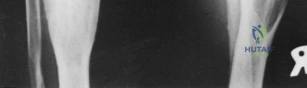
There is typically significant systemic upset, characterized by fever, tachycardia, and often a polymorphonuclear leukocytosis, though laboratory values can sometimes be equivocal. Admission and aggressive investigation with repeated blood cultures are essential prior to the initiation of antimicrobial therapy. Radiographs of the tibia are initially normal, as a 30 to 50 percent reduction in trabecular bone mass must occur before lytic changes become radiographically apparent. This creates a diagnostic lag of two weeks or more before any osseous abnormality is detectable on plain films. However, advanced imaging modalities such as MRI and CT scans are highly sensitive and will demonstrate marrow edema and periosteal elevation significantly earlier.

Inflammatory markers, including the erythrocyte sedimentation rate and C-reactive protein, are usually elevated at an early date and serve as excellent parameters for monitoring treatment response. When this condition is suspected, it is customary to administer a broad-spectrum antibiotic effective against penicillin-resistant Staphylococcus species. These must be given in large intravenous doses to achieve adequate minimum inhibitory concentrations within the bone, immediately following the acquisition of blood cultures. Splintage of the affected area is often helpful for pain control and to prevent pathologic fracture. In proven cases, antibiotics are administered for a minimum of four weeks. Surgical drainage is seldom necessary in the modern antibiotic era and is avoided unless there is a failure of response to appropriate antibiotics, profound systemic toxicity, or the development of a frank subperiosteal abscess that makes surgical decompression essential.

Diagnostic Challenges in Osteitis
Differentiating acute osteitis from superficial soft tissue infections can be challenging. Cellulitis arising from insect stings, small penetrating wounds, abrasions, and hair follicle infections may sometimes cause difficulty in diagnosis. However, the profound bony tenderness, refusal to bear weight, and deep, unremitting pain characteristic of osteitis usually guide the clinician toward the correct osseous diagnosis.

Low Grade Osteitis and Brodies Abscess
Subacute or low-grade osteitis of the tibia, commonly referred to as a Brodie abscess, may give rise to chronic upper tibial pain. This condition represents a localized, contained focus of osteomyelitis where the host immune response has successfully walled off the infection, creating a sclerotic rim around a radiolucent nidus. It often mimics benign bone tumors and requires careful radiographic and sometimes histopathologic evaluation to confirm the diagnosis and guide surgical curettage and bone grafting.

Tibial Bone Tumors
The tibia is a highly common site for many primary bone tumors, including osteosarcoma, Ewing sarcoma, and benign lesions such as osteoid osteoma and non-ossifying fibromas. Because the clinical presentation of these neoplasms can closely mimic stress fractures or chronic tendinopathies, a comprehensive radiographic examination of the tibia is strictly essential in any case of undiagnosed, persistent leg pain.

Anterior Tibial Compartment Syndrome
Acute anterior tibial compartment syndrome is a surgical emergency and a critical differential diagnosis for leg pain. This is a common complication of fractures of the tibial shaft, but it may also follow a period of intense, unaccustomed lower limb activity, making it a recognized entity in high-level athletes. It gives rise to severe, unremitting pain in the front of the leg that is classically out of proportion to the apparent injury.

The pathophysiology is driven by edema and hemorrhage swelling within the unyielding osseofascial confines of the anterior compartment. This elevated intracompartmental pressure leads in turn to microvascular compromise and ischemia in the anterior tibial muscles. In severe cases where swelling is progressive, the ischemic cascade will eventually cause irreversible muscle necrosis and rhabdomyolysis. Clinically, the leg is diffusely swollen, tense, and exquisitely tender, and the overlying skin frequently has a tight, glossy appearance.

The tibialis anterior and extensor hallucis longus are typically the first muscles affected, presenting with weakness and later a complete inability to actively extend the ankle and great toe. Pain with passive plantarflexion of the toes is a hallmark sign. While the dorsalis pedis pulse may eventually be absent, this is a late and unreliable finding; capillary refill and distal pulses often remain intact until catastrophic tissue damage has already occurred. There may be distinct sensory loss in the first web space due to ischemic changes affecting the deep peroneal nerve. In high-risk and suspect cases, continuous or repeated compartment pressure monitoring is highly advisable. In severe cases with a delta pressure less than thirty millimeters of mercury, immediate surgical decompression of the anterior tibial compartment via fasciotomy is absolutely essential if permanent muscle necrosis and neurologic deficit are to be avoided.

Tibial Stress Fractures
In this condition, the onset of leg pain may be sudden following a specific loading event, or it may be less acute, building insidiously over weeks of repetitive microtrauma. There is sharply localized bone tenderness upon palpation and often overlying soft tissue edema. Radiographic demonstration of the hairline fracture may be difficult during the initial presentation, and with persistent pain, repeated examination and serial imaging are essential.

A radioisotope bone scan or magnetic resonance imaging may be highly helpful in diagnosing a local hot spot or marrow edema long before cortical changes appear. In many cases, the diagnosis may not be firmly established on plain radiography until a small area of tell-tale periosteal callus is showing weeks later. The condition is also common in patients with Paget disease, where the altered bone remodeling creates biomechanical stress risers; in such cases, there is an easily identifiable underlying radiological abnormality characterized by cortical thickening and trabecular coarsening.

Medial Tibial Syndrome Shin Splints
Medial tibial stress syndrome, commonly referred to as shin splints, represents a periostitis at the fascial insertion of the soleus and flexor digitorum longus along the posteromedial tibia. In this condition, pain on the medial side of the shin in sportsmen may be severe, and there is usually distinct tenderness linearly distributed along the posteromedial border of the lower part of the tibia. This must be carefully differentiated from a true stress fracture, which typically presents with focal, pinpoint tenderness rather than a diffuse linear pattern.

Surgical Anatomy and Biomechanics
A thorough understanding of the lower extremity compartments is essential for diagnosing and surgically managing both posterior calf injuries and anterior compartment syndromes.
Posterior Compartment Anatomy
The posterior compartment of the lower leg is divided by the transverse intermuscular septum into superficial and deep subcompartments. The superficial posterior compartment houses the triceps surae, composed of the medial and lateral heads of the gastrocnemius and the soleus, along with the plantaris muscle.

The plantaris is a small, vestigial muscle with a short belly and a long, thin tendon. It originates from the lateral supracondylar ridge of the femur, superior to the lateral head of the gastrocnemius, and crosses the popliteal fossa obliquely. Its tendon courses distally between the medial head of the gastrocnemius and the soleus, eventually inserting into the medial aspect of the calcaneal tuberosity, often blending with the Achilles tendon. Biomechanically, the plantaris acts as a weak plantarflexor of the ankle and a weak flexor of the knee. However, it is highly dense in muscle spindles, suggesting its primary contemporary role is proprioceptive rather than mechanical.

The medial head of the gastrocnemius is significantly larger and extends further distally than the lateral head. It is at the musculotendinous junction of the medial gastrocnemius where the majority of "tennis leg" ruptures occur. The sural nerve, formed by contributions from the medial sural cutaneous nerve and the peroneal communicating branch, courses superficially down the posterior midline of the calf, closely associated with the small saphenous vein. This nerve is at significant iatrogenic risk during posterior surgical approaches.

Anterior Compartment Anatomy
The anterior compartment is bounded anteriorly by the extensor retinaculum and deep fascia, posteriorly by the interosseous membrane, medially by the lateral surface of the tibia, and laterally by the anterior intermuscular septum. It contains four muscles: the tibialis anterior, extensor hallucis longus, extensor digitorum longus, and peroneus tertius.

The neurovascular bundle of the anterior compartment consists of the deep peroneal nerve and the anterior tibial artery and vein. The deep peroneal nerve supplies motor innervation to the muscles of the anterior compartment and provides sensory innervation to the first dorsal web space of the foot. Because the osseofascial boundaries of this compartment are exceptionally rigid, it is highly susceptible to acute compartment syndrome.

Indications and Contraindications
The management of sudden calf pain and lower leg pathology depends entirely on the specific anatomical diagnosis. For the classic "tennis leg" (medial gastrocnemius tear with or without plantaris rupture), conservative management is the gold standard. Operative intervention is reserved for severe, recalcitrant cases or specific complications. Conversely, acute anterior compartment syndrome mandates emergent surgical decompression.

| Pathology | Operative Indications | Non Operative Indications |
|---|---|---|
| Plantaris Rupture | Massive organized hematoma causing localized compartment syndrome or severe skin compromise. | Isolated rupture, minimal functional deficit, acute phase without neurovascular compromise. |
| Medial Gastrocnemius Tear | Complete avulsion with massive retraction, chronic painful scar tissue formation, failure of prolonged conservative therapy. | Partial tears, acute presentation without massive hematoma, compliant patient. |
| Anterior Compartment Syndrome | Delta pressure (Diastolic BP minus Compartment Pressure) less than 30 mmHg, absolute compartment pressure greater than 30-40 mmHg, clinical signs of ischemia. | NONE in the setting of acute, confirmed compartment syndrome. |
| Tibial Stress Fracture | "Dreaded black line" (anterior cortical tension-sided fracture) failing conservative care, high-level athlete requiring rapid return to play (intramedullary nailing). | Posteromedial compression-sided fractures, acute onset, mechanically stable. |
| Tibial Osteitis | Failure of intravenous antibiotics, profound systemic toxicity, presence of a subperiosteal abscess requiring drainage. | Early diagnosis, positive response to broad-spectrum antibiotics, absence of drainable fluid collection. |

Contraindications to surgical intervention for posterior calf tears include active overlying skin infection, severe peripheral vascular disease precluding adequate wound healing, and medical comorbidities that make anesthesia unacceptably high risk.

Pre Operative Planning and Patient Positioning
Thorough preoperative evaluation relies on a combination of clinical examination and advanced imaging. For posterior calf pain, the Thompson test must be performed to definitively rule out an Achilles tendon rupture, which requires a completely different treatment algorithm. Palpation will typically reveal a focal defect at the medial musculotendinous junction of the gastrocnemius, often accompanied by a palpable fluid wave if a significant hematoma has developed between the aponeuroses of the gastrocnemius and soleus.

Imaging Protocols
Ultrasonography is the primary modality for dynamic assessment. It can easily differentiate between a medial head gastrocnemius tear, an isolated plantaris rupture, and a deep vein thrombosis, which is a critical differential and a known complication of calf injuries. Magnetic Resonance Imaging is utilized when surgical intervention is contemplated, providing superior resolution of the retracted muscle edges, the volume of the hematoma, and the integrity of the Achilles tendon.

For suspected anterior compartment syndrome, intracompartmental pressure monitoring using a solid-state transducer or a simple arterial line setup is the definitive diagnostic tool. Measurements should be taken in all four compartments of the leg, as multi-compartment involvement is common.

Patient Positioning
For posterior calf exploration, hematoma evacuation, or gastrocnemius repair, the patient is positioned prone on a radiolucent operating table. Chest rolls and pelvic supports are utilized to ensure adequate ventilation and avoid abdominal compression. The knees are slightly flexed using a padded bump to relax the triceps surae complex.

For anterior compartment fasciotomy or tibial intramedullary nailing, the patient is positioned supine. A bump is placed under the ipsilateral hip to internally rotate the leg to a neutral position, allowing unrestricted access to the anterior and lateral aspects of the leg.

Detailed Surgical Approach and Technique
While conservative management is the rule for plantaris and gastrocnemius tears, surgical evacuation of a massive, organized hematoma or repair of a severe medial gastrocnemius avulsion is occasionally necessary.

Posterior Approach for Calf Hematoma and Muscle Repair
A longitudinal incision is made over the posteromedial aspect of the calf, centered over the palpable defect or maximal swelling. The subcutaneous tissues are carefully dissected. The surgeon must remain highly vigilant to identify and protect the sural nerve and the small saphenous vein, which course superficially in the midline before diving laterally.

The crural fascia is incised longitudinally. In the setting of a severe "tennis leg" injury, a large volume of dark, organized hematoma is typically encountered immediately deep to the gastrocnemius aponeurosis. This hematoma must be thoroughly evacuated and the cavity irrigated with sterile saline.

The medial head of the gastrocnemius is then inspected. If a massive avulsion is present, the retracted muscle belly is mobilized. The plantaris tendon, if ruptured and interposed in the defect, is identified and excised to prevent tethering and chronic pain. The medial gastrocnemius is then repaired to its aponeurotic insertion using heavy, non-absorbable synthetic sutures in a Krackow or locking continuous configuration. The repair is performed with the ankle in slight plantarflexion to minimize tension. The crural fascia is left open or loosely approximated to prevent secondary compartment syndrome.

Clinical & Radiographic Imaging


