العربية

Your Complete Humerus Fractures Summary: Diagnosis & Healing

Updated: Feb 2026 51 Views
Your Complete Humerus Fractures Summary: Diagnosis & Healing

Proximal humerus fractures ### Summary
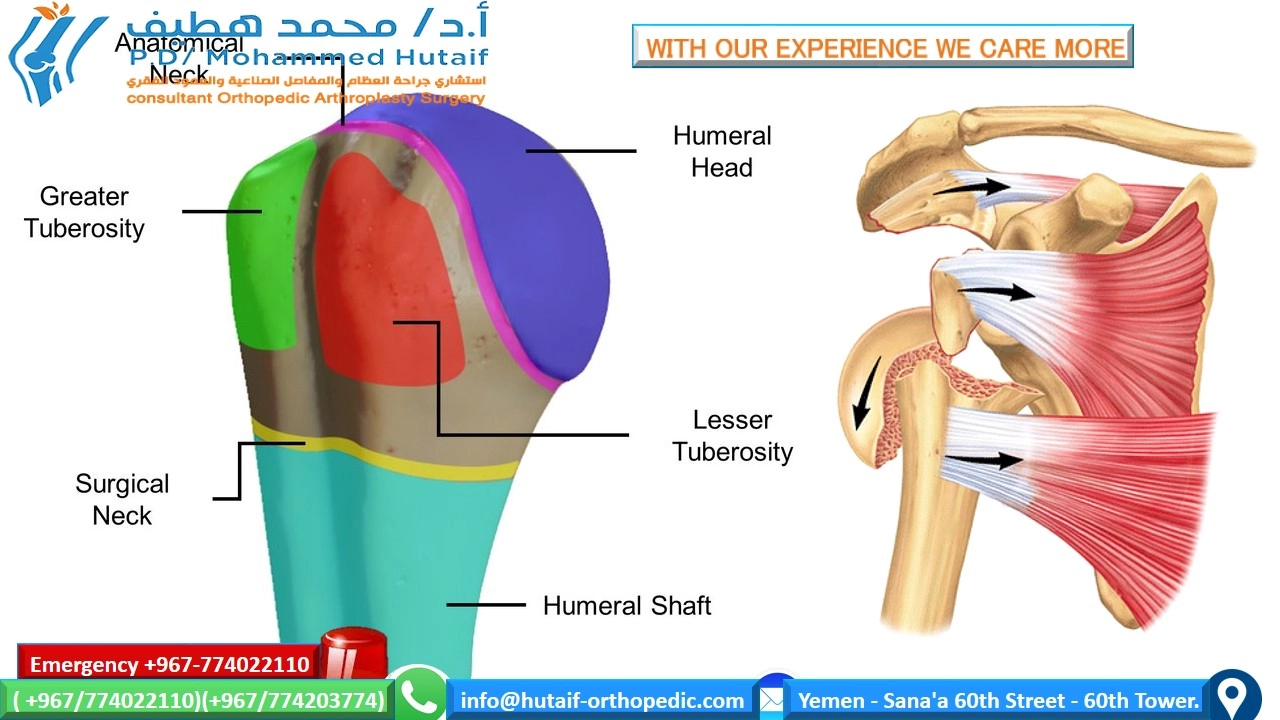
Proximal humerus fractures are very common injuries, and they are one of the true osteoporotic fractures. Most fractures can be treated effectively without surgery, as the rich blood vessels and wide surfaces give a great tendency to heal. In addition, many fracture patterns result in adequate bone contact and less displacement with acceptable alignment. Open reduction and internal fixation of displaced fractures can improve outcomes, depending on the functional status of the patient prior to injury. If surgical treatment is chosen, unique treatment challenges must be overcome, including the diagnosis and preservation of small bone fragments with strong muscular forces, often in bones with osteoporosis. Many options are feasible, including plates, screw, wires, and other hardware. Anatomical location Fractures of the head of the humerus may occur in the surgical neck, the anatomical neck, the greater tuberosity, and the lesser tuberosity
Proximal humerus fractures  Summary Proximal humerus fractures are very common injuries, and they are one of the true osteoporotic fractures. Most fractures can be treated effectively without surgery, as the rich blood vessels and wide surfaces give a great tendency to heal. In addition, many fracture patterns result in adequate bone contact and less displacement with acceptable alignment. Open reduction and internal fixation of displaced fractures can improve outcomes, depending on the functional status of the patient prior to injury. If surgical treatment is chosen, unique treatment challenges must be overcome, including the diagnosis and preservation of small bone fragments with strong muscular forces, often in bones with osteoporosis. Many options are feasible, including plates, screw, wires, and other hardware.   anatomical location Fractures of the head of the humerus may occur in the surgical neck, the anatomical neck, the greater tuberosity, and the lesser tuberosity  Two-part surgical neck fractures are most common  risk factors Osteoporosis diabetic epilepsy female Associated injuries nerve injury Most common axillary nerve injury  Arterial injury Uncommon (incidence 5-6%), higher probability in older patients  It often occurs at the surgical neck level or with subluxation of the head     How do we classify proximal humeral fractures? On the basis of the anatomical relationship consisting of 4 parts      How do we classify proximal humeral fractures? On the basis of the anatomical relationship consisting of 4 parts        single part  fractures   two-part fractures   Three-part fractions   Four-part fractions   Dislocations and fractures of joint surface injuries Separate categories have been added because they represent more severe injuries, are more likely to develop avascular necrosis . Likewise, fractures of the articular surface have been placed in a separate category due to their unique treatment considerations.     Treatment options for proximal humeral head fractures  Non-surgical management If the proximal humerus fracture is non-displaced and stable, nonsurgical management may be a viable option. This may consist of wearing an arm sling, rest, pain medication, and gentle physical therapy after the fracture has healed. The bone usually takes 8 to 12 weeks for the primary fusion mass to form. Keeping the arm supported and reducing the amount of stress on the fracture is key.  Surgical options It depends on several factors, including:  Are fractures open? What is the exact classification of fracture? patient's age Associated injuries
Two-part surgical neck fractures are most common

Risk factors

  • Osteoporosis * Diabetic * Epilepsy * Female ### Associated injuries Nerve injury Most common axillary nerve injury Arterial injury Uncommon (incidence 5-6%), higher probability in older patients
    It often occurs at the surgical neck level or with subluxation of the head

How do we classify proximal humeral fractures? On the basis of the anatomical relationship consisting of 4 parts

Single part fractures

Proximal humerus fractures  Summary Proximal humerus fractures are very common injuries, and they are one of the true osteoporotic fractures. Most fractures can be treated effectively without surgery, as the rich blood vessels and wide surfaces give a great tendency to heal. In addition, many fracture patterns result in adequate bone contact and less displacement with acceptable alignment. Open reduction and internal fixation of displaced fractures can improve outcomes, depending on the functional status of the patient prior to injury. If surgical treatment is chosen, unique treatment challenges must be overcome, including the diagnosis and preservation of small bone fragments with strong muscular forces, often in bones with osteoporosis. Many options are feasible, including plates, screw, wires, and other hardware.   Anatomical location Fractures of the head of the humerus may occur in the surgical neck, the anatomical neck, the greater tuberosity, and the lesser tuberosity  Two-part surgical neck fractures are most common  Risk factors Osteoporosis Diabetic Epilepsy Female Associated injuries Nerve injury Most common axillary nerve injury  Arterial injury Uncommon (incidence 5-6%), higher probability in older patients  It often occurs at the surgical neck level or with subluxation of the head     How do we classify proximal humeral fractures? On the basis of the anatomical relationship consisting of 4 parts      How do we classify proximal humeral fractures? On the basis of the anatomical relationship consisting of 4 parts  Single part  fractures Two-part fractures  Three-part fractions  Four-part fractions  Dislocations and fractures of joint surface injuries Separate categories have been added because they represent more severe injuries, are more likely to develop avascular necrosis . Likewise, fractures of the articular surface have been placed in a separate category due to their unique treatment considerations.   Treatment options for proximal humeral head fractures  Non-surgical management If the proximal humerus fracture is non-displaced and stable, nonsurgical management may be a viable option. This may consist of wearing an arm sling, rest, pain medication, and gentle physical therapy after the fracture has healed. The bone usually takes 8 to 12 weeks for the primary fusion mass to form. Keeping the arm supported and reducing the amount of stress on the fracture is key.  Surgical options It depends on several factors, including:  Are fractures open? What is the exact classification of fracture? Patient's age Associated injuries

Two-part fractures

Proximal humerus fractures  Summary Proximal humerus fractures are very common injuries, and they are one of the true osteoporotic fractures. Most fractures can be treated effectively without surgery, as the rich blood vessels and wide surfaces give a great tendency to heal. In addition, many fracture patterns result in adequate bone contact and less displacement with acceptable alignment. Open reduction and internal fixation of displaced fractures can improve outcomes, depending on the functional status of the patient prior to injury. If surgical treatment is chosen, unique treatment challenges must be overcome, including the diagnosis and preservation of small bone fragments with strong muscular forces, often in bones with osteoporosis. Many options are feasible, including plates, screw, wires, and other hardware.   Anatomical location Fractures of the head of the humerus may occur in the surgical neck, the anatomical neck, the greater tuberosity, and the lesser tuberosity  Two-part surgical neck fractures are most common  Risk factors Osteoporosis Diabetic Epilepsy Female Associated injuries Nerve injury Most common axillary nerve injury  Arterial injury Uncommon (incidence 5-6%), higher probability in older patients  It often occurs at the surgical neck level or with subluxation of the head     How do we classify proximal humeral fractures? On the basis of the anatomical relationship consisting of 4 parts      How do we classify proximal humeral fractures? On the basis of the anatomical relationship consisting of 4 parts  Single part  fractures Two-part fractures  Three-part fractions  Four-part fractions  Dislocations and fractures of joint surface injuries Separate categories have been added because they represent more severe injuries, are more likely to develop avascular necrosis . Likewise, fractures of the articular surface have been placed in a separate category due to their unique treatment considerations.   Treatment options for proximal humeral head fractures  Non-surgical management If the proximal humerus fracture is non-displaced and stable, nonsurgical management may be a viable option. This may consist of wearing an arm sling, rest, pain medication, and gentle physical therapy after the fracture has healed. The bone usually takes 8 to 12 weeks for the primary fusion mass to form. Keeping the arm supported and reducing the amount of stress on the fracture is key.  Surgical options It depends on several factors, including:  Are fractures open? What is the exact classification of fracture? Patient's age Associated injuries

Three-part fractions

Proximal humerus fractures  Summary Proximal humerus fractures are very common injuries, and they are one of the true osteoporotic fractures. Most fractures can be treated effectively without surgery, as the rich blood vessels and wide surfaces give a great tendency to heal. In addition, many fracture patterns result in adequate bone contact and less displacement with acceptable alignment. Open reduction and internal fixation of displaced fractures can improve outcomes, depending on the functional status of the patient prior to injury. If surgical treatment is chosen, unique treatment challenges must be overcome, including the diagnosis and preservation of small bone fragments with strong muscular forces, often in bones with osteoporosis. Many options are feasible, including plates, screw, wires, and other hardware.   anatomical location Fractures of the head of the humerus may occur in the surgical neck, the anatomical neck, the greater tuberosity, and the lesser tuberosity  Two-part surgical neck fractures are most common  risk factors Osteoporosis diabetic epilepsy female Associated injuries nerve injury Most common axillary nerve injury  Arterial injury Uncommon (incidence 5-6%), higher probability in older patients  It often occurs at the surgical neck level or with subluxation of the head     How do we classify proximal humeral fractures? On the basis of the anatomical relationship consisting of 4 parts      How do we classify proximal humeral fractures? On the basis of the anatomical relationship consisting of 4 parts        single part  fractures   two-part fractures   Three-part fractions   Four-part fractions   Dislocations and fractures of joint surface injuries Separate categories have been added because they represent more severe injuries, are more likely to develop avascular necrosis . Likewise, fractures of the articular surface have been placed in a separate category due to their unique treatment considerations.     Treatment options for proximal humeral head fractures  Non-surgical management If the proximal humerus fracture is non-displaced and stable, nonsurgical management may be a viable option. This may consist of wearing an arm sling, rest, pain medication, and gentle physical therapy after the fracture has healed. The bone usually takes 8 to 12 weeks for the primary fusion mass to form. Keeping the arm supported and reducing the amount of stress on the fracture is key.  Surgical options It depends on several factors, including:  Are fractures open? What is the exact classification of fracture? patient's age Associated injuries

Four-part fractions

Proximal humerus fractures  Summary Proximal humerus fractures are very common injuries, and they are one of the true osteoporotic fractures. Most fractures can be treated effectively without surgery, as the rich blood vessels and wide surfaces give a great tendency to heal. In addition, many fracture patterns result in adequate bone contact and less displacement with acceptable alignment. Open reduction and internal fixation of displaced fractures can improve outcomes, depending on the functional status of the patient prior to injury. If surgical treatment is chosen, unique treatment challenges must be overcome, including the diagnosis and preservation of small bone fragments with strong muscular forces, often in bones with osteoporosis. Many options are feasible, including plates, screw, wires, and other hardware.   anatomical location Fractures of the head of the humerus may occur in the surgical neck, the anatomical neck, the greater tuberosity, and the lesser tuberosity  Two-part surgical neck fractures are most common  risk factors Osteoporosis diabetic epilepsy female Associated injuries nerve injury Most common axillary nerve injury  Arterial injury Uncommon (incidence 5-6%), higher probability in older patients  It often occurs at the surgical neck level or with subluxation of the head     How do we classify proximal humeral fractures? On the basis of the anatomical relationship consisting of 4 parts      How do we classify proximal humeral fractures? On the basis of the anatomical relationship consisting of 4 parts        single part  fractures   two-part fractures   Three-part fractions   Four-part fractions   Dislocations and fractures of joint surface injuries Separate categories have been added because they represent more severe injuries, are more likely to develop avascular necrosis . Likewise, fractures of the articular surface have been placed in a separate category due to their unique treatment considerations.     Treatment options for proximal humeral head fractures  Non-surgical management If the proximal humerus fracture is non-displaced and stable, nonsurgical management may be a viable option. This may consist of wearing an arm sling, rest, pain medication, and gentle physical therapy after the fracture has healed. The bone usually takes 8 to 12 weeks for the primary fusion mass to form. Keeping the arm supported and reducing the amount of stress on the fracture is key.  Surgical options It depends on several factors, including:  Are fractures open? What is the exact classification of fracture? patient's age Associated injuries

Dislocations and fractures of joint surface injuries

Proximal humerus fractures  Summary Proximal humerus fractures are very common injuries, and they are one of the true osteoporotic fractures. Most fractures can be treated effectively without surgery, as the rich blood vessels and wide surfaces give a great tendency to heal. In addition, many fracture patterns result in adequate bone contact and less displacement with acceptable alignment. Open reduction and internal fixation of displaced fractures can improve outcomes, depending on the functional status of the patient prior to injury. If surgical treatment is chosen, unique treatment challenges must be overcome, including the diagnosis and preservation of small bone fragments with strong muscular forces, often in bones with osteoporosis. Many options are feasible, including plates, screw, wires, and other hardware.   Anatomical location Fractures of the head of the humerus may occur in the surgical neck, the anatomical neck, the greater tuberosity, and the lesser tuberosity  Two-part surgical neck fractures are most common  Risk factors Osteoporosis Diabetic Epilepsy Female Associated injuries Nerve injury Most common axillary nerve injury  Arterial injury Uncommon (incidence 5-6%), higher probability in older patients  It often occurs at the surgical neck level or with subluxation of the head     How do we classify proximal humeral fractures? On the basis of the anatomical relationship consisting of 4 parts      How do we classify proximal humeral fractures? On the basis of the anatomical relationship consisting of 4 parts  Single part  fractures Two-part fractures  Three-part fractions  Four-part fractions  Dislocations and fractures of joint surface injuries Separate categories have been added because they represent more severe injuries, are more likely to develop avascular necrosis . Likewise, fractures of the articular surface have been placed in a separate category due to their unique treatment considerations.   Treatment options for proximal humeral head fractures  Non-surgical management If the proximal humerus fracture is non-displaced and stable, nonsurgical management may be a viable option. This may consist of wearing an arm sling, rest, pain medication, and gentle physical therapy after the fracture has healed. The bone usually takes 8 to 12 weeks for the primary fusion mass to form. Keeping the arm supported and reducing the amount of stress on the fracture is key.  Surgical options It depends on several factors, including:  Are fractures open? What is the exact classification of fracture? Patient's age Associated injuries
Separate categories have been added because they represent more severe injuries, are more likely to develop avascular necrosis . Likewise, fractures of the articular surface have been placed in a separate category due to their unique treatment considerations.

Treatment options for proximal humeral head fractures Non-surgical management

If the proximal humerus fracture is non-displaced and stable, nonsurgical management may be a viable option. This may consist of wearing an arm sling, rest, pain medication, and gentle physical therapy after the fracture has healed. The bone usually takes 8 to 12 weeks for the primary fusion mass to form. Keeping the arm supported and reducing the amount of stress on the fracture is key.

Surgical options

It depends on several factors, including:
* Are fractures open?
* What is the exact classification of fracture?
* Patient's age
* Associated injuries

Dr. Mohammed Hutaif
Written & Medically Reviewed by
Consultant Orthopedic & Spine Surgeon