A 47 year old female with metastatic thyroid cancer has progressive left hip pain. X-rays are shown in Figure 8–34A–D.
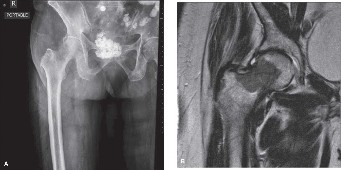
Figure 8–34 A–B
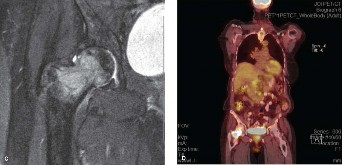
Figure 8–34 C–D
What surgical treatment would you recommend?
- Hip arthroplasty
- Cephalomedullary nailing with long intramedullary rod
- Curettage and bone grafting of the lesion
- Radiation therapy
Discussion
The correct answer is (A). The patient has metastases to the femoral neck and head. T1-weighted imaging shows a possible fracture line through the metastasis. Prophylactic stabilization of the femur with a cephalomedullary rod is not the best choice for this patient’s condition. With the significant neck and head disease, arthroplasty is indicated. Curettage and bone grafting is an inappropriate treatment for a metastatic lytic lesion; this is generally used for benign lesions. Radiation therapy is used in conjunction with surgical stabilization but will not treat the mechanical symptoms associated with the nondisplaced fracture that has already occurred and can lead to arthrofibrosis of the hip joint.
He has a second lesion identified on bone scan that is located in the right sacrum. He has no significant pain in this area with sitting or standing. What other symptoms is it important to question him about?
- Dizziness
- Bladder/bowel dysfunction
- Weakness in the hip flexors
- Numbness in his fingertips
Discussion
The correct answer is (B). Sacral lesions often cause encroachment on the exiting sacral nerve roots. Patients may not associate changes in bladder or bowel habits
with their metastatic cancer, and it is important to question patients specifically regarding these symptoms when they present with a sacral mass.
Objectives: Did you learn...?
Management of difficult metastatic lesions?
