KNEE Structured oralexamination question9: Malalignment of total knee replacement (TKR) components
EXAMINER : Have a look at this image. What can you see?
(Figure 3.8.)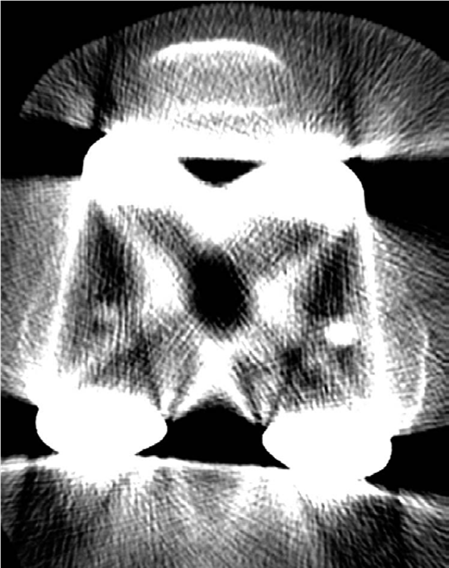
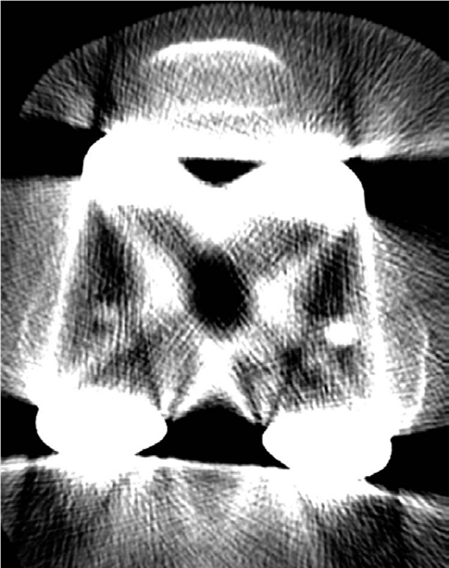
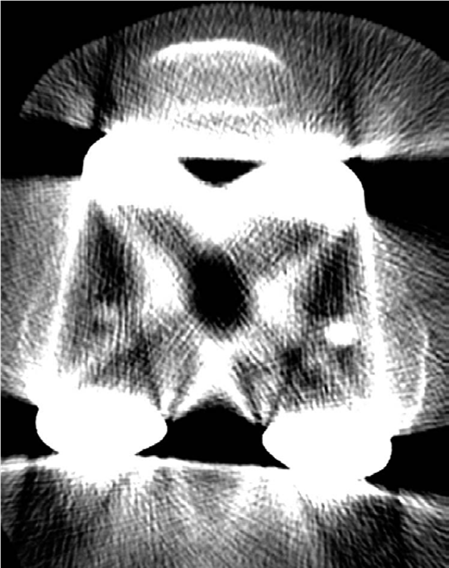
Figures 3.8 CT axial view of TKR.
maltracking following TKR, which is associated with anterior knee pain, subluxation, fracture, wear, and aseptic loosening. It has been suggested that rotating-platform mobile bearings compensate for malrotation between the tibial and femoral components and may, therefore, reduce any associated patellofemoral maltracking. Internal rotation of femoral component by resection of excessive amounts of posterior lateral femoral condyle or insufficient resection of the posterior medial femoral condyle moves the anterior femoral patellar groove portion of the femoral component medially, making it more difficult for a relatively laterally placed patella to be captured by the patellofemoral groove. In addition, internal rotation of the femoral component results in tight flexion gap on the medial side of the knee.
Nicoll D, Rowley DI. Internal rotational error of the tibial component is a major cause of pain after total knee replacement. J Bone Joint Surg Br 2010;92-B:1238–1244.
