Description-Shoulder osteoarthritis
Five major types of arthritis typically affect the shoulder.
Osteoarthritis
Also known as "wear-and-tear" arthritis, osteoarthritis is a condition that destroys the smooth outer covering (articular cartilage) of bone. As the articular cartilage wears away, it becomes frayed and rough, and the protective space between the bones decreases. During movement, the bones of the joint rub against each other, causing pain; this is often referred to as "bone on bone" arthritis.
Osteoarthritis usually affects people over the age of 50 and is more common in the acromioclavicular joint than in the glenohumeral shoulder joint.
![Osteoarthritis of the shoulder is a gradual wearing of the articular cartilage that leads to pain and stiffness. As the joint surface degenerates, the subchondral bone remodels, losing its sphericity and congruity. The joint capsule also becomes thickened, leading to further loss of shoulder rotation. This painful condition is a growing problem in the aging population. In most cases, diagnosis of degenerative joint disease of the shoulder can be made with careful history, physical examination, and radiography. The symptoms and degree of shoulder arthritis visible on radiography determine the best treatment option. Mild degenerative joint disease can be treated with physical therapy and over-the-counter anti-inflammatory medications such as acetaminophen or nonsteroidal anti-inflammatory drugs. More advanced cases of osteoarthritis that are refractory to nonoperative management can be managed with corticosteroid injections. In severe cases, surgery is indicated. Surgical options include arthroscopic debridement, arthroscopic capsular release, and, in the most severe instances, hemiarthroplasty or total shoulder arthroplasty. Shoulder osteoarthritis, also known as degenerative joint disease of the shoulder, is a gradual, progressive, mechanical, and biochemical breakdown of the articular cartilage and other joint tissues, including bone and joint capsule. As the articular surface wears, friction within the joint increases, causing progressive loss of the normal load-bearing surfaces with pain and disability. There are many risk factors for shoulder osteoarthritis, including age, genetics, sex, weight, joint infection, history of shoulder dislocation, and previous injury. Certain occupations, such as heavy construction or overhead sports, are also risk factors. The prevalence of shoulder osteoarthritis is increasing as the population ages. Primary care physicians will be confronted with this disease at various levels of severity. This review highlights epidemiology, evaluation, current treatment options, and treatment results for osteoarthritis of the shoulder. Clinical recommendation Evidence rating References Axillary radiography should be performed because it provides the best images of joint-space narrowing to diagnose degenerative joint disease of the shoulder. This view also helps rule out dislocation. Anteroposterior radiography with the arm actively held at 45 degrees of abduction may reveal joint-space narrowing in patients with otherwise normal neutral anteroposterior radiography. C 10 The initial approach to early osteoarthritis should begin with activity modification, rest, and ice. Physical therapy, strength training, and aerobic exercise alleviate symptoms in certain cases; in other patients, over-the-counter medications may be sufficient for pain relief. C 12, 23, 24 Acetaminophen should be the first pharmacologic agent used to manage pain. Therapeutic effects are achieved at dosages of 3 to 4 g per day. C 13 The most common indications for shoulder arthroplasty are pain from shoulder arthritis with a loss of function that is unresponsive to conservative treatment; end-stage rotator cuff tear arthropathy; osteonecrosis; and a previously failed joint-sparing surgery or total shoulder arthroplasty. C 16 Epidemiology Musculoskeletal disorders have had a significant impact on the world's population. The current decade (2000–2010) has been named the “Bone and Joint Decade.”1 In the United States alone, musculoskeletal conditions account for 131 million patient visits per year, costing society about $215 billion.1 Arthritis and chronic joint symptoms affect one out of three adults, making it the most widespread disease in America.2 The prevalence of arthritis for all joints is higher in whites, men older than 45 years, women older than 55 years, overweight and inactive persons, and persons with less than eight years of education.2 Nearly 60 percent of those affected by osteoarthritis are older than 65 years, and the incidence is increasing.20 Osteoarthritis affects many joints throughout the body.3 Although not as common as other locations, shoulder osteoarthritis is just as debilitating. The loss of shoulder function can lead to depression, anxiety, activity limitations, and job-performance problems.4 The causes of shoulder osteoarthritis are divided into primary and secondary categories. Primary osteoarthritis has no specific cause, but is more prevalent and not isolated to older persons.5 Secondary osteoarthritis has a known cause or predisposing factor, such as major shoulder trauma, chronic dislocations, infection, congenital malformations, or chronic rotator cuff tear ( Table 16).5 Type Etiology Primary Unknown Secondary Atraumatic osteonecrosis Alcohol induced Corticosteroid therapy Cytotoxic drugs Gaucher's disease Lipid metabolism disorders Obesity Radiation Sickle cell disease Postinflammatory Crystal arthropathies Postinfection arthritis Rheumatoid arthritis Rotator cuff arthropathy Postsurgical Capsulorrhaphy arthropathy Intra-articular hardware (e.g., screws, staples) Overtightened anterior joint capsule (prior Putti-Platt repair) Posttraumatic Dislocation Malunion of the proximal humerus Posttraumatic avascular necrosis Subluxation Evaluation The diagnosis of shoulder osteoarthritis involves a specific set of symptoms, physical examination findings, and changes to the bone, which are visible on radiography. The typical presenting symptom is progressive, activity-related pain that is deep in the joint and often localized posteriorly. As the disease progresses, night pain becomes more common. For many patients, the pain is present at rest and interferes with sleep. In advanced cases, the stiffness creates significant functional limitations. In younger patients, prior trauma, dislocation, or previous surgery for shoulder instability are factors associated with the development of osteoarthritis. Patients in the early stages of degenerative joint disease may complain of mild pain and may have unremarkable examinations. Radiography may show only subtle changes to the bone until there is more advanced destruction. The only objective evidence of the disease is articular cartilage wear, which may be shown on magnetic resonance imaging (MRI). In advanced cases, there is a loss of active and passive range of motion, in addition to pain. Physical examination will reveal painful crepitus, joint enlargement, and swelling. In severe cases, audible and palpable grinding may occur when a mechanical stress is placed on the shoulder. During the examination, it is important to exclude other shoulder pathologies that cause pain besides osteoarthritis (Table 2). Pain that is not induced by joint palpation or passive range of motion suggests bursitis, rotator cuff disease, or biceps tendinitis.7 Loss of passive and active range of motion may also occur with calcific tendinitis or idiopathic adhesive capsulitis. Radiography will show calcific tendinitis as radiodense calcium in the rotator cuff. In patients with adhesive capsulitis, shoulder joint radiography is typically normal. Morning stiffness may suggest rheumatoid arthritis. Intense inflammation, swelling, and erythema can be caused by gout, pseudo-gout, or a septic joint. A blood panel can help identify infection (i.e., white blood cell count greater than 11,000 per mm3 [11 × 109 per L] and white blood cell count in the joint fluid greater than 50,000 per mm3 [50 × 109 per L]). An erythrocyte sedimentation rate greater than 45 mm per hour may indicate rheumatoid arthritis, an underlying malignancy, or chronic infection. These blood tests are sensitive, but not specific in determining causes of shoulder pain.8 Finding Probable diagnosis History Joint effusion Osteoarthritis Rheumatoid arthritis Septic arthritis Morning stiffness improved with activity Rheumatoid arthritis Night time shoulder pain Impingement Rotator cuff disease (partial or complete cuff tears) Pain or “clunking” sound with overhead motion Labral disorder Pain radiating down arm Disk disease (cervical) Stiffness worse with activity, improves with rest Osteoarthritis Physical examination Cervical range of motion decreased Disk disease (cervical) Crepitus Osteoarthritis Rheumatoid arthritis Decreased range of motion, specifically external rotation and abduction Osteoarthritis Soft tissue injury (frozen shoulder) Erythema, warmth Septic arthritis Rheumatoid arthritis Shoulder joint line tenderness Osteoarthritis Radiography Joint space narrowing (central, posterior, and superior erosion) Cufftear arthropathy Osteoarthritis Rheumatoid arthritis Marginal joint erosions Rheumatoid arthritis Normal joint Frozen shoulder Septic arthritis Osteophytes Osteoarthritis Subchondral sclerosis Osteoarthritis Imaging studies are essential to diagnosing degenerative joint disease. In most cases, conventional radiography demonstrates shoulder osteoarthritis9 (Table 2). Early in the disease process, radiographic evidence of degenerative joint disease may include joint-space narrowing (mild), osteophytes (small), subchondral sclerosis, cysts, and eburnation or advanced articular cartilage loss (Figure 1). The axillary view provides the best image to look for joint-space narrowing and helps rule out dislocations. Anteroposterior radiography, with the arm held at 45 degrees of abduction, may also show early joint-space narrowing.10 Computed tomography arthrograms can localize articular defects, whereas MRI reveals soft-tissue pathologies and subtle changes in articular cartilage. Subchondral edema visible on MRI suggests advanced articular cartilage involvement.11 Current Treatment Options MEDICAL MANAGEMENT Presently, there are no known interventions that alter the natural history of early osteoarthritis; therefore, the main objectives in treatment are to control pain and restore function. The initial approach to osteoarthritis treatment begins with activity modification, rest, and ice. Physical therapy, strength training, and aerobic exercise help alleviate symptoms.12 Acetaminophen should be the first pharmacologic agent used to manage pain, with therapeutic effects achieved at dosages of 3 to 4 g per day.13 Nutritional supplements, such as glucosamine and chondroitin, are pharmacologic alternatives to acetaminophen, although only anecdotal evidence supports their use for shoulder osteoarthritis. The mainstay of pharmacotherapy for degenerative joint disease has been the nonselective and selective cyclooxygenase-2 (COX-2) inhibitors, or nonsteroidal anti-inflammatory drugs (NSAIDs) (Table 314). Nonselective COX-2 inhibitors (e.g., ibuprofen [Motrin], diclofenac [Voltaren], naproxen [Naprosyn]) and selective COX-2 inhibitors (e.g., celecoxib [Celebrex]) have been effective in alleviating osteoarthritis symptoms, but have varying side effects. Side effects can include gastrointestinal irritation, stomach ulcerations, bleeding, or renal failure from long-term use. In advanced osteoarthritis cases with inflammation, an injection of a corticosteroid, such as triamcinolone acetonide (Kenalog; 1 to 2 mL of 40 mg per mL) with lidocaine 1% (Xylocaine), into the affected joint can help relieve pain and swelling. Cardiovascular risk level No or low NSAID gastrointestinal risk NSAID gastrointestinal risk No cardiovascular risk (no aspirin) Traditional NSAID Consider non-NSAID therapy Traditional NSAID plus PPI or COX-2 inhibitor plus PPI* (if necessary) Cardiovascular risk (consider aspirin) Consider non-NSAID therapy Consider non-NSAID therapy Traditional NSAID† plus PPI if gastrointestinal risk warrants gastroprotection A gastroprotective agent must be added if a traditional NSAID† is prescribed SURGICAL MANAGEMENT If conservative therapies fail, there are many surgical options available. Joint preservation surgery is preferable for patients younger than 55 to 60 years or those with early stage degenerative joint disease of the shoulder. The operative procedure should match the patient's symptoms or functional limitations. Arthroscopic debridement, capsular release, corrective osteotomies, and interposition arthroplasty are surgical options that attempt to reduce symptoms while preserving the native joint.15 Arthroscopic debridement with capsular release is the most common surgical treatment. It is most effective in patients younger than 55 to 60 years with moderate pain and significant passive motion restrictions. Debridement removes mechanical irritants, unstable cartilage flaps, or loose bodies. Inflamed synovium can be treated via synovectomy, and the stiff contracted joint capsule can be released to restore passive joint mobility and unload articular surfaces. Arthrodesis (shoulder fusion) is an option for patients younger than 45 to 50 years with severe arthritis or for those who are not suitable candidates for total shoulder replacement. This procedure eliminates pain by fusing the humeral head to the glenoid, thus eliminating painful motion interface. Shoulder arthroplasty is recommended for patients with severe shoulder osteoarthritis. The most common indications for shoulder arthroplasty are pain from shoulder arthritis with a loss of function that is unresponsive to conservative treatment; end-stage rotator cuff tear arthropathy; osteonecrosis; and a previously failed joint-sparing surgery or total shoulder arthroplasty.16 Most recent studies support the use of a total shoulder arthroplasty, which involves replacing the glenoid and humerus 17,18 (Figure 2). In certain instances, a hemiarthroplasty (humerus only) may be an acceptable option. Major contraindications to shoulder replacement are: active or recent infection, neuropathic joint, complete paralysis of deltoid or rotator cuff muscles, debilitating medical status, or uncorrectable shoulder instability. Shoulder arthroplasty is typically done under general anesthesia. A regional nerve anesthetic (interscalene block) can supplement general anesthesia and provide perioperative pain control. After careful surgical exposure, the glenoid fossa is resurfaced with a solid polyethylene component, and the humeral head is resected along the anatomic neck and replaced with a metal prosthesis. Newer prostheses, called reverse or inverse shoulder replacements, have been designed specifically for use in rotator-cuff–deficient shoulders. The procedure lasts one to three hours, followed by a two- to four-day postoperative hospitalization. Blood loss is minimal, and patients who start with a preoperative hemoglobin above 11 g per dL (110 g per L) should not need transfusions. Donating blood before surgery is not recommended.19 Pain is controlled in the hospital with opioids via intravenous patient-controlled analgesia. A sling should be used for three to six weeks to protect the repair. Patients usually require some assistance with normal daily activities for approximately four to six weeks after surgery. Postoperative rehabilitation begins immediately with joint motion, in-home exercises, and a therapist-supervised program (Table 4).20 The initial six weeks of rehabilitation focus on stretching exercises to optimize the flexibility of the joint. When flexibility and range-of-motion goals have been achieved (usually at six to eight weeks), the strengthening can begin. Normal activities of daily living can be resumed within six weeks of surgery, and patients can often return to athletic activities within four months. After shoulder arthroplasty, patients can expect alleviation of pain and a significant improvement in range of motion.18 Improvement in function may continue up to two years after surgery.21 Exercise Postoperative day Active hand, forearm, elbow motion 1 Passive shoulder motion 1 Pulley 21 Wand or cane 35 Isometrics 35 Treatment Results NONSURGICAL TREATMENT Nonsurgical osteoarthritis treatments can temporize symptoms; however, they do not alter natural history and have had unsatisfactory results. Nonpharmacologic measures, such as aerobic exercise and strengthening, are unproven in the shoulder.22 One study has shown that acetaminophen was more effective than placebo at pain reduction, but less effective than NSAIDs.23 NSAIDs were also associated with more frequent gastrointestinal events than acetaminophen.23 Two randomized placebo-controlled studies have been published since 2003. One found no significant difference between placebo and acetaminophen, and the other found acetaminophen to be more effective than placebo, and celecoxib to be more effective than acetaminophen.13,24 Pharmacologic results show that newer COX-2 selective inhibitors are not more effective than nonselective NSAIDs for treating knee and hip osteoarthritis.25,26 However, the Celecoxib Long Term Arthritis Safety Study (CLASS) illustrated that the COX-2 inhibitor celecoxib was associated with significantly less gastrointestinal events than traditional NSAIDs.27 In recent years, studies have shown certain COX-2 inhibitors to be associated with an increased cardiovascular risk, resulting in the removal of rofecoxib (Vioxx) from the market. Additional data suggest that the nonselective NSAIDs may also cause an increase in adverse cardiovascular events.28,29 More studies are needed to demonstrate effectiveness and serious cardiovascular side effects of NSAIDs and COX-2 selective inhibitors. Nutritional supplements are widely used for osteoarthritis treatment, although the U.S. Food and Drug Administration has not approved them for this use. The most common supplements are glucosamine and chondroitin. Glucosamine has been shown to provide moderate symptomatic relief over placebo, but the overall effectiveness of these supplements remains uncertain.30 At this time, there is a paucity of evidence to support the use of these supplements in shoulder degenerative joint disease. SURGICAL TREATMENT Few studies exist on joint-preservation surgery for the shoulder. There are several case reports and small series that present cartilage resurfacing procedures for young patients with focal chondral defects.31,32 The largest series on arthroscopic treatment consists of 25 patients with early to moderate osteoarthritis, treated with lavage, partial synovectomy, and subacromial decompression.15 The mean follow-up was 34 months, and the authors demonstrated good or excellent outcomes in 80 percent of patients. The authors concluded that arthroscopic debridement was reasonable for early shoulder osteoarthritis treatment. Surgical prerequisites included concentric humeral head and glenoid with visible joint space on axillary radiography. Prosthetic total shoulder arthroplasty is the treatment of choice for severe degenerative joint disease. Studies show that total shoulder arthroplasty provides excellent clinical results with good durability. The results of total shoulder arthroplasty have been shown to be superior to hemiarthroplasty, in which only the humerus is resurfaced.33 As early as 1982, one study reported that 90 percent of patients who underwent total shoulder arthroplasty had satisfactory results at minimum two-year follow-up.34 As of 1988, only two of the 615 patients who had undergone total shoulder arthroplasty required further surgery. Another paper with 12-year mean follow-up demonstrated satisfactory pain relief in 83 percent of shoulders, with an average improvement of 40-degree active abduction, and yielding an overall average range of motion of 117 degrees.18 Despite concerns about glenoid loosening, long-term studies have shown high rates of survivorship. Another study of patients younger than 50 years, with minimum five-year and mean 12-year follow-up, found a prosthesis survival rate of 97 percent at five years, 97 percent at 10 years, and 84 percent at 15 years.16 This study illustrates that total shoulder arthroplasty improves functional range of motion with good long-term pain relief. The average orthopedic surgeon performs only two total shoulder arthroplasties per year, and recent data has shown that surgeon and hospital volume significantly influence surgical outcomes.32,35 Surgeons with higher volumes of arthroplasties have better patient outcomes and fewer complications. When total shoulder arthroplasty is performed under appropriate clinical indication, complete pain relief and normal or near-normal restoration of function is often the result. Experts predict that surgical outcomes following total shoulder arthroplasty will continue to improve with newer implant designs and fixation methods.Shoulder Osteoarthritis (Degenerative Arthritis of the Shoulder) Medically Reviewed by David Zelman, MD on November 06, 2020 ARTICLES ON OSTEOARTHRITIS TYPES Foot and Ankle Osteoarthritis Hip Osteoarthritis (Degenerative Arthritis of the Hip) Spinal Osteoarthritis (Degenerative Arthritis of the Spine) Cervical Osteoarthritis (Cervical Spondylosis) Hand Osteoarthritis (Degenerative Arthritis of the Hand) Shoulder Osteoarthritis (Degenerative Arthritis of the Shoulder) Osteoarthritis of the Knee (Degenerative Arthritis of the Knee) Your risk of developing osteoarthritis of the shoulder with its pain and physical limitations increases with age. But an injury, such as a dislocated shoulder, can lead to shoulder osteoarthritis even in young people. Here is information about the causes of and treatments for shoulder osteoarthritis. Read on to learn how an arthritic shoulder can affect your range of motion and ability to do everyday things, and discover ways to treat and manage the condition. What Is Osteoarthritis? Osteoarthritis -- also known as degenerative joint disease -- occurs when the cartilage that covers the tops of bones, known as articular cartilage, degenerates or wears down. This causes swelling, pain, and sometimes the development of osteophytes -- bone spurs -- when the ends of the two bones rub together. What Is Osteoarthritis of the Shoulder? The shoulder is made up of two joints, the acromioclavicular (AC) joint and the glenohumeral joint. The AC joint is the point where the collarbone, or clavicle, meets the acromion, which is the tip of the shoulder blade. The glenohumeral joint is the point where the top of the arm bone, or humerus, meets the shoulder blade, or scapula. Osteoarthritis is more commonly found in the AC joint. Who Gets Shoulder Osteoarthritis? Osteoarthritis most often occurs in people who are over age 50. In younger people, osteoarthritis can result from an injury or trauma, such as a fractured or dislocated shoulder. This is known as posttraumatic arthritis. Osteoarthritis may also be hereditary. What Are the Symptoms of Shoulder Osteoarthritis? As with most types of osteoarthritis, pain is a key symptom. A person with shoulder arthritis is likely to have pain while moving the shoulder and after moving the shoulder. The person can even have pain while sleeping. Another symptom may be a limited range of motion. This limitation can be seen when you are trying to move your arm. It can also be evident if someone is moving your arm to assess range of motion. Moving the shoulder might also produce a clicking or creaking noise. How Is Shoulder Osteoarthritis Diagnosed? To diagnose shoulder osteoarthritis, the doctor will take a medical history and do a physical exam to assess pain, tenderness, and loss of motion and to look for other signs in surrounding tissues. At this point, the doctor may be able to tell if the muscle near the joint has signs of atrophy, or weakness, from lack of use. Tests that might be ordered to diagnose osteoarthritis of the shoulder include: X-rays Blood tests, mainly to look for rheumatoid arthritis, but also to exclude other diseases Removal of synovial fluid, the lubricating fluid in the lining (synovium) of the joint, for analysis MRI scans How Is Osteoarthritis of the Shoulder Treated? The first treatments for osteoarthritis, including osteoarthritis of the shoulder, do not involve surgery. These treatments include: Resting the shoulder joint. This could mean that the person with arthritis has to change the way they move the arm while performing the activities of daily living. For example, the person might wear clothing that zips up the front instead of clothing that goes over the head. Or the person might prop up hair dryers instead of holding them up for long periods of time. Taking over-the-counter nonsteroidal anti-inflammatory drugs, such as ibuprofen or aspirin. These drugs, also called NSAIDS, will reduce inflammation and pain. Check with your doctor to make sure you can take these drugs safely. Performing physical therapy as assigned by the doctor. Performing range-of-motion exercises. These exercises are used as an attempt to increase flexibility. Applying moist heat. Applying ice to the shoulder. Ice is applied for 20 minutes two or three times a day to decrease inflammation and pain. Using other medications prescribed by the doctor. These might include injections of corticosteroids, for example. Taking the dietary supplements glucosamine and chondroitin. Many people claim relief with these supplements. Evidence is conflicting as to whether they really help. You should discuss using these with your doctor because the supplements may interact with other drugs. If nonsurgical treatments do not work effectively, there are surgeries available. As with any surgery, there are certain risks and potential complications, including infection or problems with anesthesia. Surgical treatments include: Shoulder joint replacement (total shoulder arthroplasty). Replacing the whole shoulder with an artificial joint is usually done to treat arthritis of the glenohumeral joint. Replacement of the head of the humerus, or upper arm bone (hemiarthroplasty). This option, too, is used to treat arthritis of the glenohumeral joint. Removal of a small piece of the end of the collarbone (resection arthroplasty). This option is the most common surgery for treating arthritis of the AC joint and associated rotator cuff problems. After the removal of the end of the bone, the space fills with scar tissue.](\media\upload\1658755159.webp)
Illustration and x-ray showing osteoarthritis of the shoulder Rheumatoid Arthritis
Rheumatoid arthritis (RA) is a chronic disease that attacks multiple joints throughout the body. It is symmetrical, meaning that it usually affects the same joint on both sides of the body.
The joints of your body are covered with a lining — called synovium — that lubricates the joint and makes it easier to move. Rheumatoid arthritis causes the lining to swell, which causes pain and stiffness in the joint.
Rheumatoid arthritis is an autoimmune disease. This means that the immune system attacks its own tissues. In RA, the defenses that protect the body from infection instead damage normal tissue (such as cartilage and ligaments) and soften bone.
Rheumatoid arthritis is equally common in both joints of the shoulder.
Posttraumatic Arthritis
Posttraumatic arthritis is a form of osteoarthritis that develops after an injury, such as a fracture or dislocation of the shoulder.
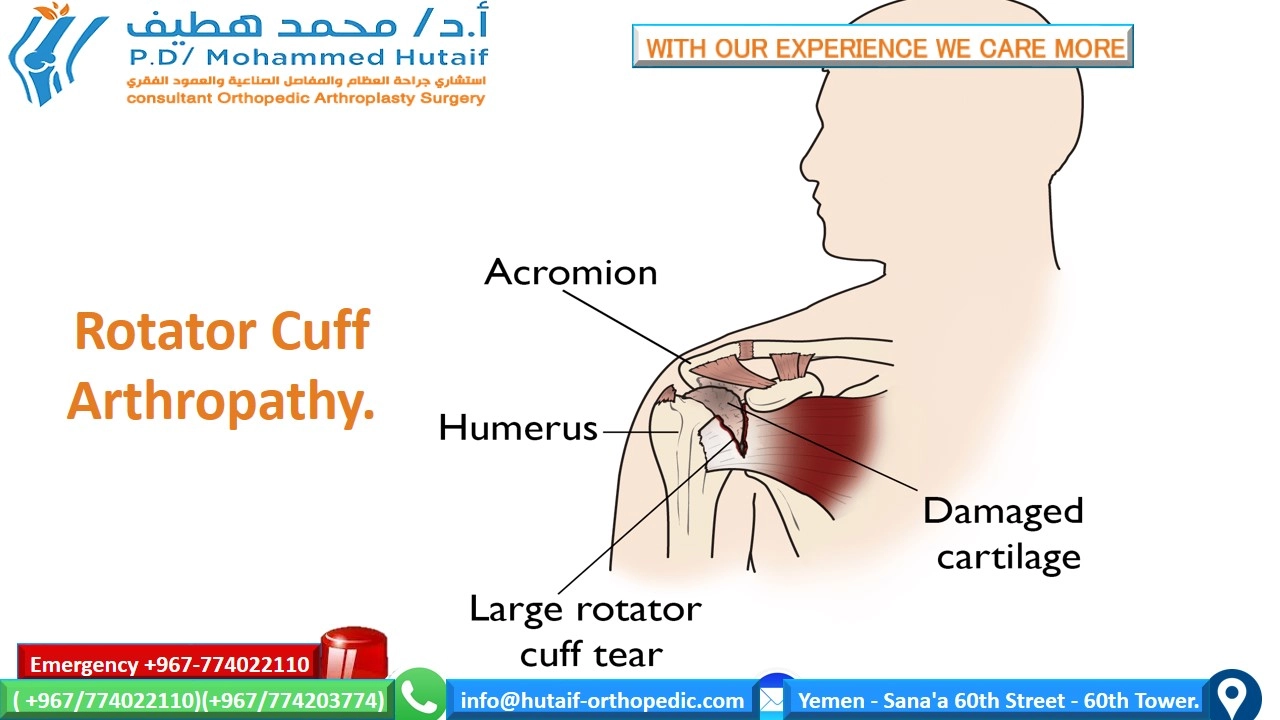
Rotator Cuff Tear Arthropathy
Arthritis can also develop after a large, long-standing rotator cuff tendon tear. The torn rotator cuff can no longer hold the head of the humerus in the glenoid socket, and the humerus can move upward and rub against the acromion. This can damage the surfaces of the bones, causing arthritis to develop.
The combination of a large rotator cuff tear and advanced arthritis can lead to severe pain and weakness, and the patient may not be able to lift their arm away from the side.
![Osteoarthritis of the shoulder is a gradual wearing of the articular cartilage that leads to pain and stiffness. As the joint surface degenerates, the subchondral bone remodels, losing its sphericity and congruity. The joint capsule also becomes thickened, leading to further loss of shoulder rotation. This painful condition is a growing problem in the aging population. In most cases, diagnosis of degenerative joint disease of the shoulder can be made with careful history, physical examination, and radiography. The symptoms and degree of shoulder arthritis visible on radiography determine the best treatment option. Mild degenerative joint disease can be treated with physical therapy and over-the-counter anti-inflammatory medications such as acetaminophen or nonsteroidal anti-inflammatory drugs. More advanced cases of osteoarthritis that are refractory to nonoperative management can be managed with corticosteroid injections. In severe cases, surgery is indicated. Surgical options include arthroscopic debridement, arthroscopic capsular release, and, in the most severe instances, hemiarthroplasty or total shoulder arthroplasty. Shoulder osteoarthritis, also known as degenerative joint disease of the shoulder, is a gradual, progressive, mechanical, and biochemical breakdown of the articular cartilage and other joint tissues, including bone and joint capsule. As the articular surface wears, friction within the joint increases, causing progressive loss of the normal load-bearing surfaces with pain and disability. There are many risk factors for shoulder osteoarthritis, including age, genetics, sex, weight, joint infection, history of shoulder dislocation, and previous injury. Certain occupations, such as heavy construction or overhead sports, are also risk factors. The prevalence of shoulder osteoarthritis is increasing as the population ages. Primary care physicians will be confronted with this disease at various levels of severity. This review highlights epidemiology, evaluation, current treatment options, and treatment results for osteoarthritis of the shoulder. Clinical recommendation Evidence rating References Axillary radiography should be performed because it provides the best images of joint-space narrowing to diagnose degenerative joint disease of the shoulder. This view also helps rule out dislocation. Anteroposterior radiography with the arm actively held at 45 degrees of abduction may reveal joint-space narrowing in patients with otherwise normal neutral anteroposterior radiography. C 10 The initial approach to early osteoarthritis should begin with activity modification, rest, and ice. Physical therapy, strength training, and aerobic exercise alleviate symptoms in certain cases; in other patients, over-the-counter medications may be sufficient for pain relief. C 12, 23, 24 Acetaminophen should be the first pharmacologic agent used to manage pain. Therapeutic effects are achieved at dosages of 3 to 4 g per day. C 13 The most common indications for shoulder arthroplasty are pain from shoulder arthritis with a loss of function that is unresponsive to conservative treatment; end-stage rotator cuff tear arthropathy; osteonecrosis; and a previously failed joint-sparing surgery or total shoulder arthroplasty. C 16 Epidemiology Musculoskeletal disorders have had a significant impact on the world's population. The current decade (2000–2010) has been named the “Bone and Joint Decade.”1 In the United States alone, musculoskeletal conditions account for 131 million patient visits per year, costing society about $215 billion.1 Arthritis and chronic joint symptoms affect one out of three adults, making it the most widespread disease in America.2 The prevalence of arthritis for all joints is higher in whites, men older than 45 years, women older than 55 years, overweight and inactive persons, and persons with less than eight years of education.2 Nearly 60 percent of those affected by osteoarthritis are older than 65 years, and the incidence is increasing.20 Osteoarthritis affects many joints throughout the body.3 Although not as common as other locations, shoulder osteoarthritis is just as debilitating. The loss of shoulder function can lead to depression, anxiety, activity limitations, and job-performance problems.4 The causes of shoulder osteoarthritis are divided into primary and secondary categories. Primary osteoarthritis has no specific cause, but is more prevalent and not isolated to older persons.5 Secondary osteoarthritis has a known cause or predisposing factor, such as major shoulder trauma, chronic dislocations, infection, congenital malformations, or chronic rotator cuff tear ( Table 16).5 Type Etiology Primary Unknown Secondary Atraumatic osteonecrosis Alcohol induced Corticosteroid therapy Cytotoxic drugs Gaucher's disease Lipid metabolism disorders Obesity Radiation Sickle cell disease Postinflammatory Crystal arthropathies Postinfection arthritis Rheumatoid arthritis Rotator cuff arthropathy Postsurgical Capsulorrhaphy arthropathy Intra-articular hardware (e.g., screws, staples) Overtightened anterior joint capsule (prior Putti-Platt repair) Posttraumatic Dislocation Malunion of the proximal humerus Posttraumatic avascular necrosis Subluxation Evaluation The diagnosis of shoulder osteoarthritis involves a specific set of symptoms, physical examination findings, and changes to the bone, which are visible on radiography. The typical presenting symptom is progressive, activity-related pain that is deep in the joint and often localized posteriorly. As the disease progresses, night pain becomes more common. For many patients, the pain is present at rest and interferes with sleep. In advanced cases, the stiffness creates significant functional limitations. In younger patients, prior trauma, dislocation, or previous surgery for shoulder instability are factors associated with the development of osteoarthritis. Patients in the early stages of degenerative joint disease may complain of mild pain and may have unremarkable examinations. Radiography may show only subtle changes to the bone until there is more advanced destruction. The only objective evidence of the disease is articular cartilage wear, which may be shown on magnetic resonance imaging (MRI). In advanced cases, there is a loss of active and passive range of motion, in addition to pain. Physical examination will reveal painful crepitus, joint enlargement, and swelling. In severe cases, audible and palpable grinding may occur when a mechanical stress is placed on the shoulder. During the examination, it is important to exclude other shoulder pathologies that cause pain besides osteoarthritis (Table 2). Pain that is not induced by joint palpation or passive range of motion suggests bursitis, rotator cuff disease, or biceps tendinitis.7 Loss of passive and active range of motion may also occur with calcific tendinitis or idiopathic adhesive capsulitis. Radiography will show calcific tendinitis as radiodense calcium in the rotator cuff. In patients with adhesive capsulitis, shoulder joint radiography is typically normal. Morning stiffness may suggest rheumatoid arthritis. Intense inflammation, swelling, and erythema can be caused by gout, pseudo-gout, or a septic joint. A blood panel can help identify infection (i.e., white blood cell count greater than 11,000 per mm3 [11 × 109 per L] and white blood cell count in the joint fluid greater than 50,000 per mm3 [50 × 109 per L]). An erythrocyte sedimentation rate greater than 45 mm per hour may indicate rheumatoid arthritis, an underlying malignancy, or chronic infection. These blood tests are sensitive, but not specific in determining causes of shoulder pain.8 Finding Probable diagnosis History Joint effusion Osteoarthritis Rheumatoid arthritis Septic arthritis Morning stiffness improved with activity Rheumatoid arthritis Night time shoulder pain Impingement Rotator cuff disease (partial or complete cuff tears) Pain or “clunking” sound with overhead motion Labral disorder Pain radiating down arm Disk disease (cervical) Stiffness worse with activity, improves with rest Osteoarthritis Physical examination Cervical range of motion decreased Disk disease (cervical) Crepitus Osteoarthritis Rheumatoid arthritis Decreased range of motion, specifically external rotation and abduction Osteoarthritis Soft tissue injury (frozen shoulder) Erythema, warmth Septic arthritis Rheumatoid arthritis Shoulder joint line tenderness Osteoarthritis Radiography Joint space narrowing (central, posterior, and superior erosion) Cufftear arthropathy Osteoarthritis Rheumatoid arthritis Marginal joint erosions Rheumatoid arthritis Normal joint Frozen shoulder Septic arthritis Osteophytes Osteoarthritis Subchondral sclerosis Osteoarthritis Imaging studies are essential to diagnosing degenerative joint disease. In most cases, conventional radiography demonstrates shoulder osteoarthritis9 (Table 2). Early in the disease process, radiographic evidence of degenerative joint disease may include joint-space narrowing (mild), osteophytes (small), subchondral sclerosis, cysts, and eburnation or advanced articular cartilage loss (Figure 1). The axillary view provides the best image to look for joint-space narrowing and helps rule out dislocations. Anteroposterior radiography, with the arm held at 45 degrees of abduction, may also show early joint-space narrowing.10 Computed tomography arthrograms can localize articular defects, whereas MRI reveals soft-tissue pathologies and subtle changes in articular cartilage. Subchondral edema visible on MRI suggests advanced articular cartilage involvement.11 Current Treatment Options MEDICAL MANAGEMENT Presently, there are no known interventions that alter the natural history of early osteoarthritis; therefore, the main objectives in treatment are to control pain and restore function. The initial approach to osteoarthritis treatment begins with activity modification, rest, and ice. Physical therapy, strength training, and aerobic exercise help alleviate symptoms.12 Acetaminophen should be the first pharmacologic agent used to manage pain, with therapeutic effects achieved at dosages of 3 to 4 g per day.13 Nutritional supplements, such as glucosamine and chondroitin, are pharmacologic alternatives to acetaminophen, although only anecdotal evidence supports their use for shoulder osteoarthritis. The mainstay of pharmacotherapy for degenerative joint disease has been the nonselective and selective cyclooxygenase-2 (COX-2) inhibitors, or nonsteroidal anti-inflammatory drugs (NSAIDs) (Table 314). Nonselective COX-2 inhibitors (e.g., ibuprofen [Motrin], diclofenac [Voltaren], naproxen [Naprosyn]) and selective COX-2 inhibitors (e.g., celecoxib [Celebrex]) have been effective in alleviating osteoarthritis symptoms, but have varying side effects. Side effects can include gastrointestinal irritation, stomach ulcerations, bleeding, or renal failure from long-term use. In advanced osteoarthritis cases with inflammation, an injection of a corticosteroid, such as triamcinolone acetonide (Kenalog; 1 to 2 mL of 40 mg per mL) with lidocaine 1% (Xylocaine), into the affected joint can help relieve pain and swelling. Cardiovascular risk level No or low NSAID gastrointestinal risk NSAID gastrointestinal risk No cardiovascular risk (no aspirin) Traditional NSAID Consider non-NSAID therapy Traditional NSAID plus PPI or COX-2 inhibitor plus PPI* (if necessary) Cardiovascular risk (consider aspirin) Consider non-NSAID therapy Consider non-NSAID therapy Traditional NSAID† plus PPI if gastrointestinal risk warrants gastroprotection A gastroprotective agent must be added if a traditional NSAID† is prescribed SURGICAL MANAGEMENT If conservative therapies fail, there are many surgical options available. Joint preservation surgery is preferable for patients younger than 55 to 60 years or those with early stage degenerative joint disease of the shoulder. The operative procedure should match the patient's symptoms or functional limitations. Arthroscopic debridement, capsular release, corrective osteotomies, and interposition arthroplasty are surgical options that attempt to reduce symptoms while preserving the native joint.15 Arthroscopic debridement with capsular release is the most common surgical treatment. It is most effective in patients younger than 55 to 60 years with moderate pain and significant passive motion restrictions. Debridement removes mechanical irritants, unstable cartilage flaps, or loose bodies. Inflamed synovium can be treated via synovectomy, and the stiff contracted joint capsule can be released to restore passive joint mobility and unload articular surfaces. Arthrodesis (shoulder fusion) is an option for patients younger than 45 to 50 years with severe arthritis or for those who are not suitable candidates for total shoulder replacement. This procedure eliminates pain by fusing the humeral head to the glenoid, thus eliminating painful motion interface. Shoulder arthroplasty is recommended for patients with severe shoulder osteoarthritis. The most common indications for shoulder arthroplasty are pain from shoulder arthritis with a loss of function that is unresponsive to conservative treatment; end-stage rotator cuff tear arthropathy; osteonecrosis; and a previously failed joint-sparing surgery or total shoulder arthroplasty.16 Most recent studies support the use of a total shoulder arthroplasty, which involves replacing the glenoid and humerus 17,18 (Figure 2). In certain instances, a hemiarthroplasty (humerus only) may be an acceptable option. Major contraindications to shoulder replacement are: active or recent infection, neuropathic joint, complete paralysis of deltoid or rotator cuff muscles, debilitating medical status, or uncorrectable shoulder instability. Shoulder arthroplasty is typically done under general anesthesia. A regional nerve anesthetic (interscalene block) can supplement general anesthesia and provide perioperative pain control. After careful surgical exposure, the glenoid fossa is resurfaced with a solid polyethylene component, and the humeral head is resected along the anatomic neck and replaced with a metal prosthesis. Newer prostheses, called reverse or inverse shoulder replacements, have been designed specifically for use in rotator-cuff–deficient shoulders. The procedure lasts one to three hours, followed by a two- to four-day postoperative hospitalization. Blood loss is minimal, and patients who start with a preoperative hemoglobin above 11 g per dL (110 g per L) should not need transfusions. Donating blood before surgery is not recommended.19 Pain is controlled in the hospital with opioids via intravenous patient-controlled analgesia. A sling should be used for three to six weeks to protect the repair. Patients usually require some assistance with normal daily activities for approximately four to six weeks after surgery. Postoperative rehabilitation begins immediately with joint motion, in-home exercises, and a therapist-supervised program (Table 4).20 The initial six weeks of rehabilitation focus on stretching exercises to optimize the flexibility of the joint. When flexibility and range-of-motion goals have been achieved (usually at six to eight weeks), the strengthening can begin. Normal activities of daily living can be resumed within six weeks of surgery, and patients can often return to athletic activities within four months. After shoulder arthroplasty, patients can expect alleviation of pain and a significant improvement in range of motion.18 Improvement in function may continue up to two years after surgery.21 Exercise Postoperative day Active hand, forearm, elbow motion 1 Passive shoulder motion 1 Pulley 21 Wand or cane 35 Isometrics 35 Treatment Results NONSURGICAL TREATMENT Nonsurgical osteoarthritis treatments can temporize symptoms; however, they do not alter natural history and have had unsatisfactory results. Nonpharmacologic measures, such as aerobic exercise and strengthening, are unproven in the shoulder.22 One study has shown that acetaminophen was more effective than placebo at pain reduction, but less effective than NSAIDs.23 NSAIDs were also associated with more frequent gastrointestinal events than acetaminophen.23 Two randomized placebo-controlled studies have been published since 2003. One found no significant difference between placebo and acetaminophen, and the other found acetaminophen to be more effective than placebo, and celecoxib to be more effective than acetaminophen.13,24 Pharmacologic results show that newer COX-2 selective inhibitors are not more effective than nonselective NSAIDs for treating knee and hip osteoarthritis.25,26 However, the Celecoxib Long Term Arthritis Safety Study (CLASS) illustrated that the COX-2 inhibitor celecoxib was associated with significantly less gastrointestinal events than traditional NSAIDs.27 In recent years, studies have shown certain COX-2 inhibitors to be associated with an increased cardiovascular risk, resulting in the removal of rofecoxib (Vioxx) from the market. Additional data suggest that the nonselective NSAIDs may also cause an increase in adverse cardiovascular events.28,29 More studies are needed to demonstrate effectiveness and serious cardiovascular side effects of NSAIDs and COX-2 selective inhibitors. Nutritional supplements are widely used for osteoarthritis treatment, although the U.S. Food and Drug Administration has not approved them for this use. The most common supplements are glucosamine and chondroitin. Glucosamine has been shown to provide moderate symptomatic relief over placebo, but the overall effectiveness of these supplements remains uncertain.30 At this time, there is a paucity of evidence to support the use of these supplements in shoulder degenerative joint disease. SURGICAL TREATMENT Few studies exist on joint-preservation surgery for the shoulder. There are several case reports and small series that present cartilage resurfacing procedures for young patients with focal chondral defects.31,32 The largest series on arthroscopic treatment consists of 25 patients with early to moderate osteoarthritis, treated with lavage, partial synovectomy, and subacromial decompression.15 The mean follow-up was 34 months, and the authors demonstrated good or excellent outcomes in 80 percent of patients. The authors concluded that arthroscopic debridement was reasonable for early shoulder osteoarthritis treatment. Surgical prerequisites included concentric humeral head and glenoid with visible joint space on axillary radiography. Prosthetic total shoulder arthroplasty is the treatment of choice for severe degenerative joint disease. Studies show that total shoulder arthroplasty provides excellent clinical results with good durability. The results of total shoulder arthroplasty have been shown to be superior to hemiarthroplasty, in which only the humerus is resurfaced.33 As early as 1982, one study reported that 90 percent of patients who underwent total shoulder arthroplasty had satisfactory results at minimum two-year follow-up.34 As of 1988, only two of the 615 patients who had undergone total shoulder arthroplasty required further surgery. Another paper with 12-year mean follow-up demonstrated satisfactory pain relief in 83 percent of shoulders, with an average improvement of 40-degree active abduction, and yielding an overall average range of motion of 117 degrees.18 Despite concerns about glenoid loosening, long-term studies have shown high rates of survivorship. Another study of patients younger than 50 years, with minimum five-year and mean 12-year follow-up, found a prosthesis survival rate of 97 percent at five years, 97 percent at 10 years, and 84 percent at 15 years.16 This study illustrates that total shoulder arthroplasty improves functional range of motion with good long-term pain relief. The average orthopedic surgeon performs only two total shoulder arthroplasties per year, and recent data has shown that surgeon and hospital volume significantly influence surgical outcomes.32,35 Surgeons with higher volumes of arthroplasties have better patient outcomes and fewer complications. When total shoulder arthroplasty is performed under appropriate clinical indication, complete pain relief and normal or near-normal restoration of function is often the result. Experts predict that surgical outcomes following total shoulder arthroplasty will continue to improve with newer implant designs and fixation methods.Shoulder Osteoarthritis (Degenerative Arthritis of the Shoulder) Medically Reviewed by David Zelman, MD on November 06, 2020 ARTICLES ON OSTEOARTHRITIS TYPES Foot and Ankle Osteoarthritis Hip Osteoarthritis (Degenerative Arthritis of the Hip) Spinal Osteoarthritis (Degenerative Arthritis of the Spine) Cervical Osteoarthritis (Cervical Spondylosis) Hand Osteoarthritis (Degenerative Arthritis of the Hand) Shoulder Osteoarthritis (Degenerative Arthritis of the Shoulder) Osteoarthritis of the Knee (Degenerative Arthritis of the Knee) Your risk of developing osteoarthritis of the shoulder with its pain and physical limitations increases with age. But an injury, such as a dislocated shoulder, can lead to shoulder osteoarthritis even in young people. Here is information about the causes of and treatments for shoulder osteoarthritis. Read on to learn how an arthritic shoulder can affect your range of motion and ability to do everyday things, and discover ways to treat and manage the condition. What Is Osteoarthritis? Osteoarthritis -- also known as degenerative joint disease -- occurs when the cartilage that covers the tops of bones, known as articular cartilage, degenerates or wears down. This causes swelling, pain, and sometimes the development of osteophytes -- bone spurs -- when the ends of the two bones rub together. What Is Osteoarthritis of the Shoulder? The shoulder is made up of two joints, the acromioclavicular (AC) joint and the glenohumeral joint. The AC joint is the point where the collarbone, or clavicle, meets the acromion, which is the tip of the shoulder blade. The glenohumeral joint is the point where the top of the arm bone, or humerus, meets the shoulder blade, or scapula. Osteoarthritis is more commonly found in the AC joint. Who Gets Shoulder Osteoarthritis? Osteoarthritis most often occurs in people who are over age 50. In younger people, osteoarthritis can result from an injury or trauma, such as a fractured or dislocated shoulder. This is known as posttraumatic arthritis. Osteoarthritis may also be hereditary. What Are the Symptoms of Shoulder Osteoarthritis? As with most types of osteoarthritis, pain is a key symptom. A person with shoulder arthritis is likely to have pain while moving the shoulder and after moving the shoulder. The person can even have pain while sleeping. Another symptom may be a limited range of motion. This limitation can be seen when you are trying to move your arm. It can also be evident if someone is moving your arm to assess range of motion. Moving the shoulder might also produce a clicking or creaking noise. How Is Shoulder Osteoarthritis Diagnosed? To diagnose shoulder osteoarthritis, the doctor will take a medical history and do a physical exam to assess pain, tenderness, and loss of motion and to look for other signs in surrounding tissues. At this point, the doctor may be able to tell if the muscle near the joint has signs of atrophy, or weakness, from lack of use. Tests that might be ordered to diagnose osteoarthritis of the shoulder include: X-rays Blood tests, mainly to look for rheumatoid arthritis, but also to exclude other diseases Removal of synovial fluid, the lubricating fluid in the lining (synovium) of the joint, for analysis MRI scans How Is Osteoarthritis of the Shoulder Treated? The first treatments for osteoarthritis, including osteoarthritis of the shoulder, do not involve surgery. These treatments include: Resting the shoulder joint. This could mean that the person with arthritis has to change the way they move the arm while performing the activities of daily living. For example, the person might wear clothing that zips up the front instead of clothing that goes over the head. Or the person might prop up hair dryers instead of holding them up for long periods of time. Taking over-the-counter nonsteroidal anti-inflammatory drugs, such as ibuprofen or aspirin. These drugs, also called NSAIDS, will reduce inflammation and pain. Check with your doctor to make sure you can take these drugs safely. Performing physical therapy as assigned by the doctor. Performing range-of-motion exercises. These exercises are used as an attempt to increase flexibility. Applying moist heat. Applying ice to the shoulder. Ice is applied for 20 minutes two or three times a day to decrease inflammation and pain. Using other medications prescribed by the doctor. These might include injections of corticosteroids, for example. Taking the dietary supplements glucosamine and chondroitin. Many people claim relief with these supplements. Evidence is conflicting as to whether they really help. You should discuss using these with your doctor because the supplements may interact with other drugs. If nonsurgical treatments do not work effectively, there are surgeries available. As with any surgery, there are certain risks and potential complications, including infection or problems with anesthesia. Surgical treatments include: Shoulder joint replacement (total shoulder arthroplasty). Replacing the whole shoulder with an artificial joint is usually done to treat arthritis of the glenohumeral joint. Replacement of the head of the humerus, or upper arm bone (hemiarthroplasty). This option, too, is used to treat arthritis of the glenohumeral joint. Removal of a small piece of the end of the collarbone (resection arthroplasty). This option is the most common surgery for treating arthritis of the AC joint and associated rotator cuff problems. After the removal of the end of the bone, the space fills with scar tissue.](\media\upload\1658755386.webp)
Illustration of rotator cuff arthropathy
Avascular Necrosis
Avascular necrosis (AVN) of the shoulder is a painful condition that occurs when the blood supply to the head of the humerus is disrupted. Because bone cells die without a blood supply, AVN can ultimately lead to destruction of the shoulder joint and arthritis.
Avascular necrosis develops in stages. As it progresses, the dead bone gradually collapses, which damages the articular cartilage covering the bone and leads to arthritis. At first, AVN affects only the head of the humerus, but as AVN progresses, the collapsed head of the humerus can damage the glenoid socket.
Causes of AVN include high dose steroid use, heavy alcohol consumption, sickle cell disease, and traumatic injury, such as fractures of the shoulder. In some cases, no cause can be identified; this is referred to as idiopathic AVN.
In This Article:
-
- SHOULDER OSTEOARTHRITIS-SUMMARY * Description-Shoulder osteoarthritis * Shoulder osteoarthritis-Anatomy * * Shoulder osteoarthritis-video * Shoulder osteoarthritis-Treatment * Shoulder osteoarthritis-Doctor Examination * Shoulder osteoarthritis-Symptoms
-
Next Page:
Shoulder osteoarthritis-Symptoms
