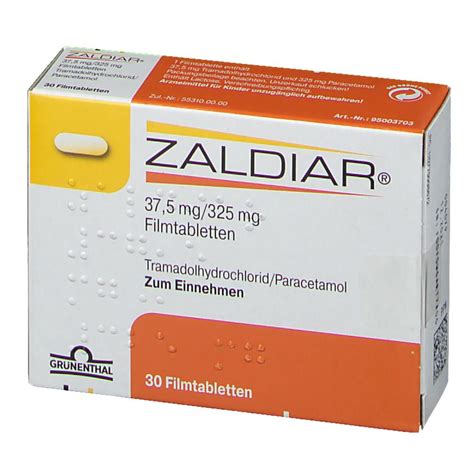
Zaldiar: An Expert Medical SEO Guide to Combined Analgesia for Moderate to Severe Pain
1. Comprehensive Introduction & Overview
Zaldiar is a potent analgesic medication prescribed for the symptomatic treatment of moderate to severe pain. It is a fixed-dose combination drug containing two active pharmaceutical ingredients: Tramadol hydrochloride and Paracetamol (also known as Acetaminophen). This synergistic combination allows for a dual-pronged approach to pain management, often providing superior pain relief compared to either component administered alone, particularly when monotherapy with non-opioid analgesics or milder opioids is insufficient.
As an expert in orthopedic care and medical SEO, understanding the nuances of Zaldiar is crucial for both healthcare professionals and patients. This guide aims to provide an exhaustive, authoritative, and medically accurate overview of Zaldiar, covering its mechanisms, clinical applications, safety profile, and management strategies.
The rationale behind combining Tramadol and Paracetamol lies in their distinct yet complementary mechanisms of action. Tramadol, a centrally acting opioid analgesic, works through multiple pathways, while Paracetamol provides its analgesic and antipyretic effects primarily through central mechanisms. This combination broadens the spectrum of pain relief, addresses different pain pathways, and may allow for lower doses of each component, potentially reducing the incidence of dose-dependent side effects.
Key Highlights of Zaldiar:
- Dual-Action Formula: Combines Tramadol (opioid analgesic) and Paracetamol (non-opioid analgesic).
- Targeted Pain Relief: Indicated for moderate to severe pain where other treatments are inadequate.
- Synergistic Effect: Offers enhanced pain relief compared to individual components.
- Versatile Application: Used in various pain conditions, including post-surgical, chronic musculoskeletal, and neuropathic pain components.
- Prescription-Only: Requires a healthcare professional's assessment due to its opioid component and potential risks.
2. Deep-Dive into Technical Specifications & Mechanisms
Understanding how Zaldiar works at a pharmacological level is fundamental to its appropriate and safe use. The combined action of Tramadol and Paracetamol provides a comprehensive approach to pain management.
2.1. Mechanism of Action
Tramadol Hydrochloride
Tramadol is a synthetic opioid analgesic that exerts its pain-relieving effects through several distinct mechanisms:
- Opioid Receptor Agonism: Tramadol and its active metabolite, O-desmethyltramadol (M1), act as agonists at µ-opioid receptors in the central nervous system (CNS). This binding inhibits pain signal transmission and modulates the perception of pain. The M1 metabolite has a significantly higher affinity for the µ-opioid receptor than the parent compound.
- Monoaminergic Reuptake Inhibition: Tramadol also inhibits the reuptake of norepinephrine and serotonin in the CNS. This action enhances the descending inhibitory pain pathways, which play a crucial role in modulating pain perception. By increasing the concentrations of these neurotransmitters in the synaptic cleft, Tramadol indirectly amplifies the body's natural pain-fighting mechanisms.
Paracetamol (Acetaminophen)
Paracetamol's mechanism of action is still not fully elucidated but is believed to involve central rather than peripheral effects:
- Cyclooxygenase (COX) Inhibition: It is thought to selectively inhibit cyclooxygenase enzymes (primarily COX-3, and possibly COX-1 and COX-2) in the CNS, leading to reduced prostaglandin synthesis. Prostaglandins are key mediators of pain and inflammation.
- Descending Serotonergic Pathways: Some evidence suggests that Paracetamol may also modulate pain through its interaction with descending serotonergic pathways, similar to certain antidepressants.
- Cannabinoid System Modulation: Recent research indicates potential interaction with the endocannabinoid system, contributing to its analgesic effects.
Synergistic Analgesia
The combination of Tramadol and Paracetamol provides synergistic analgesia. Tramadol's opioid and monoaminergic actions complement Paracetamol's central analgesic effects, leading to a more profound and sustained pain relief with potentially fewer side effects than higher doses of either drug alone. This multi-modal approach addresses different facets of the pain experience.
2.2. Pharmacokinetics
The pharmacokinetic profile of Zaldiar reflects the absorption, distribution, metabolism, and excretion of both Tramadol and Paracetamol.
Absorption
- Tramadol: Rapidly and almost completely absorbed after oral administration. Peak plasma concentrations (Cmax) are reached approximately 2 hours post-dose. Bioavailability is about 75% due to first-pass metabolism.
- Paracetamol: Rapidly and completely absorbed from the gastrointestinal tract. Peak plasma concentrations are achieved within 1 hour.
Distribution
- Tramadol: Highly lipophilic and widely distributed throughout the body. Approximately 20% bound to plasma proteins.
- Paracetamol: Relatively low protein binding (10-25%) and widely distributed into most body tissues.
Metabolism
- Tramadol: Primarily metabolized in the liver by cytochrome P450 (CYP) enzymes, mainly CYP2D6 and CYP3A4. The major active metabolite is O-desmethyltramadol (M1), formed by CYP2D6. Genetic polymorphisms in CYP2D6 can significantly affect Tramadol's metabolism and efficacy.
- Paracetamol: Primarily metabolized in the liver via glucuronidation (major pathway), sulfation (secondary pathway), and a minor pathway involving CYP2E1, which produces a highly reactive intermediate metabolite, N-acetyl-p-benzoquinone imine (NAPQI). NAPQI is rapidly detoxified by conjugation with glutathione; however, in overdose, glutathione stores can be depleted, leading to hepatotoxicity.
Excretion
- Tramadol: Excreted predominantly by the kidneys, both as unchanged drug and its metabolites. The elimination half-life of Tramadol is approximately 6 hours, and for M1, it's about 7 hours.
- Paracetamol: Excreted mainly in the urine as glucuronide and sulfate conjugates. The elimination half-life is typically 2-3 hours.
3. Extensive Clinical Indications & Usage
Zaldiar is indicated for the symptomatic treatment of moderate to severe pain when a combination of Tramadol and Paracetamol is considered necessary. This often applies to situations where non-opioid analgesics or milder opioids alone do not provide adequate pain relief.
3.1. Detailed Indications
- Post-Surgical Pain: Effective in managing acute pain following various surgical procedures, including orthopedic surgeries (e.g., joint replacements, fracture repairs).
- Acute Traumatic Pain: Management of pain resulting from injuries, sprains, or strains.
- Chronic Musculoskeletal Pain: Useful in conditions like:
- Osteoarthritis: Especially when flares cause moderate to severe pain.
- Rheumatoid Arthritis: For symptomatic pain relief.
- Low Back Pain: Both acute exacerbations and chronic forms, particularly when neuropathic components are present.
- Fibromyalgia: As part of a multi-modal pain management strategy.
- Neuropathic Pain Components: Tramadol's dual mechanism (opioid agonism and monoamine reuptake inhibition) can be beneficial in pain conditions with a neuropathic component, such as diabetic neuropathy or post-herpetic neuralgia, though it's not a first-line treatment for these.
- Cancer Pain: Can be used for moderate cancer pain, often as a step-up from NSAIDs or as an adjunct to stronger opioids.
3.2. Dosage Guidelines
Dosage should be individualized based on pain intensity, patient response, and tolerability. It is crucial to start with the lowest effective dose and titrate upwards as needed, while always adhering to maximum daily doses.
Standard Adult Dosage (≥12 years)
- Initial Dose: Typically two tablets (37.5 mg Tramadol / 325 mg Paracetamol each) per dose.
- Subsequent Doses: May take additional doses as needed, but not more frequently than every 6 hours.
- Maximum Daily Dose: No more than 8 tablets (equivalent to 300 mg Tramadol / 2600 mg Paracetamol) in a 24-hour period.
Special Populations
- Elderly Patients (>75 years): A longer dosing interval may be necessary due to reduced renal and/or hepatic function. Maximum daily dose should generally not exceed 6 tablets.
- Patients with Renal Impairment:
- Creatinine clearance <30 mL/min: Dosing interval should be extended to 12 hours. Not recommended in severe renal impairment (CrCl <10 mL/min).
- Patients with Hepatic Impairment:
- Mild to moderate impairment: Dosing interval should be extended.
- Severe hepatic impairment: Zaldiar is contraindicated.
Administration
- Zaldiar tablets should be swallowed whole with sufficient liquid, with or without food.
- Treatment duration should be as short as possible. For long-term treatment, the need for continued therapy should be regularly assessed.
4. Risks, Side Effects, and Contraindications
While effective, Zaldiar carries significant risks due to its opioid component and Paracetamol content, necessitating careful consideration of its use.
4.1. Common Side Effects
These are generally mild to moderate and often transient:
* Nausea, vomiting
* Dizziness, somnolence
* Headache
* Constipation
* Sweating
* Dry mouth
* Fatigue
4.2. Serious Side Effects & Warnings
- Respiratory Depression: A dose-dependent risk, particularly with higher doses or in susceptible individuals.
- Seizures: Tramadol lowers the seizure threshold. Risk is increased with higher doses, concomitant use of other seizure-lowering drugs (e.g., antidepressants), or in patients with epilepsy.
- Serotonin Syndrome: A potentially life-threatening condition resulting from accumulation of serotonin. Symptoms include agitation, hallucinations, rapid heart rate, fever, muscle rigidity, and severe nausea/vomiting. Risk is higher with concomitant use of SSRIs, SNRIs, MAOIs, and other serotonergic drugs.
- Hepatotoxicity: Paracetamol overdose can cause severe and potentially fatal liver damage. Even therapeutic doses, especially in patients with pre-existing liver disease or chronic alcohol use, can pose a risk.
- Anaphylaxis/Hypersensitivity: Rare but severe allergic reactions can occur.
- Dependence and Withdrawal: Tramadol can lead to physical and psychological dependence. Abrupt discontinuation after prolonged use can precipitate withdrawal symptoms (e.g., anxiety, sweating, tremors, gastrointestinal disturbances).
- Adrenal Insufficiency: Rare cases of adrenal insufficiency have been reported with opioid use.
- Hypoglycemia: Rare but potentially serious.
4.3. Contraindications
Zaldiar is contraindicated in patients with:
* Hypersensitivity to Tramadol, Paracetamol, or any excipient of the formulation.
* Acute intoxication with alcohol, hypnotics, centrally acting analgesics, opioids, or psychotropic drugs.
* Severe hepatic impairment.
* Epilepsy not controlled by treatment.
* Concomitant use of monoamine oxidase inhibitors (MAOIs) or within 14 days of discontinuing MAOI therapy.
* Severe respiratory depression.
* Children younger than 12 years.
* Breastfeeding mothers.
4.4. Precautions and Special Warnings
- Risk of Misuse, Abuse, and Diversion: Zaldiar contains an opioid and carries a risk of addiction.
- Interactions with CNS Depressants: Concomitant use with alcohol or other CNS depressants can increase the risk of respiratory depression, profound sedation, coma, and death.
- Drug-Drug Interactions: A wide range of interactions can alter the efficacy or safety profile (see Section 4.5).
- Driving and Operating Machinery: Zaldiar can impair mental and physical abilities. Patients should be cautioned against driving or operating machinery until they know how the drug affects them.
- Chronic Alcohol Use: Increases the risk of Paracetamol-induced hepatotoxicity.
4.5. Drug Interactions
Many drugs can interact with Zaldiar, altering its metabolism or pharmacodynamic effects. Careful review of a patient's medication list is essential.
Significant Interactions Table:
| Interacting Drug/Class | Effect on Zaldiar | Clinical Implication |
|---|---|---|
| MAOIs | Severe and potentially fatal interactions with Tramadol due to increased serotonin levels and risk of serotonin syndrome. | Contraindicated. Do not use Zaldiar within 14 days of MAOI discontinuation. |
| SSRIs, SNRIs, TCAs, Triptans | Increased risk of serotonin syndrome with Tramadol. | Use with caution. Monitor for symptoms of serotonin syndrome (agitation, hyperthermia, muscle rigidity, rapid heart rate). |
| Other Opioids, Benzodiazepines, CNS Depressants (e.g., alcohol, sedatives, hypnotics) | Increased risk of respiratory depression, profound sedation, coma, and death due to additive CNS depressant effects. | Avoid concomitant use. If unavoidable, use lowest effective doses for shortest duration, and monitor closely. |
| Carbamazepine | Significantly decreases Tramadol plasma concentrations, reducing its analgesic effect. | Not recommended. If necessary, consider alternative analgesics or significantly higher Tramadol doses (with caution). |
| CYP2D6 Inhibitors (e.g., Fluoxetine, Paroxetine, Quinidine) | May decrease the formation of the active M1 metabolite, potentially reducing Tramadol's analgesic efficacy. | Monitor for reduced pain relief. |
| CYP2D6 Inducers (e.g., Rifampicin) | May increase the formation of the active M1 metabolite, potentially increasing opioid effects or toxicity. | Monitor for increased opioid-related side effects. |
| Warfarin and Coumarin Derivatives | Increased INR and bleeding risk, possibly due to Paracetamol and/or Tramadol interactions. | Monitor INR closely, especially when initiating or discontinuing Zaldiar. Adjust anticoagulant dose as needed. |
| Digoxin | Isolated reports of digoxin toxicity. | Monitor digoxin levels. |
| Gabapentin/Pregabalin | Additive CNS depression and increased risk of respiratory depression. | Use with caution, especially in patients with respiratory risk factors. |
| Ondansetron (antiemetic) | Has been reported to reduce the analgesic effect of Tramadol. | Consider alternative antiemetics or monitor pain control. |
| Zidovudine | Increased risk of neutropenia with Paracetamol, especially in patients with HIV. | Monitor blood counts. |
4.6. Pregnancy and Lactation Warnings
Pregnancy
- Pregnancy Category: Zaldiar is generally not recommended during pregnancy.
- Tramadol: Crosses the placental barrier. Prolonged use during pregnancy can lead to neonatal opioid withdrawal syndrome. Administration late in pregnancy can cause respiratory depression in the neonate.
- Paracetamol: While generally considered safe for occasional use in pregnancy at recommended doses, the combination with Tramadol changes the risk profile.
- Overall Risk: The combination poses risks of neonatal withdrawal, respiratory depression, and potential developmental effects. Use only if the potential benefit justifies the potential risk to the fetus, and only under strict medical supervision.
Lactation
- Tramadol: And its active metabolite (M1) are excreted into breast milk.
- Paracetamol: Also excreted into breast milk in small amounts.
- Overall Risk: Due to the presence of Tramadol and its active metabolite, Zaldiar is contraindicated in breastfeeding mothers. Neonates can be exposed to clinically significant amounts of Tramadol, leading to somnolence, respiratory depression, and even death.
5. Overdose Management
An overdose of Zaldiar is a medical emergency requiring immediate attention due to the combined toxicities of Tramadol and Paracetamol.
5.1. Symptoms of Overdose
Tramadol Overdose Symptoms:
- Respiratory depression (from shallow breathing to apnea)
- Miosis (pinpoint pupils)
- Somnolence progressing to stupor or coma
- Seizures (often generalized)
- Hypotension
- Bradycardia
- Circulatory collapse
- Cardiac arrest
Paracetamol Overdose Symptoms:
- Initially (within 24 hours): Nausea, vomiting, abdominal pain, anorexia, pallor, malaise, diaphoresis.
- Later (24-48 hours and beyond): Signs of liver damage (e.g., jaundice, right upper quadrant tenderness, elevated liver enzymes), renal tubular necrosis, cardiomyopathy, pancreatitis. Severe cases can lead to hepatic failure, encephalopathy, coma, and death.
5.2. Management of Overdose
Immediate medical attention is crucial. The management strategy focuses on stabilizing the patient, reducing absorption, counteracting specific toxicities, and providing supportive care.
- Emergency Response: Call emergency services immediately.
- Airway and Breathing: Ensure a patent airway and assist ventilation if respiratory depression is present. Oxygen administration.
- Circulation: Manage hypotension with intravenous fluids and vasopressors if necessary.
- Gastrointestinal Decontamination:
- Activated Charcoal: Administer if the overdose is recent (within 1-2 hours) and the patient is conscious and able to protect their airway.
- Specific Antidotes:
- Naloxone: For Tramadol overdose, naloxone is the specific opioid receptor antagonist. Administer intravenously. However, naloxone may increase the risk of seizures in Tramadol overdose. Use with caution and titrate to reverse respiratory depression without precipitating severe withdrawal or seizures.
- N-acetylcysteine (NAC): For Paracetamol overdose, NAC is the antidote. It replenishes hepatic glutathione stores, detoxifying the toxic NAPQI metabolite. NAC is most effective when administered within 8 hours of ingestion but should be given even if delayed, as it can still provide benefit. A loading dose followed by maintenance doses is typically administered intravenously or orally.
- Seizure Management: If seizures occur, administer benzodiazepines (e.g., diazepam, lorazepam) intravenously.
- Supportive Care: Monitor vital signs, neurological status, liver function tests (ALT, AST, bilirubin, INR), renal function, and electrolyte balance. Provide intravenous fluids and other supportive measures as indicated.
- Hospitalization: All patients with suspected or confirmed Zaldiar overdose require hospitalization for observation and management.
6. Massive FAQ Section
Q1: What is Zaldiar used for?
Zaldiar is used for the symptomatic treatment of moderate to severe pain in adults and adolescents aged 12 years and older. It is typically prescribed when other pain relievers, such as non-opioid analgesics, have not been effective enough. This can include pain from injuries, post-surgical recovery, or chronic conditions like osteoarthritis.
Q2: How quickly does Zaldiar start to work?
Zaldiar usually starts to provide pain relief within 30 to 60 minutes after taking a dose. The peak effect is typically seen within 2-3 hours. Individual response can vary.
Q3: Is Zaldiar addictive?
Yes, Zaldiar contains Tramadol, which is an opioid. Opioids carry a risk of physical and psychological dependence, as well as abuse and addiction. It's important to use Zaldiar exactly as prescribed by your doctor and for the shortest duration necessary to manage your pain. Do not exceed the recommended dose or duration of treatment.
Q4: Can I drink alcohol while taking Zaldiar?
No, it is strongly advised to avoid alcohol while taking Zaldiar. Alcohol can significantly increase the risk of serious side effects such as severe drowsiness, dizziness, respiratory depression, coma, and liver damage (due to the Paracetamol component).
Q5: What are the most common side effects of Zaldiar?
The most common side effects include nausea, vomiting, dizziness, somnolence (drowsiness), headache, constipation, sweating, and dry mouth. These are usually mild and may lessen as your body adjusts to the medication. If they persist or worsen, contact your doctor.
Q6: Can Zaldiar be used for long-term pain management?
Zaldiar is generally intended for short-term use. For long-term treatment, your doctor will regularly assess the need for continued therapy due to the risks of dependence, tolerance, and other long-term side effects associated with opioid use.
Q7: What should I do if I miss a dose of Zaldiar?
If you miss a dose, take it as soon as you remember, unless it's almost time for your next scheduled dose. In that case, skip the missed dose and continue with your regular dosing schedule. Do not take a double dose to make up for a missed one, as this can increase the risk of side effects. Ensure at least 6 hours have passed between doses.
Q8: Is Zaldiar safe for elderly patients?
Zaldiar should be used with caution in elderly patients, especially those over 75 years of age. They may be more sensitive to the effects of the medication and may have reduced kidney or liver function, which can affect how the drug is processed and eliminated from the body. A lower dose or extended dosing interval may be necessary. Your doctor will determine the appropriate dosage.
Q9: How should I store Zaldiar?
Store Zaldiar at room temperature (typically below 25°C or 77°F), away from moisture and direct heat. Keep it in its original packaging and out of reach of children and pets. Do not keep outdated medicine or medicine no longer needed.
Q10: Can I drive or operate machinery while taking Zaldiar?
Zaldiar can cause dizziness, drowsiness, and blurred vision, which can impair your ability to drive or operate machinery safely. You should not drive or perform tasks requiring mental alertness until you know how Zaldiar affects you and are certain you can do so safely.
Q11: What is the difference between Zaldiar and just taking Tramadol or Paracetamol alone?
Zaldiar combines both Tramadol and Paracetamol. This combination provides a synergistic effect, meaning the pain relief is often greater than what either drug could achieve alone at comparable doses. This allows for a multi-modal approach to pain, targeting different pain pathways, and potentially reducing the dose of each component, which might lower the risk of dose-dependent side effects.
Q12: What are the signs of a Zaldiar overdose?
Signs of an overdose can include severe drowsiness, pinpoint pupils, slow or shallow breathing, unconsciousness, seizures, low blood pressure, and signs of liver damage (e.g., yellowing skin/eyes, severe abdominal pain, nausea/vomiting). If you suspect an overdose, seek immediate emergency medical attention.