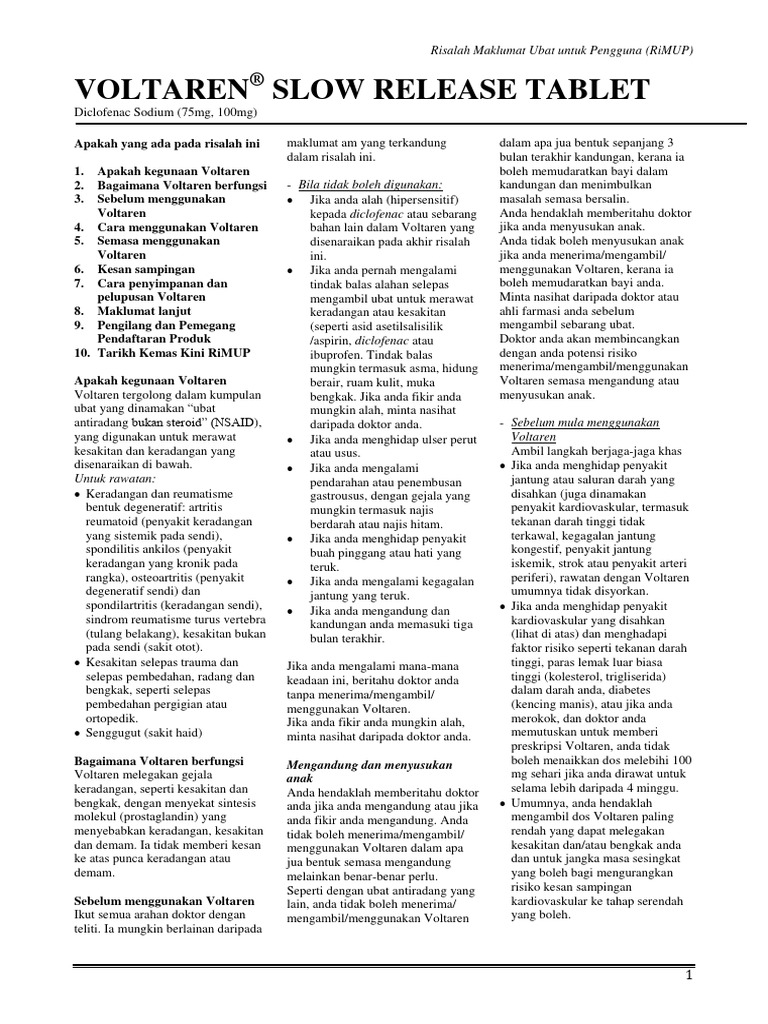
Voltaren (Diclofenac): An Expert's Comprehensive Guide to Pain and Inflammation Management
As an orthopedic specialist, I frequently encounter patients seeking effective relief from pain and inflammation, often stemming from musculoskeletal conditions. Among the most widely prescribed and recognized medications in this arena is Voltaren, the brand name for diclofenac. This comprehensive guide aims to provide an exhaustive, authoritative, and medically accurate overview of Voltaren (diclofenac), covering its fundamental aspects from scientific mechanisms to clinical applications and critical safety considerations.
Diclofenac is a non-steroidal anti-inflammatory drug (NSAID) renowned for its potent anti-inflammatory, analgesic (pain-relieving), and antipyretic (fever-reducing) properties. Available in various formulations, including oral tablets, topical gels, patches, ophthalmic solutions, and injectable forms, diclofenac offers versatile treatment options for a broad spectrum of conditions.
Deep Dive into Technical Specifications and Mechanisms
Understanding how diclofenac works at a molecular level is crucial for appreciating its therapeutic benefits and potential risks.
Mechanism of Action: The COX Inhibition Story
Diclofenac exerts its primary therapeutic effects by inhibiting the activity of cyclooxygenase (COX) enzymes. There are two main isoforms of COX enzymes:
- COX-1 (Cyclooxygenase-1): This enzyme is constitutively expressed (always present) in most tissues and plays a vital role in maintaining normal physiological functions. It is involved in producing prostaglandins that protect the stomach lining, support kidney function, and facilitate platelet aggregation.
- COX-2 (Cyclooxygenase-2): This enzyme is primarily induced at sites of inflammation, injury, and infection. It is responsible for synthesizing prostaglandins that mediate pain, inflammation, and fever.
Diclofenac is considered a non-selective NSAID, meaning it inhibits both COX-1 and COX-2 enzymes. However, it exhibits a slight preference for COX-2 inhibition, which contributes to its potent anti-inflammatory effects with a theoretically (though not always clinically significant) lower propensity for some COX-1 mediated side effects compared to truly non-selective NSAIDs like ibuprofen at higher doses. By inhibiting COX enzymes, diclofenac reduces the synthesis of prostaglandins, thromboxanes, and prostacyclins, thereby mitigating the cardinal signs of inflammation: pain, swelling, redness, and heat.
Pharmacokinetics: How the Body Handles Diclofenac
The journey of diclofenac through the body involves several key stages:
- Absorption:
- Oral Forms: Diclofenac is rapidly and almost completely absorbed from the gastrointestinal tract following oral administration. However, it undergoes significant first-pass metabolism in the liver. This results in an absolute bioavailability of approximately 50-60% for oral formulations. Peak plasma concentrations are typically reached within 2-3 hours for immediate-release tablets and longer for extended-release formulations.
- Topical Gels/Solutions: Absorption is slower and less extensive, leading to lower systemic concentrations but higher local concentrations at the site of application, minimizing systemic side effects.
- Injectable Forms: Intramuscular (IM) administration leads to rapid absorption, with peak plasma concentrations achieved within 10-30 minutes.
- Distribution:
- Diclofenac is highly protein-bound, primarily to albumin (over 99%). This high binding affinity means that only a small fraction of the drug is free and pharmacologically active.
- It readily distributes into synovial fluid, reaching concentrations comparable to or even higher than plasma levels, which is therapeutically beneficial for conditions like arthritis.
- Metabolism:
- Diclofenac is extensively metabolized in the liver, primarily by hydroxylation and subsequent glucuronidation. The main enzymes involved are cytochrome P450 isoenzymes, particularly CYP2C9, CYP2C19, and CYP3A4.
- The major metabolites, 4'-hydroxydiclofenac, 5-hydroxydiclofenac, 3'-hydroxydiclofenac, and 4',5-dihydroxydiclofenac, are largely inactive.
- Elimination:
- The elimination half-life of diclofenac from plasma is relatively short, approximately 1-2 hours. However, the drug's therapeutic effects can persist longer due to its distribution into synovial fluid and sustained inhibition of COX enzymes.
- Excretion primarily occurs via the kidneys (approximately 60% of the dose as metabolites) and bile (approximately 30-40% as metabolites).
- In patients with severe renal impairment, accumulation of metabolites may occur, necessitating dose adjustments. Hepatic impairment can also affect diclofenac clearance.
Extensive Clinical Indications & Usage
Diclofenac's versatility makes it a cornerstone in managing various painful and inflammatory conditions.
Detailed Indications
Orthopedic and Rheumatic Conditions:
- Osteoarthritis (OA): Symptomatic relief of pain and inflammation associated with OA, particularly in the knee, hip, and hand. Topical formulations are often preferred for superficial joints.
- Rheumatoid Arthritis (RA): Management of pain, stiffness, and inflammation in active RA.
- Ankylosing Spondylitis: Relief of pain and inflammation in the spine and other affected joints.
- Acute Gout: Rapid alleviation of severe pain and inflammation during acute gouty attacks.
- Post-operative Pain: Management of moderate to severe pain following surgical procedures, often used in multimodal pain regimens.
- Post-traumatic Pain: Effective for pain and inflammation associated with sprains, strains, contusions, and other soft tissue injuries.
- Low Back Pain: Relief of acute and chronic non-specific low back pain.
- Tendinitis and Bursitis: Reduces inflammation and pain in conditions like rotator cuff tendinitis or trochanteric bursitis.
Other Pain Conditions:
- Dysmenorrhea (Menstrual Cramps): Highly effective in reducing uterine cramping and associated pain.
- Migraine Attacks: Specific formulations (e.g., diclofenac potassium for oral solution) are approved for the acute treatment of migraine with or without aura.
- Renal Colic: Injectable diclofenac is frequently used for rapid relief of severe pain associated with kidney stones.
- Dental Pain: Post-extraction pain or pain from other dental procedures.
- Ophthalmic Inflammation: Diclofenac ophthalmic solution is used to treat post-operative inflammation following cataract extraction and for temporary relief of ocular itching due to seasonal allergic conjunctivitis.
Topical Specific Indications:
- Actinic Keratosis: A specific diclofenac sodium topical gel (e.g., Solaraze®) is approved for the topical treatment of actinic keratosis lesions.
Dosage Guidelines
It is imperative that dosage is always individualized based on the patient's condition, response, and tolerability, under the guidance of a healthcare professional. The lowest effective dose for the shortest possible duration should always be used to minimize risks.
| Formulation | Typical Adult Dosage | Maximum Daily Dose (Adults) | Notes |
|---|---|---|---|
| Oral (Immediate-Release) | 50 mg 2-3 times daily for RA/OA; 50 mg 3 times daily, then 50 mg as needed for acute pain. | 150 mg | Take with food or milk to reduce GI upset. |
| Oral (Extended-Release/XR) | 100 mg once daily for RA/OA. | 100 mg | Do not crush or chew. |
| Topical Gel (1%) | Apply 2-4 grams to affected joint 4 times daily (e.g., Voltaren Arthritis Pain Gel). Max 32g/day over all joints. | 32 g | Localized treatment, lower systemic absorption. Wash hands after application. |
| Topical Solution (1.5% or 2%) | Apply 40 drops (2 pumps) to each affected knee 2 times daily (1.5%); 2 times daily for 2% solution. | 80 drops (1.5%) | Used for osteoarthritis of the knee. Avoid showering/bathing for 30 minutes after application. |
| Injectable (IM) | 75 mg once daily, or 75 mg twice daily in severe cases. | 150 mg | For acute exacerbations or post-operative pain. Not for prolonged use. Administer deep into gluteal muscle. |
| Rectal Suppositories | 50 mg or 100 mg once daily, or divided doses. | 150 mg | Alternative for patients unable to take oral medication. Often used for night-time pain relief. |
| Ophthalmic Solution | 1 drop to affected eye 4 times daily for post-op inflammation; 1 drop to affected eye 4 times daily for allergic conjunctivitis. | - | Specific for ocular use. |
Special Populations:
* Elderly Patients: Increased risk of adverse effects, especially GI bleeding and cardiovascular events. Use the lowest effective dose for the shortest duration.
* Renal Impairment: Diclofenac should be used with caution. Dose reduction may be necessary in moderate impairment; contraindicated in severe renal failure.
* Hepatic Impairment: Caution is advised. Monitor liver function tests. Contraindicated in severe hepatic failure.
Risks, Side Effects, and Contraindications
While highly effective, diclofenac carries significant risks, common to all NSAIDs, that necessitate careful consideration.
Contraindications
Diclofenac is absolutely contraindicated in patients with:
* Known hypersensitivity to diclofenac, aspirin, or other NSAIDs (e.g., history of asthma, urticaria, or allergic-type reactions after taking aspirin or other NSAIDs).
* Active gastrointestinal bleeding, ulceration, or perforation.
* Severe uncontrolled heart failure.
* Severe renal impairment (creatinine clearance <30 mL/min).
* Severe hepatic impairment.
* Peri-operative pain in the setting of coronary artery bypass graft (CABG) surgery. NSAIDs increase the risk of myocardial infarction and stroke in this setting.
* Third trimester of pregnancy due to the risk of premature closure of the fetal ductus arteriosus.
Adverse Effects
Adverse effects can range from mild and transient to severe and life-threatening.
- Gastrointestinal (GI) System (Most Common):
- Nausea, vomiting, diarrhea, dyspepsia, abdominal pain, constipation.
- Serious: GI ulceration, bleeding, perforation (can be fatal, especially in the elderly).
- Cardiovascular System (Black Box Warning):
- Increased risk of serious cardiovascular thrombotic events, including myocardial infarction (heart attack) and stroke, which can be fatal. This risk may increase with duration of use and in patients with pre-existing cardiovascular disease or risk factors.
- Fluid retention, edema, hypertension (high blood pressure), exacerbation of heart failure.
- Renal System:
- Acute kidney injury (especially in dehydrated patients or those with pre-existing renal dysfunction), interstitial nephritis, papillary necrosis, hyperkalemia.
- Hepatic System:
- Elevated liver enzymes (transaminases), which can be asymptomatic.
- Rarely, severe hepatotoxicity, including jaundice, fulminant hepatitis, liver necrosis, and liver failure (some fatal). Regular monitoring of liver function is recommended with long-term use.
- Hematologic System:
- Inhibition of platelet aggregation (increased bleeding time).
- Anemia, agranulocytosis, aplastic anemia (rare).
- Dermatologic System:
- Rash, pruritus (itching), photosensitivity.
- Serious: Stevens-Johnson Syndrome (SJS), Toxic Epidermal Necrolysis (TEN), exfoliative dermatitis (rare but life-threatening).
- Nervous System:
- Headache, dizziness, vertigo, somnolence, insomnia.
- Tinnitus (ringing in the ears).
- Aseptic meningitis (rare).
- Hypersensitivity Reactions:
- Anaphylaxis, angioedema, bronchospasm (especially in aspirin-sensitive asthmatics).
Drug Interactions
Diclofenac can interact with numerous medications, altering their efficacy or increasing the risk of adverse effects.
| Interacting Drug/Class | Potential Interaction | Management |
|---|---|---|
| Anticoagulants (e.g., Warfarin, Dabigatran, Rivaroxaban) | Increased risk of bleeding (GI and non-GI) due to platelet inhibition and potential displacement from protein binding. | Avoid concomitant use. If unavoidable, monitor INR/bleeding parameters closely. |
| Antiplatelet Agents (e.g., Aspirin, Clopidogrel) | Increased risk of GI bleeding and ulceration. | Avoid concomitant use. If unavoidable, monitor for signs of bleeding. Consider gastroprotective agents. |
| Corticosteroids | Increased risk of GI ulceration and bleeding. | Use with caution; consider gastroprotective agents. |
| SSRIs (Selective Serotonin Reuptake Inhibitors) | Increased risk of GI bleeding. | Use with caution; monitor for signs of bleeding. |
| Diuretics (e.g., Furosemide, Thiazides) | Reduced natriuretic and antihypertensive effect of diuretics. Increased risk of renal impairment. | Monitor blood pressure and renal function. |
| ACE Inhibitors / ARBs | Reduced antihypertensive effect. Increased risk of renal impairment, especially in elderly or dehydrated patients. Increased risk of hyperkalemia. | Monitor blood pressure, renal function, and serum potassium. |
| Beta-blockers | Reduced antihypertensive effect. | Monitor blood pressure. |
| Lithium | Increased plasma lithium levels, leading to toxicity. | Monitor lithium levels closely if co-administration is necessary. Adjust lithium dose. |
| Methotrexate | Increased plasma methotrexate levels, leading to toxicity (e.g., myelosuppression, nephrotoxicity). | Avoid concomitant use, especially with high-dose methotrexate. If unavoidable, monitor methotrexate levels and for toxicity. |
| Cyclosporine | Increased nephrotoxicity of cyclosporine. | Use with caution; monitor renal function. |
| Digoxin | May increase serum digoxin levels. | Monitor digoxin levels. |
| Alcohol | Increased risk of GI irritation and bleeding. | Avoid or limit alcohol consumption during diclofenac therapy. |
| CYP2C9 Inhibitors (e.g., Fluconazole, Voriconazole) | May increase diclofenac exposure. | Use with caution; consider lower diclofenac doses. |
| CYP2C9 Inducers (e.g., Rifampin, Carbamazepine) | May decrease diclofenac exposure. | Monitor for reduced efficacy. |
Pregnancy and Lactation Warnings
- Pregnancy:
- First and Second Trimesters: Diclofenac is classified as Pregnancy Category C. Animal studies have shown adverse effects on the fetus, and there are no adequate and well-controlled studies in pregnant women. Use only if the potential benefit justifies the potential risk to the fetus.
- Third Trimester: Diclofenac is classified as Pregnancy Category D. NSAIDs like diclofenac should be avoided during the third trimester because they can cause premature closure of the fetal ductus arteriosus and renal dysfunction in the fetus, leading to oligohydramnios and, in some cases, neonatal renal failure. They can also inhibit uterine contractions and increase the risk of maternal and fetal bleeding.
- Lactation (Breastfeeding):
- Diclofenac is excreted into breast milk in small amounts. While the amount is generally considered low and unlikely to cause adverse effects in a healthy full-term infant, caution is advised. Consult a healthcare provider before using diclofenac while breastfeeding. For short-term use, it is often considered compatible, but prolonged or high-dose use should be avoided.
Overdose Management
Diclofenac overdose can lead to significant toxicity.
- Symptoms of Overdose:
- Common: Lethargy, drowsiness, nausea, vomiting, epigastric pain, GI bleeding.
- Less Common but Serious: Hypertension, acute renal failure, respiratory depression, coma, convulsions (especially in children), anaphylactoid reactions.
- Treatment:
- There is no specific antidote for diclofenac overdose.
- Management is primarily supportive and symptomatic.
- Gastric decontamination: If an overdose is identified early (within 1 hour of ingestion), gastric lavage or administration of activated charcoal may be considered to reduce absorption.
- Monitoring: Closely monitor vital signs, renal function, liver function, and electrolyte balance.
- Supportive Care: Provide oxygen, maintain airway, treat hypotension with fluids and vasopressors if necessary. Manage convulsions with benzodiazepines if they occur.
- Forced diuresis, alkalinization of urine, hemodialysis, or hemoperfusion are unlikely to be effective due to diclofenac's high protein binding and extensive metabolism.
Massive FAQ Section
1. What is Voltaren (Diclofenac) primarily used for?
Voltaren (diclofenac) is primarily used to relieve pain, reduce inflammation, and lower fever. It is very common for conditions like osteoarthritis, rheumatoid arthritis, ankylosing spondylitis, acute gout, menstrual cramps, and various types of acute pain such as post-operative or post-traumatic pain.
2. How quickly does Voltaren start to work?
For oral formulations, patients typically begin to feel pain relief within 30 minutes to an hour. The full anti-inflammatory effects may take several days to become apparent, especially in chronic conditions like arthritis. Topical gels may take longer to show noticeable effects, often a week or more for conditions like osteoarthritis.
3. Can I take Voltaren with other pain relievers?
It depends on the pain reliever. You should not take Voltaren with other NSAIDs (like ibuprofen, naproxen, celecoxib) or aspirin (unless specifically directed by a doctor for antiplatelet purposes, with careful monitoring) due to an increased risk of side effects, particularly GI bleeding. Acetaminophen (Tylenol) can generally be taken with Voltaren, as it works differently, but always consult your doctor or pharmacist.
4. What are the most serious side effects of Voltaren?
The most serious side effects of Voltaren include an increased risk of heart attack and stroke (cardiovascular thrombotic events), serious gastrointestinal bleeding, ulceration, or perforation, and severe kidney or liver problems. Allergic reactions, including severe skin reactions, are also possible.
5. Is Voltaren addictive?
No, Voltaren (diclofenac) is not considered an addictive medication. It does not produce the euphoric effects or withdrawal symptoms associated with opioid pain relievers.
6. Can Voltaren cause stomach problems?
Yes, stomach problems are among the most common side effects of Voltaren. These can range from mild indigestion, nausea, and heartburn to more serious issues like stomach ulcers, gastrointestinal bleeding, and perforation, especially with long-term use or higher doses. Taking it with food or milk can help reduce irritation.
7. Is Voltaren safe for long-term use?
Long-term use of Voltaren is generally discouraged due to the increased risk of serious side effects, particularly cardiovascular events, GI complications, and kidney damage. If long-term use is necessary, it should be at the lowest effective dose, with close monitoring by a healthcare professional, and often with co-prescription of gastroprotective agents.
8. What is the difference between oral Voltaren and Voltaren gel?
Oral Voltaren (tablets, capsules) provides systemic pain relief by circulating throughout the body, making it suitable for widespread pain or deeper joint pain. Voltaren gel, on the other hand, is applied topically to the skin over the affected area. It provides localized pain relief with significantly less systemic absorption, thereby reducing the risk of systemic side effects like stomach upset or cardiovascular issues. It's often preferred for superficial joint pain like in the knees or hands.
9. Can pregnant women use Voltaren?
Voltaren should be avoided during the third trimester of pregnancy due to significant risks to the fetus (premature closure of the ductus arteriosus, kidney problems). During the first and second trimesters, it should only be used if the potential benefit outweighs the potential risk, and under strict medical supervision. Always consult your doctor if you are pregnant or planning to become pregnant.
10. Does Voltaren affect blood pressure?
Yes, Voltaren, like other NSAIDs, can cause new onset hypertension or worsen pre-existing hypertension. It can also interfere with the blood pressure-lowering effects of certain medications, such as ACE inhibitors, ARBs, and diuretics. Blood pressure should be monitored regularly if you are taking Voltaren, especially if you have a history of hypertension.
11. Can Voltaren be used for headaches?
Yes, specific formulations of diclofenac (particularly diclofenac potassium for oral solution) are approved for the acute treatment of migraine attacks. It can also be used for tension headaches, but it's important to consult a doctor to ensure it's the appropriate treatment and to avoid medication overuse headaches.
12. What should I do if I miss a dose of Voltaren?
If you miss a dose of Voltaren, take it as soon as you remember. However, if it's almost time for your next scheduled dose, skip the missed dose and resume your regular dosing schedule. Do not double the dose to catch up. Consistent dosing is important for maintaining therapeutic levels, but never exceed the maximum daily dose.