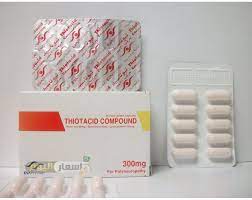
Thiotacid Compound: An Expert Medical Guide to Uses, Benefits, and Safety
As an expert medical SEO copywriter and orthopedic specialist, I understand the critical need for clear, accurate, and comprehensive information regarding therapeutic agents. Thiotacid Compound is a medication primarily recognized for its role in managing conditions associated with oxidative stress, particularly neuropathies. This exhaustive guide aims to provide healthcare professionals and patients alike with an authoritative resource on Thiotacid Compound, covering its intricate mechanisms, clinical applications, safety profile, and more.
1. Comprehensive Introduction & Overview
Thiotacid Compound is a pharmaceutical preparation whose primary active ingredient is Alpha-Lipoic Acid (ALA), often combined with other synergistic nutrients like B vitamins. Alpha-Lipoic Acid is a naturally occurring compound that plays a vital role in cellular metabolism, functioning as a powerful antioxidant and coenzyme in mitochondrial processes. Its unique ability to be both water- and fat-soluble allows it to exert its antioxidant effects throughout the body, including nerve tissues and the brain.
The "Compound" designation typically refers to formulations that include additional ingredients designed to enhance the primary action of ALA, such as B-complex vitamins (B1, B6, B12), which are crucial for nerve health and function. This combination aims to provide comprehensive support for conditions characterized by nerve damage and oxidative stress.
Key Highlights of Thiotacid Compound:
- Primary Active Ingredient: Alpha-Lipoic Acid (ALA)
- Classification: Antioxidant, Metabolic Agent, often combined with Neurotropic B Vitamins
- Main Therapeutic Area: Neuropathies, particularly diabetic peripheral neuropathy
- Mechanism: Reduces oxidative stress, improves nerve function, supports cellular energy production.
This guide will delve into the scientific underpinnings of Thiotacid Compound, providing a detailed understanding of its pharmacology, clinical utility, and essential safety considerations to ensure informed decision-making for both prescribers and users.
2. Deep-Dive into Technical Specifications & Mechanisms
Understanding how Thiotacid Compound works at a cellular level is crucial for appreciating its therapeutic benefits.
2.1. Mechanism of Action
The therapeutic efficacy of Thiotacid Compound largely stems from the multifaceted actions of Alpha-Lipoic Acid (ALA):
- Potent Antioxidant Activity: ALA is a powerful scavenger of free radicals, which are unstable molecules that cause oxidative damage to cells and tissues. It directly neutralizes various reactive oxygen species (ROS) and reactive nitrogen species (RNS).
- Regeneration of Other Antioxidants: Uniquely, ALA can regenerate other endogenous antioxidants, including:
- Vitamin C (ascorbic acid)
- Vitamin E (alpha-tocopherol)
- Glutathione (the body's "master antioxidant")
- Coenzyme Q10 (CoQ10)
This regenerative capacity amplifies the overall antioxidant defense system of the body.
- Chelation of Heavy Metals: ALA possesses chelating properties, meaning it can bind to and help remove toxic heavy metals (e.g., iron, copper) from the body, thereby reducing metal-induced oxidative stress.
- Improvement of Insulin Sensitivity: In diabetic patients, ALA has been shown to improve glucose utilization and insulin signaling, potentially by enhancing glucose transporter activity (e.g., GLUT4) and reducing insulin resistance. This is particularly relevant for diabetic neuropathy.
- Neuroprotective Effects: By reducing oxidative stress and inflammation, ALA protects nerve cells from damage. It can improve nerve blood flow, enhance nerve conduction velocity, and support the regeneration of nerve fibers. This is critical for alleviating symptoms of neuropathy.
- Mitochondrial Support: ALA is a coenzyme for pyruvate dehydrogenase and alpha-ketoglutarate dehydrogenase complexes, which are essential enzymes in the Krebs cycle (cellular energy production). This role supports optimal mitochondrial function and energy metabolism.
If the "Compound" includes B vitamins, their mechanisms further contribute:
* Vitamin B1 (Thiamine): Essential for carbohydrate metabolism and nerve impulse transmission. Deficiency can lead to neuropathy.
* Vitamin B6 (Pyridoxine): Involved in neurotransmitter synthesis and myelin formation.
* Vitamin B12 (Cobalamin): Crucial for nerve cell maintenance, myelin sheath formation, and DNA synthesis. Deficiency is a common cause of neuropathy.
2.2. Pharmacokinetics
The journey of Thiotacid Compound within the body involves several key stages:
- Absorption:
- Oral administration: ALA is rapidly absorbed from the gastrointestinal tract.
- Bioavailability: Can be variable and significantly reduced when taken with food. Peak plasma concentrations are typically reached within 30-60 minutes after oral ingestion.
- Distribution:
- ALA is widely distributed throughout the body.
- It readily crosses the blood-brain barrier, allowing it to exert its effects on the central nervous system and peripheral nerves.
- Metabolism:
- Primarily metabolized in the liver.
- Undergoes extensive first-pass metabolism, including reduction to dihydrolipoic acid (DHLA), beta-oxidation, and S-methylation.
- DHLA is also an active antioxidant.
- Excretion:
- Excreted mainly via the kidneys as metabolites.
- The elimination half-life is relatively short, typically ranging from 20 to 50 minutes, which necessitates specific dosing regimens to maintain therapeutic levels.
3. Extensive Clinical Indications & Usage
Thiotacid Compound is indicated for a range of conditions where oxidative stress and nerve damage play a significant role.
3.1. Detailed Indications
| Indication | Description |
| Diabetic Peripheral Neuropathy (DPN) | The primary indication. ALA improves nerve function and reduces symptoms like numbness, tingling, burning, and pain. It helps by combating oxidative damage, improving nerve conduction velocity, and supporting nerve fiber regeneration.