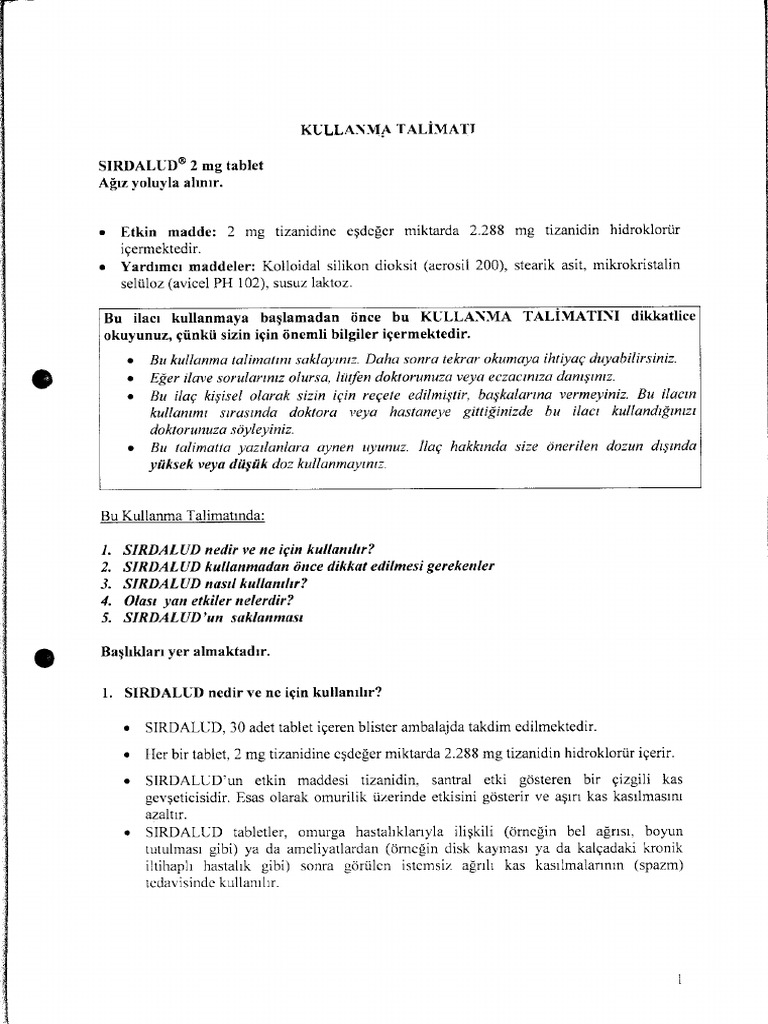
Sirdalud (Tizanidine): A Comprehensive Medical SEO Guide for Spasticity Management
1. Introduction & Overview of Sirdalud (Tizanidine)
Sirdalud, known generically as tizanidine hydrochloride, is a centrally acting alpha-2 adrenergic agonist primarily used as a muscle relaxant. It plays a crucial role in the management of spasticity, a condition characterized by increased muscle tone, stiffness, and involuntary muscle spasms, often resulting from damage to the central nervous system. Conditions like multiple sclerosis (MS), spinal cord injury, stroke, and cerebral palsy frequently lead to spasticity, which can significantly impair mobility, cause pain, and reduce quality of life.
Unlike some other muscle relaxants, tizanidine is thought to reduce spasticity with less impact on muscle strength, making it a valuable option for patients where maintaining muscle function is critical. This comprehensive guide will delve into the intricate details of Sirdalud, from its pharmacological actions to clinical applications, potential risks, and safe usage, providing an authoritative resource for patients, caregivers, and healthcare professionals alike.
2. Deep-Dive into Technical Specifications & Mechanisms
Mechanism of Action: How Sirdalud Works
Sirdalud (tizanidine) exerts its therapeutic effects by acting as an agonist at alpha-2 adrenergic receptors, primarily located in the spinal cord. Its mechanism can be broken down into several key steps:
- Presynaptic Inhibition: Tizanidine primarily acts presynaptically on inhibitory alpha-2 adrenergic receptors. When activated, these receptors reduce the release of excitatory amino acids, such as glutamate and aspartate, from interneurons and afferent nerve fibers in the spinal cord.
- Reduced Polysynaptic Reflex Activity: By inhibiting the release of excitatory neurotransmitters, tizanidine effectively dampens polysynaptic reflex activity. These reflexes are often hyperactive in spastic conditions, leading to sustained muscle contractions.
- Decreased Muscle Tone and Spasms: The net effect of reduced excitatory input and dampened reflex activity is a decrease in muscle tone, resistance to passive movement, and the frequency and severity of involuntary muscle spasms and clonus.
- Analgesic Properties: Beyond its muscle relaxant effects, tizanidine also possesses some analgesic properties, which can be beneficial in alleviating pain associated with spasticity and muscle spasms.
- Minimal Direct Effect on Muscle: Importantly, tizanidine is believed to have minimal direct effects on skeletal muscle fibers or the neuromuscular junction, contributing to its ability to reduce spasticity without causing excessive muscle weakness in many patients.
Pharmacokinetics: The Journey of Sirdalud in the Body
Understanding how Sirdalud is absorbed, distributed, metabolized, and eliminated is crucial for appropriate dosing and managing potential interactions.
- Absorption:
- Tizanidine is rapidly and almost completely absorbed from the gastrointestinal tract following oral administration.
- Peak plasma concentrations are typically achieved within 1 to 2 hours.
- However, it undergoes significant first-pass metabolism, resulting in an absolute bioavailability of approximately 34%.
- Food can influence absorption; taking Sirdalud consistently with or without food is recommended to maintain stable plasma levels.
- Distribution:
- Tizanidine is widely distributed throughout the body.
- Plasma protein binding is relatively low, approximately 30%.
- The volume of distribution is around 2.4 L/kg.
- Metabolism:
- Tizanidine is extensively metabolized in the liver, primarily by the cytochrome P450 1A2 (CYP1A2) isoenzyme.
- The metabolites formed are largely inactive.
- This hepatic metabolism is a critical factor in drug interactions, particularly with other CYP1A2 inhibitors.
- Elimination:
- The majority of the dose (approximately 60%) is excreted via the kidneys, primarily as metabolites.
- The terminal elimination half-life of tizanidine is relatively short, ranging from 2 to 4 hours.
- Impaired renal function significantly prolongs the elimination half-life, necessitating dose adjustments in patients with kidney disease.
3. Extensive Clinical Indications & Usage
Sirdalud is primarily indicated for the symptomatic treatment of spasticity of skeletal muscle due to neurological disorders.
Detailed Indications
- Multiple Sclerosis (MS): Sirdalud is effective in reducing the increased muscle tone, spasms, and pain associated with MS.
- Spinal Cord Injury: It helps alleviate the severe spasticity that often follows spinal cord trauma, improving comfort and facilitating rehabilitation.
- Stroke: For patients experiencing post-stroke spasticity, tizanidine can reduce muscle stiffness and improve functional outcomes.
- Cerebral Palsy: While often used off-label, tizanidine is frequently prescribed to manage spasticity in children and adults with cerebral palsy, aiming to improve mobility and reduce discomfort.
- Other Neurological Conditions: It may also be used in other conditions causing chronic or severe spasticity, such as amyotrophic lateral sclerosis (ALS) or traumatic brain injury.
- Painful Muscle Spasms: In some regions, Sirdalud may also be indicated for the relief of painful muscle spasms associated with acute, painful musculoskeletal conditions, though this is a less common primary indication compared to spasticity.
Dosage Guidelines and Administration
Dosing of Sirdalud must be individualized based on patient response, tolerability, and the specific condition being treated. The goal is to achieve maximal therapeutic effect with minimal side effects.
- Initial Dose:
- Typically, treatment begins with a low dose of 2 mg, taken orally, 2 to 3 times daily.
- Starting with a low dose helps to assess individual tolerance and minimize initial adverse effects like sedation and hypotension.
- Dose Titration:
- The dose can be gradually increased in increments of 2 to 4 mg, usually every 3 to 4 days, depending on the patient's clinical response and the occurrence of adverse reactions.
- Increments should be carefully managed to avoid sudden spikes in plasma concentration and associated side effects.
- Maintenance Dose:
- The usual therapeutic maintenance dose ranges from 6 mg to 12 mg per day, divided into 3 to 4 doses.
- Some patients may require higher doses, but these should be carefully titrated.
- Maximum Dose:
- The maximum recommended daily dose is generally 36 mg. Doses exceeding this are associated with a higher risk of adverse effects, particularly hypotension and liver dysfunction.
- Administration:
- Sirdalud can be taken with or without food. However, consistency in administration (always with food or always without food) is important to ensure predictable absorption and plasma concentrations, as food can increase the peak plasma concentration and absorption of tizanidine.
- Discontinuation:
- Abrupt discontinuation of Sirdalud, especially after prolonged use or at high doses, can lead to rebound hypertension, tachycardia, and hypertonia (exacerbation of spasticity).
- To minimize withdrawal symptoms, the dose should be gradually tapered over 1 to 2 weeks.
Special Populations
- Renal Impairment:
- Patients with impaired renal function (creatinine clearance < 25 mL/min) exhibit a significant reduction in tizanidine clearance.
- The initial dose should be reduced (e.g., 2 mg once daily), and subsequent dose increases should be slower and carefully monitored.
- Monitoring for adverse effects is crucial.
- Hepatic Impairment:
- Tizanidine is extensively metabolized by the liver. Patients with hepatic impairment should use Sirdalud with caution.
- Liver function tests (LFTs) should be monitored at baseline and periodically during treatment.
- Sirdalud is generally contraindicated in severe hepatic impairment.
- Elderly Patients:
- Elderly patients may be more sensitive to the effects of tizanidine, including sedation and hypotension, and may have reduced renal or hepatic function.
- Treatment should be initiated with a lower dose and titrated slowly, with close monitoring for adverse effects.
4. Risks, Side Effects, and Contraindications
While Sirdalud is an effective treatment for spasticity, it is associated with various side effects and carries specific contraindications and drug interaction warnings.
Common Side Effects
Many side effects are dose-dependent and tend to be more pronounced during initial treatment or with dose escalation.
- Central Nervous System (CNS):
- Drowsiness, somnolence, sedation
- Dizziness, lightheadedness
- Asthenia (weakness), fatigue
- Nervousness, anxiety
- Insomnia (less common)
- Cardiovascular:
- Hypotension (low blood pressure), especially orthostatic hypotension
- Bradycardia (slow heart rate)
- Gastrointestinal:
- Dry mouth (very common)
- Nausea, abdominal discomfort
- Other:
- Liver enzyme elevation (transient and usually asymptomatic)
Serious Side Effects (Less Common)
- Hepatotoxicity: While rare, tizanidine can cause significant liver damage. Regular monitoring of liver function tests (ALT, AST) is recommended, especially during the first 6 months of treatment and with dose increases. Discontinue Sirdalud if LFTs are persistently elevated or if symptoms of liver injury (e.g., jaundice, persistent nausea, dark urine) occur.
- Severe Hypotension: Can lead to syncope or collapse, particularly with rapid dose increases or in susceptible individuals.
- QT Prolongation: Though rare, there is a theoretical risk, especially when co-administered with other QT-prolonging drugs.
- Hallucinations/Psychotic-like Symptoms: Can occur, particularly at higher doses.
- Severe Allergic Reactions: Rash, pruritus, angioedema (swelling of face, lips, tongue) are possible, though rare.
- Rebound Hypertension/Tachycardia: As mentioned, abrupt withdrawal can lead to a significant increase in blood pressure and heart rate.
Contraindications
Sirdalud is contraindicated in certain situations to prevent severe adverse outcomes:
- Hypersensitivity: Patients with a known hypersensitivity to tizanidine or any component of the formulation.
- Concomitant Use with Strong CYP1A2 Inhibitors: Co-administration with potent inhibitors of CYP1A2, such as fluvoxamine (an antidepressant) or ciprofloxacin (an antibiotic), is absolutely contraindicated. These drugs significantly increase tizanidine plasma concentrations, leading to a high risk of severe hypotension, bradycardia, and profound sedation.
- Severe Hepatic Impairment: Due to extensive hepatic metabolism, Sirdalud should not be used in patients with severe liver disease.
Drug Interactions
Tizanidine's metabolism by CYP1A2 makes it susceptible to numerous drug interactions.
| Drug Class | Examples | Interaction Mechanism | Clinical Effect & Management